My main computer is a five year old 17" MBP. I've upgraded it to the max and done repairs to maintain it. I need the computational power - I use it for programming, photo editing at scale, and recording/mixing music.
It would cost me $3000 to replace it with a computer that is not significantly more powerful, has a smaller screen and less I/O functionality, and would be incompatible with my audio interface unless I daisy-chain multiple adapters to get Firewire. Fuck that, as long as possible.
This week, my mother's crappy Windows computer died, and I bought her a Chromebook. It was great! I'm now seriously considering getting a Chromebook for myself for day-to-day web browsing and such, and retiring the MBP to music and photos only. If I can figure out how to run Vagrant on one, I'll probably switch for development, too (or maybe I'll just start paying for a cloud-based dev environment).
Meanwhile, I keep having computer envy for a friend's MS Surface Pro. It's the first time I've ever looked longingly from a MacBook to a Windows machine! But frankly, it does things my Mac doesn't do, and the build quality is on par.
Someone please tell Apple than when you need to hold a press conference to convince people you're committed to your product, you're not committed to your product.
>My main computer is a five year old 17" MBP. I've upgraded it to the max and done repairs to maintain it. I need the computational power - I use it for programming, photo editing at scale, and recording/mixing music. It would cost me $3000 to replace it with a computer that is not significantly more powerful
Compared to a five year old 17"? More like double the power. And unbelievably faster SSD (even if you have an aftermarket SSD on your 17", it will be nowhere near as fast as the ones in current MPBr unless you pay top dollar).
>has a smaller screen
Smaller but hi-dpi, and with far greater color accuracy and brightness. Also, you can hook up an external monitor, apparently lugging 17" beasts around wasn't popular enough to carry the models forward.
>and less I/O functionality
Actually way way more. Less varied ports (basically 2 types: 4 USB-C and 1 headphone), but way way more I/O power and connectivity.
>and would be incompatible with my audio interface unless I daisy-chain multiple adapters to get Firewire.
Or just get a USB-C to Firewire adapter of hub. Daisy chain multiple adapters? Huh?
The high-end processor on the 2011 Macbook Pro was the 2860QM. Current options on the 15" are the 6700HQ, which is about 1% faster on single threads and 14% faster on multiple threads, and the 6920HQ, which is about 23% faster on single threads and 36% faster on multiple threads.
For the C++ codebase I work with my 6700 compiles 4.5 MLOC of code in a little less than half the time my 2nd gen i7 does. Hardly scientific, but the 6th i7s are really fast.
Both machines have a RAID 1 of the same model of SSD (2x Corsair force 3 GTs) and no PCIE involved. Each gets about 1.1 gb/s when I benchmark it in Bonnie++.
That and all 8 cores (I am counting the HT threads as cores) in the system monitor are fully saturated on both machines until the the linking stage of the build. I have a great deal of confidence the newer CPUs are significantly for at least building C++ code when disk bandwidth is not an issue.
The older machine as 32 GB of RAM and the newer has 64gb. This could potentially be an issue, but generally the build consumes no more than 6GB leaving a leaving amount unused. Memory bandwidth is more likely.
But really I am building C++, all the parsing and re-parsing is stupidly CPU intensive. most 5400 rpm drives can feed the compiler fast enough to keep them saturated.
With a hot cache, your disk is only going to do writes (and waiting on those writes is the reason why they suggest a make -jN with N higher than the number of cores). All reads are going to be serviced from memory. All writes will also go to the cache and will be coalesced on close().
The remaining memory will be used as a crazy fast file cache. As far as 5400rpm drives that may be true if it was just a linear read, but the real problem is latency.
The rest of the RAM could be used as a file cache, but it is a moot point. 100% CPU use on each of the 4/8 cores/threads. Nothing but more CPU horsepower will significantly speed that up.
If you look at a detailed graph of CPU usage you should see a pumping action as the CPU goes full bore and then stalls out waiting for data. Filling in those stalls is what gives you the extra performance.
I don't have windows. I will google for "systemwide profilers". Thank you.
I doubt this will change anything, (because the compilation time decreased as CPU time was added) but the information could be helpful in other situations.
> I've upgraded it to the max and done repairs to maintain it.
but didn't mention it in your retort to the rest of that paragraph.
You can't upgrade the new macbooks. I am typing this from a 2015 Macbook Pro Retina, I bought it with the biggest hard drive they offered at the time, and am currently doing development off a thunderbolt hard drive. Do you know how much that sucks?
I would do anything to be able to just open up my computer and pop in more RAM or a bigger SSD, like I used to do with my matte 15" macbook. That macbook lasted me so long, and so many RAM upgrades / network card installations (for Bluetooth 4.0) / etc etc.
I've been using this computer for almost three years, I have have to go through a lot of trouble to do my work on it (I work at a .NET shop), and I'm strongly considering just getting a Windows 10 laptop instead of dealing with this mess. It sucks to have to carry around a hard drive for my SQL back-ups because I can't upgrade the hard drive in my computer.
> I have have to go through a lot of trouble to do my work on it (I work at a .NET shop), and I'm strongly considering just getting a Windows 10 laptop instead of dealing with this mess.
If you work at a .NET shop, why would you NOT use Windows 10? Seems like you're swimming against the current.
I work on the mobile ecosystem for Stack Overflow. I run the team that makes our Android and iOS apps, so I need Xcode at the very least. I also feel more comfortable on a UNIX environment because I know the tools more.
Most of the developers at the company either get a Macbook Pro and use Parallels for Windows (Boot Camp leads to headaches because you can't resize the partitions later on without deleting everything and reformatting, or paying for Paragon NTFS for Mac, which might still crash and lose all your data!), or build their own Windows desktop.
I'd rather continue using a laptop, since sometimes I work from an office sometimes I work from home and sometimes (like right now) I work from random locations while visiting family.
At home I mostly use a Linux desktop, I've been looking at System76 laptops but nothing grabs my eye.
None of the Win10 laptops have grabbed my eye either, it seems that Windows laptops that are performant are either massive gaming "laptops" or severely lacking in some other way (although maybe now that the new Dell XPS has the newest discrete GPUs, maybe).
The newer Macbook Pros you can't upograde the storage, and yeah, that really sucks. I get that most people don't upgrade anyway, but I spend a lot of time showing people how much faster systems can be with a few hundred bucks of upgrades when those same upgrades would have cost them a thousand or more at purchase time.
Now if I want something future-proof I efectively have to max it out even if I don't need those specs now, so I have to pay $3500 instead of $2500 because in five years I'll need that extra oomph and it's technically still cost-effective over the long term even if it's ridiculous now (and in a year or so these laptops will come down in price anyway).
Not the code, the databases. And actually the specific databases I need to run (we have minimal PII scrubbed versions we use for local testing) could live on my internal HD but I don't have enough storage for all my files + the backup files of the DBs for restoring + the restored database files.
I wonder if any of the AWS stuff would help with this. An EC2 instance or something. Sure there would be latency but if the data processing is mostly kept local to the AMI, it might work. But then I don't know your workflow.
Yeah we've been talking about setting up once-a-week-restored dev instances that people who aren't making database migrations / schema changes can point their codebase at so they don't have to have _all_ the databases. It's a struggle though, especially since most of the other devs have desktops with RAIDs of TBs of space haha.
Also @beat forgot to say "matte display". MATTE.
Mine is a 6 year old 17 inches MBP and I still use it for everything.
It's still current. I can also rip CDs with it (it is handy children) :)
I've even found a VERY simple way to dual boot Windows 10 on it after trying to get the instructions I found everywhere to work (after Apple made sure it was indeed difficult).
I even play games on it.
To me it was the reference developer laptop and still is.
I would pay as much as $5000 for a 17 inches Retina Matte MBP, the same SSD speed as the TouchBar models, the Pascal chipset, an 8 core i7 and 64GB of RAM and I do not think I am alone in that category.
i'm surprised Apple even offers mechanical hard drives in their Macs any more. they're soooooooo slow. they make the whole machine feel like a wet sponge.
But, for the system drive, the drive that's inside the machine where the OS is installed and loaded from, the drive that cannot be (easily) replaced on most Macs -- why, nowadays, would anyone buying a new computer they're going to use for several years want that drive to be an old-school, 200 MB/s HDD?
Apple still gives users the option to buy the slow system drive (i.e. shoot themselves in the foot) rather than forcing them to ante up for (at least a 256GB) flash system drive.
But, given it's Apple we're talking about, I find it really, really weird. Historically, Apple is notorious for denying the user these kinds of choices (e.g. a floppy disk drive, optical drive, user upgradeable RAM ...)
But slow system drives? Apple lets people buy those all day long. I don't get it.
>Smaller but hi-dpi, and with far greater color accuracy and brightness. Also, you can hook up an external monitor, apparently lugging 17" beasts around wasn't popular enough to carry the models forward.
Size on the screen does matter, I'd rather the screen do the work than my eyes.
With a 17 inches I don't need to hook up an external monitor. I am able to work at full proficiency anywhere.
>Actually way way more. Less varied ports (basically 2 types: 4 USB-C and 1 headphone), but way way more I/O power and connectivity.
If you don't mind paying for and carrying around a dozen dongles. Also no ethernet port. And you're forgetting about the ExpressCard slot...
If you're only using FireWire at a desk, look at thunderbolt docks. OWC's TB3 dock will have a FireWire 800 port.
It's a bit pricey at $300, but will also get you a power supply (so you can leave the original in your bag), displayport, gigabit ethernet, S/PDIF, and a bunch of USB-A all over a single cable.
If only there were a wired protocol that is high-speed, has a standard connector, can deliver power, and has both bandwidth and latency controls ... wouldn't that be wonderful? Then we wouldn't have to reinvent all of these wires.
(Yes, sarcasm. That protocol is called Ethernet. And basically every high-speed interface we currently have is a bad reimplementation of it for political reasons.)
Good luck with 40Gb/s speeds or pushing 100W on ethernet. (Sure you could use HDBaseT for 100W but we're talking about getting rid of adapters right?) It's definitely not just for political reasons, that's disingenuous at best.
There is no good reason why USB 3.0 wasn't USB 2.0 spliced with Ethernet other than politics. It wasn't cheaper. It wasn't faster. The drivers weren't better. The connector wasn't smaller.
However, HDMI (which is primarily four pairs of high speed serial--just like Ethernet) and later Displayport became the "solution" because of all the people pushing HDCP.
Thunderbolt was the "solution" to the fact that USB 3.0 wasn't coming down the pipe fast enough. And that drivers were just too complicated. Why solve the simple problem of loading a driver at boot time when you can just give the peripheral complete control over a system bus? What could possibly go wrong?
USB 3.0 is an "evolution" over 2.0 in the way that a jackalope is an evolution--splicing two completely unrelated things together (USB 2.0 spliced with 4 high speed pairs--just like Ethernet). But you can't charge a licensing fee for Ethernet ...
Ethernet is not as cheap as USB 2 for low-cost/low-performance devices. And it's not as fast (plus higher overhead) than Thunderbolt for high perfomance applications. Thunderbolt is (very loosely speaking) PCIe extended outside of the computer.
(And yes, I'm assuming bare ethernet frames, not IP or such)
We're not talking Ethernet vs USB 2.0. USB 2.0 wins in terms of cheapness.
However, Ethernet IS cheaper than USB 3.0. And Ethernet is significantly less complex. Look at carnage from all the audio interface people trying to come to grips with Thunderbolt and USB 3.0. Whereas, people implement gigabit Ethernet interfaces all the time.
And this dovetails with USB 2.0. In terms of complexity, I have found that Ethernet wins. I have started removing USB 2.0 from anything I can and replacing it with Ethernet when possible. USB 2.0 is such a pain to handle in terms of drivers while Ethernet "just works".
ethernet has as much to do with TCP/IP and DNS as does radio waves with FM radio.
ethernet is a wire protocol upon which a TCP/IP stack runs on top of. if USB looked a lot more like ethernet, it would be far easier to write drivers for devices.
USB and PCIe are not layer 2 protocols, they're vertical over layers 1-6 so I filled in the blanks of the proposal, such as it was. If you want to pick nits, do it with bsder, comparing the two is his idea.
> it would be far easier to write drivers for devices
I can only assume this comes from a place of "I know a bit about ethernet and would like to transfer that knowledge to the embedded space." It certainly doesn't come from a place of "I write drivers for the USB and PCIe stacks and think ethernet would make my job easier."
There's also the matter of what HW/FW likes, which probably has greater bearing on the situation than what SW likes, and I can assure you that they'd be even less enthusiastic about the replacement than I am. Proof: they've got a choice! If they wanted to use ethernet, they could just do it. They don't. For good reason.
It's not just hardware. Apple has officially abandoned Firewire protocol maintenance. We're okay at the moment, but how many more MacOS upgrades will we have where Firewire still works?
And I'm not an outlier case. There are a lot of audio professionals and semi-pros that depend on old Firewire interfaces. These were Apple's market for selling high-end laptops! This is basically just disregard for your oldest and frankly most profitable customers. If I didn't feel like a new MBP would actually be sacrificing functionality, I'd probably have upgraded already. Instead, I'm considering a platform switch. That's bad.
out of interest, which platform still has better firewire support? most windows laptops don't have them either.
btw, as someone who didn't use firewire, i hated that port. waste of space, could have used an extra usb port instead. and it wasn't like there was a lot of gear that used it, unlike e.g. ethernet or vga which sometimes came in handy (i also loath vga).
FireWire is a EOL technology at this point so why would they be continuing to work on the protocol ?
And actually you aren't Apple's most profitable customer since you are still clamouring for old technologies. It's early adopters that upgrade every year that are the most valuable to Apple.
They clearly are not Apple's most profitable customers if they're abandoning the tech. If they were Apple's most profitable customers, you'd see Firewire on everything.
You could replace FireWire in that sentence with LaserDiscs, BetaMax etc. Fact is some technologies just don't take off enough to warrant long term support.
We're living in a transitory period as we move from a world of wires and connectors to a wireless world. This is the pain we have to endure as technology is pushed forward.
If it were up to the luddites and their obsession with compatibility, a laptop would have a dvd drive, firewire, usb-a, usb-c, thunderbolt, hdmi, dvi, vga, sd, microsd,vga, and display port all in one laptop chassis.
Having one single port, that can do all those things and do them just as well, is a far preferable alternative. Couple that with the future transition to wireless-only technology, and we're on our way to the future.
This Luddite has rather a lot of money invested in a professional grade audio interface. Replacing it with modern connectivity would be upwards of a thousand dollars. Ouch. And it works perfectly. Why am I throwing away hardware that I like and trust for the relentless march to the future?
Any recording interface more substantial than a headphone jack is wired. It's going to remain that way for a while. Audio is a quasi-realtime problem with a lot of bandwidth. Neither Bluetooth nor 802.11 are really reliable enough for the task, and won't be for some time to come.
Preserving investment in hardware that works, rather than making a risky expenditure on hardware that may or many not work (and will change process), isn't "Luddite". It's realist. We have the same problem with much more static tech, like ATMs and voting machines. The "one single port" dream you're spouting? I've heard that dream before. It was called "Firewire" back then. Another decade or so, and we'll be digging Lightning connectors out of our junk drawer and saying "Hey, remember this? Do we even need to keep this anymore?"
But this is where I get pragmatic. I know I have compatibility issues, so I'm looking at semi-retiring the MBP just for the heavy lifting and compatibility of audio, and maybe looking at what else can be done about photo editing. And a Chromebook for web browsing and other not-hard-work sounds better and better all the time.
> Why am I throwing away hardware that I like and trust for the relentless march to the future?
It's all part of change. It's inconvenient(change) when done well, and absolutely show-stopping when done poorly. Apple took a ham-fisted approach to this, and decided you should go through that right now. Not a lot of choice left to people like you(those with significant hardware investments) beyond using refurb gear, or spending a large sum on a brand new set of hardware and accessories(which will go through this same cycle again in the future).
It kind of all stinks, but there isn't a terrible lot us little people can do about it.
Look up the latency in the USB specs. There is a reason that professional audio equipment used FireWire. Thunderbolt is better, and there is some equipment available for it, but frankly it is overkill. And even then it only works with some USB-C ports, with some cables.
Many inexpensive USB C docks will have firewire. And I've used fw interfaces in the past for audio, I honestly prefer newer options but hey if it works just don't update anything and you'll be find until it dies.
Why would you throw away hardware that works? Your current computer still works with it, right? And if that stops working and you need to get another computer, there are adapters that will make it work with the new hardware that don't require you to spend thousands. I don't see the issue here. If the hardware is more important to you, buy the adapters needed. If the computer is more important, buy the new hardware to go with it. The new computers don't suddenly cause your perfectly good hardware to be unusable.
Many interfaces of yore didn't do USB (especially ones with lotsa I/O). So many jumped on the FW train due to bandwidth and the fact that USB 3.0 just wasn't in audio hardware developer's sights.
Apogee Ensemble Firewire. A Thunderbolt replacement would be $2500. There are other, less expensive options, but I'm still stuck with a minimum of $300 (new interface that supports ADAT, reuse the Ensemble with that) and probably upwards of $1000 to get equivalent functionality. This, on top of the cost of a new computer.
Yeah it may suck for you, but it won't suck for the people that buy whatever this equipment is and then use it over USB-C once that company makes the conversion.
It's like if we had no common way of measuring things. Imagine having to walk around with like 10 different tape measures because there was no standard. It's stupid. All of these different port interfaces are just like that.
Yeah. It's no big deal. Santa will be coming by real soon with new shiny USB Type C toys to replace our obsolete ones. It's a good thing Santa can write blank checks.
You as the individual don't matter. Parts will fail, components will need to be replaced, time moves forward. The future will be those same devices (or similar) using a single cable that will be compatible with everything, or it will be wireless. If for some reason it's not, then you just buy an adapter (which people do now anyway).
Your view is short-sighted. You're saying "What about me? What about right now?".
I'm a customer. Of course I matter. They're losing sales because they're not giving me any reason to stay, and multiple reasons to go. That matters.
Suppose I bite the bullet and switch to Windows? Apple's lost me then. They're not going to win me back. And that's not just the Mac. That's maybe my next phone. My next pad. My next router (oh wait, they're getting out of the wireless router game too).
Losing customers who have been with them for decades, who have spent thousands and thousands of dollars on their products and will stop? That fucking well matters.
As for losing customers, well, then we will look at the sales numbers.
I wasn't "happy" with the new MacBook Pro lineup, but I personally love the direction they're going. The only bad thing is the price increase, but they will drop the price.
But for your "I'm a customer I matter" comment. No you don't. Apple isn't going to let people who want a gigantic laptop with a million different ports get in the way of a wireless or standardized port world. I hate the fact that my work monitors have all these connections. You have all these cords coming out, different port types that do the same thing, and how many times has somebody gone to a meeting only to have to bring some dongle or find out that they have hdmi and the conference room is vga only or something? All of that is stupid. It's 2016. We can do better. I don't want to be tethered to the wall or a some device like a slave.
So basically, Apple has chosen a direction, and that direction may make sense, but it involves abandoning longtime loyal customers who were/are dependent on parts of the Apple ecosystem they're no longer supporting.
Last time I bought a new Mac was five years ago, but at that time their website had a quiet corner where you could buy the remaining stock of the previous models at a substantially reduced price. They also sold refurbs of current and previous models with further discounts. I bought just after a new-model announcement, and got the machine I'd been looking at the previous week for ~25% off.
One single cable or one single port? I thought the problem with the USB Type-C port was that there is a myriad of different USB C cables that "fit" into the port but each cable has different capabilities and thus your device may only work with a certain USB C cable.
Except there needs to be some BENEFITS on the other side. What you're saying is he should upgrade for the sake of upgrading, at great cost, to something that will do effectively the same thing except in a bass-ackwards fashion.
I'm not opposed on principle to a Macbook with a touchbar but I'm not buying, why? Because it has plus or minus the same specs as my current model which also connects to my monitors and everything else I use. Why would I impose that cost and pain on myself? Just to have the latest and greatest for the sake of it? Screw that, I'd rather be a luddite than a lemming.
I can't agree more. Wires are the best. Unfortunately we're in the rapidly shrinking minority. Most people would rather put up with regressions in reliability and debugability in the name of ease of use.
I lived in a house with several roomates for a year or so, and I never ever had a problem with the internet because I used an ethernet cable. My roomates went through 3 wireless routers and a wireless repeater and they were never able to completely solve the myriad of issues that comes with wireless technology on a congested spectrum.
It really boggles my mind that they'd allow themselves to be frustrated, waste many combined hours of their life troubleshooting, and spend hundreds of dollars on network hardware when the solution is SO SIMPLE and dates back to 1970s.
How about trying to find the PC with the beaconing condition? That shuts down the entire ring? Usually someone copied another DOS PC configuration that uses the same Token Ring address. Engineers were good for that. 1994 or 1995 and they bought a new PC and instead of filling out sheets to have IT set up the PC they tried to do it themselves.
Technology in this context isn't an investment. Wires aren't investments. Wires are a cost. Imagine if your kids grow up and never have to buy a single cable for anything. How much money would that save them over their lives? What if these kids grow up in a world where things are connected, seemingly alive, because they just know about the presence of other things and can "talk" to those things and do your bidding?
This is what we're moving to. It sucks that people can't see that.
This is only going to happen in the professional audio world if you can build wireless protocols with sufficient reliability in terms of latency - bandwidth isn't the problem, latency is. Neither Bluetooth nor 802.11 are designed for guaranteed latency. Firewire was designed explicitly for it. USB not so much, but it can be adequately faked. But wireless? I don't see that happening anytime soon. Right now, I can't get my computer to reliably do Bluetooth from ten feet away to handle a single one-way stereo stream. That's crap.
So this wireless dream future? It's just a dream, for those who have more demanding needs than surfing the web.
The pain is completely self imposed. Wired ports and wireless technology are not mutually exclusive. USB-C is great bit there's no reason to remove all other ports. Technology will get adopted. It doesn't have to be forced.
IMO they should have given us one transition model before going all USBC. Leave one USBA, HDMI, sdcard slot (my wife and I use it all the time, and it is the pro after all, used by many in graphics arts, film, and photography). Downgrade power to USBC (yeah, losing magsafe or moving it to a dongle is a downgrade) if you must, replace the thunderbolts and other USBA with USBC.
That way I'd have a chance to actually pick up any USBC devices whatsoever before moving to a laptop that can only connect to USBC without dongles. 'Cuz right now I have zero, and so does my Mac-only office. Even the couple of USBC Android testing phones floating around come with a to-A USB cable, so I'd have to buy a new cable for them.
The people who compared the USB-C move to Apple's past moves were completely ignoring that in the past Apple replaced the FLoppy drive with the CD rom, but still kept all the other ports around.
This time round Apple has replaced every port with a USB-C port, which means I don't need to transition only 1 interface. I need to transition all.
And the most painful part about this move is they are doing it to the product line that in the past was loved because it came with USB + FW400 + FW800 + Video + Magsafe. IOW, a design goal for the Pro line used to be easy compatibility so professionals could end up in any situation and have a great chance of getting their computers to work with their environment without any adapters.
Yes, but that was consumer / education market gear first (iMac) as I recall.
More or less back on topic ... I bought a HP Probook for my on-the-road studies/work last cycle because I needed a portable that I could do _work_ with and repairability, matte screen, mouse buttons, VGA, HDMI, and whole lot of other things were much more important to me than width or mass or shiny. It came with Windows and it's well supported.
I would like to get another 17" macbook pro someday (mine is pretty old and 80% retired), and this move and the messaging around it suggests that Apple doesn't care to make one. It's no surprise, but it still stings a bit, and as noted else where it is breathtakingly clumsy for their remaining mac business (as is that press conference).
The problem with USB-C as "the one port to rule them all" is that it is impossible to produce a cheap cable and still meet the design spec. Even major smartphone manufacturers have been caught including underspec cables with their phones that damage one device or the other right out of the box. This isn't just limited to USB-A to USB-C cables, there are plenty of USB-C to USB-C cables that pose a potential threat when pushed to their power transmission limits.
USB-C was a great idea taken one step too far. USB-C would be perfect if it hadn't been saddled with the requirement to handle 100 Watts of power. That's an overkill requirement for a feature that wasn't demanded by anyone aside from OEMs looking to cut an additional charging port off the bill of materials.
As soon as someone invents an isochronous wireless interface with guaranteed throughput and latency, I'm sure all the recording studios will switch to that.
His point is that fundamental physics and information theory limit how good a wireless link can be. So wired links will always perform better and therefore high-end audio engineering will run cables forever.
Technically, you could create an isosynchronous wireless protocol. But 802.11 ain't it, and neither is Bluetooth. Both are very tolerant of lag and have little guarantee of latency.
It's not a deficiency. Laptops can't do everything. Apple can't build a computer that caters to every edge case. That's why I don't complain that I can't play the latest video games on my laptop, or run 50 VM boxes or something.
But I'm not complaining that it can't do something magical and new. I'm complaining that it can't do what the same product could do from the same vendor five years ago.
My laptop has nearly all of those ports, and more besides. It's fantastic. The obsession with light weight and slimness is silly. Lugging around a five pound or even ten pound laptop is not that much of a burden.
Wireless technology needs to get a whole lot more reliable to get its foot in my door.
I don't really care for making the laptops increasingly thin, but the ports are just nonsense. Carrying around a 10 pound laptop with a trunk full of adapters is going to be a thing of the past and I can't wait for the future.
A top dollar SSD over SATA III will be about 1/6 the speed of the new NVMe connected SSDs. Are there good options for external PCIe hard drives using Thunderbolt 2?
I did take a close look at the Surface Pro. Sorry, the build quality is nowhere near a MacBook Pro. Secondly, I found the touch screen very gimmicky. I tried using it for a week and found that my hand just hurt lifting it up repeatedly and also hated switching context from the keyboard to the screen. Not to mention, the screen was full of smudge marks after awhile.
To be honest, I really found myself using the keyboard and touchpad the most on the Surface and when you think about it, the MacBook Pro has the best touch pad. I think Apple needs to do some minor things to get the MacBook Pro back on track:
- Fix the battery issue. They really need to fix that from a hardware perspective. Also, the OS needs to be optimized to preserve battery. The burden can't be fully on hardware.
- Put magsafe back or some sort of USB-C magsafe solution.
- Bump the specs. The whole point of the Pro is it is leap years ahead of everyone on processor, HD, and RAM.
- The keyboard is getting better, but I still think it needs more travel time.
- The screen could be further to the edges a bit for a more modern look.
- The ports. Look, I get it, you want to embrace the future but then please include free cables to help in the transition. A power extension cable was not even included in this MacBook pro release, that is just sad.
I really like the touchscreen on my Surface Pro and don't find it gimmicky. It's very useful, especially to scroll while reading an article, or to use it in "tablet mode," or just to hit buttons on command prompts. I don't use it for everything, but it is good at making small efficiency improvements in my overall life with my computer. Not accusing you of anything, but I suspect if Apple released a laptop with a touchscreen, people like you would change their tunes on calling it "gimmicky."
You had me at scrolling. Apple is in denial. If nothing else it's the number of times I've witnessed someone try to manipulate the OS on a MacBook only to find themselves dumpfounded, "duh it's not a touchscreen". Well maybe it should be
Bit harsh on the downvotes, I agree somewhat. There's a disconnect here, I guess myself and electic are still under the impression "Pro" stands for professional. I would hate to sacrifice even more battery life for a touch screen. Fact is, if you use external monitors, touch screens are never going to work very well.
And seriously, if web browsing is your main use-case, a MBP is overkill.
>It's very useful, especially to scroll while reading an article
I don't understand why someone using a laptop would want to scroll by lifting their arm up to the screen, rather than just moving two fingers on the touchpad where their hand is already resting.
When reading more than few lines of text on the screen, my hands do not tend to remain on the keyboard. They instead drift up the sides of the computer, making the screen closer than the touchpad.
Not to mention, having the option to use both certainly doesn't harm anyone.
Nope. Well, no more uncomfortable than working on a laptop without an external monitor ever is.
Merely taking my hands off the keyboard is enough for them to move out and away, since I have to "swing" them in to use the keyboard to begin with. This leaves them inches from the screen in the best case, and nowhere near the computer in the worse case.
Apparently not. My father got a HP netbook/tablet and feels super comfortable with it, scrolling and zooming in with gestures on the screen. I never thought it'd be comfortable (for scrolling I'm super used to the mouse wheel, a habit he never caught), but to him it came naturally and he certainly wants it on any other device.
> They instead drift up the sides of the computer, making the screen closer than the touchpad.
Hmm… if you did that on a new MacBook Pro, wouldn't drifting up the side leave your thumbs somewhere near the Touch Bar? Maybe Apple should add support for scrolling on its edges. Of course, that'd still be a much smaller target than the screen... on the other hand, it would work regardless of window positioning and even with an external monitor.
I'm only speculating, since I don't think I've gotten into that habit myself (not having a touchscreen).
I used to have a SP3. When you're just reading something, your hand tends to end up resting along the right side of the computer, and you scroll in the corner of the screen using your thumb. It's more comfortable than scrolling with a trackpad.
I suspect they might be holding it like a tablet. There are plenty of situations (riding on transit, for example) where the tablet form factor is more appropriate.
I think a lot of this depends on the individual. My natural preference is to use the touch screen. It's not about what's "better" in absolute terms, but what requires the least amount of thought/brain power for the person (my guess is that time is a major factor of the cost calculation - it's quicker to do what is natural). The cost of hand motions isn't significant by comparison.
> rather than just moving two fingers on the touchpad where their hand is already resting.
My hands tend to rest on the mouse or table when reading. It's actually quicker and less conscious to 'flick' the screen when reading than to break focus to find a trackpad and scroll that way.
> I did take a close look at the Surface Pro. Sorry, the build quality is nowhere near a MacBook Pro.
Shrug, not my experience.
> Secondly, I found the touch screen very gimmicky. I tried using it for a week and found that my hand just hurt lifting it up repeatedly and also hated switching context from the keyboard to the screen.
Don't force the touchscreen. Just use it when it makes sense. I've found it's a very natural way to press buttons (because you can just... press the button), particularly when I'm using the keyboard (e.g. filling in a multi-page form, or writing generally) - must nicer than pushing a pointer around to the right place. And it's nice when dragging and dropping, and there are a few games that play nicely that way. And being able to draw/write on it is very nice occasionally. But sure, most of the time I don't use the touchscreen. But even if you ignore the touch aspect, it's a beautiful screen. I've also fallen in love with 3:2 - it seems to strike the right balance between vertical space for development and rectangular enough for watching movies on. At least for me.
> Not to mention, the screen was full of smudge marks after awhile.
That seems like something that shouldn't be happening, assuming your hands were clean? It doesn't happen on mine.
> Don't force the touchscreen. Just use it when it makes sense.
This is like saying "Don't force the new touch bar on macbook pro. Just use it when it makes sense.". A lot of people are pissed about how useless the touch bar is. You can make the same argument about this but the thing is, they could have done better. There's nothing wrong with people criticizing something that's bad. Sure you can just "NOT use it". But these are features designed to be used, and when it doesn't make sense in many cases, it probably means it's badly thought out.
>That seems like something that shouldn't be happening, assuming your hands were clean? It doesn't happen on mine.
Good for you for having the most sanitary hand in the world. For the rest of actual human beings, everyone knows that touching any glass surface leaves smudge, not just computers. I'm fine with logical arguments but please don't deny what everyone knows as fact, because that doesn't fly, and brings credibility of the rest of your arguments down to zero.
The difference being that the touchscreen doesn't take away anything, while the touchbar replaces function keys. You could circumvent this by getting the smaller pro, though.
I own an SP3 and the touchscreen is a blessing. Ironically, even more so because the touchpad on the sp3 is crap, but either way, I seem to know my fingers more than mouse pointers on the screen and prefer to touch the screen as often as possible.
It's not for everyone, but for me, I can dual boot Linux on it, write code, still keep MagSafe charging, have a USB port, AND disconnect the keyboard at the end of the way to watch a movie on a kickstand tablet, AND throw it in my bag and forget it's there, for much less money than a macbook. I love the thing to death.
Also, the screen can be cleaned with a cloth or the bottom of your shirt, like most of us do with our phones. That might be annoying but doesn't sound like a deal breaker.
I find the trackpad to be quite good compared to most other Windows PCs, but it is on the small side. I haven't tried the SP4 keyboard yet where it is slightly larger.
The touch capability is interesting in that I've found that I've begun using it along with the pen more and more over time. The pen has really grown on me as I've discovered more ways to put it to use. For the first year that I owned my SP3 I rarely used the pen, but now I use it almost every day. Being able to switch from full on tablet and pen back to keyboard and mouse mode is pretty killer and I plan to continue using this form factor for the foreseeable future.
> This is like saying "Don't force the new touch bar on macbook pro. Just use it when it makes sense.". A lot of people are pissed about how useless the touch bar is. You can make the same argument about this but the thing is, they could have done better. There's nothing wrong with people criticizing something that's bad.
I think people are more annoyed about losing the physical function keys. Honestly the touchscreen is niche functionality unless you're an artist or something, and if it were a choice between a brighter/sharper/clearer non-touch screen and a touchscreen I would absolutely go for the former. But like I said, the surface book screen is really good even if you ignore the touch aspect - at which point the touch really does just become an enhancement, and the little enhancements add up.
> For the rest of actual human beings, everyone knows that touching any glass surface leaves smudge, not just computers.
Indeed, which is why I was very surprised when it didn't happen (it did on previous laptops I've used). But it doesn't seem to. I figured the anti-grease coatings or whatever they use must've got a lot better. (Modern phones are the same - whatever it is that makes the screens smudge they seem to have found some way to deal with it. So it's not like this is magical technology).
Regarding the touchscreen, I have a Thinkpad with a touchscreen. If you ask me how I used a touchscreen six months ago I'd say probably never. It wasn't until I got a loaner that didn't have a touchscreen that I realized how much I used it. I was constantly trying to use the touchscreen when I was doing things like scroll the webpage when I was immersively reading. I actually didn't realize I was using it until I no longer had it.
The Surface's touch screen is not meant for full-time use. It's a hybrid device. If you need a pure tablet, get a pure tablet. I really like my ThinkPad Yoga's hybrid featureset.
I hate to say it, but this post definitely has the ring of fanboyism.
The build quality of the Surface is "nowhere near a MacBook Pro" ... without specifying anything that's actually worse.
The point of the MBP is "always to be leap years ahead" on specs, but in reality, they never really are; they're usually comparable to other high-end laptops, although they are normally the priciest by about $1k and among the least repairable/extensible.
Speaking of gimmicks, you've apparently seriously suggested that Apple just need to make even thinner edges.
Maybe I'm just a tasteless philistine like all the other non-Mac users, but personally I think you may've had a bit too much kool-aid.
I used a 2007 MBP as my main computer for a while (and it was my only laptop for years), and I've also used a work-issued 2013 MBP for extended periods of time. There are certainly nice things about Macs (I ended up loving the Retina display much more than I expected to), but they're not the end-all be-all.
While I agree with you on a few points, I think it gets drowned out by the ring of anti-fanboyism too.
The build quality on MacBooks is well-known in the industry and, if you go to a Microsoft Store (or own one), it's readily visible that the build quality isn't on par. Don't get me wrong, it's really good, but it's not MacBook good. This isn't the greatest example because I don't own one, but look at this shot (https://si.wsj.net/public/resources/images/BN-QM003_MSFTst_P...) and compare even the fit and finish of the cutouts.
As for the specs, I don't know where you got that the point of the MBP is to be leap years ahead on specs and I'm pretty sure this is a straw man that you set up just to argue against it. Apple has never been about pushing specs but only the overall experience of using their machines. In fact, in a lot of benchmarks, Apple devices outperform similarly (or even better) spec'd PCs simply because of Apple's ecosystem advantage.
You're right that they're not the end-all be-all, but you should probably make sure you're being objective yourself before suggesting that someone else has had too much kool-aid.
Not to suggest you're wrong, but the picture you linked is one of Surface Studio. (There are other things wrong with that machine that I won't get into.)
Do you have any evidence regarding the fit and finish of the Surface Pro (which was what the original question was about) wrt Macbook Pros?
Again, not saying you're wrong, just the picture you linked doesn't say that.
It may not even be a fair comparison since the Surface has to accommodate the screen going in either direction and the design plays a big part in the visual appeal for the Macbooks, but it just doesn't look as polished to me. Again, I think the only way to really see and feel the difference is to go to a Microsoft Store and check it out for yourself. If you're lucky enough to have an Apple Store and a Microsoft Store near each other, it'll be even more obvious, in my opinion.
Thank you for the updated picture. That is now the Surface Book (not the Surface Pro). Maybe third time's the charm? :)
I happen to live in the Bay Area, and there's a mall here where there are an Apple Store and a MS store literally opposite each other. I've fondled both laptops (MBP, Surface Book -- never was a big fan of the Surface Pro) and my impressions about the hardware were as follows:
1) The new MBP is really just that, the new MBP. The touch strip novelty factor wore off for me very quickly. The build quality is nice (to be expected of MBPs, surely) although I did feel like sometimes the screen didn't want to close all the way in. I think the fact that it only has USB-C ports is going to bug me, a lot.
2) I didn't really know what to expect for the Surface Book. I was pleasantly surprised by the hinge -- it's very solid. Weight distribution is a concern; the laptop is definitely top heavy due to its motherboard placement behind the screen. The screen latch is cool but I have concerns about longevity, although it felt /really/ solid. I tried to separate the screen without unlatching it and there was no give.
To my untrained eyes, I'd say the new MBP and the Surface Book are about on par, build quality wise. Admittedly I didn't take a good look at the port cutouts on the Surface Book to see if they line up.
WRT Surface Pro, I just don't feel like I'm the target audience. I type very quickly and very loudly, and I would probably break the type cover in short order. The touch pad is too small for me. For these reasons I never gave it a fair shake, so I don't have much to say about its build quality.
>As for the specs, I don't know where you got that the point of the MBP is to be leap years ahead on specs and I'm pretty sure this is a straw man that you set up just to argue against it.
The post I replied to says:
"- Bump the specs. The whole point of the Pro is it is leap years ahead of everyone on processor, HD, and RAM."
> Secondly, I found the touch screen very gimmicky. I tried using it for a week and found that my hand just hurt lifting it up repeatedly and also hated switching context from the keyboard to the screen.
I agree, but on the other hand, I'm yet to find something that requires the use of the touchscreen. So I don't use it. Unless I'm carrying it around like a tablet, in which case it's a great feature to have.
I bought the Dell XPS 13 with the hidpi display. I didn't buy it for the touchscreen and I couldn't buy it without if I wanted the resolution.
I'd have happily paid less for the same resolution but longer battery life (low power for driving the touch sensor and more for driving the display to a greater brightness to support the same display brightness).
I figure I should have put up with a lower resolution display tbh, which is sad.
Personally, I find FHD on a 13-inch screen perfectly fine. One might be able to distinguish between FHD and QHD on the screen, but definitely not at a regular viewing distance. This way, I don't have to deal with any of the issues that HiDPI typically brings as well.
What I really wanted was a non-touch FHD Developer Edition with Rose Gold, but c'est la vie. It's been one of my favorite laptops.
The touch screen on the Surface has one killer application: scrolling while reading. It's very natural to scroll content with a thumb on the edge of the screen.
You're starting to sound like one of those funny infomercials where everything is black and white and the actor fumbles with some overtly awkward action, that is otherwise mundane... Holding their outstretched arm up over their head with their other arm, a grimace of strain on their face, trying to scroll with their pinky finger. All the while the voice-over is asking why you'd subject yourself to this.
It's a, very natural, quarter inch movement of your thumb while your arm rests comfortably on the table. Not unlike having your hand on your coffee mug.
I think the point, though, is that your hand wouldn't naturally rest on the table near the screen like that. The main reason you're comfortable doing that is because you know you can scroll with your hand in that position. The natural resting position would be to relax your hands off the keyboard after typing and that puts it squarely in the area of the (comically) huge trackpad.
I'm reading this right now (well, thirty seconds ago, before I started typing) on a touch-screen Chromebook. My right hand was resting on the table in a vertical orientation with the edge of my hand on the table, my finger loosely resting on the back of the screen, and my thumb on the touchscreen scrolling up and down. Very smooth, very natural.
Conversely, scrolling up and down this text box using the trackpad is tiny, cramped, constrained motions of my finger on the touchpad.
Except that the mouse is an example of being completely unnatural... The whole point of the positioning on the trackpad is that it's right there when you relax your hands from the keyboard. Otherwise, you'd see computers with trackpads above the keyboard. The positioning of a mouse may be a reflex from usage, but it's the exact opposite of natural.
Bingo. Your hand is already there, no need to leave the workspace. There is no need to move up they keyboard and to the right and then up the screen to scroll.
Lift your arm up? I can rest my arm on the desk and have my thumb in the lower right corner of the screen. It's actually much nicer than having my hand in front of me slightly raised to have two fingers to scroll with. Try it now.
Yes, but then you just have one hand on the keyboard. So now to type, you have to bring your right hand down, and resume typing. The distance there is greater vs. using the touchpad. I just have to flick my wrist and boom, I am on the touch pad scrolling. On Surface, assuming I hate the touchpad and want to use the screen, I have to take my hand off the keyboard, put it on the screen and start scrolling.
Why do you assume that you have to use the screen or the touchpad exclusively? Surely if you're going to be fliting back and froth between keyboard and scrolling you'll use the touchpad but if you're reading a longer form article you rest your hand on the desk with your thumb on the screen and scroll comfortably. Both can work.
> It is far far faster to scroll through a web page with the touchpad.
This is true if you are the only one using it. If people are standing around you or over your shoulder, and you are all interacting with the screen - then a touchable screen is more quickly usable than shuffling who-has-the-keyboard-mouse. Not saying you are wrong, but there are scenarios where a touch screen is the "best" of the available IO options.
This sounds like everyone here is about to get into an argument over hand position. I feel like the hand being positioned hear the bottom of the computer is the result of you knowing that you can scroll with your thumb like that. Wouldn't your natural position after using the keyboard be to just relax your hands which would put it right near the trackpad? It seems like moving your hands out to the side of the computer/table/desk is a self-fulfilling improvement as you most likely wouldn't put your hands there if there wasn't a touchscreen. There would be no benefit or convenience to it otherwise. On top of that, you'll most likely still have one hand resting near the keyboard for typing which further worsens the inconvenience.
I couldn't agree more. The Surface Pro and Surface Book are in a completely different (lower) category of build quality compared to the new MBP. Also, the touchpads on the Surface products are nowhere near as good as I was led to expect from online comments. The Surface touchpads are passable at best by late 2016 standards and, again, are in a different category than the new MBP trackpads.
I have a retina Macbook Pro (15") that I absolutely love, but I have to say the touchpad on the new MacBook Pros just doesn't feel right to me. I've played with them in the store, and maybe I could get used to it, but its mostly the size. It just seems overly large and my palms end up on it. Although to be honest I use my MacBook with a couple of dell p2715q's hooked to it, and I use a magic trackpad and keyboard separately now.
I don't think there is any hardware/software issues for the poor battery performance in latest MacBook Pro. The TouchBar uses AppleWatch CPU under the hood, and anything with a screen will suck up battery rather badly. They might be able to squeeze some more juice by software update. Its likely noticeable improvement will come with the refresh next year. The one thing Apple needs to do is the price. Many are pissed that they pay so much premium but get worst battery performance than last year model.
The parent article has the first good explanation I've seen for the battery issues in the new MacBook Pro. Apparently they wanted to use a fancy non-square battery but it failed some tests so they reverted to a much smaller square battery at the last minute, thus the significant drop in capacity.
> Fix the battery issue. They really need to fix that from a hardware perspective. Also, the OS needs to be optimized to preserve battery. The burden can't be fully on hardware.
They actually have been doing this for the past few years—for instance, when you ask the OS for a timer, the timer you get will be ±10% of what you requested so that a bunch of timers can go off all at once. This way the CPU can sleep, wake up, take care of all of them, and then go back to sleep. (You can say 'no really it needs to be exactly this time', but most of the time you don't need that). Other things as well, but that's the one that's stuck in my brain.
Oddly I found the kickstand on the Surface Pro irritating to work with because the device becomes impossible to use on your lap, as you need to put the Surface quite far up your leg, and then the kickstand is further along than the length of your leg (hanging over your knees). So it becomes impractical to use.
The OS has done quite well to optimise battery I thought - App Nap has been great. If I reboot my MBP into Windows (so same hardware, different OS), I get worse battery life.
Agree with the ports - the Surface Pro I use at work has 1 USB port so plug in a wired mouse and you can't plug in your USB key. Despite the love of wifi, ports are a great way to keep your device useful.
I have this problem too. They could've mostly solved it by just making the keyboard work wirelessly while detached. (Surface with kickstand on the coffee table, keyboard in my lap.)
I agree the kickstand is horrible. I bought an aftermarket case (manvex) which makes it much easier to use on non-flat surfaces. I think there's other brands with similar things.
> The screen could be further to the edges a bit for a more modern look.
I have the new MBP 13" (love it), but the one thing that annoys me slightly is the smudges on the edge of the screen from opening it, or adjusting the screen angle.
It's impossible not to get marks on the screen. As it is, they're in the thin bezel area and not on the actual screen. I'm not sure I'd want the screen to go all the way to the edge...
>The keyboard is getting better, but I still think it needs more travel time.
I wish Apple would use the same keys that they use on the new Magic Keyboard. Definitely less travel than outgoing MacBook Pros but still clicky and usable.
Why not get a cheap powerful desktop for heavyweight processing, and a cheap lightweight laptop for mobility? $3K is a ridiculous amount of money considering modern options.
Those are some really interesting options. I recently picked up a new Asus Zenbook ux330ua (basically Macbook Air, but significantly better specs and ~$500 less) for mobile use and was going to start looking for a new desktop option.
I really like building my own systems, so buying one prebuilt would be strange, but that's some serious hardware for pretty nice prices.
Meh. I'd rather get one of the dual-xeon setups I listed. For the same price you're getting a quarter of the ram, half the processing power, a quarter of the CPU cache. It will do better in single-threaded apps, so it all depends on the tasks you're facing. I do lots of 3D rendering, so I'd pick more cores, RAM and cache.
The other advantages of your setup are power efficiency and NVMe.
Oh, and btw, you will save yourself a ton of money if you just bid on the components on eBay. Take, for instance the CPU. You're going to pay $325 for it. Now check how much they auction for:
I would agree. I would not want to do serious editing on a laptop that costs >2x, has half the ram and like a third of the CPU/GPU power. Just not worth the money and time. So much longer waiting for renders...
It's amazing how much of a good quality machine with great battery life you get today for $299, especially compared to what you used to get with a netbook just a few years ago - my son was using my old laptop and installing things left and right on it including adware some times and I let him go crazy because I don't want him growing up just knowing about the web and the browser. I still let him use that as a tinkering machine after a bit of security 101 but I got him a Acer 14" Chromebook recently and I was seriously blown away how good it felt, how decent the screen was and just how long it lasts!
I bought a Chromebook Pixel out of curiosity and have loved every minute of it. It's fun and really slick, and even as the most expensive, by far, it's still a fraction the cost. It was easy to put Linux on it for real dev, and I keep hearing about more and more methods (https://mrchromebox.tech). Plus it has all the Play Store apps now. Everyone I know is just waiting for work to buy them a Surface, but doesn't want to pay for it themselves.
I switched to a Pixel earlier this year and it's been fantastic.
I primarily run https://galliumos.org, but keep ChromeOS around for casual use. I'd highly recommend GalliumOS to people interested in putting linux on it: it makes things like the custom keyboard layout work out of the box.
The big thing that has deterred me so far, is that I heard it's not really usable unless you're cool with having a google account. Despite having one, I thought it was a bit offputting for that to be a dependency.
From what I've heard, throwing Linux in it works really well from a compatibility standpoint (and obviously doesn't require a Google account). I believe Linus was using a pixel as his dev laptop some time back.
There's s two ways to use Linux. You can load something called Crouton which runs inside of ChromeOS and basically exposes Linux. But this method everything goes away on reboot. Maybe way to fix.
The other is to replace ChromeOS with Linux. No different from buying a Windows laptop and replacing Windows with Linux.
Crouton doesn't necessarily go away on reboot. You just have to consistently boot into Developer Mode to keep it (and the rest of your data). You just get a warning and the option to do so each time it boots. That's how I've been doing it, though I hardly ever shut the thing down.
Well, yeah, I suppose it's like needing an AppleID for mobile devices. ChromeOS is web based, so a lot of it is tied to their services. Like the free drive storage you get with it.
> It would cost me $3000 to replace it with a computer that is not significantly more powerful, has a smaller screen and less I/O functionality, and would be incompatible with my audio interface unless I daisy-chain multiple adapters to get Firewire. Fuck that, as long as possible.
To be fair, with the new Macs you still get to daisy chain adapters...
Here's the thing, nobody can take away how great the Macs we have now were when they came out. The fact that it was so well built and so powerful that you're still using it after 5 years speaks exactly to what we loved about them.
But the new MBPs aren't the same. They're just as expensive as they always were, but they don't have forward-looking specs. Unlike the old ones, we don't see the new ones being machines we can keep around for the next 5 years.
I've got a 2013 MBP and it's got virtually identical specs as the new 2016s. (Used similarly upgraded from base units both times -- with Apple care this cost ~$3,300 then and would cost ~$3,300 now.)
If you can build your own, and don't want to stick to the apple ecosystem; the 4 core intel cpu + 970 gfx starts around a thousand:
https://ca.pcpartpicker.com/list/VhyP8K
If you can wait until February, AMD Zen is coming out, so no matter which camp (amd/intel) you are in, all prices should go down for the given level of performance.
16:9 is kinda crappy, but 3200x1800 is resolution that works nicely at @2x. Seems better than both the MBP (too low for @2x) and 4K (too high for @2x, too low for @3x).
Same boat as you. I have a late-2011 17" MBP with an i7, maxed out RAM, and a 512GB SSD. I think that the graphics processor is starting to fail and I'm starting to experience some very odd DNS-related issues with the OS.
I am very unsatisfied with my replacement options.
That specific MBP has an issue with the logic board that they will replace for free. I used to have glitches as well and took it in and got a replacement. It's only until the end of the year so I would go and get them to have a look before the new year.
That's just the price of diagnostics. If you read further you'll see that the full repair price is £169 + shipping. But yes, that confused me at first as well. They replace the GPU and use lead solder.
The sad reality is there doesnt exist a reliable source of _real_ new replacement GPU chips. Almost every single chip from china is either a pull from dead laptop or old stock(1). Chinese counterfeit markings, clean them up and sell as new.
The absolute best case scenario is you get really new old stock and it will survive at least 2 years, but in reality it will most probably be a pull from recycled trash with week-month lifespan.
1- Nvidia chips were ALL factory defective (bad underfill between die and bga carrier), every single GPU at least up to FERMI has a limited life span dependent on thermal stress. Nvidia had to issue huge recall and restart manufacturing of ancient chips with fixed underfill formula - they only did a limited run for select partners (Dell, Apple) and those chips are pretty much _gone_ from the market.
At least with the AMD 67X0 models of the MBP the problem isn't the chip itself, but the solder connection (or lack thereof). Same issue as the XBOX 360 RROD. So just replacing from lead free solder to lead solder does the trick.
My GPU failed. The Apple stores offers (or at least offered) a $300 "We will fix anything wrong with your MBP" deal. They replaced the motherboard. Now, that is a great example of "Why buy Apple?" You think I'm gonna get a deal like that from Dell?
1) They don't do that with the MBP from 2010. Not even if you bought the 3 year extended warranty. Worse, it can break again, at any time, because it is a hardware defect.
2) Only after extensive pressure did Apple start this project, and only for 2011 MBPs.
I far prefer my MBP but I used to have Dell CompleteCover or something like that and they sent a technician over to meet me in a new city I traveled to. I landed there, the guy arrived to fix it, replaced my motherboard, and gave me the fixed product while I spent my time doing other things. Fairly convenient.
Laptop was okay, though. Much rather have something that doesn't need that.
In the same boat with a maxed out 2010 17" MBP. RAM is maxed and I've upgraded the HD 3 times.
The lack of a new 17" is blocking my upgrade entirely and has me shopping for Linux laptops at the point that it finally dies. I use my laptop as a second screen when I work and a screen smaller than 17 makes it less functional in terms of readability from a distance.
4K, 32 GB DDR4, dual PCIe SSDs, i7-6700HQ, GTX 1080 (a real desktop one apparently), SDXC reader, Thunderbolt 3, plus a full compliment of legacy ports.
Doesn't come cheap at $3,699, but you can save $10 if you sign up for their newsletter ;)
For what it's worth, when I switched from Windows I was looking for a 17" macbook because I have a vision issue. I ended up buying a used 15" retina MBP and it's actually easier on my eyes than my 17" Windows laptop was. The retina makes a huge difference and the weight/form factor is very convenient.
The 17" MBP is such a beautiful and usable machine. I've been using a rMBP from 2012 until recently, but when Apple announced the new 2016 MBP I went and got a mint maxed out late 2011 17" instead. Just to give it a try really. I now love everything about it (especially the keyboard and the screen). Serviceability and the fact that you can run a 4TB RAID 0 or a 2TB RAID 1 is a huge bonus as well.
Regardless of the justifications Apple may have to continue on their current path, it personally (and very subjectively) makes me sad. They used to be a tent pole in my digital life, but now I feel we've lost touch with each other...
I have a Microsoft Surface Pro 3 with i7 processor and I would not trade my Macbook Pro (3 1/2 years old) for it. The Surface frequently heats up to be too hot to hold as a tablet and just isn't nearly as fast.
The overheat problem is quite common with i7 Surface Pro 3. See also Microsoft Community thread[1]. Personally I have the i7 512GB but do not have the overheat issue, although I do have the problem of the fan running very loud sometimes under light usage.
I switched from a MBP to a Surface, and eventually to a $500 generic "hybrid" laptop (with decent Linux support).
Turns out moving to the cloud for developer work and not playing videogames on my laptop really cuts down on my computer needs. (Also, saving that much money justifies more cell data to tether with, so it's actually more convenient at times.)
YMMV though, because I worked in ML, and so had to make the cloud move because no laptop was going to be a 4GPU, 32core machine, much less a cluster of them. Once that's your workflow anyway, the switch in hardware is pretty seamless.
What can the Surface do that your Mac cant?
Use a pen?
The build quality of the Surface have gotten better
with each iteration but they are still far below the
Macbooks. I have had 3 of them, and I have a lot of friends that use the Surface due to work. I believe one guy is on his 4 Surface 3 now, due to repeated quality problems in hardware.
I am on my 2 Surface 3 now.
The list of hardware issues for Surface 2 and Surface 3 is long and painful.
I dont have insight into 4 yet, but I am told it is better.
> This week, my mother's crappy Windows computer died, and I bought her a Chromebook. It was great! I'm now seriously considering getting a Chromebook for myself for day-to-day web browsing and such, and retiring the MBP to music and photos only. If I can figure out how to run Vagrant on one
This is tricky, the vagrant part. Virtualization extensions aren't compiled for the chromeos kernel. You can do it, but it requires downloading the chromeos kernel source, configuring the modules to be compiled, recompiling and booting with that. This means substantially more work if you want to upgrade the software, since each upgrade means you have to repeat the kernel compilation step.
The development side of it is simpler though - you can load whatever you want on it once you put it into development mode.
tldr; it's possible, but not without some time and effort, and it may not be worth your time. When I need to vagrant on a chromebook, it starts and ends with SSH'ing to a linux machine that can run vagrant.
I've bought Acer R11 to myself, and gave my MBPr to my wife. Of course it is a huge downgrade, but my idea is to relax from writing code in the evenings for a few months, and then later install some linux on it.
It is very portable, and tablet mode is nice, but performance in web apps is pretty bad (so I even use MBP to use for stuff like AirBnB) – they work, but with quite frustrating experience. I am fine with it, but if someone will decide to go with it, be careful that it is really slow machine.
I still think though that for linux that would be more than enough.
I got an HP something-or-other for my mother, but I took an Acer for a spin at Best Buy and was really impressed. Unfortunately, all of Amazon, Best Buy, and Newegg were out of stock for the Acer model I wanted, and she lives in another state, so I got her the HP instead (similar specs, a bit more $$).
I have a 15" 2012 MBP Retina that still works amazingly well. But... I wanted to do side project work on the train ride to/from work and the MBP is just too big for my backpack and cumbersome to use if I'm sitting next to someone else.
I picked up a Chromebook so I'd have a smaller (11") device to work on. I did a bunch of research and ended up with an Acer C720-3404 (a specific model that has 4GB of RAM, when most only have 2GB, and has a legit Core i3 CPU instead of a Celeron, so it actually had great horsepower. And I managed to find one with an upgraded 128GB SSD for $150 on craigslist. I spent a bunch of time messing around with it and ended up with an EFI boot system, Clover bootloader, and a triple boot setup with Windows 10, Ubuntu 16.10 & Mac OS X El Capitan. Sounds great, but it has its downsides. Win10 has to run in some test mode so the custom drivers will work, OSX wifi is flakey and stops working periodically, Linux would randomly crash and I was never able to get the trackpad setup juuuuuuust right so I can use the smaller keyboard without my palms causing issues. I was able to get some work done with it, but eventually it turned into me spending more time maintaining the system than being productive.
So I'm selling the Chromebook and I bought a 2013 MacBook Air to replace it. I spent probably 4x as much on the Air, but it just works, I can triple boot it the same way if I want, and it has a Core i7 and 8GB of RAM, and the battery life is like 10+ hours. That and the overall quality is just better.
The Chromebook was fun to mess around with, but I'm more productive with a Mac.
I just can't wrap my head around the idea of a 15" laptop being too big to fit in a backpack or work on comfortably. On the other hand, these tiny laptops that people wax poetically about seem comically small to me. In college, I had a 10" Asus eeePC that I picked up cheap to take to class, since my main computer was a beastly 17" HP, and there was no way in hell that that would balance on the tiny little flip-up desk arms on lecture auditorium seats. I couldn't physically fit both hands on the keyboard, and had to learn how to type with just my left hand. It was passable for typing a few notes and dicking around on the internet, but I cannot fathom trying to actually do work on it, simply because of the ergonomics of something that tiny.
Even going up to the 13" form-factor that appears to be all the rage these days, it's tough when I hold one up next to one of the 27" monitors attached to my desktop, and notice that it is only one quarter of the screen area. And I've got four of those arranged 2x2 at my desk.
I'm in the same boat. I still use my 2011 MBP for development work, and I will continue to use it until it falls apart, but I don't think I'm going to buy a new Macbook to replace it.
I love that I can open this one up and upgrade the hell out of it. It's got a better SSD than Apple ever sold for it, and more memory than Apple claims is possible. I doubt a processor upgrade is possible, but if it was, I'd be in the market for one.
ThunderBolt 3 is certainly not less IO functionality. It provides the highest performing / most versatile IO that's ever been available in a laptop before. I get your point that it's not exactly the physical connector you need but that's a small price to pay for what is pretty close to desktop level expansion on a laptop.
> maybe I'll just start paying for a cloud-based dev environment
That's really the best option for developers in most cases. I can't imagine ever going back to being limited by the resources of any individual computer (much less a laptop) when cloud resources are so inexpensive and offer so many other advantages.
Have to agree with you. I'm still lugging around my 2011 17" MBP. For work I've been issued a recent 13"(not the newest MBP) and it does not perform significantly better than my 2011.
I'd have long ago just settled on a linux laptop if I wasn't dependent on the media apps on the mac(Logic Pro & FCPX).
I might look at Windows a little more seriously depending on how Bash for Windows development comes a long. Currently it is not feasible to develop in my stack on Windows though without a VM.
It might be usable for some stuff, but if you don't devmode it (mine's a school computer, so I can't), it's really insufficient for a wide variety of tasks. It does (credit to Google) have a very good SSH client, and (credit to the mosh team) have a very good Mosh client, so if you've got a fast network and you're an emacs/vi/vim user, it's okay for dev work, but it's not ideal.
> This week, my mother's crappy Windows computer died, and I bought her a Chromebook. It was great!
Yeah, no kidding. I have a $160 Toshiba Chromebook that is great for most tasks.
Apple's risk in dropping the Premiere/FCP crowd is that the mass audience they are seeking will discover how good Chromebooks are, and the price tradeoff, and use them with Google cloud services for pretty much everything.
Indeed. One of the big selling points of Macs was that they weren't running Microsoft Virus Studio, and didn't turn into a filthy pit of malware when handed to someone without a degree in computer security.
The one I got my mother has 1920x1280. I set that as a minimum requirement, because the cheap Windows junker I bought her four years ago had that resolution.
Can I ask what your MacBook's current specs are? I love my 5-year-old 13" MBP, but IIRC $3000 was close to the cost of a fully-upgraded top-end 17" MBP in 2011. It's hard to imagine how a similarly-specced machine could cost the same five years later.
You can use a chromebook for music too, if you use crouton it allows you to shut off cras (the chromeos audio system) and fire up jackd, you can run open source stuff like audacity and ardour but if you have an intel chromebook you can even run Renoise and Bitwig.
The CPUs and GPUs from 5 years ago were good but the current generation of intel cpus are much faster and the video cards are in an entirely different realm.
Source: owned 2011 MacBook Pro that was decked out, own current MacBook Pro
Someone please tell Apple than when you need to hold a press conference to convince people you're committed to your product, you're not committed to your product.
Wouldn't Apple have to do that first so that someone can then tell them?
I may wind up doing just that, or using Koding or Cloud9 or some other cloud-based dev environment. My work tends to want a 2gb vagrant instance, and even a DigitalOcean VM starts getting me into the price range of a cloud dev environment.
Only if you need the touchbar. The non-touchbar model can be had for $2599, including the horribly overpriced 1 TB upgrade. If you can figure out how to use an external drive (Samsung T3 is $349, tiny and performance should be roughly on par with an internal drive), you can knock another $250 off that and still have the 256 GB that comes with the standard configuration. As a plus, the T3 is trivially upgradable when storage prices inevitably fall over the next couple of years. Even if you chose a Mac alternative with user-accessible internal storage, the process of swapping out the drive would be somewhat involved and require an OS re-install.
I've never understood the obsession with having a ton of internal storage in your laptop. I'd rather buy external storage since it allows me to upgrade my laptop independent of my data and makes migrations easier. It also saves money given how much cheaper external storage is and becomes over the life of the laptop.
I don't want to have to carry around an external drive with me almost everywhere I go, just so I can do my work and listen to my tunes. I don't have to do that now!
So the reason the replacement is so expensive is because you've coupled yourself to a particular OS and so your replacing a macbook with another macbook. Even though there being other cheaper and more powerful options.
I assumed that when the poster said replace the macbook, they were specifically talking about replacing it with the same thing. Obviously one can get a windows laptop with those specs for MUCH cheaper. Replacement in this context = replace with the same thing.
To wit:
"It would cost $150,000 to replace my Porsche!" You don't argue that one can buy a Nissan Leaf to replace it for $9k.
Sorry that's just not possible. There are gamer targeted systems that are better specs than anything apple ever made (even after market upgrades) in the sun $2k range.
The problem is, they don't run macOS. And if your whole work-environment is centered around macOS, it is not an easy choice to leave that behind, and consequently, hardware upgrades don't come cheap.
No, if he wants to be a replacement, one has to assume he wants to be compatible and keep using the applications he currently uses. Any non-Mac system might be an "alternative" but not a "replacement".
The problem is with changing the software environment. Most applications are not available on all operation systems. So your hunt starts for solutions where the application is not available on other operation systems.
I'm in the middle of producing a 17 song concept album. If I switch platforms, I have to completely redo all my mixes and learn a whole lot of new tooling. What's the cost of that? Dozens of hours of my time...
>There are gamer targeted systems that are better specs than anything apple ever made
Which is irrelevant. I don't a "gamer system". I want thin, light, excellent construction, and good battery life, great trackpad, and a good enough CPU/GPU to achieve all that.
Comparable Mac and PC systems for that cost $2000 and way up...
More than a single event, it is the string of events which create the disappointment. While Apple is indeed bound by Intels schedule for CPU upgrades, this would not prevent Apple from regular other components in their devices.
A computer like the Mini should get yearly updates - and there is no good reason to solder in the memory. While it kept the very same design, it went from a quad-core i7 to a dual-core, with fixed memory. Which then stopped to be upgraded.
The versatile Mac Pro got replaced with the current can-like design, limiting the choices and then never got upgraded. If you make a machine which cannot be user-upgraded, please upgrade it every year. There is no good reason, there is no option for the current NVidia or AMD cards available.
The iMac is still one of the better offerings - I got the 5k after the last refresh. However, while this gives you the fastest CPU, it only offers mobile graphics performance. There is no good reason why its internals, especially the drive bay are not user-accessible. While having a gorgeous display, why for all its expensiveness does it not offer any kind of video-in? If it had the ability to accept HDMI or DisplayPort input and display them in a special application window, that would be just great.
Especially, if Apple does not focus on the desktop, why are they so reluctant to sell a more traditional desktop machine? Where the user can change the hardware, if Apple cannot be bothered to do it?
All of this just adds up - and while power users in the pre-can age had at least an expensive but powerful alternative, this does not longer exist. And the other choices also get more and more limited. So it should not come as a surprise, when even the most faithful supporters get frustrated.
The most insane part of this to me, is the inability to upgrade or repair any of the desktop Macs by making them locked down, soldered machines.
These are machines meant to sit on a desk. Who cares about shaving off few centimeters of desk space if means you can't replace your RAM or hard disk or video card with off the shelf parts?
I find this both anti-user and environmentally unfriendly.
Seriously, if anyone has a technical answer to this I'd love to know what it is. Right now I can't intepret the soldered-on ram in desktops as anything other than a user-hostile cash grab.
Cash grab. Apple charge $1200 to upgrade from 16GB to 64GB in the Mac Pro. The retail price for 64GB of ECC DDR3 is $530. The markups on processor upgrades are similarly high.
Soldering down the ram uses less vertical space (thinner laptop by a few mm) and less planar space (smaller PCB). This lets them make the laptop marginally thinner and have more space for other things (mainly batteries). If you look at the smallest form factors in consumer electronics (cell phones for example), nearly everything is soldered to one board in pursuit of reducing size. Realistically, Apple would not be able to make their laptops as thin as they are without doing this. That being said, it does provide them with the nice side effect of being able to extract incredible margins on hardware upgrades.
Edit: Missed the point that we are talking about desktops, same idea still exists, it lets you make the form factor smaller and it requires less space since you don't need the connectors and you can be a bit more creative with the chip layout.
I'm not saying that I prefer the soldered-in versions, but back when I had a Mac with user-replaceable memory, the RAM would get unseated from time to time as my machine got jostled around in my bag and I'd have to open it up to fix it. I imagine that the Genius Bar saw a non-zero number of people bringing in computers that wouldn't boot because of this. Also, soldered-in saves space and thus helps with their pathological need to make MBPs thinner.
It's hostile to users who want to upgrade RAM, but pretty friendly to everyone else. It gets into the point of this article...when Apple looks at both demographics, the group that doesn't upgrade is much larger. Apple used to make decisions that would cater to the more non-mainstream use cases of their pro users. Now, they're focused almost entirely on the mainstream users.
I'm using a Dell Latitude E7440, it's about 3 years old, and I carry it everywhere. It has a few dents here and there. I've gone to the pub with it a few times and only God (and Google location services) know how I got back, luckily with the notebook still in my backpack, and the backpack somehow inside my place.
But of course, soldering them in is not surprising. It cuts costs. A lot I guess. You need less connectors, you need less time assembling the laptop, less time supporting the very rare cases when there's a problem with the RAM.
>> But of course, soldering them in is not surprising. It cuts costs.
Unfortunately these cost savings don't get passed to the customer. RAM bumps in Apple BTOs cost notably more than socketed RAM of equivalent quality. And because the RAM is pre-soldered, you can't chalk the price premium to the cost of some guy popping RAM into sockets.
> Unfortunately these cost savings don't get passed to the customer.
You don't get to be the most profitable enterprise by passing on savings to the customer.
The premium price is there because people buy it. As simple as that. Peer fucking pressure. (Because no one wants to be the lame duck fiddling with a subpar device, even if the only thing that really SHIES is the polish on the same Intel turd.) Consumerism. It works very well.
The Mac Pro is made in the USA; the rest of Apple's product line is made in China. There is already considerable hand-assembly in the Mac Pro; the additional step of installing socketed RAM would add no more than a few cents in cost.
Using soldered RAM in the Mac Pro is transparently user-hostile. It serves no purpose other than to depress the used market and allow Apple to charge a huge premium for extra RAM.
> the additional step of installing socketed RAM would add no more than a few cents in cost.
It's not just about more labour though. It's also about having a different kind of component, another supply chain to manage, different QA processes... on what's at this point a very much non-core product line.
The lack of affordable storage in the retina and up laptops and even desktops has been a deal breaker for me. I am on a five year old mbp and am seriously considering a hackintosh to be a daily driver. That's a whole big can of worms though.
I just built a Mini-ITX Hackintosh (dual-booting Windows 10 and Sierra) that is running great if you have any questions or interest concerning the parts I used.
They're way better now than they were a few years ago thanks to UEFI installations. No more having to do a complete backup prior to updates and having to fix all your kexts/drivers, or a complete reinstall for upgrading to the next OSX/MacOS major release. The biggest problem I have is needing to use a $6 USB adapter for sound, but it's so trivial compared to past headaches.
I was originally looking into buying a Mac Pro. I spent less than $1000 on this build, and got something much, much better than a $4k+ maxed-out Mac Pro or 2016 MBP, plus with the ability to upgrade storage, GPU, and RAM.
Not the original poster, but I also built a hackintosh in the last 2 months and its working great, here's the PCpartpicker list ($1350 without monitor): https://pcpartpicker.com/user/bshep/saved/xgn7P6
The only issue was getting the video card to work correctly and that was pretty easy after finding a tutorial on tonymac.
It's really nice, but text can be hard to read without scaling or enlarging it. I haven't looked at any other 4k or 5k displays, but I think a 30" 4k would be much better. Sadly those are really expensive at the moment. The P2715Q is the best IPS 4k monitor in the price range, plus I got a great deal on a used one.
Even with the text issue, I think that it's still a significant upgrade over the Thunderbolt displays I was using before (I was using 2). Not quite as huge as going from my previous non-IPS 1920x1200 monitor to 2560x1440, though.
Yes, the lack of storage is really bad - the Mac Pro is the most ridiculous one, being limited to 1T of SSD in a pro machine. Fortunately for me, I was able to order the iMac with the basic HD and my Mac dealer (authorized) replaced it with a 2T Samsung SSD, though for a fee. Still, I got this for roughly the same price as the Apple 1T had cost. Otherwise I probably would not have invested into the iMac. (And what a nice machine it would be, if it had 2 bays of user accessible SSD drives...)
Can you identify specifically the critical features of OS X that aren't replicable with a reasonable amount of effort on other systems? I've spent considerable time using all 3 major OSes as daily drivers and while each platform has perks, I've never felt a strong commitment to OS X for daily use. I'm curious what many people feel is so crucial about it that they'd consider switching to the massively unstable Hackintosh over a customized Windows or Linux installation (or some hybrid of the two, which is what I run).
For me at least it's a lot of little things, including but not limited to:
- The plethora of excellent native apps made by indie/small company on macOS. The platform has attracted small time high quality developers as far back as the pre-OS X days and it still does, mostly. Apps like this are considerably more rare on Windows, and while indie is the name of the desktop Linux game, quality and consistency are huge issues there.
- The workflow. macOS is built to deal with lots of loose, oddly sized windows scattered around which is great for how I work, especially when hooked up to a 27" monitor. Windows' window management starts to breaks down if you don't maximize everything and doesn't allow you to manage windows on a per-application basis. Under macOS you can tell your computer, "Close all windows belonging to TextEdit, but don't quit TextEdit", while Windows cannot offer that sort of control. I also really like having a single, fixed global menubar over a smattering of redundant bars attached to individual windows. There's also the key binds built into every native text field and the way the OS additively stacks key shortcuts and all sorts of other little things.
Linux can be customized to be semi-Maclike but getting all the details right is damn near impossible short of writing an entirely new desktop environment, and even then you're eventually going to find your efforts thwarted by some third party app that where for some reason or another the developer has found it necessary to use some oddball UI toolkit or to do otherwise do odd things that don't play nice with your meticulously arranged desktop.
I'm currently dual booting hackintoshed Sierra and Windows 10 on my tower (keeping windows for games) and in the past have exclusively run several Linux distributions with numerous different desktop setups. At the end of the day I'm facing a productivity loss by switching to either of the alternative platforms.
There are a ton of quality utilities that add up to a nice experience.
cmd is a lot nicer than ctrl to use as a base for keyboard shortcuts and the keyboard shortcuts are generally well integrated into the os.
How the operating system handles events enables a lot of the tweaking apps to work well.
I like the single menu bar at the top of the screen.
It's unix under the hood and it has a terminal as a first class citizen. Finder is pretty weak but what can you do? There are some alternatives to finder and the architecture of osx allows for them to exist without causing a bunch of the mac equivalent of "blue screens of death".
I am sure there are some equivalent utilities for windows and linux but I have some mouse gestures that are system wide that I would be severely disappointed not to have anymore.
In general there is a nice little gui that polishes up whatever little utility thing you feel like doing but didn't know.
I am sure I could move to linux if I really needed to but there would be things that I missed quite a bit.
Edit, a few more:
Cmd left and right arrow to go to the beginning and end of a line is great. emacs bindings by default in text areas is nice to have(I think you can turn vi mode on too if you want).
Parallels to use windows when I need to for engineering programs that need it and have it seamlessly work as a mac app is great.
the hardware is of great quality too. (the mac pro before the trashcan was a thoughtful and modular machine that was a joy to work on)
Anything with audio. ASIO on Windows is a mess of exclusive application usage and without it you're looking at latency so bad that I can't real-time monitor and talk at the same time because the echo effect kills me (and it's worse if you want to aggregate multiple audio devices). Linux--there's nothing worthwhile in terms of audio software and JACK is a disaster.
Even if I switch everything else I do to Windows and Linux, and I'm considering it, I'll end up keeping a Mac around for the foreseeable future.
Apart from what the sibling posters said about great indie software:
Linux just doesn't seem to be very trackpad-friendly. There is a messy diaspora of tools that translate fixed gestures into hotkeys, and it doesn't help that Linux distros are transitioning from synaptics to libinput. libinput doesn't even have kinetic scrolling, for example.
It's not just muscle memory - every kind of mouse (traditional, 'gamer', vertical) has given me back pain. I wouldn't have expected that, but this is my #1 reason for staying in the Apple ecosystem.
Spaces, the windows 10 version won't fill that gap for me until I can assign apps to specific spaces so that they always open there, as well as key shortcuts e.g. Ctrl 1 to go to space 1. Also remembering my setup through shutdowns.
Quick look - so useful.
Screenshotting (cmd shift 4, cmd shift space etc) and annotations via preview app. Windows expects me to draw highlight boxes by hand which rapidly looks unprofessional.
Using cmd shift 4 to measure pixels for web design work.
Exposé is nice, not sure if Windows has something like that, I think it does?
Spotlight was a big one for me too but I believe Windows does that justice now with Windows button search.
iMessage on desktop is actually a big deal for me, being that most of my friends and family have apple devices. Being on Windows and wanting to send someone a quick link is frustrating when you're used to having iMessage.
As others have mentioned, it's all the small things. Admittedly I haven't looked at Linux on the desktop for a while so this is mostly based on comparisons with Windows.
macOS is great because it combines a flawless UNIX system (with homebrew, the only package manager I've been satisfied with) and a nice GUI with apps that work/look great by default.
Linux has a massive lack of good apps. Simple things like a decent calendar app on Linux doesn't seem to exist.
Homebrew is a children's toy compared to APT or Portage. There's no argument about general polish or calendar apps in particular though.
It's a trade off. You can have rough edges but community control and 100+ backup plans, or you can have sleek, polished, but at the mercy of next year's soldered RAM and SSD pricing guidelines. I personally love breaking things to figure out how they work, but some people have a job to do and can't deal with distractions.
Homebrew works way better than APT for me at least (I've never tried Portage). APT is definitely a way better option for servers, but at a high cost by sacrificing usability.
I suppose the era of PowerPCs was a little different, with Apple far ahead of PCs for a while, then well behind. Apple could have released Skylake 13" class laptops a long time ago. Possibly they thought there would be suitable Kaby Lake processors with Iris by now.
These MacBook Pros are expensive, but they really are not more expensive than similar machine with matching specs. Given that, here's what I think would have worked a lot better:
Release these MacBook Pros 3-6 months ago, but each model a couple hundred dollars more expensive. In the box for free include an adapter with power pass through, HDMI and a USB-A 3.1, another with mini DisplayPort, and one USB-C to Lighting cable. Make the power cable fully capable for 3.1 data transfer, rather than a potential source of confusion. Sell adapters in the store for close to cost. They should also have released the iPhone 8 and future iOS devices with USB-C rather than Lighting. And to complete the line, maybe a premium-priced dock, that doesn't crowd out other hardware innovators, but proves the market viable.
Presumably the cost of the OS is built into the computers, why not some of the add-ons that facilitate the transition to USB-C? USB-C is superior, but the transition with short-sighted nickle-and-diming seems like it is needlessly aggravating people.
I don't know that PPC Macs were ever far ahead of PCs, performance-wise at least. At best there was a relatively big leap from "much slower than what you can get in a PC" in the tail end of the 68040 era to "pretty close to what you can get in a PC" in the early PPC days. But then PPC performance stagnated and left Apple in the lurch again, which helped drive the eventual jump to Intel.
I've started to wonder if I'm the only one who isn't understanding the problem in general.
The MacBook is fine – the new models are quite expensive, and I'm sure having to carry some dongles could be annoying, but it's a lovely machine and there are obvious reasons and long-term benefits for those choices. I'll definitely consider purchasing one when the next refresh allows the processor and memory options to be bumped a bit. It's a bit disappointing the the Mac Pro or Mac Mini haven't seen updates, though I expect that's just down to insufficient sales to justify it.
The software stack is fine too – I've had minimal problems through multiple machines and macOS versions, and everything seems to be incrementally improving. Meanwhile, I get a pretty good UNIX environment and a pretty good GUI. Cloud services (calendars, reminders, keychains etc.) seem to work pretty reliably, and there are lots of little features that generally work well.
I just can't help but feel it's all a little overblown. Sure, look at the alternatives – a nice Dell running Linux, or a Surface or whatever – and if they suit your requirements better, cool! But I just can't see the abrupt, precipitous nosedive that seems to be the current narrative around Apple.
I'm not a Mac user, but having listened to friends who are, their complaints fall into:
- so many dongles required (ethernet, Adapters to HDMI, DVI, etc, sdcard readers, USB C to USB A, and another one to get their iPhone to connect) - some of them need to be genuine Apple to get decent performance, and those are all hideously expensive.
- lack of ram (tops out at 16GB even on 15" model)
- not the best battery life
All of this seems to have been sacrificed in the name of thinness.
Folks who wanted thin could already get that with the Air / Non-Pro variants.
That's an interesting point, and it tallies with what I've heard.
I'll give Apple a pass on the RAM, which AFAIK was down to unavailability of Kaby Lake. Probably better to get the machines out, and bump them when Kaby Lake is available.
The dongle thing is a worse situation. While I appreciate the steps taken by Apple, it does seem like the whole malarkey could have been avoided with the inclusion of a couple of basically free USB-C to USB-A converters. I reckon the general dongle story is going to be much nicer soon, when there are more multi-port adapters available and more devices (including the iPhone) are supplied with USB-C cables.
You are right. Nothing else even comes close -- right now. But for the first time in a long time, there's an opening for some smart company to come in deliver the sort of user experience that only Apple (/ Steve) once could. We'll see if it happens or not.
Yeah, that's a good point. Maybe it's just the first time that we've started to see products that look like they could threaten Apple's niche – Google's Pixel, or Microsoft's Surface in particular. I guess that's good for everyone really, so long as Apple do respond appropriately.
> I just can't help but feel it's all a little overblown. Sure, look at the alternatives – a nice Dell running Linux, or a Surface or whatever – and if they suit your requirements better, cool! But I just can't see the abrupt, precipitous nosedive that seems to be the current narrative around Apple.
Interestingly enough, Surfaces are actually pretty expensive, especially if you try to upgrade SSD and RAM. Yet, somehow, there doesn't seem to be a big outrage over this. Most of the limitations of the MacBooks, as far as I can tell, seems to come from the fact that Intel processors simply have not advanced much in the last couple of years.
I think a lot of Mac users are forgetting how awful the Windows ecosystem still is. One gets used to everything mostly working and think that that's how it is on the other side, too.
Meanwhile, one guy I know bought a new Windows laptop to replace his flaky older one. On the new computer, audio doesn't work. Programs load slowly (~10 minutes to start up software that takes 10 seconds for me). It turned out the flakiness of the old laptop wasn't its age or power, it was the software. Lots of folks have stories like this. There's still a huge amount of uncertainty in that world.
1. Some Windows PCs are shitty because there are so many choices. You can't expect a Mac pro speed and build quality from a $300 laptop. But you can get Mac pro level build quality and better specs for less from some manufacturers (Microsoft, Dell,..)
2. Windows and any other OS gets laggy is you load it full with crap. On Windows this is easier, since everyone targets you on the web.
I generally prefer my windows machines, but you absolutely cannot get an equivalent quality screen. I've looked very hard for such a thing. Sure you can get a high DPI monitor, but it won't have a proper finish and will appear textured.
Even after all this if you happen to get a perfect monitor, Windows software performs very poorly in a high DPI environment. Even the OS itself was very poor in this regard until a year ago.
There's a huge additional burden on the customer to select the right device, do special steps on purchase to remove the manufacturer's crapware, avoid mucking up the internals by installing the wrong software.
If you value your time at zero, and there have definitely been times in my life where I have, then this is a fine tradeoff to make. But I think a lot of the busy professionals who are bemoaning the touch bar aren't thinking about how they'll spend a few weekends trying different driver versions, or that they'll miss out on an important deliverable because their computer restarted itself in the middle of uploading the file. Externalities!
Is his "new" machine using spinning rust for Win10? Cause that is what it sounds like, I don't get why people inflict non-SSD computers on themselves, its just a positively awful experience.
> The MacBook is fine – the new models are quite expensive, and...
True, for Macbooks, they are fine. For MacBook Pros however, they are disappointing. They really added nothing, and just took away. And then raised the price.
Agree entirely. I actually think the title would be much more accurate if it were changed to *How coverage of Apple has created the Illusion of Apple Alienating Mac Loyalist' because I've been a mac user since the Mac Plus days and I'm pretty much the definition of loyalist, and for me non of this rings true. My new MacBook Pro 13 is a great machine (and I'm a developer...).
Sorry if I rehash the same old points. I think it's easy to knock Apple because of, "what have you done for me lately?" For awhile Apple was making really impressive changes to their laptops every year or two; slotload DVDs were standard, backlit keyboards, a great touchpad, latchless (magnetic) lid, fantastic battery life, magsafe, retina. People would still complain when they dropped a port or got rid of user-swappable batteries or DVD drives--all things that made sense long term, but the pros beat the cons. Recent changes weren't big pros (to me): clickless touchpad, force touch, low-travel keyboard, out of band wifi. It's still weird and frustrating that retina and SSDs aren't standard (when friends and family are looking to buy macs).
I also feel like recently they've been jumping in, redesigning and dumbing stuff down, then abandoning it. Disk Utility was fine. Now I have to use the command line or third-party apps for common things. Mac Pro is another example. I'd say Aperture to Photos is another example.
I was at the Apple Store today and looked at the new Macbook Pros. Not only is magsafe gone, the LED on magsafe let you know if it was charging and if it was full is gone. I wouldn't care if it was a special USB-C cable that only Apple sold or put it on the chassis. A button that lights up half a dozen LEDs to let you know approximately how empty your battery is no longer there either. Both of those are things were really nice to have. I also really dislike the keyboard. Every single Apple laptop I've bought I've had to replace or upgraded RAM, hard drive, and battery. It sucks when you have a minor issue and your only option is to "replace the logic board." The iPhone or Apple Watch doesn't even come with a USB-C cable. That's quite a few regressions and I'm skeptical if the new things compensate.
I think USB-C is an inevitability. I think their problem was holding out so long for new Macbook Pros caused two problems; the expectations were too high because of the wait and they dropped too many ports too quickly for pros. There wouldn't be as large of an outcry about the max RAM if the release from 6 months ago had the same issue or if I could just buy last year's model with 2 USB-C ports and 2 USB-A.
Sadly, I don't see anything I like better not made by Apple yet. My plan is to buy a newer, used Macbook Pro and hope I can make the jump at some future update. I'm sure the current laptops are great as-is for many people.
Hardware is not the only problem Apple has right now vis-a-vis developers.
Apple's flagship IDE, XCode, is also lagging behind, at least when talking about C++ development, but even Swift doesn't get too much love it seems.
Having used it since at least version 5, XCode 8 has been a frustrating experience for me starting from day one, when it defaulted to Swift version 3.0 and so broke all of the existing Swift projects and dependencies from CocoaPods / Carthage.
Me and thousands of devs had to waste hours if not days just to build our projects - with no way to downgrade to previous XCode version.
After that, I constantly struggle with syntax highlighting, unusable code completion, broken navigation and so on.
And that's for Swift ! Ok, my project also has Objective-C++ and C++ code, but all of them are broken beyond frustrating.
Sometimes the "comment/uncomment block" feature just stops working and the only fix is to run a magical sudo command and then restart your mac.
I've revived an older Windows 7 machine just so I could compile my C++ lib on Windows. Visual Studio 2015 + Visual Assist, which I haven't used in years, was a revelation.
I ended up refactoring most of my C++ code on that 7-year old machine and frankly it felt very good that I didn't have to fight the development environment, like I do on my $2500 MacBook pro.
Until then, I didn't even realise how unproductive XCode made me in C++.
So yeah, I'm already thinking about a 32GB of RAM, nVidia 1070 GPU, 17" monitor laptop. It costs like a Macbook pro, but punches a stronger punch at the expense of portability.
I can justify all the gaming and VR that I'll do on it with the fact that it runs Visual Studio well...
I wrote this to vent but also with the hope that someone at Apple is reading these comments and hopefully something will change soon.
XCode is the #1 reason I was never able to fully commit to a Mac. Hell, I was a Mac beta tester back in '83! (At age 17.) I've owned one, and used them as my main email machine for decades, but I never could wrap my head around the IDE poverty that is XCode. Even when I wrote Mac software, I did not use XCode, or whatever they called it back then. These days, I still have a Mac for email and it is my main system for personal web surfing, but any and all technology development takes place on some flavor of Windows or Linux. Plus, my $350 gaming desktop PC was easily upgraded to 32GB RAM and 3 4K displays - Apple can't touch that, and the entire system, counting monitors, was under $2K.
I'm confused why the presence of Xcode would prevent one from using a Mac with whatever IDE they preferred. Atom, IntelliJ, VSCode, Sublime, VIM, etc... all work just fine on Macs.
You are correct. You don't need Xcode for all the code you write for Apple's platforms. You need it to build and link to Apple libraries or the App Store, but you can edit code elsewhere.
You can compile and link without XCode too. Apple just makes it annoying to do so, and the documentation frequently says the equivalent of "just use XCode".
But this has nothing to do with actually editing your code; the majority of the iOS code I write and compile does not depend on Xcode or any of its utilities.
Xcode was the buggy "single program" replacement for Project Builder and Interface Builder. It really never got over the bugs. I wish they had gone the other way an embraced the parts and components so we could at least add stuff beyond the current model.
Thinking about it, this whole must be in xcode to read the documentation is still a pain in the butt. I miss printing the pdfs (much easier on my eyes or I could use an e-ink based reader) and wonder why the heck they at least don't have an official documentation viewing app on iOS.
I highly recommend Dash. It recently got yanked from the App Store, but the iOS version was subsequently open-sourced: https://github.com/Kapeli/Dash-iOS so you can build and install it yourself. I'd like an e-ink version, too, but an iPad is a close second.
I use the Mac version constantly. I haven't had to open the Xcode documentation window for months.
> with no way to downgrade to previous XCode version.
What? The Apple Xcode downloads page lets you manually download every version of Xcode going back to at least 2008. I mean: I clearly love to complain about Apple, and I am shocked anyone uses Xcode at all for any reason, but the only thing keeping you from downgrading versions of Xcode is really old copies have GUI issues on newer versions of OS X... Apple at least got that right.
I don't remember exactly in what way this wasn't working for me, but it was something related to Carthage and xcodebuild. The workaround, which I use to this day is to define TOOLCHAINS=com.apple.dt.toolchain.Swift_2_3 before calling Carthage.
Even if I did downgrade to Xcode 7.x, it would still add quite a bit of effort on my side, which Apple forces me to do by nagging me to update Xcode.
I think it should work the other way around - Swift 2.3 still default with the option to use Swift 3.0.
In all fairness, I like Xcode - it looks nice, it's fast. It's quite good when it works well - mostly with Objective-C projects.
But the last version has been really frustrating and I think it's a step backwards, which I hope they will fix fast.
I generally agree about Xcode, I have since demoted it to essentially a build engine and use external editors, etc. to actually do work.
Although, regarding Swift: you cannot blame them for Swift 3 breaking things because they have always been clear what was going to happen! It evolved a lot, and that was kind of the point; it’s one of the reasons there is no stable ABI yet.
Hey I ran into the same issue with Xcode 8 breaking all my existing iOS projects. If you go to developer.apple.com and find the downloads section you can download older versions of Xcode. You can have multiple Xcode versions installed on a single machine. I have Xcode 7 and Xcode 8 sitting right next to each other in my applications folder.
I do all my c++ in emacs and compile or export a static library, which I then use in Xcode projects. Works well for me. Plus the c++ projects remain isolated and portable, self-contained. I have iOS apps that are 90% c++ written in emacs.
I still think macOS/OSX provides the best user experience for personal computing. It's the lack of substantial hardware updates which is driving users away.
If creatives are going to pay a premium for a Mac, there should be something to differentiate it between the competition besides the privilege to run macOS. Heck, it should have something to differentiate it from the last model!
I'll still recommend Macs for my friends and family, but will likely look towards something which is cheaper, has better hardware, and has a fucking escape key for my next purchase.
Since I'll be departing from macOS and Messenger.app, I'll be opening the door to Android for my mobile when I make this switch too.
Not just lack of hardware updates, but the lack of complete system categories. It's the height of hypocrisy to tout a green approach to things, while not even offering an upgradable machine, e.g. a tower. All-in-ones like the iMac are usually discarded if either the motherboard or the display goes south, whereas a tower is easily fixed.
Also, power users are left out in the cold, with the Mac Pro the only system fitting that category - and it's dated and deficient in many ways.
Apple should bite the bullet and license macOS for third-party hardware. The Hackintosh community has things working pretty well today, and Apple could charge substantial money per license (notionally at least $200). Pretty good for just selling bits. That move would completely revitalize the Mac landscape, and would be a giant boost to iDevice adoption. Think Different!
Sadly, I don't think current Apple management has the vision to do the right thing. Apple will likely continue a slow decline unless that changes.
(BTW, "ctrl-[" is an excellent alternative to the regular Escape key...personally I prefer it.)
> Apple should bite the bullet and license macOS for third-party hardware
Please, please, no. Presumably you've never gone through this particular form of hell:
1. You have a [Toshiba|Dell|HP] laptop. You've upgraded something. You need [graphics|sound|network] drivers.
2. You go to [Toshiba|Dell|HP].com to get those drivers. You navigate to the "Support" page for your laptop model.
3. You - you, the user - are presented with options. Do you want the AMD network drivers, or the Intel? Err. What? Why should I know? I typed in the model number of my machine. You, the vendor, should know what's in it! But you don't.
This is infuriating madness. It's one of the many things I hate about the Wintel ecosystem. Opening up the Mac leads us down that path. Please no.
This isn't thinking different, this is thinking backwards. They tried that once, didn't with so well and it was the first thing Jobs reverted when he came back.
Apple knows bit from iOS and OSX that one of their defining advantages cones from their close ties of hardware and software. They won't give that away again.
The drama around the new MBPs is all about price. No idea why they went so high but if they were more in line with with PC pricing there would be very little complaint.
"This isn't thinking different, this is thinking backwards. They tried that once, didn't with so well and it was the first thing Jobs reverted when he came back."
Times have changed. Macs are down to a pretty small percentage of Apple's revenues - what Apple needs is widespread uptake of macOS to promote the ecosystem of macOS + iOS.
"Apple knows bit from iOS and OSX that one of their defining advantages cones from their close ties of hardware and software. They won't give that away again."
Apple is using almost completely generic PC hardware at this point. See my other post regarding hardware.
"The drama around the new MBPs is all about price. No idea why they went so high but if they were more in line with with PC pricing there would be very little complaint."
Not at all. Much of the drama around the new MBPs was how anemic they look compared to other "pro" laptops. They don't even support 32 GB of RAM, much less 64. No ECC. No Xeons. No "pro" level graphics chips.
Apple is the largest and arguably richest company in the world. Surely it could do a much better job of serving the many market segments. One size does not fit all!
"Times have changed. Macs are down to a pretty small percentage of Apple's revenues - what Apple needs is widespread uptake of macOS to promote the ecosystem of macOS + iOS."
What do you mean widespread uptake? What software doesn't run on either? iOS has the largest app store and best apps by a country mile while OSX runs everything that matters and is the preferred dev machine (at least for OSS devs) due to its Unix roots.
"Apple is using almost completely generic PC hardware at this point. See my other post regarding hardware."
It is way way way easier to optimize a few specific pieces of hardware working together than trying to support all of them. It becomes a worse experience for end users and a distraction for the company. The mobile space is the most stark example of this. (where the hardware is also pretty much all the same)
"Not at all. Much of the drama around the new MBPs was how anemic they look compared to other "pro" laptops. They don't even support 32 GB of RAM, much less 64. No ECC. No Xeons. No "pro" level graphics chips."
I'm a dev, I work on terrabyte size databases, though I may have liked to have 32 gigs of ram, the truth of it is I hardly ever am using even half of my 16. Sure seems to me most of the blame falls on good old Moore's Law no longer keeping up. It isn't Apple's fault that today's procs are only 25% faster than those from four years ago. The old retina's had the advantage of still being in an era of faster processor revs as well as being able to bring SSD's to everyone, which was also a huge performance boost.
What are the "pro" level graphics chips used for? Seems mostly games no?
Mark my words, all the brew-haha over the current gen will blow over in six to twelve months as type-c becomes more common and accessory makers get on board. Apple will rev in two years with more RAM, their fancier fitted battery and whatever the current gen proc is, but everything else will remain the same.
I mean a higher percentage of people with systems running macOS. Macs are currently hovering at somewhere around 10% of systems purchased in the US. That means there's 90% potential growth...
Folks with macOS systems are MUCH more likely to want iOS devices, which is where Apple is making most of its profits these days.
"I'm a dev, I work on terrabyte size databases, though I may have liked to have 32 gigs of ram, the truth of it is I hardly ever am using even half of my 16."
I frequently run into yellow or pink memory conditions in System Monitor on my 16 GB MBP. VMs in particular suck up a lot of memory. Since modern laptops can support 2x and even 4x the amount of memory, shouldn't the customer get to decide how much is optimum? Many engineers and scientists can use as much RAM as they can get their hands on...
It's also time to move to ECC as we move to these large memory sizes. HP and Lenovo both offer laptops with ECC RAM.
"What are the "pro" level graphics chips used for? Seems mostly games no?"
Nope. "Pro" level graphics chips (like, you know, the ones included with the Mac Pro) are used for CAD and other high-end professional graphics apps, as well as GPU compute.
Even the high end consumer GPUs should be offered, again why should Apple dictate to their customers what's optimal? Let the customer decide!
"Mark my words, all the brew-haha over the current gen will blow over in six to twelve months as type-c becomes more common and accessory makers get on board. Apple will rev in two years with more RAM, their fancier fitted battery and whatever the current gen proc is, but everything else will remain the same."
If so, don't expect to see Apple expand its marketshare significantly. It is not serving its customers as it should.
On the contrary, the ability for Apple to re-use and re-manufacture their products makes them more green. Apple computers tend to be recycled and resold for far longer than PCs (and their resale value is stupidly high for a tech product). I doubt that all-in-ones, and specifically the iMac, are usually just discarded as it's pretty easy to replace both of those things. I would be curious to see if you have any kind of support for that statement.
Apple should bite the bullet and license macOS for third-party hardware.
Apple is a hardware company that also makes software that makes the hardware compelling. The first time around licensing the OS was part of the near bankruptcy of Apple. I can't imagine them trying that again.
Agreed on licensing macOS. They don't need to make it available to everyone; they just need to work with a couple of carefully selected manufacturers to fill one or two niches that they consider too small to bother with themselves, like developers/power users.
I’ve never owned a PC. The first computer I ever used was a Macintosh II. The first desktop computer I bought was a Power Mac G3. My first laptop was that adorable little Powerbook G4. And I’ve been using an iPhone since 2007.
I’m not frustrated because of the hardware — I’m frustrated because 50% of the software on my phone is made by Google, who seems to actually still care about making useable, stable software that gets how I use multiple devices. The iOS ecosystem just keeps getting worse and worse, and I keep hiding or deleting their software on their hardware.
Ditto! My first machine was an Apple IIe, and my second a Mac SE/30. I've loved almost every Apple machine I've ever owned. The software, on the other hand, seems to get progressively worse. Not so bad to make me ditch Macs, yet, but enough to make me think about it.
I don't understand how you can say that when no other ecosystem offers things like Handoff, Airdrop, and Continuity. How do you use multiple devices that Google software understands but that iCloud/iOS/macOS don't? The difference may be that you have to pay for iCloud, but you're saying that the equivalent just isn't capable.
Agree but software-wise, macOS also begins to show bugs and be annoying. Not at all like Windows but with their lack of focus, I wouldn't be surprised to see Ubuntu or Win10 become better in 2,3 years
Let's hope Apple stops changing the expose behaviour every single release. One weird regression with Sierra is that expose/overview requires you to move your cursor to the top of the screen to display the different desktops after showing. It's stupid.
I have ctrl-up mapped to show expose and the inability to view the different desktops straight away is insane. Who thought removing this from El Capitan / Mavericks (whatever it was) was a good idea??
After being an Apple "Loyalist" for over 15 years, I recently sold my rMBP and built a desktop (i7 4790k, GTX 1080, 16Gb DDR3 @ 2933Mhz). It was by far the best hardware decision I have ever made. Building the system was an absolute blast. Plus, I now have an extremely powerful PC with first class Linux support, tons of I/O ports, and no vendor lock in. The best part is it cost me about 1/3 of the price of a (maxed-out) Mac.
As for portability, I bought a ARM Chromebook and installed Xubuntu. I also have an iPad and iPhone. The three get the job done.
The toughest part of leaving OS X was knowing I was also leaving hobby OS X and iOS development. And homebrew. Man, I will miss homebrew.
I am puzzled about missing homebrew..
You said you are installing Xubuntu, which comes with an excellent package manager with less issued than a brew user is likely to run into.
For a lot of popular packages homebrew is more bleeding edge these days than whatever the default sources are for Ubuntu. It's nice not needing to add a bunch of extra apt sources to get updated packages. Another perk of homebrew is, in most cases it can't really screw up your system. After all these years apt can and still frequently does break things. Just the other day I had to help someone restore an apache config that got hosed due to apt upgrade trying to remove a package. It's in an endless loop of insisting the old package has to be installed before it can be removed or some such non-sense. Of course as you might guess this person's apt sources were full of random things that he most likely found and copy & pasted from random Internet sites. Somehow he had what I guess was a docker nightly build which, when updated, caused all the containers on his machine to be stopped. He thought docker was just buggy and crashed a lot. Good stuff. I very rarely have any of those problems with homebrew.
I think it's probably because Homebrew has all the obscure packages one might ever need, and packages in Homebrew are quite up-to-date even though it may not be extensively tested. For example, I use cocot quite often (for dealing with SJIS systems), and while cocot is in Homebrew, it's not in the Ubuntu's official repository.
I'm pretty sure AUR has everything :) But the OP was talking about ARM, which I'm not sure about the state of ARM port for Arch Linux. It's also true that one can also find PPA, but there's big convenient when it's installable right away without needing to search for PPAs.
I was in a similar place but ended up getting a MacBook in addition to the custom PC. Most of my day-to-day work just feels more efficient with the Mac but I realized that it didn't make sense to rely on a laptop for gaming, video encoding, and media serving. I still love the Mac for Final Cut and all that, but I just had to change my workflow a little and now I get the best of both worlds.
This is what I did, never been happier. My current desktop is the most used and useful possession I've ever had.
I don't have a Chromebook, but seriously considering it if I can use Dropbox and a terminal on it for dev.
I still have a MBP for work, but it has become a chore to use especially with Sierra breaking everything (iCloud is now incapable of working with our company's security software or something)
Out of curiosity, if you are such a OS X/homebrew fan, why not try a Hackintosh setup?
I don't know if you can get a dual-boot working well with OS X, but worst case scenario you can have a HD for each OS (after all, you have a desktop now and no longer a notebook) and boot the Linux disk in case the Hackintosh starts to show any signs of trouble.
After 15 years of doing so, I can no longer tell people that the quality of Apple's products are worth the cost.
I waited three years to upgrade from my late-2013 MBP and I see no improvements of value in the new version.
The new MBPs have seemingly worse battery life, the RAM is the same, ports I use every day are gone, and now their "portable" laptop requires you to carry around a bunch of adapters and wires. The touch bar is a naked marketing ploy. Might as well be straight out of the mid-2000s Microsoft playbook.
I work at a "unicorn" and I can tell you that the majority of developers eligible for new machines are delaying upgrades or getting a Surface. I'd do the same if not for homebrew.
I feel the same about their phone line. I've been praying my iPhone 5 continues to last because I have no interest in paying more money for their flimsier successors and then paying a tax to buy new headphones.
I am also a shareholder and am quite concerned. The Apple Watch is a joke. Their desktop machines, monitors and routers are stale, obsolete and overpriced.
Usually I like to give them the benefit of the doubt, but it's clear they have lost their way and the marketers have won. What is their leadership thinking? How long until talent starts to migrate out?
How is the Apple Watch a joke? It was the best selling wearable device for both series and it has the highest customer satisfaction rating of any wearable. Something like 96% of Apple Watch owners said that they would buy another one.
I think it's the overall market for smart watches? For sure, it's not the next iPhone or iPad in terms of revenue.
Even in the smartwatch category, Apple isn't doing too well. Going from 70% in market share from last year to 41% this year. They're still the market leader, though.
Same thing happened with iPhone after android devices started appearing, and iPads with android tablets. Market share has never been the metric that matters, because there will always be cheap high volume crap electronics that are disposed of and replaced frequently. Profit share is what matters, and Apple Watch is doing well there, just like iPhone and iPad.
I'm in the same boat. I've used and loved Apple products for the better part of a decade. Used to tune in to Steve Jobs doing his keynotes. Got excited about everything they launched. Maybe that fades with age, I'm almost in my 30s now. But, I just don't care anymore. In fact, almost every new Apple product does the opposite of what I want. In my day job I do consulting on Natural Language Processing and Machine Learning. And sometimes that involves CUDA. There are no Apple solutions with Nvidia cards. I'm an avid hobby photographer, the lack of storage space on these devices make me cringe. A single RAW from my dSLR easily takes 20 megabytes, do a day of shooting and I ramp up gigabytes of data. At night, I'm a hobby astronomer and play with astrophotography, this requires a lot of IO. Often I have 7 to 8 USB devices attached via various hubs. This works fine on my 3 year old Macbook Pro … the reports from flaky IO, even if you use their branded adapters, make me really reluctant to upgrade. That stuff is hard enough without having to deal with dodgy transfers or incompatible hubs. For some of this I've started using the cloud and bare metal servers in a rack … but it's not a proper substitute for doing it in a train with flaky wifi. And it drastically adds to the latency of my iterations. I realize I'm a minority, but I once honestly believed that Apple catered to my needs, that it would provide me with the best possible hardware to achieve my hobbies and professional goals. No longer so, not by a long shot.
For me, there's still no alternative. And I also will not recommend anything but a Mac to friends and family. They just have the best personal computer on the market, period.
Out of all the devices I've ever owned, my Apple devices have had the most hardware failures. My iPhone 4S's headphone jack stopped working. I bought a replacement and installed it myself
(which was a nightmare) but it was still broken. Turns out the logic board had an issue and replacing that is hundreds of dollars. My Macbook Pro 2010's hard drive cable failed. New one was $50.
I've never had any hardware issues with my PCs or Android phones. Sure, they arguably have more software issues, but those are "free" for me to fix.
Apple may be a good fit for some people, but it's too expensive for my blood. I'm not paying $1500 for a laptop only to shell out another $50 a year later for a hard drive cable. That's bullcrap considering my $150 chromebook has been running for 4 years now with 0 issues.
This has been my experience also. It seems like Apple is delivering premium hardware and build quality -- they're certainly charging premium prices -- but in my family I can think of at least five show-stopping hardware failures with Apple products in the past few years, and zero such failures with a comparable number of Windows/Android devices. In addition, Apple's hardware specs no longer justify premium prices, in most cases.
With Apple these days (and especially for Macs) the simple fact is you're paying a high price for underwhelming hardware that's not especially reliable.
I still strongly prefer the Mac OS, so I can't see myself buying a Windows PC anytime soon, but I'm not a happy customer.
I do use a Hackintosh for my desktop, but that's not really a viable option for the general public, and even for myself I'd prefer to just have Apple start selling decent desktops again.
My Apple devices have problems, but so did my PCs and feature phones before them. It feels like the Apple devices have fewer problems, but that could just be a feeling or the fact that devices in general have become less problematic in the time since I've started using Apple's products.
But where I think Apple distinguishes itself is the user experience when there is a problem. It's the main reason why I recommend Apple to my non-tech friends and family. When a PC fails, you have to call the manufacturer and run the gauntlet of phone support. If there's something amiss in the hardware, you'll likely have to send it in to be fixed/replaced. With Apple, it's a Genius Bar appointment. I've always thought that the "Genius" in "Genius Bar" didn't refer to the slightly-above-minimum-wage tech support person helping you but, instead, to the person who realized that giving users friendly and non-scary tech support was crucial to the user experience. My mother, who is from a generation that will never be comfortable using computers, doesn't fear to make an appointment and resolve issues when I'm not available. Back when she had a Dell, she was too afraid to call their support line without me being present.
For every "<brand-x> has given me most trouble whereas <brand-y> has been reliable" example, there will be a "<brand-y> has given me most trouble whereas <brand-x> has been reliable" example.
I have a Black MacBook from 2009. Still working. The shell has developed a slight flex and the fan gets as loud as a blender but still perfectly serviceable.
The iPhone I bought in 2009 kept going until end of 2012, at which point I decided getting a new iPhone would be too expensive. After shying away from not buying an iPhone due to it being expensive and having tried everything from HTC devices, Nexus devices and even Lumia Windows Phones, finally back to iPhone. (Lumia was very nice though and quite like the Windows Phone experience)
The iPad 2 from 2012 is still not willing to give up. Keeps a good battery charge.
Recently I got a MacBook. It gets a lot of hate from a lot of people. But I will say it here... I LOVE that keyboard ! Works for me and I find it better than the MacBook Air. (This is again subjective)
It is not hard to see that I am an Apple Fan Boi and consume the Apple Kool Aid BUT I have had Lenovo, Thinkpad and HP Windows laptops from work. Lenovo with Windows Vista kept spinning it's fans even in Sleep Mode when I had left nothing running on it. HP blew it's mainboard. Thinkpad was the only one which kept going and I quite liked the tracking nipple on it.
I got a MacBook Pro (2014). Have not experienced any major hiccups. It runs pretty much everything that a developer needs.
I think Apple are going through the change and everybody is feeling the pain of change.
Things will be OK in a couple of years. I hope...
BUT Apple need to sort out issues with some of it's iOS apps. The Music app is Wonky. ! WhatsApp leaves the message text box hanging on screen if I force touch into WhatsApp from lock screen !!! And this is happening on a 6s.
Portable devices go through a heck of a lot more stresses than desktops. I've gone through my share if issues. At least half the time Apple takes care of it without issue. I have a 2011 MBP and a month or two ago my hard drive cable went bad. It was $20 on Amazon[1] and easy to replace. Apple products are so ubiquitous I feel like spare parts are easier to find. Maybe there are PC equivalents, but I can't imagine ordering a hard drive cable for a 5yo laptop off Amazon Prime.
I also avoid 1st gen models and usually wait a few weeks/months under the suspicion production issues are fixed.
You may be an outlier. I may be an outlier too. It's anecdote v anecdote.
But the only Apple hardware I or my family ever had an issue with (out of 8 iPhones, 4 MacBooks, 2 iMacs, a PowerMac, an Apple TV, and various accessories) was a MacBook Pro that failed after 6 years' heavy use. I'm pretty happy with that.
This response would've been exactly what I'd say like a year ago. The thing is that while a mac has in history delivered a better experience I'm not quite sure that's still the case. If you're buying premium hardware for a windows machine you'll still get a very stabile workstation.
I think it's just a tool in a toolbox and that your personal choice should depends on what you're using it for. Actually, hadn't it been for xcode being macOS only, i'd probably be on a linux machine right now, and if I worked more with 3D modelling I'd be on a windows machine due to the better availability of hardware/software.
Yeah, I don't want to switch for the same reasons, but this will be the first time I've actively resented buying a Mac. I've always understood that I'd pay premium prices for premium quality, but with the new MacBook Pro, I feel like my allegiance to MacOS is being exploited. They're simply too expensive, especially if, like me, you like in the U.K. or Europe.
Not to mention the benefit of taking your own to the Apple store when needed. And the insane degree to which they bend over backwards to fix things free, even more so if you bought direct from Apple and have AppleCare.
I agree, and for me it all comes down to the OS. I've tried using other computers and operating systems, but as a software developer, my income and livelihood depend on me being able to produce code and do so efficiently. I'm more than willing to spend $2500 on a computer, one that I will one day be able to sell for ~$1000 if my past experiences hold true in the future, that works smoothly without hiccups and has a pristine top of the line OS that works seamlessly with all of the programs I run.
I've tried Linux and like it, but some things just do not run the same as on my Mac.
I've also tried Windows recently and the OS just feels gross, slow, and buggy after working with macOS and Linux.
>> And I also will not recommend anything but a Mac to friends and family. They just have the best personal computer on the market, period.
Shouldn't you at least ask what your friends and family intend to do with their computer?
Macs are great in general, but they're not great at everything, so you shouldn't just give a blanket recommendation for a Mac without considering how it's going to be used.
And that's the problem. I do want to move away from MacOS but I don't see anything better yet. And there are a lot of useful apps unique to Apple's ecosystem and iCloud. Well, looks like I'm knee-deep in a vendor lock-in.
Not really, Microsoft has build some good and affordable machines. Had it been only to Mac, computers would wouldn't have reached the mass market. Same with iPhones.
As a Mac Loyalist I don't feel at all alienated. I am not merely a consumer and my life is more than the computer I use. I don't need or want constant attention. I think what they've been doing it great. Frankly I'm more annoying with the bloggers and media with their constant bullying of Apple. The iPhone 7 had just been announced and they were already speculating what the iPhone 8 was going to be. WTF? How about we give it some time before we start down that road.
What, really? What happens when you plug it in? Does it tell you that you can't use it? Does it lock you out? Does it brick the phone?
Ohhhh...you meant that you have to get an adapter. Of course you can plug the phone into the new MacBook. The only thing that might be absurd is that you might need an adapter to plug it in but, in reality, there's nothing that you'd really need to plug it in for anyways except to charge it and you get a power brick with every phone.
The phone comes with everything you need to charge it. It is neither absurd nor user-hostile. Inconvenient, maybe. Annoying, yes. Anything else is an exaggeration.
Yes, you've to get an adaptor, but when I've invested thousands into their ecosystem there is a certain level of expectation that their products work integrate seamlessly without such hassles.
They do. You don't have to plug in an iPhone to the computer to do anything, unless you're a developer. The majority of people using the iPhone and the new Macbook have no need to plug it in.
Of course and that includes me. We need to get better, though, and realize that our needs are not representative of everyone that might purchase a tech product.
> For a 2016 MacBook update, some Apple engineers wanted to add a Touch ID fingerprint scanner and a second USB-C port (which would have made some power users happy)
"power users" is humorous here, considering an additional port would allow a literal power cable and a peripheral.
Honestly I think the communal upset at the new MBP (personified by sensationalist headlines like the one here) are just blown way out of proportion. Am I floored by the new tech and software that Apple is pouring into their computer hardware? Nope (still 16 GB of RAM???). It is still the best option out there? Absolutely. Not trashing everything else out there, there is plenty to love. But the MBP still takes the cake. Here's the biggest reason why: workflow.
I have honestly never once seen a professional Windows or Linux (please gods don't think I am ragging on either) run so many programs as the professional Mac user. By 'professional' I mean people working in a professional, tech-oriented profession. I am used to keeping a dozen programs running, all the time. No matter what. Because why not? Photo editing software, Docker machines, 8 terminals/interactive programming environments, prototype ML training pipelines, local servers, MS products, various text editors and IDEs, Matlab, Mathematica, 100 Chrome tabs, some dev Safari pages, mail programs, Remote Desktop sessions, virtual machines, and whatever else I might need. Seriously. Who does that? My Windows coworkers all still have 1 to 2 things open at once, and routinely shut down their computers overnight. The startup to any task is about 100x longer than me and my always-ready MBP running coworkers. I can't remember the last time I actually turned my computer off. I also notice that my coworkers with MBPs get about 2 years more usable time out of them. Plus, my virtual machines run Windows specific software (STK, SDT, etc) faster and with less fuss than any of my coworkers' laptops.
The MBP hardware and software could be better, but the combo seems to make second nature the levels of productivity and multitasking that other users don't even know to dream of. My point isn't that the maximum capability is necessarily higher on the MBP, but that the median is leagues higher than on other machines. For that reason I don't see myself switching anytime soon.
Background: I am an Aerospace Engineer (becoming a full-on software developer), professional photographer, and generally demanding computer user.
Apple clearly did make major investments in the Mac, it’s just that their investments were not even relevant to most Mac users, and not even apparent to everyone else.
For instance, there is clearly extensive support for Touch Bar in many built-in Mac Apps, and the API that was created just for this one device is impressive. And yet, to see this extensive support for Touch Bar, you often have to select a “Customize Touch Bar…” command! The defaults expose very little, making the Touch Bar appear far less helpful than it could be. Also, it is really questionable to distract so many software teams to support this one feature, which probably kept all of those teams from implementing more obvious improvements that people actually asked for.
If I were managing this and I could see that hardware was going to be delayed, I would consider shifting more resources into the macOS to develop a series of “awesome” new features (heck, make this the year that you develop a real Finder). That way, although you’re announcing modest improvements to hardware, you can still say “look at all this great new stuff!” and boost the platform. Instead, they developed extensive software that a tiny fraction of their Macs can even use, while simultaneously putting it in a product that few people want to buy, further limiting its usefulness.
What is going on with Apple and management? It seems like they are struggling to put enough manpower behind their many different hardware (MacBook, iPhone, iPad, Mac Pro, etc) and software (iOS, MacOS, tvOS, pro software, etc) to make sure they stay up to date, but I'm not sure why they aren't just throwing more manpower at it.
Honestly, a team that did nothing but update the MacPro every few months with the latest hardware can't cost that much, especially compared to Apple's coffers. Unless they are so blinded by the need to have huge margins. They don't need to change the industrial design for every iteration.
I'm just confused as to why they aren't committing more of their resources towards making their products better, instead, they seem to be hamstrung by a lack of manpower and engineers.
> Honestly, a team that did nothing but update the MacPro every few months with the latest hardware can't cost that much, especially compared to Apple's coffers. Unless they are so blinded by the need to have huge margins. They don't need to change the industrial design for every iteration.
I think you hit the nail on the head there.
I bet everyone on this thread would have been happy if Apple had just revved the Macbook Air and Macbook Pro lines instead of rolling out a whole new product concept in the MB and MBP:
MBA 11" & 13" - rev the guts, upgrade to Retina display w/thinner bezels, upgrade Thunderbolt port to USB-C / Lightning
MBP 13" & 15" - rev the guts, upgrade Thunderbolt to USB-C / Lightning
No new MB or MBP redesigns needed. Tons of money saved. Happy customers.
The big problem with Apples professional lineup is it's lack of GPU upgrades and power. Along with supporting the GPU manufactures by adopting standards and improving them.
I'm tired of them and others blaming intel. x86 is no longer where huge increases in computing power will really come from-- we all clearly see this due to the laws of physics. Parallelizing computation for all its problems, is the future, and GPUs are dominating in this area. From video rendering, machine learning... and I'm sure most of us would drool over a web server that could use a GPU to speed up requests or a compiler that would use it to speed up compilation.
But GPUs are "not apple," because GPUs are not thin and need to be replaceable. This is antithetical to their whole desktop division.
This glaring blind spot is one of the many reasons I'm a depressed mac user these days. If I want to do cutting edge things, I cannot do them on a mac. Imagine how good the new MBP would be with a GTX 1080 in it? Or a Mac Pro with two Titan X Pascal cards? A Mac mini that supported even one full size graphics card. The iMac? Well that's a relic (in my humble opinion) but the all-in-one does still have a niche it serves.
Also, the fact Apple continuously and blatantly ignores gaming on the Mac this will likely be true. Because gamers also upgrade more aggressively than most desktop users and they help drive innovation as a result. Gaming on the Mac is still a joke. Ports are often late, poorly done, and underperform compared to their PC brethren. I'd rather game on Linux than Mac (no offense to my Linux using brothers and sisters) but I think that's crazy.
I said this once before. What Apple needs to do is make the mac lineup based modular components. E.g. "Here is a box you can slide a video card into ('made for mac if course' with approval to make sure driver hell doesn't happen like Windoes) it then can fit into a Mac mini, iMac, or multiple of them into the Mac Pro. Same for PCI cards in general. This then makes things more user friendly, power users then can upgrade again, and the 3rd party industry can start making for mac.
There are plenty of other ways to innovate-- I'd love a dual socket Mac Pro like the old G4 towers. M2 support. Not looking like a trash can (okay I'm just being cheeky now so I'll stop)...
It's not that innovation can't happen on the desktop it's that Apple isn't, to use their own words, "brave enough to."
I think that's expected when the gap between releases was about twice what previous updates have been[1]. Even if people are underwhelmed with some of the decisions there is pent up demand. People that pay attention have been waiting two years for this update "any minute now."
There is pent up demand among the loyalist the Apple alienated? Sounds like an excellent position to be in. Apple ought to alienate them some more, it seems tk be working well for them.
Oh, come on. Apple outsold competing laptops five days after release. They should release new laptops every five days!
The 9to5mac article (and the cnet article it references) uses a chart from Slice Intelligence...which looks like it gathers information from its coupon and package tracking app (which I've never heard of).
I went and looked at the 13 inch MacBook pro and I was glad I bought my XPS 13.
It is of the size of a 12 inch laptop (because of the thin bezel design), can charge off a battery pack, can play DOTA 2 , has a QHD touchscreen, and has upgradable nvme SSD . The XPS 15 has upgradable ram as well.
Both these laptops are much cheaper than the MacBook.
I truly fail to see why you would pay more for the MacBook pro. Yes osx is brilliant - but so is Fedora 25 or Windows 10. Choose your poison.
My new MacBook Pro finally arrived yesterday and I'm feeling pretty underwhelmed to be honest. Don't get me wrong, it's a genuinely beautiful piece of art; every line, every curve is beautiful, the screen is utterly mindblowing, it's blazing fast and responsive, only having USB-C ports hasn't been any sort of impediment whatsoever, and Sierra is a great OS.
But overall, it just feels like it's going to be a complete chore to get accustomed to the horrific keyboard and the ridiculously large trackpad, the Touch Bar is actually pretty useless as far as my workflow is concerned, and not having a physical escape key is a lot more disorienting than I expected it to be.
My day-to-day processes rely on me being fast and proficient with the way I interact with my machine and every time I have to look down at the keyboard just to figure out where the fuck my fingers are or adjust my hands because my palms keep drifting over the touchpad or fumble around for the escape key, I lose focus for a millisecond and my flow gets ruined.
Fortunately I've got two weeks to figure out if I can adjust before it becomes too late to return the machine to Apple for a refund, so we'll see.
Right now, though, I paid well over $4,000 AUD for this thing and I'm not entirely sure why.
I agree. I am keeping my 2012 i7 MBP for a few more years. Upgraded to 16GB RAM, 1TB SSD, still got a useful DVD writer and plethora of incredibly useful ports all without dongles!
Samsies. I love my 2012 i7 MBP. I did the same upgrades as you, super easy and it runs everything I need! To the other commenter - upgrading the hard drive to a SSD is easy, you just need a mini screwdriver and the new hard drive. Protip - I put a small piece of foam in when I replaced my HDD because the solid states are so much smaller than the spinning drives.
The RAM involves taking the bottom off and shoving in some more sticks. Officially this can only support a maximum of 8GB but I have had no problem with 16GB.
For the hard disk, it is fairly trivial too. Follow iFixit's guide:
Just a counterpoint: the 12" Macbook is really excellent.
Build quality is impeccble. It feels amazing to travel with-- light enough to put into a small drawstring bag. On planes I keep it in the seat pocket in front of me. It feels like a sheet of paper.
It has two ports total: one USB C and one headphone jack. If you want you can have a single cable to a 4K monitor that carries the image, powers the laptop, and connects USB slots on the side of the monitor. Minimalism!
Some people complain about the keyboard travel being too low, but I found it comfortable after one day.
I develop WebTorrent Desktop and WebGL apps with it. I know that if a WebGL game does 60fps here, it will run smoothly just about everywhere.
"To build fast software, use a slow computer."
It has a tiny mobile CPU. The flash storage is fast and the wifi hardware is solid, so for many uses it feels faster than the brick-like Core i7 based Linux laptop I had before.
--
I think if people stopped geeking out about stats and used a 12" Macbook for one week, a LOT of people would switch.
Yes, for all the complaining about Apple, I do intend to buy the 12" after the next refresh, which I hope for in spring. As my mobile compute needs are modest, I am intrigued by this tiny and most of all, fanless laptop.
> To be fair, Apple depends on Intel Corp., which still makes key chips for Macs. Like the rest of the PC industry, Apple's innovation and product cycles are sometimes constrained by when Intel produces new chips—a process that's getting more difficult.
So, given that constraint, maybe Apple should make it easy for the end user to upgrade everything else (e.g. RAM and flash storage) instead of really hard or impossible.
But, it's more like "You're stuck with this new Intel processor which is basically similar to the previous one, so we'll just bind it as permanently as possible to all of the other components so that, when you want a larger drive, you'll have to replace the processor too."
Maybe Intel is dictating this "permanent glue and solder" strategy to Apple...
https://puri.sm/ seem to have picked up that baton. Looking at their machines, pretty successfully too. If they can survive and get past teething issues and a couple of silly choices they could have a great future.
Well I've migrated back to Windows for my latest computer, but part of that was also because I already had a reasonably functioning mac ( although starting to stumble) and ubuntu installation.
I plan on buying another mac later next year - however that is because my wife is a mac loyalist.
to say that losing developers is losing mac loyalists is pretty weird actually, traditionally developers have not been the core mac loyalist profile.
Traditionally, no. But they are the canaries in the coal mine. I remember the articles coming out about "alpha geeks" moving to Macs after Apple moved to a Unix desktop.
In truth, I'm happy to see the migration. It just means competition. Apple will need to step up their game. They can't rest on their laurels.
one thing I've found at the place I'm at now where it's bring your own device because of all the consultants is that bringing your own device really screws up running any sorts of automated ui differencing tests. so that might explain Mac all the way down even if you have a choice.
For desktop users, size of the machine is not nearly as important as raw. computational. power. The iMac was good in its time but that time was half a decade ago. The Mac Pro was supposed to be the revolution for Mac desktops, but they neglected it for too long. And since you can't upgrade it yourself that shiny new Mac depreciates exponentially and even more so when software updates bog down resources further.
Support for specific combinations of hardware is near the flawless breaking point where just about anyone could follow the guides to put together a machine that will run MacOS using near top of the line hardware. Being able to dual boot Mac and Windows, so that I can be productive and game on a high end graphics card - and not locked down in expandability is unparalleled.
A maxed out current iMac is a pretty competitive workstation machine imo. Not especially cheap, but not prohibitive for a company. The top of the line is currently a 4.0 GHz quad-core i7 w/ 32 GB RAM (27" model w/ the memory and CPU upgrades). I have that on my desk at work and am quite happy with it.
A maxed out iMac would depreciate within 5 years, and any particular part would render your entire system unusable for week(s). Three years later and Apple adds a new feature that for the slightest reason requires an entire hardware upgrade because you can't upgrade components individually. Then factor in that the thin iMacs have terrible heat dissipation which means the CPU can't run at full speed without overheating.
That top of the line iMac costs four grand while a Hackintosh costs half that and gets you a top of the line graphics card and the ability to keep on par with the top of the line.
I'm not going to claim they're really cost-competitive with PC equivalents, just that they're fast enough machines to make good workstations, and the price is within the range of what our IT considers a reasonable office workstation purchase price.
At least where I work, desktop machines aren't kept for five years anyway, so I don't think this distinguishes it from any other supplier. Our standard depreciation/replacement cycle for workstations is 3 years, whether it's coming from Apple or Dell. Obviously for home use the economics are different, but then a lot of things are different there, e.g. I build PCs from parts, and there's no way work wants people to be DIY building their own office workstations. And yeah, you can spec out a comparable Dell that's cheaper (though don't forget to add in a high-quality 27" monitor!), but not by enough to really make a dent in the IT budget one way or the other.
I have an i7 overclocked to 4.6 GHz, 64GB of RAM, 6GB GPU and it was almost $1400 cheaper. It took maybe a day and a half to put together (the last PC I put together out of parts was a pentium). Everything works, including Thunderbolt 3.
Admittedly, for my needs the 15" models are not great. Writing and some computer programming/big data. I prefer longer battery life and a lighter/smaller 15" unit. The new unit claims to have about 2 hours more battery life than the 2015 model (see tables of battery life near end) [1].
Also important to me is nearby Apple stores to get my Mac problems looked into if I need it.
Could somebody please be specific as to what the new 15" rMBP is not doing for them?
The actual problem for me (audio engineer/music production) isn't so much the new machine itself, it's that after /years/ of stagnation, at a much-hyped keynote titled "Hello Again", referencing the original Mac launch, it's the only machine we got, and it's not much better than the machine that came before it.
Essentially what this signaled to me, and a lot of other people, is that Apple has lost sight of the distinction between its Pro models and its consumer stuff. The touchbar is an interesting innovation, sure, but it's better served, at least at first, as a gimmick for their consumer devices. There were a lot of design decisions that add a lot of cost for people in a lot of Creative Professional segments, including Audio and Video production, without really adding that much functionality. Sure you can use the touchbar as a scrub-wheel in ProTools-- if Avid gets around to coding it in. But even that isn't worth the $400 price bump, when most Audio guys have their own DAW controllers already. That now need adaptors.
Furthermore, if you want a dedicated OS X desktop machine for your studio, what are your options? You can pay through the nose for a Mac Pro that has a couple thousand dollars worth of (now outdated) graphics cards that you don't need, along with an extra grand for a rackmounting solution that will convert your thunderbolt ports to PCI for your HDX/Dante/whatever setup, or you can buy a Mac Mini (which is itself direly in need of a refresh) and be severely limited by your RAM. And spend an extra grand to install your HDX card.
So I suppose to answer your question, the rage is less about what the new rMBP isn't doing for people, and more about what wasn't released alongside it.
Thank you for your reply, but I'm still a bit confused. I would have liked an NVidea dGPU instead of the AMD for GPU processing with CUDA so that is a disappointment, but from my understanding, the AMD 14nm node GPUs consume much less power than the NVidea GPUs.
The new 15" unit is smaller and somewhat lighter with a longer battery life so for those that value portability, this is really helpful.
I see value in having to lug around less weight, to better able to use it on an airplane because of smaller size, to have the extra battery life.
For my needs, the TB seems gimmicky and yet another possible point of failure so a negative.
As for the USB-C and the dongles, I think that is a transitional issue.
So, from my perspective, I see lighter, smaller, 2 hours longer battery life, a much faster SSD interface, more colors in the display panel and can do what I want functionally. That is why I was trying to figure out what it doesn't do for some people that makes them so unhappy or what they would do to improve it without making it larger and heavier and have a shortened battery life?
For those doing graphics, doesn't the better display panel help them to do their job.
> and more about what wasn't released alongside it.
Can you be specific on what this means regarding the 15" rMBP 2016?
Generally, the cost of the laptop, this tool, is little compared with salary and benefits and it really makes sense to do frequent upgrades.
I think your confusion is stemming from your perspective. To you, smaller and lighter is unequivocally a Good Thing- However my 2013 MBP 15" is already light enough that I can one hand it comfortably, and can carry it everywhere without noticing. If they'd allowed the new machine to stay at the same thickness, they could have gotten more battery life out of it, which would be something that I would consider a priority- They could also have conceivably crammed a newer, faster graphics card in to it, which in a time when the entire world is starting to look towards AR development, would be a welcome addition. There are a lot of creative professionals, like writers and some developers, for whom the new machine is fine, but there are plenty who have a massive investment in outboard peripherals (that now need a couple hundred dollars worth of adaptors), as well as requirements for power that's now being offered in PC portables but not Macs, and for us the new machine with its compromises and price inflation was a slap in the face.
As for what wasn't released alongside it, I'm talking about desktop machines. Apple's desktop machines are direly out of date. Speaking only as an audio engineer, I need a machine that I can rack in a machine room and slot my dante card in to. There are many more who have multi-card HDX setups who are even more screwed by the current Mac desktop situation. For apple to use "Hello Again" in their teaser for the event and then /not/ release a new Mac desktop was another slap in the face to people who have been waiting /years/ now to upgrade.
So again, to answer your question in the context of the 2016 rMBP, The machine itself was slightly disappointing. The fact that it was the only machine that we got at that event compounded the disappointment exponentially- and the combination of the two is indicative of a thought pattern at Apple that's out of touch with what their long term userbase has always used their Macs for.
Thank you. So for the laptop (as opposed to the desktop) if I understand you, a more powerful dGPU isn't important, but longer battery life would be.
As for me and people like me at the university (e.g. students, researchers, etc), we complain that the 15" 2015 laptop is too heavy because on its own (I'm in NYC so we walk, take subways which are faster than Uber or Taxi by far during busy times of the day which are frequent). The weight of the laptop case, a charge often, and books and papers that I use adds up to a lot.
Again, it's a matter of perspective. Strictly speaking, I don't need a faster dGPU for audio. But I also work in VR, and right now I need a separate computer for that, even with a brand new "pro" laptop with a pay-through-the-nose dGPU option, which is yet another disappointment.
As for the weight, again it's a matter of perspective. If it's too heavy for you, that's a valid complaint. But I carry my machine, and a charger, at minimum, everywhere I go, and I frequently have to check to make sure I remembered to put it in my bag because I can barely feel it. At that point, for me, remembering what carrying a 10lb machine everywhere felt like, making it some fraction of a pound lighter just does not take priority over better battery or more power.
The new model is not improving CPU performance (https://browser.primatelabs.com/mac-benchmarks). Also, losing the escape key is painful, and I still frequently use devices that don't have USB-C connectors.
I did an all-around comparison and chose to buy last year's model instead. I can't think of a previous occasion when a new Apple product was worse for me than the one that it replaces.
I own the 2015 basic 15" model and it is a great machine.
The 2016 model consumes much less energy for the same performance (see link in my post above) and the SSD speed (esp. in >= 512 GB models) is much faster. It also has built-in hardware X.265 decode (IIRC) so watching those movies will require less energy than the 2015 as well.
I'd add that they had a questionable choice of the Mac and MacBook models they released macOS Sierra for.
They left out hardware perfectly capable of running it as if they're trying to force upgrades on people who don't use their computer for computational intensive tasks.
I know that these computers are still going to work with El Capitan, but what happens when its security updates will stop?
Also, some applications already require Sierra and that's not going to get better.
And that could be the beginning of the end. Yes, it might be slow; however, once devs start migrating to other platforms, it could become a serious hit on Apple.
Most of the people I work with use Python, Swift/Obj-C, Sketch, and Ruby. Every single one has a Mac laptop. I don't see any of these people switching soon.
I've played around with Linux (Elementary and Fedora) and it's usable for most of the Ruby and Python guys, but it's just not the same. Not the same attention to detail (even with macOS shortcomings) and not the same apps.
Windows 10, similar thing. It's getting better, but it still feels overly complicated and kludgy.
macOS isn't the be all end all - it still has its issues, but I don't see anyone but the hardcore crowd defecting anytime soon. I think a lot would have to change at Apple in order for this to happen. Like, several cpu series behind or just blatant massive missteps. (Some would argue these have happened, but I don't think so yet.)
I am a developer(-ish) who used a Macbook for a while because Windows used to be awful and 'PC' laptops used to be dreadful.
Thanks must go to Apple for taking the lead and showing how laptops could be really good.
- They work hard on optimising for power use, so you can leave the power adapter behind (sometimes)
- They showed that it's possible for your machine to be ready to use the second you open the lid
- They proved touchpads can be a joy to use
- They saw that high res screens were something people actually want
- They popularised a new style of keyboard which seems to be generally well-liked (writing this on a ThinkPad T450s... with a chiclet-ish keyboard, and liking it!)
I fear that if they turn away from their 'Pro' laptops, the industry will stagnate again and we'll all be cursing the cheap creaking plastic and terrible pointing devices on our Toshibas or Fujitsus. Just as we notice there's no battery left.
I'm liking Windows 10 on a ThinkPad, but I'm using the TrackPoint / a mouse, because, while the trackpad is improved, if it's not 99% as good as a Macbook's, they might as well not bother (I've switched it off).
Also, 3.5 hours remaining after 30 minutes of use, most of it typing this comment. I carry a power adapter.
Most people I know in the Python universe bought Macs because for the past 5-6 years other PC makers would have hundreds of models and one or two decent ones... and those are usually special order or "business" computers you can't just run out and buy. OS wasn't the issue. Actually, MacOS is a PITA compared to Linux if you are developing for Linux... file locations are different, commands are different enough and GNU gettext makes autocomplete in the terminal work much better (i.e. tab completion for command parameters and other such magic).
When you buy a Mac, it's the same thing if you get it from Apple or at any retailer.
I ended up on Mac because Dell delayed an XPS-13 three times. I had to go to PyCon, so we ended up buying a MacBook Pro the day before I left. I've got two laptops since then, and both have been Macs because I can just go get one... they are all good computers.
Alienated is too strong a word. Do I feel as an Apple customer a little forgotten about because I like MacBook Pros? Absolutely. Was my family members with tech surprised by the new Surface products? Absolutely. Did a long-term, self-described "Apple fan boy" complain about the releases while wearing a first generation Apple Watch? Absolutely. Alienated? Eh, I don't think any of us think badly of the Apple brand or wouldn't consider their next product.
(The Surface Pro demo set to a version of Pure Imagination was more of an Apple presentation than Apple has done in the last couple of years. It is a constant horse race and the clear lead Apple had narrowed quite a bit. I was stunned by how bad their demo of the new Macbook was while the same week that had the Surface Pro. Watching them awkwardly DJ on the space of a row of keys was cringe-worthy. I'm not sure how that got green-lit)
It surprises me how many others here have 17" Macbook Pro's.
I thought I was the last man standing.
But it's true, changing the HD with SDD, and it even runs Sierra fine.
But also: it shows that under Jobs, they were making working horse-machines for developers. This is in big contrast to what Cook is up to. He could also be running Pepsi, Coca Cola or Exxon.
Something that really bothers me about the sentiment expressed in this article is that computer manufacturers are looking to fit people's specific use cases. I see it all the time, especially on tech sites, where people want to complain that Apple (or whatever tech company is being questioned) has abandoned them because of X, Y, or Z since they no longer offer some kind of functionality that was useful to a person. People seem to have this idea that Apple needs to continue to offer certain features because they did offer them in the past and people created workflows around those features. In reality, Apple is going to keep the features that people buy their products for.
Just look at the number of people in these comments complaining that Apple axed the 17" MBP. While I agree that there may be a use case and a segment of the population that could make use of a 17" laptop, they obviously didn't sell enough of them to make it worthwhile. The response to this is usually "well, they just lost me as a customer completely now" as if that's supposed to sway Apple into saying "You're right! We should keep building and sourcing components for a computer that less and less people are using". I'm sure Apple loses some money and some customers from the lack of a 17" laptop, but that obviously doesn't outweigh the number of people that are willing to switch to another one of their computers.
Vote with your wallets. Look at what the computers can do and buy them if they work for you. If not, go somewhere else and buy a competing product. If enough people do that, companies like Apple will notice. If not enough people do it, then you're in a small demographic that it doesn't make sense to cater for. Yes, they may lose a long time "loyalist", but it doesn't really make sense for people to be loyal to a specific product. You can be loyal to a company that continues to make products that you find value in, but to base your livelihood and your loyalty on a product seems misguided.
The problem for some Mac users is that there is nothing else that compares to the status quo ante, when Apple used to make Macs that fit our needs. Us Mac users looking to upgrade are stuck between a rock and a hard place. We either have to choose between Mac OS X (and use underpowered and/or non-upgradeable hardware since that's all Apple sells these days) or good hardware (and use operating systems that we feel are inferior to Mac OS X in terms of quality and usability). That's why we're venting right now; our platform is gone and the alternatives are all less than ideal. Maybe an alternative will materialize in the next few years or maybe we'll all learn to cope with Windows and the Linux desktop, but until then, we're in the mourning phase right now.
This is the part that I don't understand, though. If you were using a Mac before for your work, then how is a newer, faster Mac unable to do the job? I get that you may be annoyed that you have to buy dongles and adapters or that being able to upgrade was a big thing for you, but Apple has not swept the rug out from under you and made your previous tools obsolete nor have they prevented their new hardware from doing the job your old hardware did. And I'm not complaining about the venting or annoyance that you're describing, I'm talking about the hyperbole like "being in mourning" and crap like "Apple Alienated Mac Loyalists". They didn't alienate anyone, they did research and looked into how people use computers and a small subsection of the population uses them slightly differently. You can still do what you need to do with their computers. You're not alienated at all. You just don't like that their computers don't fit your use case 100% and that's a completely different thing.
Many Mac users, including myself, feel that the new MacBook Pro is inferior to the MacBook Pro it replaced. And for Mac desktop users, the situation is the Mac Mini hasn't been upgraded in two years, and the Mac Pro hasn't been upgraded in three years. And, once again, the current Mac Mini is a downgrade from its predecessor (and some may even argue that about the current Mac Pro over its tower predecessor). Sure, we can keep chugging on with our old hardware, but eventually our hardware will fail, and our options will either be to replace it with overpriced, deliberately crippled hardware if we want to stay in the OS X ecosystem or to switch away from OS X and deal with the inconveniences of Windows and/or desktop Linux. We can work with and deal with either option; heck I could get my work done with an old Pentium II laptop running Windows ME if I had to, but it's just not the same and is worse than what we had before. That's what we're lamenting.
How is the hardware deliberately crippled, though? You keep saying things like that as if they're objective facts. The new Macbooks can run exactly the same software and hardware as the old ones. The only difference is that you may need an adapter unless you have newer devices that can use USB-C. There's no way you could say that any of these are a downgrade from their predecessors when they have faster processors, more storage space, and better displays than any of the old machines. Again, you're bemoaning something that is entirely your decision. You expect the one of the biggest computer manufacturers in the world to cater to your specific workflow rather than verifying that your workflow is adaptable and extensible. That seems backwards to me and your lament seems completely misplaced.
Let's agree to disagree regarding the value proposition of today's Macs. I personally and strongly feel that soldering RAM and storage to the motherboard is crippling the machine, but you feel differently about it, and I'm not going to argue further.
Honestly, the USB-C situation is the least of my problems with the MacBook Pro and Apple these days. It's the entire philosophy of Apple and their stewardship of the Mac since Steve Jobs passed away that I take strong issue with. The problem is there is absolutely no manufacturer on the planet who has a philosophy toward personal computing that is aligned with the pre-2012 Apple, before Apple started soldering RAM to their motherboards and before Apple started dramatically lengthening the frequency of updating their Macs. We had a great run of no-compromise personal computers from 2001-2013ish or so, and it's over, not because it got supplanted by superior technology, but because Apple can't make as much money off the 5-10% of power users rather than the masses. Maybe it's just a "c'est la vie" type of thing, but it's a shame that nobody seems to care about the personal computing needs of power users anymore.
I suspect this is validation of Ben Thompson's analysis of Apple's Unitary Form organization - it is great at a single focus (iOS) but has trouble walking and chewing gum. I hope this is just a sign of things in flux at Apple and they eventually arrive at a design hierarchy that privileges both desktop and mobile...
Then again, playing devil's advocate, why shouldn't it be that way? The purest, Apple-like form of computing is a computer that is seamlessly with you and adapts to everything you need. Perhaps the end-point is a single iOS device in your pocket, and when you need the desktop/bigscreen/keyboard rubric of the Mac, it would seamlessly connect wirelessly to those things, but without having to burden you with those things otherwise. In a way, having two platforms, in the long-long run, is inelegant and therefore un-Apple-like.
It wasn't hard to do. Endless coy secrecy on platform refreshes, deciding what tech to use based on form factor and coolness instead of utility, and an operating system that got more bloated and unstable with each version were more than enough to drive me off.
It wasn't iCloud specific, although that didn't help. More just a general sense that with every iteration of OSX, the operating system got just a little bit slower, just a little bit more unstable, the human interface standards just a little more inconsistent and unclear, and you'd have to wrestle with more built-in systems like the Mac App Store that locked things down for Apple's convenience.
I'm also starting to suspect that Scott Forstall wasn't really the problem, and that the firing of Sal Soghoian is just another symptom of not getting the Mac.
Does anyone have any more insight into what went wrong with the non rectangular (presumably higher volume) battery that they wanted? Just hard to manufacture the shape? The bad battery life on the new ones is a big challenge for their marketing group.
I wonder how much of this is new. Having multiple competing prototypes is something Apple also did in the Jobs area. Attrition of "more than a dozen" doesn't sound extremely high for a year and a half. Every shipping product in this world has some of its features cut for launch, with the features often making it into v2 if the product is successful. I mean, it's an interesting article, but the same article could probably have been written 4 years ago when everyone was happier with the Mac.
I'd happily have a 15" MBPro that weights a little more and has a better transitory-period port selection (USB-C along with the ports my prior MBPro has), and upgradable RAM and SSD storage. The difference between a 4 or 5 pound desktop replacement laptop isn't important to me, even in the situation where I'm always using it on the road. Apple is optimizing the wrong things here. These optimizations could probably be done on the AIR line, though, without much negativity, though.
I'll likely keep buying Apple laptops, because it's the environment I prefer for scientific computing and general productivity rolled into one.
But for a long time, I was also a Mac Pro loyalist. They were my workhorse workstations, and there was every reason to suspect my lab would keep buying them in the future. But the new ones are overly expensive, have no CUDA-capable GPU option, a pain to upgrade and generally weird to target.
When a recent grant got funded, I ended up going with Boxx.
I feel that Apple made a mistake with the MBP. For instance, why aren't MacBooks 11" and 13", and the Pros should have been 14" and 16". At least with that, there would be a feeling of differentiation (assuming everything else stayed as delivered this fall).
It seems as though Apple fell down where they are historically the strongest - managing perception. And that has me frustrated because I'm wondering what's next to fall (like many others on HN).
> In another sign that the company has prioritized the iPhone, Apple re-organized its software engineering department so there's no longer a dedicated Mac operating system team. [emphasis added]
Wow, am I the only one who finds this terrifying? MacOS has already been getting less stable by the release. It's also unfathomable -- how can you not have a dedicated team for such a massive software product??
All the technical stuff aside, the simple fact is Apple enjoys a level of brand loyalty and market hype unlike anyone else, which is why they can afford to do practically whatever whatever they want and get away with it.
Their every decision now is weighed much more towards profitability and upsell/obsolescence than user satisfaction/usability/advancing tech.
The fact that the new MacBook is the fastest selling ever, despite all its negative press, is proof.
Why? Just buy something from newegg and call it "workstation."
Apple has two things going for them: top notch physical quality laptops and macOs. That's really it.
Who cares how shiny a desktop workstation is... ideally you don't even see it. the only reason to buy a desktop from Apple is macOs. And if that doesn't matter to you, why by from apple at all?
And for that matter why buy a desktop from anyone when you can put them together yourself like legos.
Why? Because a lot of people are begging for a Mac Pro upgrade. Not a concept trashcan computer, not a thinner laptop. A serious computer for serious people who do serious work like video editing, special effects, running TV studios, high performance computing, chemical engineering, etc.
The Mac Pro, while insanely quiet for what's inside of it, can't handle high resolution video production and graphics work. The fans peg and heat blasts out the top but the GPUs overheat at 130+ degrees and introduce artifacts into the finished media.
So in the end, the design is flawed. Which is a huge problem now that almost every production camera is 4k or higher now.
Liquid cooling in a PC case is near silent. And the GPU options are more powerful and have the right tools to stay cool. Only you have to put up with Windows which means locking driver versions, scheduling maintenance windows to upgrade edit bays and render machines and working closely with vendors for SAN and 10GbE options so everything keeps working.
My MacBookPro is considerably louder than my desktop (Windows) gaming PC with 6 fans in it. When the laptop gets hot, its a beast as far as noise (comparatively speaking, that is... its not going to disrupt a call or anything).
Replacing the stock heatsink with something that is overengineered for air (Phantecks , etc), results in minimal need for fan speed, and overall reduction in noise levels.
IIRC, HP just bought the still somewhat valuable HPC technology. I'm hopeful that HP, with it's penchant for open sourcing things it doesn't understand, will open up 4dwm.
I have the same feeling about iPhone in general as I do for my Mac, as I do for my (gathering dust) Apple Watch. Maybe we are experiencing the beginning of the decline of this system class. The question could be: what could Apple do to re-energize this ecosystem and take it to its next level? Or to invent the next class of systems?
> The question could be: what could Apple do to re-energize this ecosystem and take it to its next level?
Maybe you are asking the wrong question. Apple Computer is gone (2007). Maybe they don't want to re-energize their computer company roots. That would be looking backwards and Apple as a company doesn't look backwards very often (their recent book was a strange departure).
Maybe Apple's future is entirely in the consumer products realm - watch, iPhone, and iPad. Doesn't Cook use an iPad Pro as his primary computer?
> Doesn't Cook use an iPad Pro as his primary computer?
If he does, then he has a silent, unseen team of people who smooth over the rough edges for him. As a multinational megacorporation CEO who travels the world, I'm surprised he hasn't encountered the following oversights unless someone else is hitting these and silently behind the scenes working around them for him, instead of getting them fixed. In my mind's eye, he primarily interacts with his main device via voice to an assistant team and he uses the device mostly on a consumption as opposed to a content producing role (with the exception of email), and they run into these annoyances; those times that he directly interacts with the device to key in data, in my imagination he relies on that team to fix up inconsistencies or partial workarounds.
1. Key in a phone number, select a label; all the labels are in the order entered, not alphabetically sorted (or better, sorted by a user-customized sort).
2. Key in a calendar appointment, set a timezone; the timezone search never remembers previous timezones you selected, only displays the results of the search default, wasting the user's time to key in the timezone over and over again, and wasting all the screen space on whitespace. Breaks consistency with Calendar's Recents display of locations.
3. Contact information is based upon incorrect first-last name model; search on "Falsehoods Programmers Believe About Names" for all the incorrect assumptions Contacts embeds, for which users devise time-wasting workarounds.
4. In Calendar, setting Travel Time based upon Location still (on flagship iOS 10.2, iPhone 7, unlocked model) takes a very long time (sometimes as long as about a minute) instead of caching the previous 10-20 results, immediately displaying the travel time for them if any of the Location pairs' have a side that matches the currently selected Location, and filling in from the background as the search unobtrusively continues. Used to lock up Calendar and crash it about half of the time, but under 10.2 seems to return "Cannot Provide Directions: Network lost." error now with the same frequency. This happens because the feature depends upon a reliable network connection to function, and any disruption, poor latency, or just plain slow bandwidth seems to knock it off its feet instead of gracefully degrading to a best guess that is refined in the background with suitable visual cues and notifications.
5. No way to cut/copy and paste Calendar events.
6. Developers aren't invited in to build on top of Contacts and Calendar datastores to enhance with company-specific extensions. Instead, they must build the entire Contacts and Calendar user experience from scratch and try to replace it, or let users waste their time keying in that information into the Comments field.
There are lots of odd little omissions and oversights like these accreting over the years. Internal promotions at big organizations like this are not built on top of fixing these, so they are allowed to fester and gradually pollute the user experience until they become hygiene issues with the platform. A way to address this is a CEO-sponsored group who is charged with fixing these, and the members of the group are granted fast-track promotion status in exchange for addressing these issues. For Apple, this should be treated as an ongoing critical area to address, because it pierces their "Just Works" veil; the only way to keep up that customer stickiness for that sobriquet is superb attention to detail.
Mac loyalists are becoming a nuisance for Apple. They keep wanting Apple to change things, instead of passively accepting what Apple chooses to give them, like good little consumers. They want features needed by tiny fractions of the user base, a headache for a mass-market manufacturer.
Just open source macOS and let us build our own machines. Or at least do what Microsoft is doing and sell macOS independent of Mac. Apple doesn't seem to care about the Macs anymore anyways. Wish Steve was still alive and running the show.
I remember someone at Apple saying that Steve Jobs believed the company (as constituted when he was alive) should not try to support more than two operating systems concurrently. Last time I counted, they were supporting four.
There are many different types of professionals. The fact that the current lineup fills your needs puts you in a good position.
Unfortunately, the current lineup falls short for a good deal of many other professionals in ways that you likely can't understand as you've stated in your comment.
Personal attacks are not allowed on HN and will get your account banned, so please don't. We'd appreciate it if you'd read the following, and post only civil and substantive comments from now on:


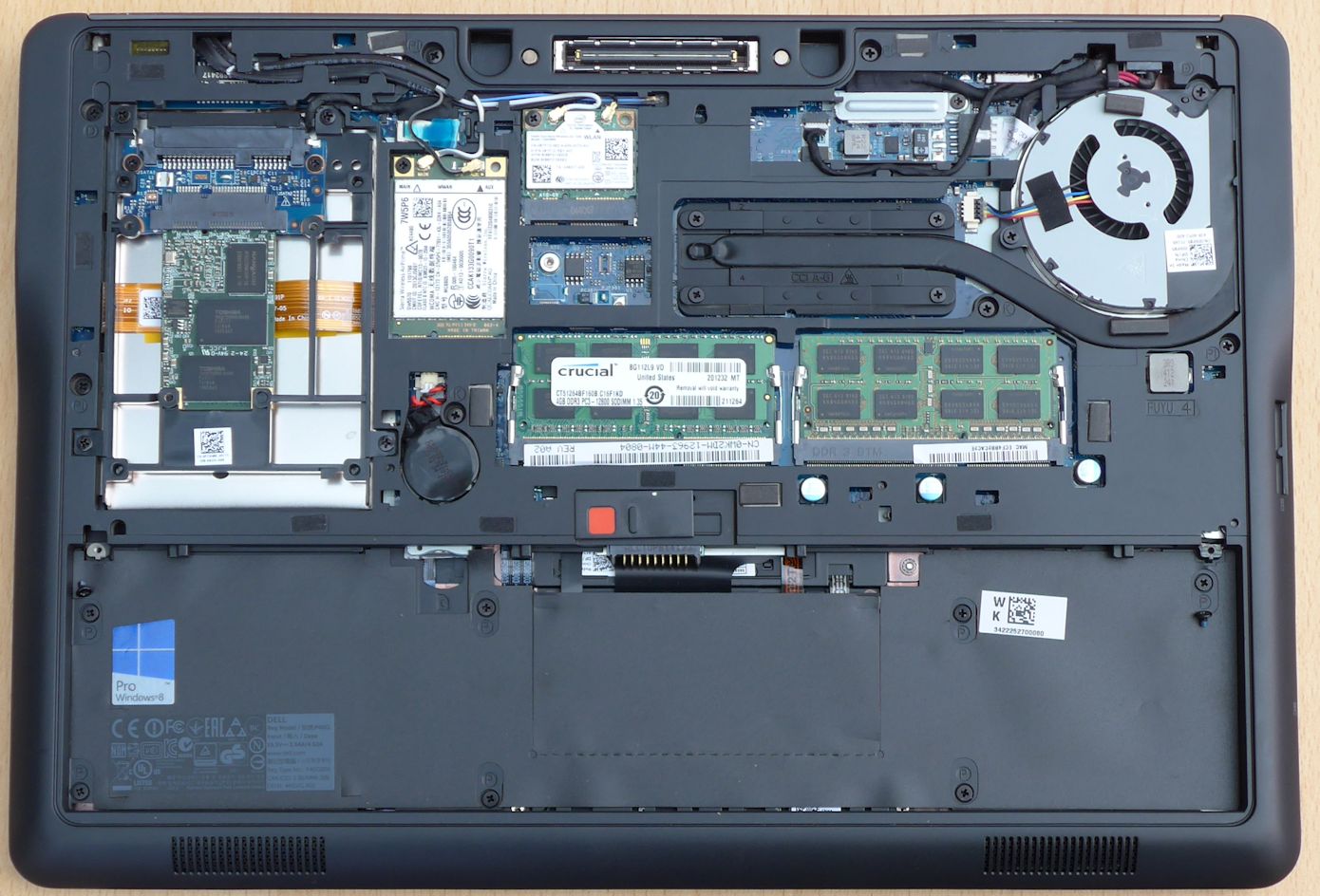


It would cost me $3000 to replace it with a computer that is not significantly more powerful, has a smaller screen and less I/O functionality, and would be incompatible with my audio interface unless I daisy-chain multiple adapters to get Firewire. Fuck that, as long as possible.
This week, my mother's crappy Windows computer died, and I bought her a Chromebook. It was great! I'm now seriously considering getting a Chromebook for myself for day-to-day web browsing and such, and retiring the MBP to music and photos only. If I can figure out how to run Vagrant on one, I'll probably switch for development, too (or maybe I'll just start paying for a cloud-based dev environment).
Meanwhile, I keep having computer envy for a friend's MS Surface Pro. It's the first time I've ever looked longingly from a MacBook to a Windows machine! But frankly, it does things my Mac doesn't do, and the build quality is on par.
Someone please tell Apple than when you need to hold a press conference to convince people you're committed to your product, you're not committed to your product.