Using a random card Amazon gives us a box size of 13.4 x 9.5 x 3.1 about 400 cubic inches. Say http://www.cargolux.com/our-expertise/cargo-equipment/aircra... we have 21 347 ft^3 that is some 36 887 616 cubic inches which means some 92 000 such boxes give or take.
There are inefficiencies etc so let's say it's 30 000 cards. Say at 300 USD each. That's a cool ten million bucks. The plane likely costs less than half a mil. It's not a biggie.
But do they really?
https://motherboard.vice.com/en_us/article/zmemza/cryptocurr... says "Enigma started with an installation of about 700 GPUs and now consists of several larger buildings," Schindler told me in an email. "Obviously at this size the operation draws attention from the hardware manufacturers directly and we have agreements with them." Compared to that I have some doubts they need to fly thirty thousand cards in. Maybe they rented a pallet in a 747F...
A side business I run supplied them with components in 2016. Based on what I shipped them I'd say they deployed some where in the neighborhood of 18,000 graphics cards in 2016 and they were supposedly ramping up to go even bigger in 2017.
I don't have any insight into what they are currently up to because that scaling apparently involved hiring a eastern European engineer on the cheap to masquerade as a customer to try and obtain confidential hardware design details from me so he could rip off my product for them.
>I don't have any insight into what they are currently up to because that scaling apparently involved hiring a eastern European engineer on the cheap to masquerade as a customer to try and obtain confidential hardware design details from me so he could rip off my product for them.
Sounds like an interesting story here. How did you out him/her?
It was pretty transparent, almost comically so. My business makes adapter boards that let large mining operations reuse power supplies from old server equipment to power their mining operations. Each power supply has a different pin-out and way to turn it on and off many are proprietary and don't have publicly available data sheets. I figure out how they work and design an adapter board with the required logic to operate them safely as a general purpose 12 volt power supply.
The business operates on a model where the customer pays a minimal fee, $100, to purchase a prototype of a new design but I retained the rights to the designs and did all the design, development, and testing on my own dime and then amortize those costs over the life of the product.
So one day they come to me and say they want to start manufacturing at a factory they've made a deal with in China and ask me to give them the design files free of charge. I told them that I wasn't going to just give them the companies IP for free because a lot of work went into developing it etc... but that we could discuss what an appropriate price was if they really were dead set on doing their own manufacturing.
There was some back and forth but their position was that they didn't think there was anything special about the product and the most they were willing to pay for access to the design files and a license to manufacture it in unlimited quantities was $100 per design. I pointed out a number of things that we did the most important of which was making sure the design and materials could safely handle the high current loads the boards had to withstand, etc...
Shortly after I refused their $100 offer as insultingly low I get an email from some guy purporting to be from eastern Europe and saying he was interested in purchasing 500 units. Before he would go through with the purchase he needed to confirm some technical details of the board design because he was "concerned his environment was very hot and dirty". He then went on to ask a list of questions including things like what are the number and thickness of the copper layers in the PCB. These were the exact reasons I had discussed with the Genesis guys as to why our designs had value. At that point I was 99% sure of what was going on. So I responded that we didn't give out those specifics but that we could send him a prototype to test and he never responded.
To satisfy my own curiosity a little while later I used a personal email address to send the guy a message saying that a friend had given me his name and asking if he still did hardware design because I needed some design work done for crypto-currency related projects. A day later I got a response that removed any remaining doubt about what was going on.
I would rather have a Netflix series... even up to now there just has been too much to fit into one movie.
If there are elements of Hackers in it, tensorflow and kubernetes is killed off by Apache's many offerings. The Gibson will be moved to the SMACK stack. Google is killed off because of a lack of any real customer service. Apache controls the ledger and the hero hackers will convince China, Russia and the USA to take all of their super computers to win back the ledger.
No, we have really good documentation including pin-outs for the headers on all our products right on our site. They were asking for things like the thickness and number of copper layers and other things related to the routing that never would have been revealed even back in the day.
To me, this stuff that's suggestive of embellishment ('business is going so well, we're renting entire planes to ship our GPUs) is par for the course in the recent climate of crypto news.
I never know if I'm being shilled or not anymore...
I'm certain they get a large discount, but that's not going to be related to the shipping cost. The best deal for them is likely to be to negotiate the price "Ex Works", which means the customer handles transportation and clearance from the factory gate. That way they can negotiate their own prices for the shipping, and handle the customs clearance in the way that works best for them. I doubt they're literally chartering a 747. I can't see how that would be better than just shipping them as normal air freight.
These headlines are annoying and what I consider to be "fake news". -- EG They are blowing up some factoid or partial fact to make a false impression.
Here's the reality--
-- Ethereum is going to PoS soon. Even if it doesn't fully switchover it will decline in profitability for miners quite a bit.
-- Ethereum is down %50 in the past couple weeks. The GPU boom is over (for now) and supply should be loosening.
-- There are just not that many coins out there that are GPU mineable to support really massive operations, like a full 747 of GPUs. BTC is $45B and ETH is $18B market cap. As far as GPU mineable coins looking at the top hundred on CoinMarketCap I see about $2-$3B market cap for them all combined. You aren't going to take the hash power of securing ETH at $18B and dump it into ETC and ZEC without thinking twice, and if you do you aren't going to be shipping 27,000 GPUS in at a time 2 months before you have to jump from your big pond into those tiny ponds.
-- And if there were, the labor to bring that many machines up, even if you already have the physical and electrical capacity is weeks of work, unless you're employing a very large labor force which you are going to turn around and fire right after they've built your very cost intensive and valuable and hard to secure warehouse full of miners.
Reality is, the industry may be buying one 747 worth over the next several months but they are all getting them a few at at time and constrained by electrical and physical capacity and labor availability, and parts of everything else.
At even low scale these are non-trivial issues, when you start building 10 rigs at a time it is at least 10 times harder, 10 times more likely a part is out, etc etc.
Cryptocurrency news should always be taken with a grain of salt; there are a lot of people and investors with a lot of interest in hyping the thing so more people get on board and buy crypto. /r/ethtrader is full of posts like that, bringing positivity and "pls have faith" posts when the price goes down, excited memes when the price goes up, etc. Imagine efforts like that, but done by multi-million companies.
I'm not sure what your point is. Do a similar calculation for the ETH difficulty and there are a lot more GPUs mining ETH....which are going to crowd into ZEC and ETC. IF you have 10,000 GPUS mining ETH and you have to move them in a few months, are you going to now be adding another 1,000 GPUS?
I was replying to "There are just not that many coins out there that are GPU mineable to support really massive operations, like a full 747 of GPUs." And I pointed out that's not true because 1 airplane-load of GPUs represent only a tiny minority of the mining power of just 1 cryptocurrency like ZEC.
Also you seemed to assume this airplane-load of GPUs is meant for Ethereum, but Genesis Mining (the miner who rented a 747) already mine ZEC and other alts.
Finally, I would wager there are probably more (at least as many) GPUs mining all other coins combined than GPUs mining Ethereum (2 millions or so).
I'm assuming most GPUS are mining ethereum and that this will change. (not the airplane load, I don't think the airplane load even exists)
But you are right there's a huge number of GPUs out there. My main point is there is going to be a big shift to the others from ethereum when ethereum becomes less profitable...
Exactly. I bet if you took the cargo capacity (I'm guessing that with any packaging to speak of, volume would be the limiting factor rather than weight) of an air cargo configured 747, months worth of Genesis' card consumption would easily fit in one flight.
That one hyperbole quote generated at least a half-dozen different articles in this media genre, most of which have been posted multiple times on HN over the past 4 days.
its useful for conducting unregulated securities offerings and launching dapps. i just haven't found any useful dapps yet. dapps are mostly used when you need censorship resistant functionality.
This is a gold rush[1]. People that were early in BitCoin already cashed, now profit is made on exchanges and by hardware suppliers. It is even worse than Gold because you can't just hold when market crash.
People who bought at the absolute peak of the last market, where it was for only an hour or so, are now up %2700 on that purchase in 4 years.
You can hold and you can dollar cost average, and if you weren't buying with the intention of holding for 5 or more years you weren't really investing you were speculating and if you're speculating you should be hedged or have a strategy that can handle a dynamic market.
I know people who were early in bitcoin and they are still HODLing and using their BTC wealth to invest in other things like ETH and startups.
And we're still waiting for tulip bulbs to return to their peak value. Just because it continued up before doesn't mean it will continue up in the future.
closest thing to Bitcoin was gold certificates not the tulip bubble that lasted 2 years. Gold certificates stopped circulating when the US government said so with Executive Order 6102.
Bitcoin is not gold to me, gold is a shiny rock, periodic element, and bitcoin is alternative to PayPal with less transaction fees and a better api. That's where I see the value. Programmable money without going through a too-big-to-fail central bank everytime is a valuable feature.
You can't send money to multiple people using paypal without being approved by PayPal and with KYC and other regulatory laws there's a lot of friction using paypal send api with bitcoin on the other hand, no permission is needed that is way I think bitcoin has an easier api, I'm not referring to the actual C++ bitcoin api but there are javascript api clients to Bitcoin that are dev friendly. Bitcoin transaction fees are high? (Around $1 per transaction at the moment) versus 2.9% of the total with paypal. It is even cheaper with Ethereum which fall under the bitcoin umbrella.
Do people really use bitcoin like they use PayPal though? It seems to me that the vast majority of people own bitcoin because they speculate that its value will go up and not to make actual transactions.
There is a certain amount of speculation and bitcoins value has gone up a lot more due to reasons that are worth speculating on (increased adoption) than based on usage in its primary applications (Remittances and convenient value transfer).
However, simply holding bitcoin as a hedge against inflation and central bank currency risk is a legitimate use.
One of the big rallies in bitcoin coincided very precisely with the Cyprus collapse where the government simply confiscated a percentage of everyone's money in the banks.. and in places like Venezuela bitcoin is literally a life saver.
So remittances may be the biggest market, but hedging against incompetent government is not an illegitimate use of it... and I would separate that from "speculation" as a use case.
Speculation tends to get a bad rap, but remember, speculators sell when prices are high and buy when prices are low-- they tend to moderate prices.
19 trillion dollars are in the US stock market, and the total amount of US GDP in 2016 was 18 trillion. We have to stop pretending that the almighty US dollar and the federal reserve is so much better system than bitcoin and the developer community behind it. I bought plane tickets, food and beer with a bitcoin visa debit card and the merchants didn't know the difference but of course the majority of the bitcoin I owned is saved. Saving more than you spend is a good thing.
That's such a weird comment, because they literally were.
I think I understand what you mean, but I also think that you underestimate the impact that the introduction of the tulip to Europe had on the economy. If you browse through the Wikipedia page, I think you will find it interesting: https://en.wikipedia.org/wiki/Tulip_mania
Also interesting is the effect that it still has on the economy. Some of the big flower monopolies that still exist today (nearly 400 years later!) were created by people who speculated on tulip bulbs and diversified quickly enough (mostly by using profits to buy up land).
We tend to think about things from our own perspectives, but when you are looking at that time period, imports of agricultural products to the wealthy is what ruled the world. Just like they were able to saturate their market, so will we with abstract financial products. Those who are able to diversify quickly enough will probably be the next big winners. Those who keep buying graphic cards will probably be the next big losers.
In addition to mikechar's sibling comment, keep in mind that the blockchain technology can still be used for all kinds of stuff even if Bitcoin and Ethereum completely collapse to zero. They are just specific implementations and there is nothing particularly unique about them technologically compared to any given fork of the same code.
Your thinking is exactly where I was in about 2012. The network effects is why bitcoin has remained so valuable in the face of, say, litecoin which is arguably better technologically.
What good are your altcoins when the developers/miners give up on the project? A bar of gold is always a bar of gold, no matter what the price of gold is.
Ehhh kinda. I think the point is that gold has been used as a means of exchange for centuries, so even if you bought at the peak of a gold-price boom and it crashed you could still hang onto it and be reasonably sure that you could sell it once things recover. We can't really say the same for BTC, ETH, dogecoin, etc
No we import it because its useful. Indians think gold is a safe haven because we consider it as an investment and of course most Indian women want to put on gold bling during marriages and festivals.
> A bar of gold is always a bar of gold, no matter what the price of gold is.
A cryptotoken is still a cryptotoken as long as the network is propagating tx & blocks. The whole point of them is that they continue to function regardless of if the "developer" is around.
We've banned this account for violating the site guidelines.
If you don't want to be banned on HN, you're welcome to email hn@ycombinator.com and give us reason to believe that you'll follow the rules in the future.
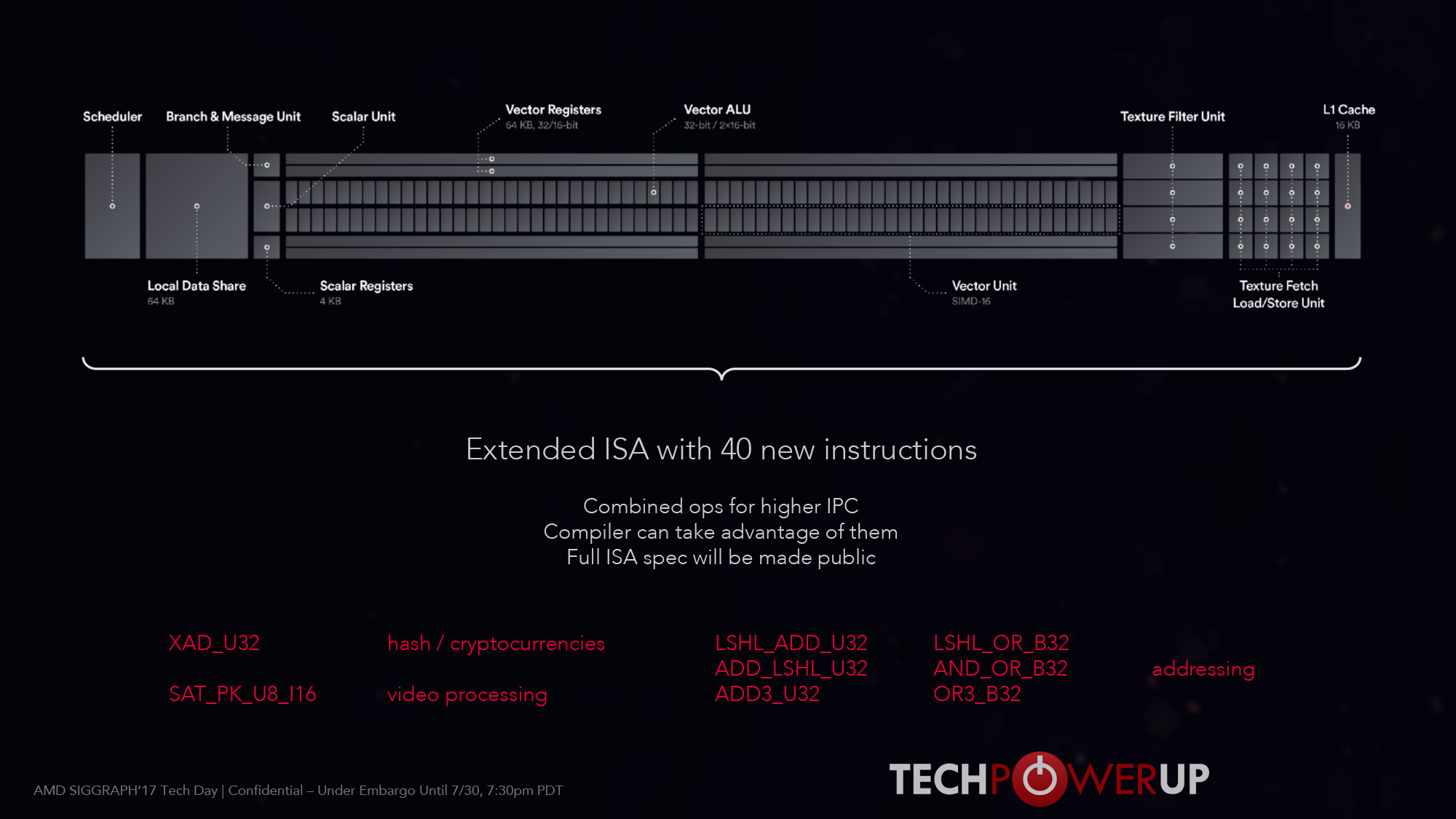
I'm consistently surprised at how tepid AMD's embrace of mining has been. If I was them and noticed that my product was literally sold out everywhere because of mining, I would embrace it, open a mining division, and immediately get to work trying to create specialized hardware optimized for mining.
The fact that they seem to be pretending that this use case does not exist and stubbornly declare themselves to be exclusively a gaming company is baffling to me.
If their hardware is sold out because of mining, all they have to do to serve the mining segment is make more of that hardware. There is no urgent need to undercut themselves.
Brief research suggests that the entirety of Etherium mining is roughly equivalent to 1 quarter of AMDs GPU sales. It seems gaming is the much bigger chunk of demand (Nvidia sells 3x what AMD sells, so annual gaming sales are roughly 10x the total Etherium spend).
Wasn't there a time few years ago when AMD overestimated the demand and then had 4 times the production capacity idle? It's not exactly cheap to build too.
The problem is, the mining comes and goes extremely sporadically, and can cause huge problems. Namely:
* Overproduction for the sake of mining can leave you with huge oversupply of cards, which is very costly.
* GPU miners can crowd out the enthusiast market, which is terrible in the long term:
* gamers have brand loyalty and buy peripherals (like FreeSync monitors) and miners don't.
* if gamers can't buy GPUs at affordable prices when they're building their new PC, then (some companies perceive that) they might just buy consoles instead, which shrinks the entire market. This is more a problem for the "budget" market, obviously.
* Enthusiasts recommend products to non-tech-savvy consumers, which again, means that if temporary mining sales crowd out non-mining sales, they lose money in the long term.
I think AMD's problem is manufacturing capacities.
They can't even properly fulfill the current demand of gamers and miners, you want them to start a completely new line specialized just on miners? Where are they supposed to manufacture these chips?
It would also be wasted effort on AMD's part as the cards are selling like crazy anyway and once the cryptoboom stops there's still plenty of gamers left to buy them.
The problem is their core audience (gamers) gets cranky when they can't buy cards at regular prices due to the huge crypto demand. It negatively affects their image and they would rather have their fanboys than the disloyal miners who would happily switch to nvidia if it meant a greater ROI.
EDIT: I see these bundles are definitely to limit demand on the early cards. I expect they will keep miners at bay until they start having volume on the single cards. That's fine.
Single Point calculations per watt or per second are not really the relevant measure for miners, it's all about memory bandwidth.
Well the results are already available since FE has been out for a while. It was pretty bad tbh but the price on these versions are better. the 100$ is not really enough to matter just an unclassy way to upsell. guess ill have loads of free hardware
Right, those are good numbers for the price, comparable to the 1080 Ti, so this bodes well for using them for mining... however we will have to see if there are any gotchas (the access patterns for mining are different than for games, so for instance GDDR5X was less effective than GDDR5 despite being theoretically faster.)
That would be my guess, that the bandwidth was very high but the latency was higher than the cheaper part, maybe not all the time, but in a way that affected this hashing algorithm.
The article title makes Genesis Mining sound like a bunch of amateurs, but they are a fairly large private company. Ordering express bulk freight for any company of this size doesn't sound so crazy.
Imagine all these people wasting time, energy and power, the last of which is a crime against the environment and an affront to good sense at a time of global concern.
But when it comes to money, greed and self interest always triumph and there will be dozens stretching logic and apologism as far as it can go.
'Proof of work' has to the most hare-brained, wasteful, anti-environment scheme ever thought of. Responsible people should not just be wasting electricity in this manner.
This is one of those positions I'm always baffled by. It's like complaining about Bell wasting copper wire or encryption wasting space and computation power. If this crowd still don't get it I guess we're further from mainstream than I imagined. Also by Q1 2018 this will be a non-issue for Ethereum.
Yet, here we are - wasting resources to post trivialities online. Their consumption is generating value, yet our comments are just yelling into the wind.
Proof of Work is inefficient by design. The transaction speed of the entire network is equivalent to that of an average node. Adding more hardware increases inefficiency.
A centralised service like HN on the other hand could be designed to scale linearly with the amount of hardware resources.
Edit: Now that I think about it I wouldn't be surprised if someone makes a cryptocurrency based around "digging holes" keynesian style. I've even found a name for it: captchacoin.
And our comments are creating no value. We're just ephemerally yelling into the wind. If the claim is about resource usage, the concern is about value. If nothing else, they are at least creating value - something we both aren't doing.
Hell, I don't even expect you to agree with me. I'm just posting to speak my point of view and amuse myself. This conversation is pretty much the most wasteful thing we are going to do today.
Real life is less utilitarian than many people wish. Even if our conversation is more efficient, it generates not one bit of value - at least financially. It does amuse me, but I'm not really sure that's very valuable.
>It does amuse me, but I'm not really sure that's very valuable.
That's valuable. It lowers the demand for jetskis and cocaine, at a fraction of the price. Also, there's not much point in life if being entertained isn't valuable.
I can cut down trees and exchange it with my friends as a
medium of exchange and call it value.
It has no value to the wider economy or world but to us, and even though it has value to my friends it's a terrible, wasteful and unethical way to generate value. I am not generating value, just wasting trees.
You just can't create money or value out of nothing. Its linked to utility, markets, labour and the wider economy and belies the fundamental confusion in the crypto world about money. But intoxicated by the prospect, like alchemists and other charlatans before them the crypto community continue to fantasize about gaining something from nothing.
You know that trees are pretty much the definition of a renewable resource, right? As in, I have a large sustainable forestry operation and they are cutting trees down as I type this. I own it, I don't do the work.
That wood builds your house, provides heat, provides jobs, makes dowels, and makes paper - depending on what is harvested. And, it will be able to do so in perpetuity. The process is called TSI and is even able to increase habitats for the animals - they are delicious.
I'm not sure we can have a productive conversation.
The value of wood derives from utility. You can see and understand the utility of wood and yet do not see the absurdity of cutting down trees and burning them as 'proof of work' for zero utility simply because 'you' want to use it as a medium of exchange and speculation?
This is what current crypto currencies are doing. How long before people notice you are wasting wood for no purpose and put a stop to your activities?
It's not just the electricity, it's major wear and tear on lots of hardware with no real purpose.
This get's worse the more different currencies there are and the more people are farming them.
While I like the basic idea behind Bitcoin, I really don't like this development of "Let's invent a couple of dozen more of those!".
It also shows the ugly face of how what we as human societies actually value. While I haven't compared any numbers, I'm pretty sure Folding@home or Seti@home can only dream of having the kind of computing power available to them that some of these cryptocurrencies manage to mobilize.
You want my cycles to find a cure for cancer? Nah, I'll keep my cycles to myself.
Using my cycles to make the imaginiary profits? Sweet, let's buy warehouses full of hardware!
You say "no real purpose" but what you mean is "a purpose I don't value". That's fine, don't do it. The problem comes when you think that people doing things you don't like is somehow wrong.
People have attempted to make scientific computing good for proof of work-- GRIDCoin is an example. But it doesn't work for actually securing the network, due to the nature of how blockchains work.
You're free to work or mine or do whatever you want and then donate that money to scientific research.
But what makes you think you know better how I should spend my money? You don't even know how I'm spending my money.
> The problem comes when you think that people doing things you don't like is somehow wrong.
I should have clarified that more: As I said before I have no issue with the basic concept behind cryptocurrencies, Bitcoin is a great thing and will hopefully do even greater things in the future.
And of course, everybody is to free to do with their time and resources as they please, never suggested otherwise.
What I have an issue with is how new currencies seem to be popping up like mushrooms because they've become the current "thing" to do if you want to make a quick buck. From the outside, it just looks like a bunch of pump and dump schemes, with no purpose besides offering a couple of early adopters the chance to make temporary huge profits, comparable to a digital Wall Street.
Originally I imagined BC as the solution to all the exchange rate shenanigans and whatnot, have one global and digital currency for everybody. Instead, we are now forking currencies like software, I'm not sure I like the possible long-term ramifications of that. Do we really want a future with hundreds, if not thousands of different, and competing, cryptocurrencies? Is such a future even viable?
Alts, like internet startups in the Dotcom era, fall into three categories:
1. Genuinely new ideas from clueless people who will fail (because they don't understand that distributed systems are hard, Satoshi made it look easy)
2. Genuinely new ideas from good devs that will succeed (extremely rare, I consider that Bitcoin is the only chain that meets that requirement for me, though some others might in the future)
3. Blatent schemes to try and grab money because there is huge interest.
It's really hard to tell what category something is going to fall into... but the thing is, bitcoin has had massive returns and if you can produce a really good innovation, the impact on society and consequently the returns could be equally massive.
So yes there is a lot of speculative money out there, but the only way to tell the good from the crap is to do your due diligence.
For me, even if the good is %1 (and I think it's a bit less than that right now) it's ok.
Competition is not always the best approach, especially for a currency.
I'd rather see a unified and simplified monetary system than "cryptocurrency wars" where vast amounts of "wealth" would just suddenly vanish into thin air, as a myriad of different currencies would struggle for relevance.
It's not like we haven't learned these lessons before in the real world, we have, plenty of times. That's why it's so surprising how keen we seem to be on repeating them in a digital format for the sole sake of having yet another speculative vehicle from which we can deduct some imaginary "economic growth".
Cryptocurrency "mining" consists of essentially burning money, by design (proof of work and all that). I don't have to know a lot about you to know that's a poor way to spend your money.
Silly. Comparing the entire infrastructure of bitcoin to just a tiny sliver of the credit infrastructure. You need to include on the other side, all the energy the employees use, the buildings, the gas in their cars, the computers they run, and all of this for the related companies and the like. Or you just look at the cost in energy of finding the one correct hash for that block-- which again is going to be two or three orders of magnitude less than a credit card swipe (and the communications systems it needs for an auth)
Further, the cost per transaction in bitcoin a year from now will be about 1,000,000 times lower due to Lightening Network.
I know there's a political desire to demonize bitcoin (this is vice, not exactly an objective source) and that ignoring one side of the equation to try and make bitcoin out to be an environmental evil seems the best approach you can get but its' absurd on its face.
why stop there? Why not complain about the wealthy individuals over at Wall Street or Silicon Valley syndicates? Or how about the amount of food waste that occurs everyday?
You're argument barely makes a blip. Perhaps if you should choose not to browse reddit or hacker news at least 3 times per week to save the environment.
It's a bit sad that cryptocurrencies tend to encourage concentration and centralisation. It's very hard for an individual to take part and earn if you "miss the time". And the negative side effects are large, like energy expense, or selling out of GPUs.
I think this is a general shortcoming of proof-of-work. I wonder if this could be fixed with a different scheme, e.g. reputation-based, or proof-of-(something socially desirable and not centralizable)?
You seem to assume that mining is the point of a cryptocurrency, and I don't think it is. Even Satoshi, when he was still around, predicted that mining would eventually be out of reach of the normal user.
But you can still "take part" by using it for what it actually is - a currency.
The big problem with cryptocurrencies is that they're really not currencies...
I don't know anyone who would want to use BC for anything other than speculation. Speculation that undermines the stability of the currency, which isn't conducive to use as currency.
There are proper cryptocurrencies that don't require mining but they don't seem to get nearly as much attention.
- Turning my "being good with computers" / learning about it early on the internet into money
- Buying illegal stuff on the darknet (which I didn't do yet)
- Speculating / Gambling
- Transferring wealth across borders while avoiding high conversion fees
While these are typical money functions, they are all fringe activities. I don't see myself ever using bitcoin as a replacement for Euros - that is for receiving my salary, for buying things (that I can get legally), for investing or saving.
One reason is I don't share the crypto-idealists idea of an anarcho-capitalist utopia...
Yes, it can be. Approve in your country a Torrens title system with a replicated database among citizens. Then anyone can buy your country land ownership, which price is much more stable.
I'd be surprised if GPUs and CPUs were ever shipped by sea instead of air. 6-8 weeks at sea Vs 12 hrs flight is quite serious deprecation, even if you're not mining them.
In GAAP you don't have to do calendar time-based depreciation (assuming you're dealing with something that doesn't have a finite life, e.g. nuclear fuel rods). There's also usage based depreciation, so, for example, you only depreciate the cost of the GPU while the computer is powered-on or the cost of a truck based on how many miles it's gone.
GAAP or not if I have $BIGINT tied up on a boat haul (there's a joke about liquidity in here somewhere) with no returns while the operational cost of the task to be done rises, there's a cost.
I think the point was that due to upgrade cycles being what they are, a given model of graphics card will be less valuable in actual reality after a few months at sea; not just less valuable according to accounting.
Depreciation is probably not a concern, but inventory management sure would be. 6-8 weeks shipping implies you have 6-8 weeks worth of sales at sea at any one time, which is potentially a lot of money to be tied up.
It depends on what you are mining, and your cost modeling. For instance, NVIDIA cards have better memory bandwidth and both dagger-hashimoto and equihash are memory hard algorithms, and NVIDIA cards have better expected resale value (though this will vary based on your expected sales channel.)
AMD is generally more popular among hobbyist miners, I think, because early on they had a performance advantage in Ethereum and hobbyists tend to follow each other like a herd because they have limited time to do experimentation and exploration (and this is not a criticism of them, they have day jobs and it takes a lot of effort to even get miners going, let alone optimize them across multiple parameters.)
Those two statements are basically equivalent when it comes to mining. cost/hash/second is the metric you optimize for. AMD cards can do the integer operations required with less power (and faster!)
Mining with GPUs hasn't been profitable since around 2014. GPUs have largely been replaced by ASICs (although certain coins are still mineable with GPUs, like Ethereum[1], as discussed in the article). Bitmain[2] is (AFAIK) the manufacturer of ASICs for mining.
Pain in the ass to run. Competition will torch your facility if you don't spend enough money and effort on security. You're going to need your own power plant, etc.
If you are the manufacturer, why not let the customer take the risk? You are planning and spending years ahead, why gamble more than you need on cryptocurrency price?
i wonder if these massive mining operations have enough power to cheat the system: couldn't they quickly compute a series of valid blocks with the cheated transaction if they band together? the longer chain of blocks would win against a shorter one.
On the other hand they would have a self interest to preserve the system, if trust in cryptocurrencies collapses then the big miners would have a lot to loose.
This is a sybil attack and it would take wide collusion and would be difficult to pull off, and it would allow you to do what? Reverse some transactions that you had the keys for.
It's really expensive attack to get back the $5 you paid for Starbucks.
So you would want to do it with a multi-million dollar transaction.
However, the thing is, anyone you pay a multi-million dollar transaction to is going to let it clear for more than just one block... probably for many blocks...before handing you the goods.
Because everybody is aware of this risk.
Chains reorganize anyway, just naturally when sometimes two blocks are found within the propagation delay.
Trying to run ahead is very hard.
Wallets like Electrum show one confirmation in red, and several in yellow and only after the chain has gotten extremely expensive to unwind will it show them in green.
Is electricity there really cheaper than places like Iceland? Aluminium smelters in Iceland tend to get contracts around $3c/kwh, other large clients should be able to get the same.
i just cant wait to see when this whole crypto-concurrency gold rush inevitably collapses.
This is no different from the tulip mania of the 17th century. Yes tulips still have value today and cost something after all but not the absurd amount of money they once fetched.
If you can get wholesale electric rates (I'm assuming if you're paying millions to buy and ship graphics cards you know what you're doing), then the power companies in California will pay you to burn electricity when the sun is at the highest [0].
In general the profits are wafer thin, but Ethereum price skyrocketed a few months ago. Far quicker than people could build mining machines. Back in mid-June a single GTX1070 was on target for $150/month profit (even with expensive electricity). Now profits dropped to only $30/month https://whattomine.com/merged_coins/2-eth-sc?utf8=%E2%9C%93&...


Using a random card Amazon gives us a box size of 13.4 x 9.5 x 3.1 about 400 cubic inches. Say http://www.cargolux.com/our-expertise/cargo-equipment/aircra... we have 21 347 ft^3 that is some 36 887 616 cubic inches which means some 92 000 such boxes give or take.
There are inefficiencies etc so let's say it's 30 000 cards. Say at 300 USD each. That's a cool ten million bucks. The plane likely costs less than half a mil. It's not a biggie.
But do they really? https://motherboard.vice.com/en_us/article/zmemza/cryptocurr... says "Enigma started with an installation of about 700 GPUs and now consists of several larger buildings," Schindler told me in an email. "Obviously at this size the operation draws attention from the hardware manufacturers directly and we have agreements with them." Compared to that I have some doubts they need to fly thirty thousand cards in. Maybe they rented a pallet in a 747F...