I'm so glad that The Expanse has brought great space opera to the masses. Scifi books are several orders of magnitude better than the majority of "Scifi" Hollywood movies.
The struggle of a fledgling technological species against the plight of interstellar space is a majestic backdrop for many of the best novels I've ever read. Especially with Clark, Niven, Pournelle etc. that have done some excellent mathematical investigation into the feasibility of the concepts discussed.
TBH, the masses know The Expanse mostly from TV show. But the show indeed is good, and while it has some differences from the books, it mostly stays true to science, even in very minor VFX details.
This is an unpopular opinion, because I've seen here how people like to hate on Gravity and stuff, but I feel like we're seeing a new trend in sci-fi movies/shows - Gravity, Interstellar, The Martian and now The Expanse, despite their various levels of science/plot tradeoffs, all are much more faithful to physics than what came before (with a honourable exception of Space Odyssey), and they do a great job at showing you can have a great sci-fi appealing to general population that sticks to how real space travel works.
--
That saids, The Expanse novels are 11/10 Even Better Than On TV, and I highly recommend them. Can't wait for the next one coming out soon(ish).
The series is mostly true to the physics (they speed up travel times a lot, but that's kinda required for a TV adaptation), with the notable exception of a certain manoeuvre in the 11th episode of the second season (which the writers have conceded to be preposterous).
Space ship design is the other thing that regularly annoys me, it's all metal and not at all foam-padded on the inside. They're designed to look cool and futuristic, not utilitarian. They're also much too spacious, which makes it easier to get nice shots, of course, but is also a little ridiculous.
That said, it's amazingly fun and I've watched it twice and read all of the books. I think we can all agree that if the two points above are what's wrong with the series, it's pretty damn good. Highly recommended!
I wouldn't put Gravity on that list. It looks nice, but its "physics" is pure Hollywood fail. Not one single plot device makes sense from a physics perspective.
I just finished the show (season 1 and 2) and it’s the best sci-fi I’ve seen. I find it more epic than BSG. I’m so happy I watched it. I am considering picking up the books now. The science is on point. Flip and burn baby!
I wish I had read the books before I watched the TV series. Doing it in the reverse order has made me fairly unmotivated to read, I'm a few chapters a in to the second book and not sure I'll continue.
Having said that, I've been fairly unmotivated to read anything recently due to working long hours and recently having rescued a dog.
I started reading the books only after the first season, and I'm very happy that I've started with the show first - now I read all Avasarala's lines with Shohreh Aghdashloo's voice.
(In general, I find reading after watching a much more pleasant experience - if I read a book first, I form my own image of the characters, which then usually clashes with what's in the movie. If I do it the other way, I just cast the characters I saw in the movie into the book.)
That said, do continue reading - the novels only get better with time, and there's plenty of awesome waiting that the show is nowhere near reaching.
I wish show-Avasarala was as abrasive and foul-mouthed as book-Avasarala. That would make it even more fun, but would probably make the show harder to show on TV ;)
I agree. Not everyone likes it, but I do appreciate the amount of f-bombs she drops in the book. AFAIK though, the issue was not only with family-friendliness of the show, but also with the actress not liking to swear.
I am in the opposite camp with regards to The Expanse. I consider the first season a very, very good trailer for the first book.
I also consider the Dark Tower movie a somewhat okeyish trailer for the series. I just finished the second Dark Tower book, and in the books the man in black always speaks like McConaughey.
However, I understand your feel. I can't read Harry Potter, it's just not interesting enough, even after the movies.
I've read the books, and without spoiling anything, there's a lot of crazy stuff to come. You should continue reading! :) (and don't forget the novellas and short stories) Plus, the second season only covers about half of the second book, so you'll be done with the material from the series pretty soon.
>Hundreds of years in the future, things are different than what we are used to after humans have colonized the solar system and Mars has become an independent military power. Rising tensions between Earth and Mars have put them on the brink of war. Against this backdrop, a hardened detective and a rogue ship's captain come together to investigate the case of a missing young woman.
SOLD. I know what I'm watching this weekend, thank you!
I think the series is truly separate and worse than the original. Clarke even said he'd never intended the line about "Ramans do everything in threes" at the end of the book to actually lead to sequels, only to beg the question of what happens to our solar system next. The sequel books do a far worse job of answering that question than the readers' own imaginations, I think. I'd never made the connection to the co-author but it makes sense. I ripped through the first book so quickly, and then picked up the second and couldn't even finish it. I could feel it devaluing my enjoyment of the first it felt like such a different, inferior story.
A probe sent out by some remote civilisation, it is on its way through our part of the Milky Way galaxy. It used Sol as a source of gravity to slingshot itself on its way in the direction of Pegasus. It also did some measurements while it was at it, even though this system is not its final destination.
Yes, totally made up but in theory it would be possible.
> okket: A remote civilisation that has no problem waiting hundred thousand years or longer for a probe to reach its destiny.
> pavlov: At 44 km/s, the object is travelling slightly faster than Pioneer 10. Seems too slow for an interstellar probe?
> QAPereo: A probe should show signs of acceleration, not freefall... unless you anted the probe to be stealthy. That is a disturbing thought.
Of course it has FTL, but they want to observe us for an extended period in our natural state, not riled up by an FTL object moving through our system and parking in orbit.
They also wanted to see how long it would take us to detect it. I'm not sure how well we did.
>> A probe sent out by some remote civilisation, it is on its way through our part of the Milky Way galaxy. It used Sol as a source of gravity to slingshot itself on its way in the direction of Pegasus.
I found it interesting that the first such object observed passed inside the orbit of Mercury. Is there some physics based reason that would be likely or was it a fluke?
There's no physical reason why it might be more likely for an interstellar object to cross the ecliptic near the sun. But an object which does so closely enough for solar gravity to yank it into a second crossing might well be more likely to get noticed, especially when its modified trajectory brings it as close to Earth as this one came.
If you're not made of meat, just put yourself into a sleep state for a few hundred thousand years. This could just be the Krang looking for a good place to have a summer holiday ("Hmmm, too much oxygen. Let's try the next exit, dear.")
91800 kmh per hour incoming, 158400 kmh outgoing. This space puppy just gained 66600 kmh from passing through our solar gravity well. Not particularly relevant, but very interesting!
> AscendingNode's tweet is in error: It's using the basic find_orb fit (which tries to fit the object's observations to a parabolic orbit) without taking into account the fact that it COULD be interstellar.
> You'll notice quite clearly, that in the follow-up tweets they make, that they give residuals in the orbit on the order of 6-9 whole arcseconds. It's quite bothersome that everyone I've been talking to has been re-quoting the tweet all day.
I like to imagine some alien civilizations version of Voyager 1. Perhaps they sent us their own golden record with difficult to decipher pictographs and samples of pictures and music.
If it is, given its trajectory, it's probably not meant for us. I would be nice to keep an eye on it though -- it'd be fun to get a complete scan and hope it's doing the same in return. It's too bad it's likely too late to rendezvous with it and get some samples.
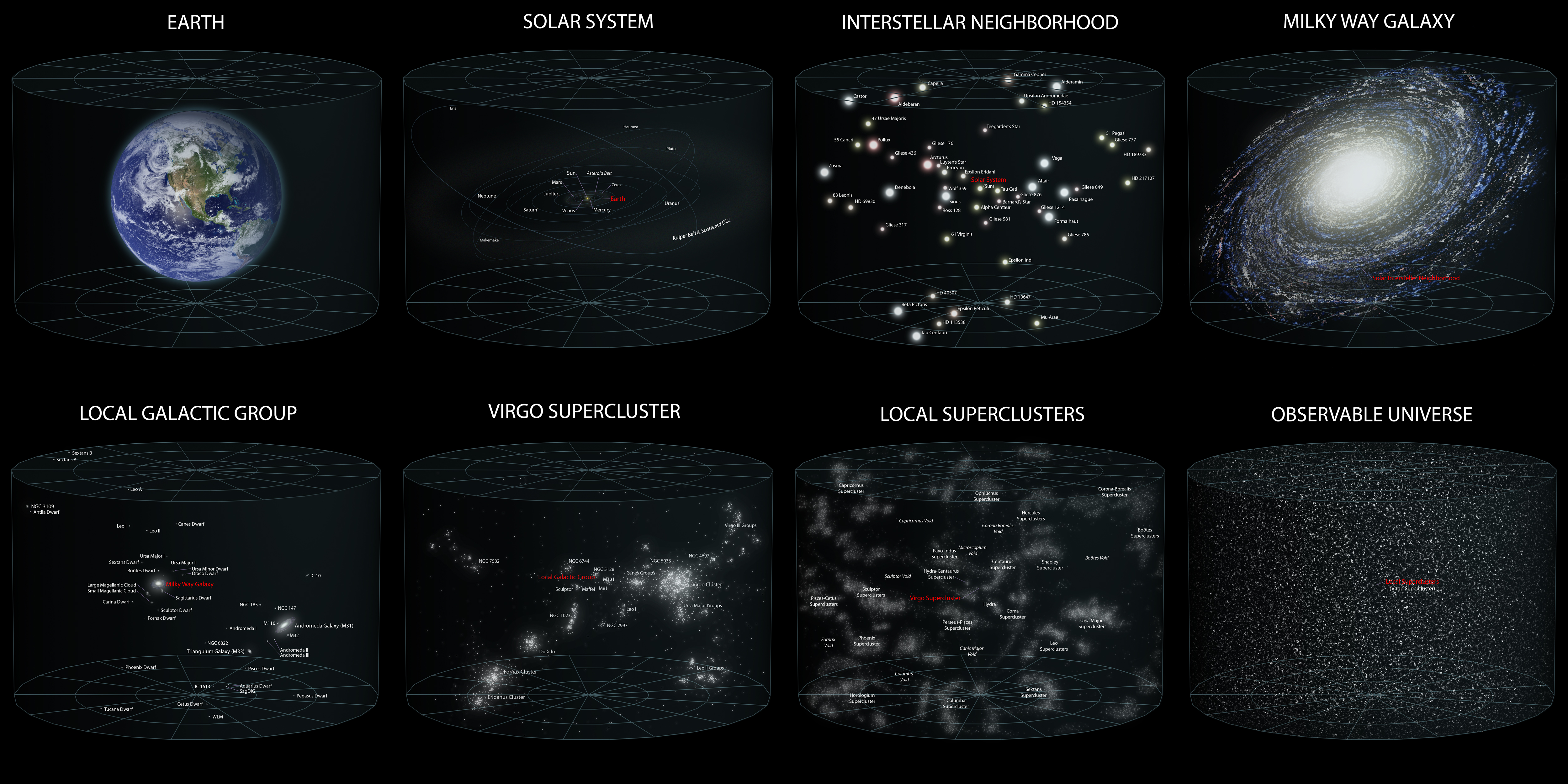
Off topic but can someone answer this for me? Are the stars in our night sky part of our galaxy or no? It seems such a stupid question to ask, but when I look online it says we have one star, our Sun, whereas other galaxies have one or multiple - for instance a galaxy with two stars would be called a Binary System.
So where are the stars in our night sky? Are they even further away than Uranus, Neptune.., but so bright we see them anyway?
>Are the stars in our night sky part of our galaxy or no
Every star you see in the night sky with the naked eye is part of our galaxy.
>for instance a galaxy with two stars would be called a Binary System.
A galaxy usually has billions or trillion of stars. Our solar system has one star, which is our sun ( a sun is a star with planets around it). Our solar system is inside of a galaxy, which is made up of billions and billions of stars.
>So where are the stars in our night sky? Are they even further away than Uranus, Neptune.., but so bright we see them anyway?
All stars are outside of our solar system by definition. They are light-years away ( the time it takes to get there at the speed of light is years), but most planets are light-minutes away.
Either I didn't get your question, or you're a bit confused about the structure of the universe. Not a problem.
There's Earth, it's a planet orbiting our star, Sol AKA the Sun, in our solar system. A star has plenty of bodies orbiting around it, dust, asteroids, planets, so the whole group is called a solar system.
There's other stars "next" to us, which in turn have dust, asteroids and planets orbiting around them. So they also are solar systems, since all stars have stuff orbiting around them.
Stars (/solar systems) tend to cluster together in a galaxy. A galaxy is composed of billions of stars.
Earth/our Solar system is in the Milky Way galaxy, so most of the stuff we see in the sky are stars that are not very far from us and/or part of the Milky Way galaxy.
The closest galaxy from ours is Andromeda, which is in turn composed of billions of stars, and countless planets.
So, the order is planet (Earth) -> star (Sun) -> (grouped into a) solar system -> galaxy (Milky Way)
Binary systems are solar systems which do not have a single star, but they have TWO! and these stars orbit each other. A galaxy has millions of binary systems (not sure how rare they are)
Uranus, Neptune, etc. are part of our solar system, so yeah, the stars you see are farther beyond.
EDIT: apparently I'm a bit confused as well, as star/planet groups are called planetary systems, and only ours is called the Solar System (from Sol/the Sun). The more you know.
Note that the Magellanic Clouds are basically orbiting our galaxy, and that the next closest independent galaxy is Andromeda, 2 and a half million light years away.
As others have covered, the stars you can see are all in our galaxy. The closest star to us is around 4 light years (the sun is around 8 light minutes).
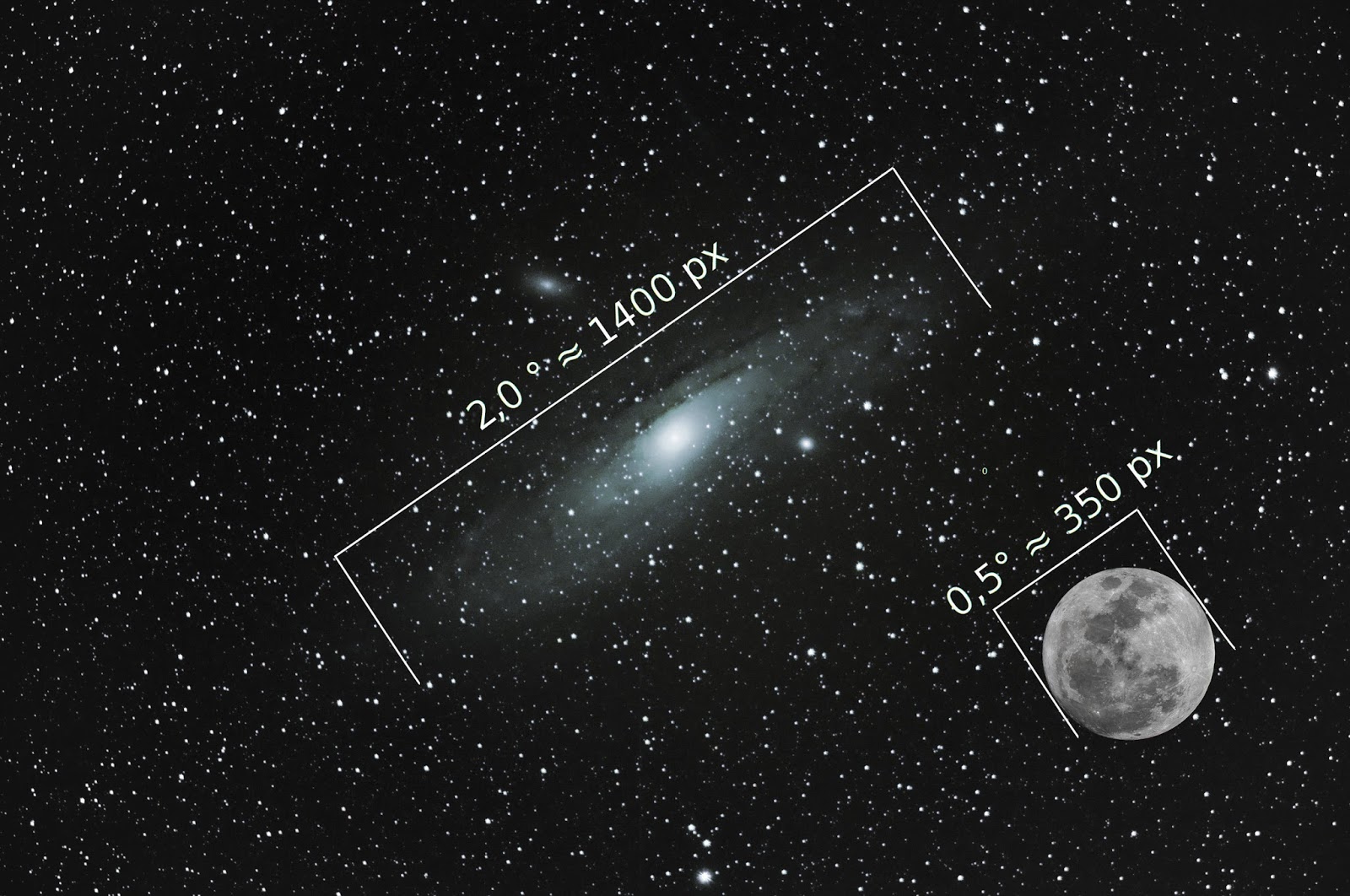
The two obvious extra-galactic objects you can see are (1) Andromeda, which appears as a small smudge but is actually huge: https://3.bp.blogspot.com/-4Z_aNPDvDVU/UtvEsVBCzSI/AAAAAAAAD... and (2) the large magellanic clouds which are a bit more obvious.
Andromeda is the nearest big galaxy to us, but the LMC still has its own stars.
To answer your last question - yes, this is the concept of apparent magnitude. Stars are so incredibly bright that you can see them despite the fact they're very distant. We can see the planets even though the only light we're getting is from reflection. Look at how bright Jupiter or Saturn are, for example, and then think what a miserable fraction of the Sun's light they actually reflect, and how much of that we receive on Earth. It's a very small percentage - the Sun is just really bright.
This is an important point though - you cannot measure the size of most stars directly. We've been able to do it with very large stars, but mostly all you know is (a) That star is this bright and (b) it's this colour. From that astronomers can derive models to figure out how large it is. Even if you know the distance, it's not trivial: is it a really tiny, but stupidly bright object or is it a massive, but really dim object? Beyond a certain distance you have to use models and make educated guesses.
When we look up at the "heavens" with the naked eye, we have our own personalized "starry night", courtesy of, and unique to our own, galaxy.
We don't see the individual stars from other galaxies. We barely can even see other galaxies with the naked eye. But once technology shows us that the sky is filled with galaxies, invisible to the unassisted eye, it blows the mind away. Every galaxy has it's own unique "starry night".
Astonishingly, some have projected that there are more galaxies in the universe than stars in our Milky Way galaxy. ~d
What you are calling a 'galaxy' is actually just our solar system, one of millions in the Milky Way Galaxy. The stars you see are located in our galaxy.
"closest approach" is very unquantified, and 400 meter is a very small object in a large space. It's a hard problem, probably not very prioritized either.
The is the best way to disguise a probe and the fact it came from above the elliptic might mean the aliens wanted to make sure it wouldnt collide with any natural bodies
This surprised me at first, because i thought Halley's Comet was also interstellar...then looked it up, and sure enough its not...So, yeah for new things!
It's moving far too fast in the worst possible direction, and it's already far too far away.
If we'd known it was coming, we could in principle have gotten something out to its point of closest Earth approach, but the object's velocity means even that would've been a flyby with no possibility of rendezvous outside possibly an impactor.
As the matter stands today, anything we'd send after it would have to overcome a velocity disadvantage of something like 40 kilometers per second - in other words, traversing the diameter of our planet three or four times every second - on a vector pointed near as nevermind to straight away from us. That's not something our propulsion technology is so far even close to being able to do.
Of course you're right. Evidently I cannot accurately exponentiate before coffee!
But, yes, the velocity difference is a killer. The closest we've ever come was the Apollo-Saturn stack, and even that only had ~9km/s left over after reaching escape velocity.
Probably not; we won't be able to scramble a mission fast enough.
That said, this was literally my first thought when I saw the headline on HN - that I can't wait until we have a space presence good enough that, the next time this happens, we'll be able to quickly send a probe to such an object.
It's doing ~40km/s almost directly away from us. We could launch yesterday and still never catch up. Best we could have done would be a flyby as it passed beneath the ecliptic - not nothing, to be sure, but not nearly close enough for sample return, either.
The object approached our solar system from almost directly "above" the ecliptic, the approximate plane in space where the planets and most asteroids orbit the Sun, so it did not have any close encounters with the eight major planets during its plunge toward the Sun. On Sept. 2, the small body crossed under the ecliptic plane just inside of Mercury's orbit and then made its closest approach to the Sun on Sept. 9. Pulled by the Sun's gravity, the object made a hairpin turn under our solar system, passing under Earth's orbit on Oct. 14 at a distance of about 15 million miles (24 million kilometers) -- about 60 times the distance to the Moon. It has now shot back up above the plane of the planets and, travelling at 27 miles per second (44 kilometers per second) with respect to the Sun, the object is speeding toward the constellation Pegasus.
Sooooo cool! I wonder if the system of origin will eventually be determined?
"The CNEOS team plotted the object's current trajectory and even looked into its future. A/2017 U1 came from the direction of the constellation Lyra, cruising through interstellar space at a brisk clip of 15.8 miles (25.5 kilometers) per second."
So we have an origin. However they don't give the error margin so is probably not possible to pin point the exact origin without further calculations.
That it passes the ecliptic from that angle, that close to the sun, feels "deliberate". Like aiming for bull's eye on the solar system, from above. Iss
Right, but that's for objects travelling more tangentially. An object travelling kind of towards the sun will get redirected more towards the sun, when the sun is the largest nearby mass.
It's unlikely that an object would be pulled right into the sun though, just redirected by its close encounter so it flies off again in another direction.