This is without a doubt, the strangest, most well researched article I've ever seen on Hacker News.
I've mostly used Expo markers and it was weird skimming this because I felt like I had some weird brand allegiance, even though I have no reason to really care much about markers.
This generally works OK, but for heavy duty use I find it is vastly improved if you glue it to an equal-sized piece of CD plywood. It makes it significantly heavier, but it won't warp and it will write way better. Only adds a little bit to the cost (plywood + bottle of liquid nails).
I was lucky enough a few years back to find a guy in my hometown selling two 6ft x 4ft whiteboards for €20 from a sports club. Before that I was playing around with magic whiteboard sheets, which are a dragons den product that's basically a roll of a2 sheets that stick to a wall with static electricity and are dry erasable. They have issues though: Markers leave an indent of what you write and even though you're supposed to be able to move them around and restick them hundreds of times, in practice they started to peel off the wall after a few weeks, even if you never moved them.
Can confirm it works well. I even found some 1/8 trim plastic (also at Home Depot, don't recall the section, think it was flooring or where they have molding for walls). Slipped right over the edges and cut at an angle for corners it looks pretty professional.
Only downside is I left a DB schema on the board for months and now can't get it off. Probably there is a solvent that would do it but haven't really looked yet. That might be a problem with regular whiteboards also though.
I'd try just a little windex. Had this awful whiteboard for a while that just would not clean normally. Window cleaner though? did the trick perfectly.
Not sure about on this particular surface, but Expo whiteboard cleaner spray works like magic for old writing. I have several different surfaces at the office, including a whiteboard-painted wall, and it works equally well on all. Clorox wipes generally work really well too, but I think the Expo spray is better.
Can also recommend furniture polish and a cloth. The polish also works great as a lubricant for a door that won't close fully without a shove. Small spray on the lock and it slides closed nicely.
I did something like this for my desks at home and work. I don't have room to mount it on the wall at either location, so I purchased a decent sized piece of acrylic, sanded down the edges to round them, then placed rubber feet on the bottom. It works really well. Especially if you work in an desk farm without a lot of wall room. I like having the flat surface to write on and it doesn't moved around a lot. I had a glass one prior which was much nicer to write one. However, someone stepped on it and the glass couldn't handle the pressure with the feet raising it up a bit. The acrylic is more flexible and doesn't have that problem.
That's awesome. I've been looking for something exactly like that. That price is insane. Hell, even with having it delivered to my house it's under $100.
Was on a review visit to Princeton with about 12 other people from various colleges and universities. We saw that Princeton was installing boards, I assumed it was whiteboards. I said just now installing whiteboards? No we are replacing all the white boards with chalk boards, because evn Princeton Professors can't tell the difference between a Sharpie and a Dry Erase marker.
Everyone in my group stated laughing and I just thought as the guy in charge of classroom equipment, hmm how can we get rid of these $5,000 document readers at my school no on can figure them out.
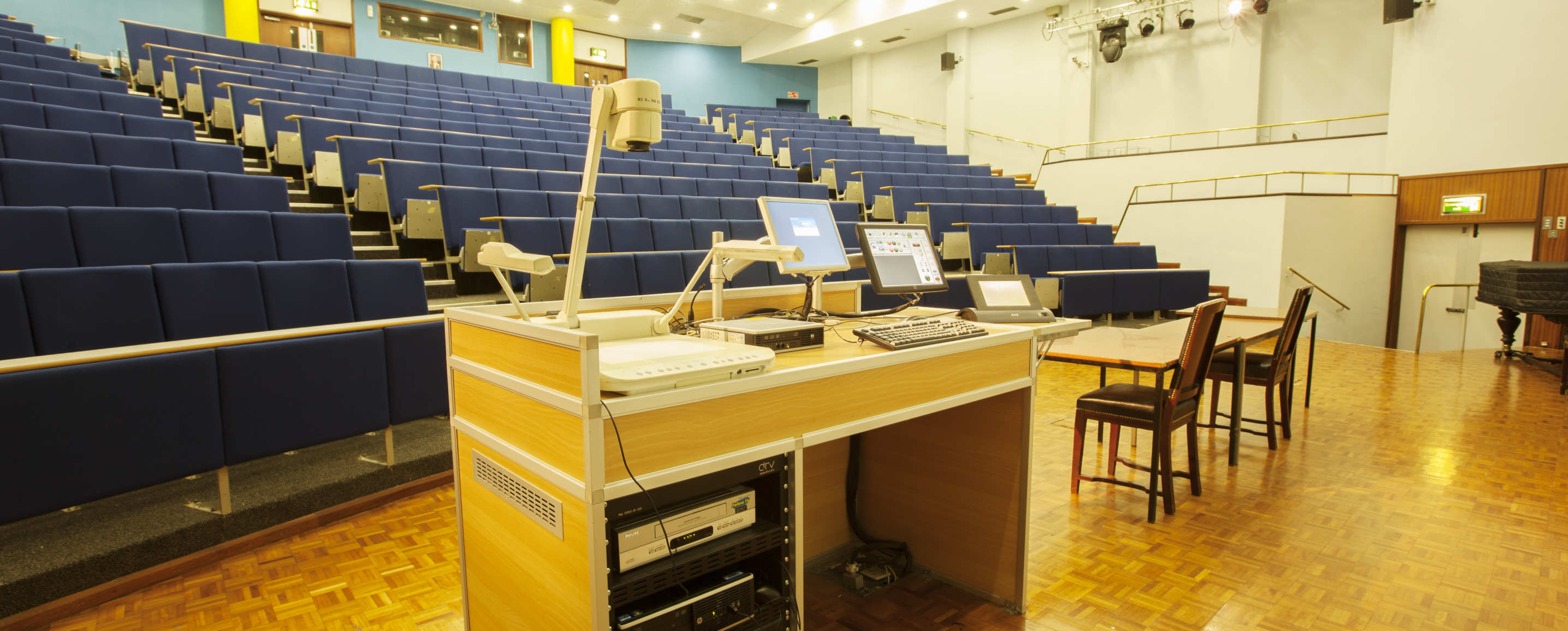
Do you mean things like [1]? That's my university, which was using them 12 years ago while I attended.
It's a high resolution camera pointing straight down at an evenly-lit sheet of ordinary A3 paper.
The "board" (the projector screen) was at a height that everyone could see. The lecturer could write with whatever pens they wanted; could continue from the previous lecture easily; could look forwards at the students rather than having their back to the class. They could show a page from a book, or bits of a robot or circuit board. There was no chalk dust, no marker smell, no dirty boards, no worn-out faint markers, no mistakes with permanent markers.
No-one ever had trouble using it. Most rooms had two projectors, and the touchscreen on the right selected an input for each projector (desktop computer, laptop, DVD player, visualiser etc).
The reason why I wanted to get rid of them was A) The professors would try to fold them down and pull and break the arms and the damage the table. B) They ended up eating a ton of my equipment budget.
For some reason the staff as a whole decided that it was ridiculous the college spent so much on the equipment (Up to $100,000 per large classroom) and revolted on touching anything because they didn't want to be responsible for damaging them. No one on my staff ever threatened anyone nor did the administration. After a few years I left but man the document reader was always the drama point. When I was in the classroom teaching I would go out of my way to use them all the tim.
Fun fact: You can use a dry erase marker to erase the writing of a permanent marker. Assuming a smooth surface, scribble the dry erase marker over the permanent mark and erase.
I figured this out almost 25 years ago when my commander was writing in front of our group on a great big whiteboard I had just spent several days putting pinstriping on. Spent an hour or so using a dry erase marker to remove Sharpie permanent marker. I just tried it on a whim since we had nothing to lose, and was pleasantly surprised at how effective it was.
I hate recommending acetone flippantly. Sure, it will definitely take it off, but I'd bet that for a lot of the whiteboards in use today it would also take off the surface of the whiteboard. I do love acetone but it's my solvent of last resort.
Acetone can also dissolve plastics so you don't want to use to remove sharpie marks except on glass or metals (or possibly wood). For anything else 99% rubbing alcohol works pretty well.
> Expo and Sharpie go next. They are OK to hold and work. But ladies might find their caps a bit challenging to attach/disattach — it really takes some physical effort.
Can't speak to the Sharpies, but Expo caps require a completely uncommentworthy level of effort to remove.
- lady with Expos
I actually prefer markers with a smell, and wholeheartedly disagree with its placement in the "cons" as part of an evaluation criteria. I'm also sure that I am not alone in the enjoyment of the olfactory sensations such markers provide, there are probably dozens of us who feel the same.
Whiteboards are usually used for collaboration, and your coworkers or candidates can't really "opt out" of a smell, so it does make sense to be thoughtful about this (some people have strong aversions)
Thanks for being thoughtful. The smell bothers me so much that I removed the whiteboard from the wall of my office so that visitors couldn't write on it.
I've found that some types and brands of markers smell much better than others. Ironically, I've found the "low odour/non-toxic" inks (mainly alcohol-based) to smell worse than the old toluene/xylene ones.
I HATE chalkboards. I hate the feeling of chalk on my hand, I hate the sound chalk makes on a chalkboard, I hate the chalk dust, I hate the feel of chalkboards themselves.
I am on the opposite side of your spectrum. Serious question: Are there any bad experiences from school that you might associate with chalk and chalk boards?
The only thing I hated was to clean the board, if the sponge was old and stinky. But I always liked the idea that chalk is so simple. There is always this feeling of guilt when I have to use a whiteboard, because of the eco balance.
I have no negative experiences related to chalk boards. But I don't like picking up chalk or touching chalk boards. It's something about the texture that makes me shiver, and it gets on my hands. I can avoid marker on my hands by being careful. Oddly, I greatly prefer hearing someone write on a chalk board. The sound is satisfying to me.
I don’t have any bad memories with chalkboards and school. I was a very good student and enjoyed school.
I always remember feeling this way, even when I was very young. I also hated doing projects with construction paper as a kid, too, because of the texture of the paper.
My favorite thing about the old chalkboards was how my elementary school teachers used a damp chamois to wipe them clean, leaving a perfect, even swathe of green where they wiped.
When I was a kid, I would eat chalk. Even so, I hated the sound, the dust, etc. It has nothing to do with experiences; simply the scraping sound and rough, dry, dusty texture.
I have always had the same uncomfortable reaction to chalkboards. Even pencils are enough to give me goosebumps. I prefer a mechanical pencil (less surface area) or a pen.
I’m the opposite—I love the feeling of chalk on my hands. When I was in grad school, all of the other students tried to keep the chalk off of their hands, but I would take the chalk and rub it on my hands to keep them dry.
I'm fairly certain that there exists some combination of smooth surface and oily enough chalk that is more satisfying than a marker, but I don't know what it is.
As a former professor I was once (only a couple years ago) assigned a classroom with a chalkboard and it was easily the worst semester. They look nice when they are clean, but as soon as you erase something it ends up being unreadable.
Not to mention I would end up covered in chalk at the end of a lecture.
> [Chalkboards] look nice when they are clean, but as soon as you erase something it ends up being unreadable.
Depends on what chalk you use. If you use chalk from chalk (CaCO3), then yes,
it's awful, but if you use chalk from gypsum (CaSO4 hydrate), it's readable on
a wet board and erases well.
The modern green-colored boards are junk. When we had our building renovated, we had all the old slate boards removed and set aside, then reinstalled when the classrooms were done. They're pretty good, but I'm not sure they're made anymore. Some have minor dings, and if the surface has gotten "slippery" it's unusable. But I use nothing but chalk every day - many of my colleagues do as well - and it works great. I usually hold white and yellow chalk, writing with white and highlighting with yellow. I even got a box of big sticks (roughly 6" x 1") of blue "railroad" chalk for additional highlighting. The white is Crayola; I don't recall the brand of the yellow.
A chalkboard pro-tip (suggested by a former colleague years ago) - get some of the foot-long "janitorial" erasers. We have them in every classroom. They erase very quickly, and pretty cleanly as well.
[We also have projectors, document cams, and touchscreens (which I think are Cintiqs) in each room for people who prefer them. I think only one room has a whiteboard/smartboard.]
Again, you don't seem to understand how a landfill works. Waste materials aren't expected to decompose in a landfill, they are compacted and then covered (usually daily) to form a solid, stable, ground (that's why they are called "landfill", and not just "a gigantic pile of rubbish").
Neither the chalk nor the plastic will decompose. And that's intentional.
So one cubic meter of chalk will have the same impact on a landfill as one cubic meter of plastic.
Indeed, but that's undesired; ideally, they should be as inert as possible.
The last thing you want is a landfill collapsing after it was covered and transformed into a park. Often, waterproof polymer liners are used to surround the thrash and prevent water from seeping in and out.
I'm sure this differs from region to region. I'm from a small town that had one landfill site that was in use since decades, and will likely be the only landfill for the town until it runs out of people. For sure quite a bit more low-tech than any metropolis landfill.
A single landfill can have dozens or hundreds of blocks, which are covered and sealed when they become full. So a single landfill can operate for decades while still packing trash into compact blocks.
It [chalk] forms under reasonably deep marine conditions from the gradual accumulation of minute calcite shells (coccoliths) shed from micro-organisms called coccolithophores. [1]
Not that much different from anything we produce. When our active time as a species is over all of our leftovers will remain as a natural resource like everything else.
I'm surprised Velleda doesn't get a single mention. They were* synonymous with whiteboard markers here in Spain. Quality and durability were very high. The smell was strong but I liked it much more than other markers.
I can barely find any information about it before it belonged to Bic. It used to have the brand "Conté".
* and still are, making it even more difficult to find information.
If I had to guess, then maybe something to do with the poor spectrum of the office lights (fluorescent?) that combined with narrow enough spectral response of the camera sensor make the curious effect. I think it is interesting how uniformly cyan the greens are, suggesting maybe that they are based on a similar dye?
Its amazing what HN can do for you. I have never cared about whiteboard markers but just spent 20 minutes reading about the differences and then looking on amazon to see what the price differences are.
Time for some heresy... I just do not understand the obsession with whiteboards that seems to be almost a requirement among programmers and software engineers. I've probably used a whiteboard by choice two or three times in the last ten years. They are terrible; I'd much rather scrawl on a regular sheet of paper, if it's throw-away stuff, or fire up Visio if it's something worth keeping.
Maybe your working environment is different than the ones for many other people. In my experience whiteboards are a huge help when you're brainstorming as a team or you need to communicate an idea or concept to a team. You can't use a sheet of paper when 5-10 people have to look at it and Visio won't make you as flexible in adapting on the fly.
I do however think that as pure software developer you may not make as much use of whiteboards, since you just need the specs and docs to get going, while a requirement engineer or just some more business oriented developer will nearly be forced at one point to draw some ideas or concepts for more than just one peer.
Paper creates mess when you write on it (barring stuff out and erasing pencil are both messy) and afterwards (pile it or throw away, arguably more mess than used markers).
My working assumption is that it makes a certain type of person feel like they're doing Real Academic Stuff, and not just showing off that they can remember syntax without an IDE highlighting their screwups.
(full disclosure: I cannot remember syntax without an IDE highlighting my screwups)
I'm at a workplace where 5 of our walls have been coated into being white boards. We also have a couple of whiteboards on wheels. We don't write code on whiteboards. Instead, we tend to write: data diagrams, UI mock up discussions, project planning, month end acknowledgements, scrum board notes / grids, brain storming (often in meetings), retro columns of good/bad/ugly, announcements to the office like new wifi password or when people are away
Recently we started a new project. I worked out a database schema around the concept of an Entity Component System. You have an Entity table with a primary id column & nothing else, & no other table has a primary key. I scribbled out some tables manually & was able to demonstrate the flexibility this enables to the team
the most important thing is to have a huge stock of whiteboard markers, like 40 of them, and order more when it gets down to 20. much time is wasted searching for good whiteboard markers. bad markers add mental overhead of deciphering faint lines when the material presented is already challenging. chalk has neither problem.
Side point: can I suggest we all throw away whiteboard markers that don't work any more? In my experience, people will just place them back in the tray and keep trying other markers until they find one that works. There is probably someone whose job it is to replace markers, but they would just replace missing ones rather than try every single one to see if they still work. So throwing away dead markers speeds up the process.
JDB's Whiteboard Marker Org Health Metric: The ratio of dead whiteboard markers to working whiteboard markers at an organization is proportional to the health of the workplace culture.
Lots of dried out markers signal a workplace culture where people are too lazy to throw the markers out and replace them or where working markers are not available (possible money issues).
This is a neat idea. I tried to Google it to get the full thesis, but it turned up nothing. I then realized you were quoting yourself in the third person.
This could also be a good test for interviewers: do they toss the dead whiteboard marker in the trash, or put it back in the bin. Though, that could also correlate with self-confidence.
"Woo hoo-hoo, looks who knows so much, huh? Well, it just so happens that your marker here is only mostly-dead. There's a big difference between mostly-dead and all-dead."
"Now, mostly-dead, it's slightly useful. Now, all-dead... well, with all-dead, there's usually only one thing you can do: Join them all together to create a modular lightsaber."
---
I think all-dead markers aren't a big problem, what you have to watch out for are teh mostly-dead ones, which tend to stick around "just in case the good one isn't available."
Got it. Whenever we come across a dead marker, we throw the board away and get a blackboard instead!
About that, could we have a similar article on blackboards and chalk? All I know is that there was much ado [0,1,2] about a certain Japanese manufacturer shutting down a couple of years ago. They, allegedly, made the best chalk and prices on the secondary market rose high after the news came out.
I bought a 20 year supply of that chalk when the demise of Hagoromo was announced, but it turns out that production of that particular product was turned over to a Korean company. I’m still using my legacy supply, so I can’t comment first-hand on old/new comparisons, but I haven’t heard any complaints.
I used to have the pleasure of working in an office with genuine slate blackboards. They were very pleasant to write on (the chalk seemed to need less pressure to make a nice line and they always cleaned up perfectly), but using them was rather dusty.
Leaded solder is actually generally better for your health (just don’t eat it). The unleaded stuff has really nasty flux, and requires much higher temperatures, meaning the fumes are quite a bit worse. Make sure you have very good ventilation when working with unleaded solder.
Completely as an aside to the thread, if you're doing this a lot, try Kester K100 alloy, which is much lower melting than the first generation Pb-free, and behaves a lot more nicely. Not like genuine PbSn, but closer. Techni-Tool has spools of it in different diameters.
I'm very aggressive about discarding any dead whiteboard marker we have at work. We have plenty of money to buy replacement markers, and indeed the copy room has several boxes of them sitting there already. So if a marker is starting to die it goes right in the trash.
It's funny the reaction this gets. Some people seem almost offended that I would destroy office property or something like that. Look, non-refillable markers of the type we use (Expo) are an expendable item. Keeping bad ones around just produces irritation for everyone down the line.
In my experience the others just are relieved that someone puts an end to the miserable writing they are getting used to over time, especially when seeing the new fresh, thick, vibrant lines!
I make it a point to deliberately throw dead/dying markers into the corner when I come across them... otherwise they stay in circulation and annoy everyone constantly.
In the Expo FAQ [1] they suggest to try to bring it back to life by putting the cap back and leaving it vertically positioned, tip down for 24 hours. If it get back to life store it horizontally.
Whenever I find a poorly writing marker somewhere I just throw it away (and replace it with one of the extra spares I keep for these cases).
Everybody is always just relieved and happy with that - no complaints.
Somewhat validates my preferences, as well. Work seems to have both Staples-branded markers and Expo markers. I'll go for the Expo markers every time, primarily because the Staples ones don't erase well at all after being on the board for a few days.
This is a great example of knowledge that should be on a webpage somewhere. I feel the Medium format is really limiting the presentation of the information.
I use a roll of dry erase film for the walls of my lab. They stick to wall with static charge. I can keep pieces of work on the wall for reference for weeks by just moving them to out of reach areas. It does make me look a little mad...
Are there best practices for clearing a whiteboard?
After a day with writing left on the board, I usually have to get a couple folks to help me scrub it down with Lysol wipes and dry that off with paper towels just to get it back to clean.
But if using water requires "grit and patience", and this is something you do regularly, it's reasonable to want to replace "grit and patience" with a solvent.
Trader Joe's Multi-Purpose Cleaner. The green stuff. Spray and wipe the board with a microfiber cloth or any cloth rag. Cleans perfectly and smells great too.


I've mostly used Expo markers and it was weird skimming this because I felt like I had some weird brand allegiance, even though I have no reason to really care much about markers.