Elementary OS has picked a specific niche, and its arguably the best distribution in it.
It has a really well designed and consistent UI experience, and you can't break it.
I think most of you just don't realize how difficult linux is for people who barely understand how to use a Mac or Windows machine.
Furthermore, linux is a world where mainstream distributions still release with horrible UI experiences with numerous typography mistakes, icons of different sizes and grid alignment imbalances everywhere.
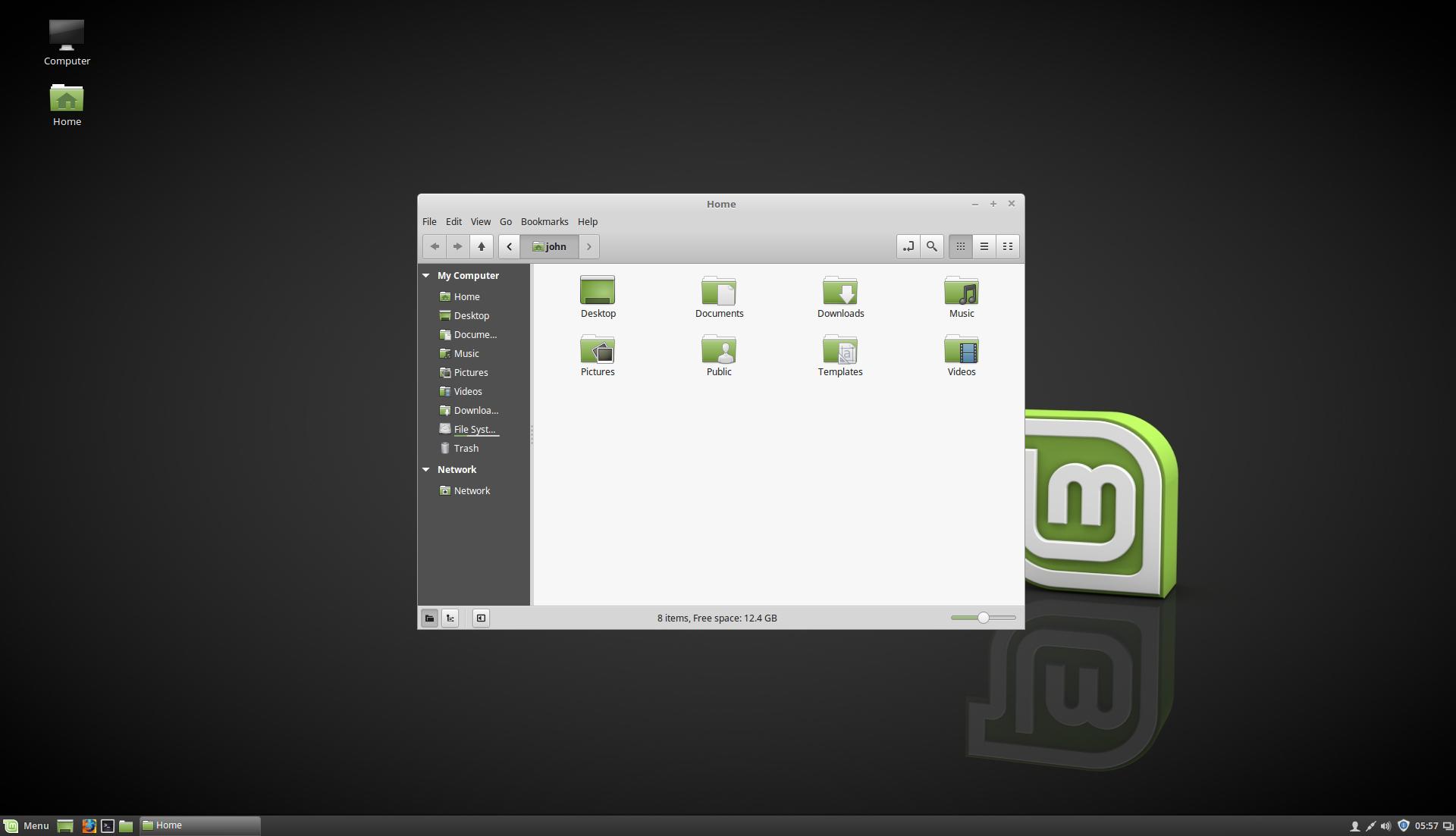
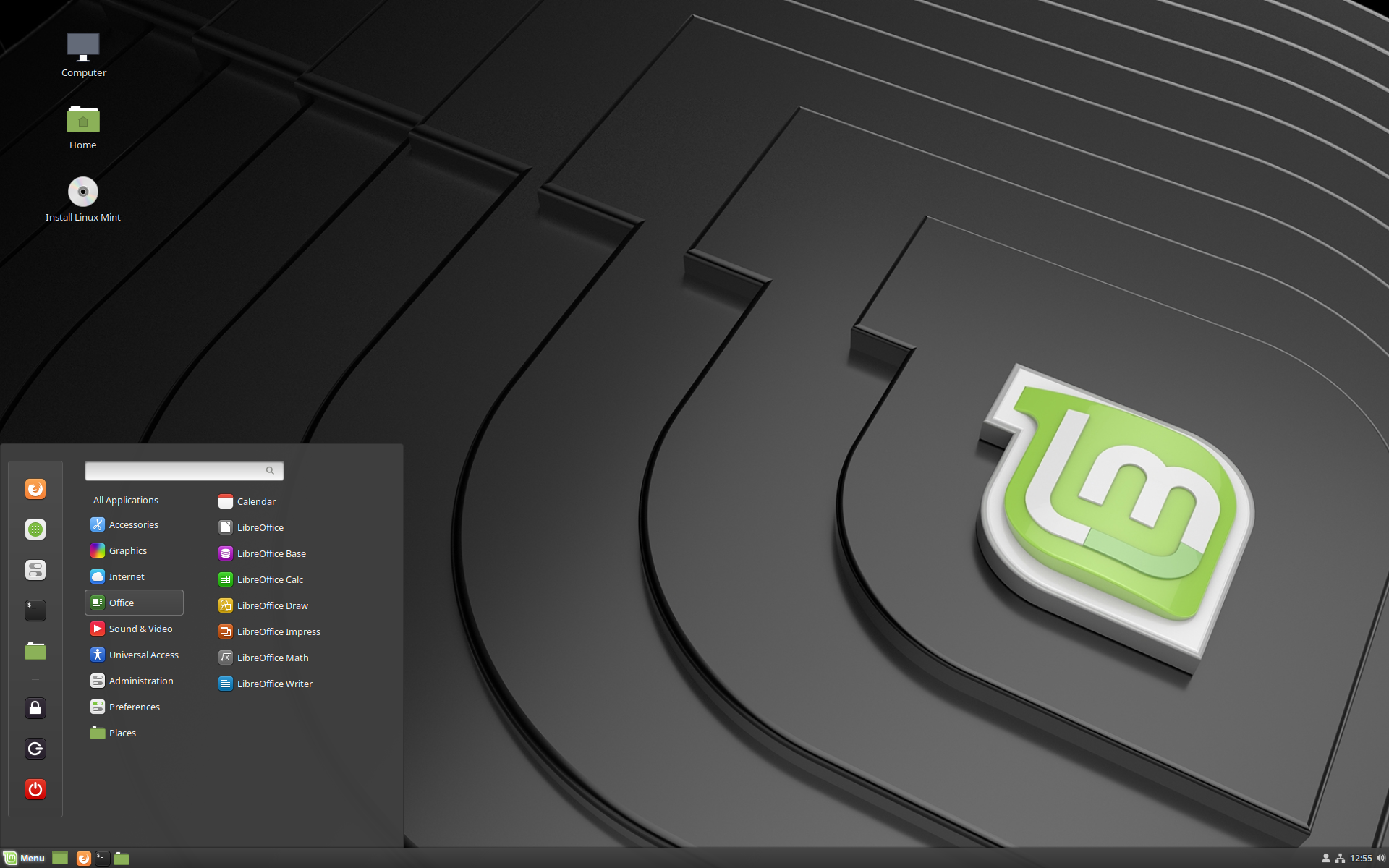
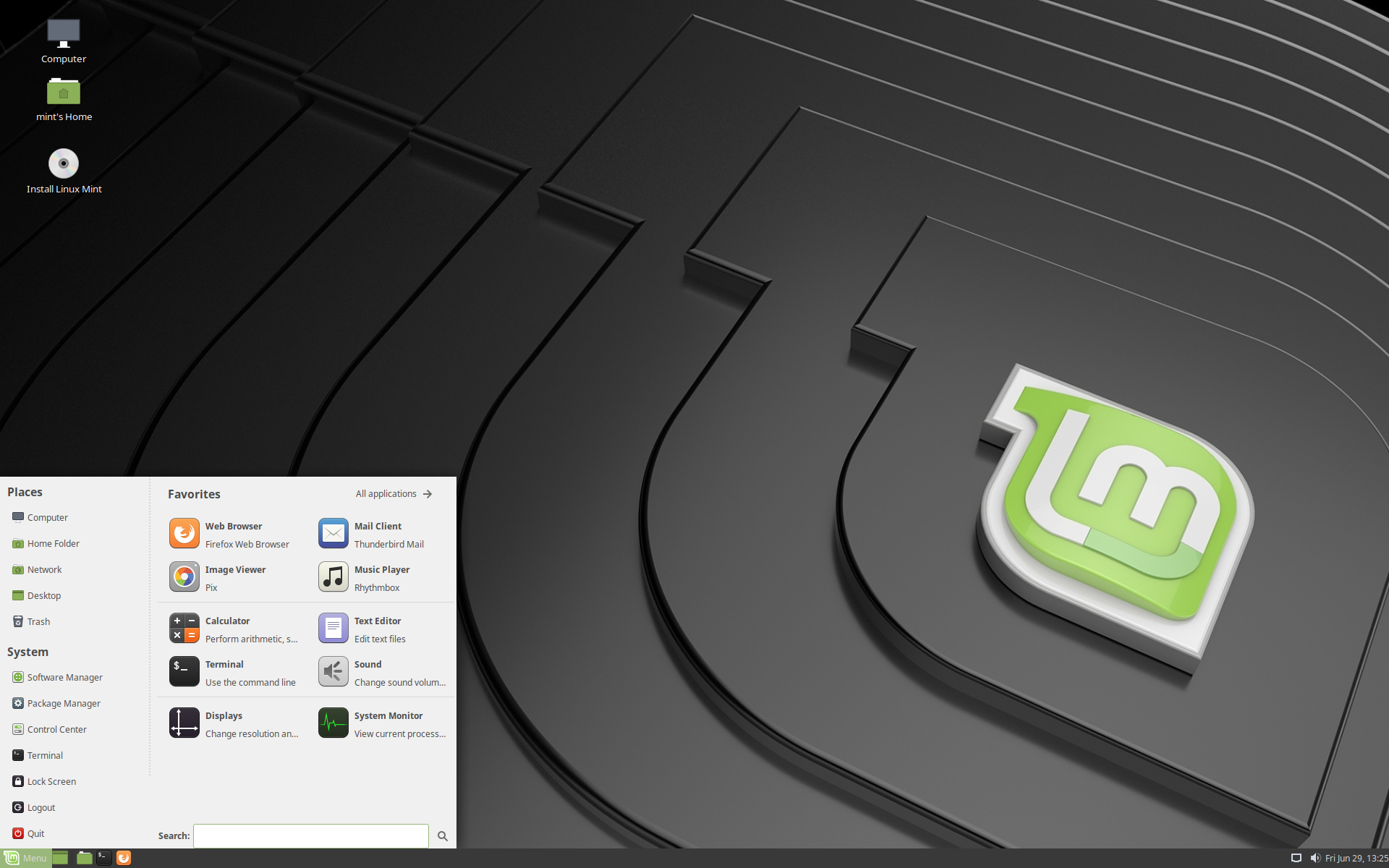
Mint is great, but seriously. Look at that logo render. Even worse, look at the start bar. Every single text and logo has a different height. I mean how do you even do something like that unintentionally?
I am using XFCE right now, and it's great because its much faster than KDE or Gnome on this old laptop. But it sure isn't a pretty UI.
I know a MSc. designer and she claims using my laptop makes her physically sick and dizzy. I don't care as much, but I can see the point. Everything is misaligned, in the start menu, the task bar, the apps. In the window bar the buttons and the minimize arrow aren't the same size. I mean seriously, whoever did this just did not care about Ui.
I don't think ElementaryOS is for everyone. If you have any interest in non-standard repos, recent kernels or doing stuff in commandline, you are just better off elsewhere. I understand their choices, but I don't use it because of how they do the app store, among other things.
But if you just want a computer that runs, looks good and doesn't break if you do X, then I think ElementaryOS is the #1 choice in the Linux world, and we should be thankful that it exists.
I agree. I would be using Linux full time if the experience was not so jarring all the time. Fonts and themes are off, stuff gets jumbled around, things are wildly inconsistent. You end up spending lots of time doing weird hacks to make everything look alright. Even Elementary will break if you move outside the core applications - it cannot be helped in this ecosystem.
When Linux works for you it's so damn great but I cannot fully enjoy a UI that is so inconsistent and ugly so often.
I had a similar perspective as you. I couldn't get past a lot of default design decisions made in many distributions and I didn't want to spend the time tweaking my machine. I installed Pop_OS after seeing the Theano release a couple of weeks ago and basically haven't booted into windows since. As a casual user I would recommend it to anyone who is looking for a similar linux experience as I was.
Dude... I was reading all these comments mega confused. I installed Pop_OS a few months back and it's a million times easier to use than Windows.
From installing applications to changing my background.
One terrible experience I had was when Windows did something to the Linux bootloader and I had to try work out how to fix that, but I can't really blame Linux for that.
Honestly I am so much more productive on Pop than on Windows. I can spend more time actually doing my job and less time manually creating PATH variables for every package I install. As a Web developer Windows is a disaster.
> I can spend more time actually doing my job and less time manually creating PATH variables for every package I install.
I don't see how this is a Windows issue. Windows, just like Linux, provides the capability to update the PATH both per-user and per-computer; many tools use it and work. NodeJS is a popular such tool that adds its bin folder to the PATH. If a tool isn't updating its path, then it's on the tool's installer.
It's an issue because adding a directory to the path just isn't as common of a pattern on Windows. Whether or not it's Microsoft's fault is irrelevant because the fact is still that you have to do it manually a lot of the time.
This is all from my own past experience using video editing, audio editing, and image editing utilities where you usually just get a binary and have to do the legwork yourself.
If you want a no frills experience that just works, give Lubuntu a try. Of all the Linux distros I've used in my company, it's given us almost no headaches. The fonts are crisp, and icons look fine too. Adding monitors has also been painless. And even my least technical users are able to use it (but might need a bit of help now and again). For us, it has actually been a pleasure to use because of its speed.
If you're prepared to give up whizzy animations etc, do try it when you have a bit of spare time.
> If you want a no frills experience that just works, give Lubuntu a try.
I can't speak for the UI but Aptitude vomits broken dependencies every time you have to upgrade your distro. It made me absolutely despise package management (I'm a Windows guy) until I switched to Arch and realized a package manager that is a pleasure to work with is not an inherent oxymoron. Obviously UI is another story but at least this one works.
It's hit and miss. At work I'm running a lubuntu install from 2012 that flawlessly upgraded up until now, sometimes skipping releases, sometimes not, switching desktop environment and window managers a few times along the way. Arch Linux on the other hand always has some minor breakage every now and then. Not with the package manager, but just something about the system being broken.
I do think windows update process is also seriously broken: no info given to users what is being changed, no indication given how long it will take, and often taking many hours to complete, all the while your computer remains unusable; I do not know why Microsoft is not being taken to task for such a shoddy experience.
I'm an old timer. I remember when Microsoft would expire your license - for any of their applications - essentially at random. And they disabled reloads of the software and disabled reinstalls of the entire OS. Even after you paid them again, it was a major hassle - but Mocrosoft didn't care about customer complaints as long as the money was rolling in (Bill Gates at the time said that "I am a businessman" when he dismissed customer concerns.)It was the Federal Government which forced them to stop breaking systems, threatening to pass laws against their practices. That's also about the time that Microsoft hired ALL the major PR firms to change their image (and Bill suddenly appeared everywhere with his charity - which was only giving away a small portion of his wealth, since he hides most of it offshore and away from any accounting.)
10s of billions with plans for more is not small amounts even for Bill. Also he does not hide most of his wealth offshore. He got his wealth from stocks in Microsoft a publicly traded company and that is where most of his wealth is. Many rich people manipulate offshore accounts to hide money but that doesn't really make sense for Bill Gates. Please don't make up things.
I've worked with executives who reported to Bill Gates, reported to Steve Jobs, and reported to Larry Ellison. Guess what? They all use the same set of accountants, and I've gotten descriptions of the way that they all hide money offshore. I've been in many meetings with Steve, and he even spoke of it internally, since it is all legal. At Oracle, our team reported to Larry and I helped reassign monies to offshore entities - and was assured that it was beyond question because "the Big 3 accounting firms are our customers, and we are their customers" and "they all make millions off us". Those monies were then funneled to groups of executives through those companies. So please don't lecture me about your opinions on these things where I have first hand knowledge. It seems like whenever I share something that I know on HN there are people who pop out to explain to me why I'm wrong. I guess I should be used to it - the more insightful the post, the more downvotes.
Not everybody has the same sensitivity to this 'jarring' component of the Linux desktop, I'm well aware. But I think it would really help the desktop forward if the group that is sensitive to it would be catered to more, like Elementary is trying to do.
It means making it more enjoyable to use for everyone, both for those that are more and less sensitive to the aesthetics. Everyone is sensitive to it to some degree.
I don't understand. I run linux on an IBM Thinkpad T40 for the better part of a decade.Then I moved to a Lenovo Thinkpad X1 Carbon which also runs Ubuntu fine.
IN fact installing linux takes at most 20 min and I am done. Drivers and everything are all automatic.
Windows on the other hand can take hours to install from scratch. God forbid you need a service pack or to find a driver that's not easily found anymore.
People have a cognitive dissonance about what it takes to run Linux. It's by far much easier than people lead on. Yes if you need to get into the underneath of things then maybe it becomes more difficult. But I don't think that's been part of the story for average users for a long time.
>> Yes if you need to get into the underneath of things then maybe it becomes more difficult.
IMO Windows is even more difficult when you want to get into underneath of things. Fiddle with registry settings, services and at times deleting AppData\App folder to get something fixed.
At least in case of Linux you get good set of answers to your Google queries, but that is not as good in case of Windows. Also, Windows and the ecosystem of software around it has a huge reliability and performance problem still unsolved. Freezing, crashing are still rampant with Windows 10. If I boot my laptop after a week Windows Update holds me up for at least half an hour. Every update restarts the OS several times.
That's because it's a Thinkpad. The T-series had been the Red Hat company issue laptop for years, and has had boatloads of internal support as a result.
You're right in that a Thinkpad will mostly work out of the box long as you don't want that Nvidia GPU to work, but everyone else? Good luck. My XPS 15 was a lost cause, losing three quarters of it's battery life under Linux and with countless video problems.
And on a desktop? Hah! Roll the dice baby, and keep rolling them with every update, because sooner or later something's going to break. It always does.
That XPS laptop of yours probably isn't great with OS X either. Yet nobody blames Apple for that.
It's a bit of a double standard. If you want a pain free workhorse, go with something that's supported out of the box. Don't buy that Nvidia GPU if you intend to use it for a Linux desktop, where it is unlikely to be of much use anyway (unless you are one of those CAD people in which case you use what your vendor supports).
Personally I settled for Thinkpads many years ago (the T- and X-series, not non-Thinkpads that Lenovo tries to peddle under that brand name) and they haven't given me any trouble yet. Seeing how Windows laptops sometimes doesn't wake from sleep properly makes me suspect that that's not much better tested either. If it boots, ship it.
Nvidia is more trouble only that you need to install the proprietary driver rather than using what comes with the kernel. You also need vdpau if you want hardware decoding of video.
Has Linux changed a lot? Last I tried installing it years ago, I had to find each driver individually and had to get some stubborn ones working. At the time I thought to myself - no average Joe would figure this out, no wonder nobody uses Linux (and by nobody I meant non-devs)
Had less problems with Linux tyan with Windows for about 10 years now.
Installation is quicker.
No bloatware/scareware to uninstall (bundled McAfee etc).
I've spent more time hunting for drivers on Windows than on Linux the 10 last years.
Linux is also significantly faster for some of my workflows (git commits, anything with maven or node).
For me (partially colorblind, never cared much about fonts, everything is an improvement from what I grew up with) I also find certain Linux DEs a lot nicer and easier to use than Windows and even MacOS. Again this is my personal opinion, but I have used Windows for years before I switched to Linux and I've also been enthusiastic about Mac and Apple and have used it for years, I just happen prefer KDE or a well tuned Gnome, Cinnamon or elementary
The downsides? In my experience Linux is slightly less stable. And there exist stuff that is only supported on Windows (an old scanner I have. Although I should add it is not great under Windows either.)
I did. I like VueScan and had a paid license at that time IIRC. But that particular scanner just didn't work which was a shame since it was supposed to be a good with photos and negatives. And as mentioned above it was good on Windows either.
Edit: I actually looked it up now on the VueScan website and here is what is says:
"VueScan is compatible with the <my scanner model> on Windows x86, Windows x64 and Mac OS X."
Absolutely. I've installed Linux on quite a number of computers, and I've yet to run into a missing driver. It just works. Whereas I've also installed Windows on a lot of computers, and that's far more likely to have issues with drivers...
99.9% of drivers are in the kernel nto downloaded from random spots on the internet. The big exception is proprietary gpu drivers which user friendly distros provide packages for in the repos.
The big issue is thus. If you intend to run linux don't buy random hardware and hope it supports linux then complain linux is hard to make work. This is a natural course because people have all sorts of existing hardware and no real desire to buy new. It's also reasonable to try because linux does support a lot of hardware. Try it and if you like how the environment but not how works with your machine buy your next machine with linux in mind.
Linux issues are not about hardware support anymore (well mostly). The guy was talking about ui inconsistencies and overall ugliness of some distros (there are of course exceptions).
I have run exclusively Linux and mostly on laptops for 15 years and it's been about 10 years since I have had problems with packages clashing, except for python pip. (I don't use python though)
It doesn't work well. I use my 2016 MBP with an external monitor and once a month or so I need to hard reboot it after sleeping because it gets confused and won't display anything on the internal screen.
My system76, with vanilla Ubuntu LTS does this perfectly for years. As did my thinkpad before this and the thinkpad before that. Always Ubuntu LTS, without big modifications.
The last time I had 'sleep' issues was with MySQL crashing when it woke up, and it found the os time changed without its internal clock moving forward. IIRC that was over ten years ago.
My main computer for last few years has been an Asus X305 laptop, using Ubuntu 14.04 with the i3 tiling window manager (i.e., there is no desktop). It's best computing environment I've had since I started out on a TRS-80 in 1979.
My i3 setup is not tweaked to auto-sleep on lid close. I'm sure it would have been easy to set up when I installed i3 back in 2015, since the sleep-on-close worked with Ubuntu's Unity desktop. Instead, when I installed i3 I attached sleep function to a hotkey, so before I close the lid I press the hotkey (if I want system to sleep). It is totally not a big deal. The system does autoresume when I open lid, which it also did in Unity environment. But if it didn't that would also not be a big deal.
To me the idea that someone would reject a superior system if it didn't auto-sleep (or auto-resume) on lid close/open is bizarre. I actually prefer to manually control with a hotkey.
My HP Pavilion laptop did this perfectly several years ago, at which point I didn't even know how "lucky" I was that it all worked. Fedora/KDE was the distro.
Can you give us details of laptop and distribution used? Seems hardware is still difficult i.e. trackpads, WiFi, screen resolution, external displays, etc.
I’m on an XPS 13 9370. I like the idea of a Thinkpad but I wanted a laptop that came sold with Linux hence the Dell.
So far hardware support seems pretty good. Not sure my Ubuntu 18.10 install is getting the most out of the GPU but everything works including Bluetooth audio and suspend.
The only issues I have are with the trackpad and the silly keyboard layout.
Trackpad: it’s small, a bit twitchy and not sensitive at the edges when moving inwards but is moving outwards. Driver issue I think.
Keyboard: who thought it was a good idea to split the left and right keys with PgUp and PgDown? Someone who doesn’t touch type would be my bet. The old layout was better.
I think of it as a replacement for an 11” MacBook Air as it’s about the same size but with a 13” screen and a quad-core i7.
Oh also, I got a 4K display and that was a mistake. Raw terminal text is tiny and Gnome currently doesn’t mix monitor resolutions very well. So dual screening with a 1440 monitor is not easy. Ordering again I’d get FHD instead.
I'm running the same laptop with Manjaro and do not have any trackpad issues. So either you're right and there is some driver issue on your system or maybe it's a hardware issue.
Only problem I've encountered so far is that if I unplug my usb/hdmi/ethernet hub while it's in standby then X crashes as soon as I wake it.
Curiously after you asked me this I also tested my trackpad a bit more and it turns out that if I go slowly from off the trackpad onto the trackpad it doesn't register the touch at all.
Not sure if that's some kind of feature intended to prevent accidental touches or a bug. Never noticed it before in my ~7 months of use.
I’m pretty sure it’s a software thing whatever it is because I don’t get the same behaviour in the BIOS pages. The trackpad is pretty choppy there for me but it is sensitive at the edges.
Thinkpads and Dell Latitude series (5xxx something). Currently Thinkpad X220 and L440. Wifi non-free drivers but in most distros, trackpad on L440 seems to recognise multiple finger use for scrolling &c. I admit that I tend to use at most one external display - projector - and that seems to work, I know that the newer hires external displays pose issues around scaling &c
Or I have? Everyone has a different workflow. I've been linux only for 12 years about. I rubbed the license key off my laptop and when I went to re install and I just couldn't afford it. Been using linux ever since.
Why are you comparing Elementary OS with a version of Linux Mint that's at least 5 years old? Especially when they had such a big design shift in the last year or two.
- task icons different size than pinned icons on task bar
- task text vertically aligned too high
- icons stylistically not matched
- system icons unreadable (badly designed, all look the same, don't convey purpose adequately)
- task bar icons on right are vertically all over the place
- task bar mini icons sizing on right is not consistent
- file manager icon sizes all over the place
- file manager bottom bar icons are too low and lack 'breathing room' at bottom compared to top bar with buttons
- file manager top/bottom bar size is mismatched
- horizontal alignment/margin of icons on file manager's top and bottom bars is inconsistent
I could go on and on. People who don't care about these things don't see them. Their vision is not trained for it.
But for a polished experience, even to UI laypersons, they make all the difference.
I am surprised that this is the current state of UI, holy shit. Does any techie care about their UI or “good enough” is where the care ends? You couldn’t pay me to look at that all day.
Making a good UI requires that you have some sort of central list of guiding UI principles, and the wherewithal and authority to enforce it.
That means you need a team to:
- Come up with a detailed set of UI principles and guidelines
- Test that they're sane
- Enforce them across the entire system
Steps one and two require user interface experts, who're probably already getting paid good money to do principle UI design at Apple or Microsoft.
Open source without a backing company will have a particularly hard time with step three, because these projects tend to be communal and at least a little fragmented/disjoint by nature.
I'm inclined to agree. The design is fine, functionally, but there's a certain harmony missing from it and most Linux desktops (even elementaryOS') that makes them feel like using toys rather than proper desktops.
Mind you, I say that as a macOS user (although I did run Linux full-time for a good six years in a past life), and I'm sure many a Linux user will call the macOS interface toy-like to their eyes.
Even though all I see, whether in the old screenshots are the current, are misaligned and seemingly randomly-sized icons, ugly text rendering, and an unclear design vision, I'll still say that the typical defaults still do a pretty good job considering that no Linux distro with mass appeal has yet shipped with a forced theme to make everything just right because, after all, such a distro would never gain mass appeal to start with.
Not with the Linux users who know they're running Linux, at least. I think this is what Ubuntu and elementaryOS are trying to establish: Linuxes for people who don't know what Linux is. That gives some freedom for forcing good, consistent design — but not until there's enough "first party" software to make the rest of the Linux application ecosystem irrelevant.
I don't think that'll happen until Ubuntu or elementaryOS bring about killer apps, something like iLife for Linux. Beautiful, works exceedingly well, and designed for ordinary people rather than fellow developers. A reason to develop for that one distro rather than the whole Linux ecosystem, so far not yet forthcoming.
> makes them feel like using toys rather than proper desktops.
Fascinating. I consider systems like Android, Windoze and MacOS to be like toys for the same reason: superficially beautiful, but not actually a good tool for work.
The problem with MacOS is that much of its refinements for power users are so different from Windows (and Linux desktops modeled after it), that people don't expect they can do things the easy way.
Suppose you have a document open. You want to attach it to an email you started writing. In MacOS, you drag the icon from the window's title bar into the email. That's it. No need to browse to the same thing you already have on the screen, because your desktop is a set of objects you interact with... Not a window manager.
If you want to open a file browser, you can right click the title bar on any document, and it will give you a breadcrumb of all the parent directories.
If you move a document you have open in an application, the application will notice, and save further changes to that new location too when you go back to it and press cmd-S.
These are just a few little things in one aspect of the OS. But macOS is full of them. Like consistent keyboard shortcuts.
Or multi touch gestures that act while you perform them, not just trigger an action after. There is a commitment to making the computer work like it should, instead of making the human adapt.
Meanwhile in Windows land, even the official apps can't figure out how they want to look or how they want to work. And this is what Linux desktops based themselves on.
There are of course signs that Apple has also lost its magic, and that a new generation raised on touch and web and cloud has no idea how this stuff works. The idea that you can e.g. scroll casually through a decade worth of emails with one flick, offline, is a pipe dream in Gmail land. It boggles my mind that basic conveniences like sortable, resizable and customizable tables are now a luxury in many apps.
But there still is an insane amount of design thought that went into macOS, and everyone else is years behind. That's just a fact.
I don't understand how people can't tell the difference between the fake smooth scroll FF has by default and a proper pixel smooth scroll you get with MOZ_USE_XINPUT2=1. The fake one scrolls line by line and smooths the transition, but still won't react to minor finger movements, there is a threshold and it feels fake as f*. Don't know why it's default on linux, but hey linux folk probably don't have high expectations anyway; they are probably fighting to keep it that way.
This is news to me! It feels good when reading a page but stops inertia working, I can't do a quick flick to jump to the top/bottom of a page with it enabled. Toggling the Firefox option for smooth scrolling doesn't help.
I've been looking for blog posts and content about macOS UX design and testing. Because it really is stellar. I'm curious what kind of stuff the elementaryOS team is reading that informs their design choices. Any ideas where to look?
Bit late replying, but I think the WWDC videos, especially old ones, relating to user interface design, what's new in Cocoa (not Cocoa Touch), and accessibility are great places to see macOS' interface decisions explained and justified.
Trouble is, at the end of the day nothing is more powerful or more efficient than the command line and once you've accepted that fact (which more and more people are there days) you might as well just use Linux.
Why choose between CLI and GUI if you can have both? I have a shell on my osx and use it for a large majority of my work, but I also have decent CLI <-> GUI interaction (pbcopy, mdfind, screencapture, open, osascript, ...), and the most consistent, easy to use but yet powerful GUI.
And two things OSX is absolutely unmatched in: spotlight and preview.
Of course it's a bad take, just another in a long line of people who think their own personal workflow is the only one anybody would ever need.
Even if the poster was kidding, it's symptomatic of the Linux ecosystem — never strive for better, what we've had for years is just fine, and be sure to mockingly put down any idea that dares to lift things up.
I think you are quibbling about things that 99.9% of people quite frankly don't care about. A substantial group will leave everything default and for most of the rest the fact that you can change the colorscheme/style/background is sufficient.
It's somewhat like a wine aficionado discussing the 7 delicate flavors that or an audiophile considering the virtue of using a slightly more expensive cable.
So when I ask how it makes a difference I wasn't looking for a trivial redefinition of the word I was asking rather what difference it makes. Do you believe more people will use it if its pretty? Do you believe more people will enjoy using it if its pretty? To what degree and why?
So everyone with an eye for design doesn't do work?
Anyways anyone that has trained their eyes (which allows extremely technical visual skills to be developed, not just "art") to actually see what their eye is transmitting to them and not just interpreting it will immediately notice these kinds of things. It's like saying to them stop looking at letters if you're trying to read.
I'm a trained musician but I'm not going to complain when my plumber doesn't quite sing in tune. It just doesn't matter. I have a pretty well-trained eye for typography too, but when the choice is between systems that are free, fast, privacy-respecting, and functional and systems that are pretty but completely out of my control I'm never going to choose the latter.
I'm not sure what posts like yours are trying to achieve. Are you just complaining about how nobody has managed to make something that is free and perfectly well "designed"? If so, why not try to do something about it rather than complain? You'd probably make a lot of people happy if you did. To me it seems more like you are saying that your priorities are with superficial design rather than anything actually relating to work, hence my original comment.
i agree with you about the plumber. it doesn't matter. but imo that example is not really an analogous situation. what if your instrument was always out of tune? or if a member of your ensemble couldn't keep time? i bet that would prevent you from making a record or being productive otherwise as a musician.
as a full time developer and someone who does notice these little things, i care a lot about good design and visual polish. in order to get my work done, i have to use these interfaces for hours on end, after all. if it doesn't particularly bother you, hey that's great. even if not intentional, this and your original comment come off as a bit disparaging, so that reply isn't terribly off base.
Linux desktop is more like an unpolished trumpet, with a few dents. After a small amount of tuning, it plays the perfect note every time. You can take it apart, and adjust the internals. If you wish, you can turn it into any other type of instrument.
Then you have macOS, perfectly round, so shiny you can see your face, including the insides... the nicest looking trumpet money can buy. But it comes in one piece, only the shop can re-tune it, and has only one button, and sounds exactly the same as the other apple trumpets.
And Windows... average looking a trumpet, which everyone recognises, operated like a kazoo. Sometimes it plays the wrong note, or stop during a performance. You can retune it, but it will de-tune itself randomly. Sometimes it will recommend the shop's other instruments, and report back to the shop what you've been playing. But the shop now wants to rent studios, instead.
I genuinely take that as a compliment. I wouldn't be caught dead using a monstrosity like, I don't know, windows 10 (or even the hideous interfaces of Google products) just because it's ""modern"".
As someone who has actually used elementaryOS for some time(both previous versions about 6 months each) I have to disagree with your "doesn't break if you do X" claim.
You can break elementaryOS' nice graphics just by putting it into sleep mode and waking it up again - say hi to at least 2 different kinds of graphics glitches and possibly a randomly appearing bug in the file manager.
And I'm not sure if it was a bug or a feature, but last time I used eOS I didn't enjoy the default video player's "fullscreen mode" in which it still didn't overlap the lower part of the desktop with the dock.
But keep in mind I haven't tried the most recent version which came out not long ago, I'd be surprised if some of the problems weren't fixed yet.
I think elementaryOS is on the right track, but it's definitely not more stable than the average distro, including the ones with rolling-release update models.
> You can break elementaryOS' nice graphics just by putting it into sleep mode and waking it up again...
Definitely this, unfortunately. elementaryOS 0.4.1 Loki was fairly stable for me, but then I installed 5 / Juno, and now the machine often locks up with a completely black screen, except for a handful of items visible where the top menu bar usually is. It seems to occur when it wakes from a sleep mode (though this is on a Parallels virtual machine). The only solution is to reboot and lose whatever you were working on.
elementaryOS is great and the first Linux I've really enjoyed using (I'm normally a Mac user, the kind who uses software by Panic). But it still has so far to go. It's also worrying that you can't upgrade from 0.4.1 to 5. Even with all of Microsoft's disasters with updates, they've still managed to let you upgrade from one version of Windows to the next one.
I’ve found the opposite to be true. I’ve been trying to use Elementary OS for years but it has always turned out to be unusable until 5 which I’ve been using for a couple weeks with only very minor complaints.
Used Loki for 6+ months here, In my case the main problem was that it took too much time to shutdown the system. I don't know if that's an elementary specific issue, but I've noticed it on multiple systems with the OS. Again, I've seen hardisk issues propping up while using elementary. It was really easy to use but then it had issues.
I've been using the Kde desktop (Kubuntu) for about 6 months now after switching from Windows 10 for Ruby development.
The UI is damn good. Way more polished and consistent than what passes for the three way mess that the Windows 10 UI is these days. Straight out of the box you get a polished, Windows 7 type layout, complete with a start menu better than Windows, consistent fonts and smooth animations. And unlike every other desktop, the dark theme actually works as advertised.
The only time I go back to windows is when is need Corel Draw for my graphics design work. And I immediately feel the difference in polish and consistency. If I could get without Corel Draw, I would definitely banish Windows from my laptop.
That being said, GNOME is a clusterfk. It's what we all accused Windows 8 of beign. A wannabe tablet desktop in a world without any actual tablets. What is possessing them to remove functionality available in ALL other desktops? When this is pointed out they point to extensions written in a leaky javascript implementation, which can be broken the next gnome update because why not?
If you want a modern desktop on Linux, Kde is what you want these days.
Imho, gnome is quite nice. I think I'm in the minority maybe but I would be pretty sad if gnome went away one day (or had another memory leak/slowdown issue)
The mostly-silent majority. KDE has some nice features but under the shiny screenshot it's still a disorganised and inconsistent jumble.
GNOME gets out of your way and lets you get on with your work. Customising every last detail isn't necessary to be productive, and if it is a DE isn't for you anyway.
You should really try out KDE Neon, it is by far the best and most consistent DE available for Linux, and is so far ahead of Win10 it's sort of embarrassing for MS.
The default settings are very sensible, I only change one or two things myself, most noticably focus follows mouse, which requires a silly gconf tweak and is considered "broken" by the devs.
> KDE has some nice features but under the shiny screenshot it's still a disorganised and inconsistent jumble.
I'm not too deep into GNOME's architecture, but I don't see that at all.
KDE is the KF5 Frameworks on top of Qt on top of QML and C++. Desktop widgets, panel widgets etc. are all architecturally the same thing, "Plasmoids". Settings screens are all isolated and also architecturally the same thing, "KCMs".
On the other hand, GNOME is GTK on top of GObject on top of C, Vala, JS, Python, Rust and a few other languages still, because they still haven't really decided what they want to go with. The extensions are written in JavaScript, but run in the same process as the entire Shell, meaning that if anything locks up or just takes longer in an extension, then your Shell does the same.
I don't want to argue that GNOME is horrible in this aspect, but in my opinion KDE is better at it.
Yes, I agree that GNOME under the hood isn't the most sensible or consistent of designs. But 'over the hood' that's all hidden away, if you use it as-intended it works just fine. KDE/Plasma has a much better design and is built on more stable technologies, but there are just too many options and too much configuration.
Also Gnome is keyboard driven to a large degree. I used dwm/dmenu for quite a time then went back to the default DE which was Gnome and it felt similar (small screen by the way so not too many tiled windows in dwm)
Open Tweaks, "Keyboard & Mouse" tab, enable Emacs Input. Now you get Ctrl-W in text fields and other shortcuts from Emacs. Doesn't quite work in Firefox though, which has a lot of conflicting shortcuts.
I have done exactly that... except it doesn’t work in Firefox, as you mentioned. There Ctrl-w always closes tabs, except in pinned tabs when it jumps to another tab without closing.
It does work as expected in Chrom(e|ium) and most other apps.
In Chrome you can still close tabs with ctrl-w, you just have tab out of a text box first.
I’m aware of that but I don’t really like it. I’d much prefer the shorter movement of Ctrl-w.
It puts less stress on my right wrist, which suffers RSI a bit and is consistent with terminals on every (unix-like) OS.
On macOS I get this behaviour via Karabiner Elements; on Gnome I mostly get it via Tweaks. Except in Firefox, as mentioned, where I put up with ctrl-backspace and curse.
I am with you. I actually love gnome a little bit. To be fair, changed theme and two extension are essential for me. It's so awesome once you got accustomed to the shortcuts and UI idea. Typing everywhere, I can pretty much never leave the keyboard if I want to, BUT if I am lazy I can also never use the keyboard. Honestly there are so many good ideas there, I wish they would rework the core and default aesthetics, to achieve real greatness.
KDE on the other hand is somewhat fine, if you don't touch anything. Customizing opens hell. UI Inconsistencies, weird bugs, stuff drawn off screen, almost guaranteed... Horrible IMO.
I'm on KDE Neon now, after having used Mint for a while. KDE is simply a joy to use. Everything works, and the visuals are consistent and well-proportioned.
If you haven't noticed 90% of people are running windows which is quite frankly ugly by default. Further it was pretty hard to get people to give up fisher price windows xp. It's probably accurate to say that most people aren't terribly concerned with aesthetics as much as functionality.
That said steps to achieve a relatively consistent look.
Open your configuration app and configure your gtk theme to something that looks nice. If you don't have one you can install lxappearance which is from lxde and has minimal deps so you can easily install it in a minimal environment.
Install qt4-config if you have any old qt4 apps. Set it to use gtk+ style for qt4 aps.
If you use newer qt apps install qt5ct and select gtk style.
In 5 minutes you will have a relatively consistent look.
A few notes.
- Its increasingly likely you have zero qt4 apps and could probably skip that part and not care
- qt5ct actually lets you set a custom stylesheet and or colors if you want more manual control but this is hardly required.
- firefox is really stupid about drawing website elements with dark text on a dark background when run with a dark theme. You can run individual gtk apps with a different theme like so
env GTK_THEME=Adwaita:light firefox
you can copy your firefox desktop file to ~/.local/share/applications and edit the command to ensure that this works properly automatically.
Chrome somehow figures out that a dark theme doesn't mean you want to draw webpages differently so I consider this a firefox bug that mozilla wontfix.
In a perfect world someone would create a single useful gui to configure qt4 plasma gtk2 gtk3 apps which only had settings that would effect all of the above consistently and required no tweaking.
In reality land most people don't care including those shipping distros can probably ship with or arrange a reasonable look with minimal fuss.
> it was pretty hard to get people to give up fisher price windows xp
It was a decade ago. The world has moved on since then and the expectations are much higher nowadays. For example, see software landing pages today vs. 2008. Even modern Instagram photos look like they were professionally edited for a magazine.
I'm starting to think the whole is plotting this weird conspiracy against me... I think linux is very comfortable, I think it looks pretty, it gives me power to make it prettier. Windows comes with fucking ads in the UI how is that any prettier? OSX is supposed to be polished, but I constantly experience problems like my screen randomly flickers, it forces me to login twice every time, sometimes all windows suddenly lose focus and the only way to come to a good state is to go to a non full screen window... I don't know man, having used all three I'll take linux any day and it's because it's prettier, UI is more functional, and the system actually doesn't have handcuffs.
I'm in the same boat - I used a Mac at my last job for ~4 years, and if given the choice I'll choose linux hands down. I find it more comfortable, but maybe that's just because I'm used to it?
I don't have a Mac, but I've used one for non-trivial amounts of time. I don't think it's significantly prettier than my Ubuntu + Gnome setup, but I'd agree there's a more consistent feel in the UI.
Weird argument. Because I have given Linux systems to the elderly before. People with little to no experience with computers. Guess what they were all fine.
My mother was a long time windows user. Kept getting viruses. She was converted to Ubuntu and has used it for over a decade now without issue.
Linux is far easier for people than you think. My mother is a senior citizen now and this is her second computer.
The UI concerns you bring up are just silly, They are about the same as you buying a new hammer and it having an inconsistent wood grain or a metal burr.
What you call silly others might call "fit and finish". Or simply "doing an adequate job".
With a kitchen if there were a few mm difference in height between wall unit cupboards, or wall sockets, it would not affect your use of the kitchen one iota. Yet everyone would likely notice such an amateur and slapdash job and employ a different contractor for their own home. Same with the difference between a table made by assembling a flat pack and something craftsman made.
There's a reason Apple put so much score into the user interface guides and specifications for icons, interface and such.
Yeah I notice the little touches such as Bluetooth on/off toggling. On the Mac when I reboot it’s in the same state as I left it. On Ubuntu it resets to on unless I edit a text file.
Over all that may not be a big thing but it does illustrate one of the rough edges.
(macOS has its own warts too of course. Such as not having keyboard shortcuts for split view or weird little pop up windows you can’t close without a mouse.)
I find Ubuntus and for that matter most DE font system superior to OSX's. Apple touts accessibility but on OSX you can't even change the font size system wide. You literally have to go into each and every app and change it specifically. Let's hope that the app supports it. Many don't.
On Ubuntu you can just change the font size and it changes everywhere without having to decrease your resolution so you take advantage of what your hardware provides.
Yeah same experience here. Installed gentoo on our home computer for my mom and dad and once i showed them how to open Firefox, they were happy as clams. The only issue was when my dad wanted to install tax software
Basically, they'll be okay as long as they only use the browser.
When they need to edit a MS Excel file, or use their digital signature (mandatory for companies in my country), or use some accounting software... or anything like this, you understand that Linux isn't as ready for the mainstream desktop as we think it is.
Some are compatible, some aren't. And even if yours is technically compatible, if you run into problems with the website or program where you need to use it -- and you will -- you're on your own.
My dad was happy with OpenOffice.org Calc (now LibreOffice), and he loved excel. But, yeah, obviously Linux doesn't run accounting or signature software that is not built for it. That's not a technical issue with Linux of course (see Android), but a lack of proprietary software that runs on GNU/Linux.
I installed it for them. It was more than a decade ago, and I chose gentoo because it was one of the first distributions to support amd64. Chose gentoo over debian because it had newer kernel versions that I needed for that particular computer.
We just finished a project in rural communities in Panama and gave laptops (ThinkPad 13) with Mint 19 Cinnamon to people with very little experience with computers. However, we kept Windows 10 in one of the computers and guess what, that's the only one that gave us trouble, when the user got all scared and confused with the Office trial version telling them they needed to pay. All the other users had no major problems at all with the user experience.
Oh, so the same reason people are paying for iPhones, BMWs and haircuts? Look, you wanted less hair, you got it! Ppppppplease... people pay for details and the products and brands that deliver them are obviously doing something right.
Desktop Linux isn't really that difficult. It could be easier. The thing is that the people who want "really easy" probably aren't going to bother installing any new OS. Microsoft and Apple work hard, not just to make their OS easy but update their OS to whatever random hardware or software thing has come out (games and printers, say). Not being able to do "this one thing" is the main complaint I hear from friends who randomly wind-up with desktop Linux from computer recyclers mostly (it's my complaint too at times).
Also, elementary OS looks a lot like the "gnome shell" and latest Ubuntu thing. Mint/Mate has become the main Linux shell by staying with Window 7-like-shell. The newer shells are easier but less powerful. So it would win for those who want easy. Except those who want easy will do nothing and stay with MS/Apple. After they are "free" too or seem like that to the average person.
In what way has Mate become the main Linux shell? It’s not the DE of choice for the most popular distributions so it likely doesn’t have a lot of exposure among Linux environments.
Just curious if noticing or more so, even being bothered by them is the norm?
Example Mint, the font heights I wouldn't have noticed and definitely something I would not be consciously aware of if I used it. And I still don't know what's wrong with the render beyond it looking at bit outdated.
Am I the odd person here or is it a vocal minority that have issues with it?
You are part of the vocal, online minority that doesn't look at Mint and cringe because it looks so amateur and dated.
Most people intuitively have a sense of whether the software they're using is elegant, polished, and user-friendly without necessarily being able to articulate that the "font heights", etc. are the problem.
By a common user's standards, Mint looks amateur and janky compared to Windows 10 and Mac OS.
Looks amateur and dated right? The thing is, 15 years ago people like you shat all over linux because it didn't look shiny and pretty like OS X. 15 years ago that OS X screenshot was the pinnacle of elegance and polish. If your UI didn't look like that, you were amateur and dated and janky. What Linux desktops needed was shiny buttons and genie effects to be taken seriously.
Now that there are a bunch of perfectly usable linux desktops you need to move the goalposts again because it doesn't meet "common user standards". Meanwhile, you could put a "common user" in front of OS X 10.1 or windows XP and they would get along just fine, just like they did 15 years ago.
That UI fit with the whole experience of the Macintosh of the time. Notice the fuzziness - the low res CRTs were all fuzzy at the time the UI played into it. The crazy colours perfectly fit the branding of the machine it ran on. Note that there was no subpixel spacing in the era of CRTs.
The top menu bar is clearly too short to hold its contents but hey even Apple makes mistakes.
10.1 and even the late and great 10.6 were products of their time. The world has moved on, and Linux does not handle itself well in an era of 4K high DPI monitors.
You are part of the vocal, online minority that doesn't look at Mint and cringe because it looks so amateur and dated.
Sure, and clearly you are part of the other vocal, minority, that complains bitterly about this. The majority is silent. The majority doesn't care about Linux or Windows but keeps their Windows install because that is the ultimate easy (maybe MacOs people care). Someone in majority could probably be trained/persuaded to agree with either perspective if someone took the time to point it out one or another of these to them and if they had any incentive to look.
Linux is usable. Linux isn't pretty by graphic designer's view of pretty. That lack of prettiness probably doesn't have that much to do with desktop Linux not being adopted widely. At least in the sense that the only way that kind adoption is going to happen is if a wider percentage of people have some actual material incentive to adopt.
The majority does care though. Every day you'll hear someone complaining about how frustrating it is to figure out how to do something on their computer that should be simpler, like finding a certain program or file. They're complaining about UI. They don't go on hacker news and rant about it, but that doesn't mean they don't care about good UI design.
Most Linux desktops are not visually consistent. Their UI isn't designed intuitively. You put that in front of the average person, and they will have trouble using it.
>Most people intuitively have a sense of whether the software they're using is elegant, polished, and user-friendly
There is a high level of subjectivity in all these, especially user-friendliness. Polish, you can quantify with stuff like alignment, consistency etc., but for user-friendliness, I find most modern UIs, including elementary or gnome, to be quite hostile. You can stare at pretty icons and parallel and perpendicular lines all day, but how do you get shit done ? That's what most modern designs miss. And it's not just these poor OSS projects. Look at all the random apple inspired navigation changes that google added to their basic navigation in pixel 3, which you can't even change although the old code exists in aosp. TLDR: user friendliness is very hard to get right.
Sorry, it still looks like the dark theme for Windows XP that I used 15 years ago. Also, note the clutter and alignment issues in the bottom left corner.
I agree. It's rough around the edges, but I only need to look at it for a few seconds when changing windows, for example. Other than that, it stays out of my way and doesn't tire me with animations which stopped looking cool the by 4th time.
I've tried moving away from the traditional desktop (yes, for the sake of it), but I just can't. And cinnamon seems to suck the least.
You are part of the vocal, online minority that doesn't look at Mint and cringe because it looks so amateur and dated.
I have used macOS for 10 years[1] and I always had the same feeling about Windows 7. The icons looked ugly, apps were all over the place UI-wise. The directory structure is impenetrable for a non-expert. Etc. With Windows 8 and 10 things are even worse, discoverability is hard in the super-flat new interface, Win32 applications or universal apps look out of place (depending which one you like), and even for Windows' own settings, things are scattered between Win32 and universal applications.
The Windows UI mess doesn't drive Windows users away, so I do not see why some misaligned icons or text would drive users away from e.g. Mint. There are other reasons why people do not use Linux, but I don't think this is it (outside some niche groups, such as designers). Death by a thousand paper cuts is why most people will stop using Linux after trying.
[1] Though I am now using Linux again the majority of my time.
As a person who chooses Mint MATE everywhere I have that option: no, I don't have this bullshit complaints. The whole point of OS is to let user start his favorite programs and get out of the way. That is what MATE get right and most other systems get wrong.
I also don't see any real problems with icons or fonts or anything but maybe it's just because I adapted to them. Without hardware problems overall experience with MATE is far superior than with Windows or Mac OS.
So one thing I don't understand is why window managers in linux never seem to have ways to let the user tweak the UI? I mean it's something to add, but I find it odd that no one has thought to add it?
Or is it just a feature hidden somewhere?
I've thought on several occasions that I'd be pretty happy if I could just hijack how the UI layer was rendering some program, tweak text sizes, adjust colours and make that a user specific choice that can be done at the OS level. It would make linux far more accessible in my opinion and give the average user a way to fix issues that as you say may make some feel physically sick and dizzy.
Users could then start sharing fixes and tweaks and devs who are interested could pull in these settings into the main program, the work could be shared and these OS's could get better! =)...
It just seems such a prefect example of give power to your user and everything is editable, many people don't have time to dig into the internals of everything, but they'd be happy using a relatively straightforward tool (or at least one with tons of tutorials) to adjust the programs they use to their liking, and I'd wager they'd be pretty happy sharing the tweaks they made too.
Maybe this already exists? If it does please tell me! It's the one major thing that keeps me coming back to macs/windows machines. I find it pretty funny, most of my linux time is lived in servers and when I was a teen I ran ubuntu desktop for some time, but I just couldn't deal with it after a while. Which is a shame in my book, and I could certainly see something like this being in the community spirit of linux.
PS: If anyone is thinking of doing this and want's to talk to me for some reason, I'll be happy to discuss this further =)...
The look & feel of applications can be changed by using GTK or Qt themes and there’s entire websites dedicated to sharing these.
Isn’t this what you describe?
Side note: Window managers are only responsible for the window decoration, i.e. the frame around the contents and the title bar. Not a lot to tweak there, but most window managers do actually allow changing pretty much every aspect of it. GTK/Qt are toolkits, not window managers.
Right, but that seems to be something that requires the user specifically to be a dev? And to know how to compile each program they need to tweak?
I'm thinking of something where say I load up a program UI Tweak, I don't need to know anything about the software I'm working with, I just select the element that I want to adjust, the label sizes for text in the dialogue, or the colour of the text by clicking on it.
Think Autohotkey's spy tool[0], when using Autohotkey with the spy tool, I just select the elements that I want to manipulate and then choose what I want to do with them. In my opinion, this significantly lowers barriers to entry for users wanting to change things to suit them. Then the developers of such software can work out ways of making apps work better with such a system. Maybe linux based UI apps need to improve their api so that they can take instructions to adjust it? Or they just add some simple hooks the UI Tweak can understand and use to adjust behaviour?
I don't know what users will want, but allowing users to describe what they want, letting them know it's possible, and giving them an avenue to share and communicate their needs can only help improve the quality of the software, as well as provide an avenue for devs that care about user experience to have a channel to understand what needs might not be being met by existing offerings.
Agree, and this is why I don't recommend Linux to anyone who isn't a techie. It's just plain ugly and that's the first thing people notice. There have been improvements and exceptions here and there, but the UI sector seems so volatile that just because current GNOME or KDE look consistent and usable, I can't expect the next iteration to be good as well.
Since starting to primarily use Linux in 2008, I've consecutively moved to simpler and simpler DEs, to the point where I'm currently running i3 everywhere for about 4 years. Less ui = fewer things to fuck up.
There is a plethora of Linux based distros out there. I recently bought a Lenovo L480 with DOS. I ended up trying out Elementary since I liked the UX. A day or two after using it, it already started hanging on me and wouldn't boot. There was this super weird bug as well because of which the first time I opened Google Chrome, the close button on top right would freeze and I'd have to close that and reopen Chrome. I hated being part of these "edge cases".
I then ended up using Ubuntu and that has been stable as rock. No surprises, rock solid. I used it back in college.
There are very few Linux based distros that are battle tested, Ubuntu is certainly one of them, on account of being backed by Canonical, which actually gets paid to develop the OS unlike most other linux based distros that have to work on "donations" or "foundation money".
Anyway, I'm happy with Ubuntu for my needs, I don't have super fancy needs and I don't want Arch level of customization. All I want something that works out of box and has a UNIX like CLI (I'm a programmer).
Another thing that sucks about Linux based OS's is that the power management is just repugnant. There are so many OS's out there and so many laptop models that I understand it is a herculean task to get maximum performance on every possible laptop.
Which is why, I decided that my next laptop is going to be an MBP, the Retina display is mind blowing, has a UNIX like interface, great battery life, a bit pricey but when it comes to being more productive as a programmer, I'm willing to pay more.
It seems your designer friend has occupational injury, eg she is trained to spot those issues, but it can give problems in real life, where not everything is perfectly aligned.
I recently installed kubuntu with the latest version of KDE Plasma and was blown away. This is by far the most polished linux experience I've ever had. My girlfriend who is definitely not a linux user forced me to install it on her laptop too after seeing it.
Everything "just works", even more than macOS IMO, and you can configure everything to your hearts content. Animations are smooth, UI is very polished and consistent. Definitely recommend checking it out.
I've been using Linux for 15 years, and I definitely agree with these points. I'm not particularly sensitive to the UI clunkiness, but I do try and use applications that use the same GUI toolkit to have some basic consistency. It definitely shows when you compare it to even mediocre macOS apps.
At this point though, most of my professional life is spent in a terminal emulator (alacritty), Firefox, Visual Studio Code, Android Studio, qpdfview, and pcmanfm-qt. I also switched to a tiling wm (i3) with window decorations shut off, so basically my consistency comes from being super simplistic (graphically atleast).
Been toying with the idea of picking up a few design books and taking a hack at writing a GUI toolkit using Rust with something like the react/redux ideology of GUI app development and seeing where that goes (would be for Wayland). Would try the flux model because unidirectional data flow maps very nicely to Rust as I don't want to deal with any refcell shenanigans.
That’d be very cool! There’s a psuedo-stealth project to build a GUI toolkit using vaguely ECS principles in Rust for similar reasons. I’d love to see how a flux approach works too!
I've gotten around this by minimizing my usage of graphical applications; I use Firefox, a PDF reader, (recently) Zotero to manage papers, and finally a tiling window manager to reduce graphical elements. Everything else happens in the terminal. Linux just isn't ready for GUI apps :(
I try every year I try a few different Linux distros and each time I notice a tonne of UI and UX issues, and leave again (I mean, even the basic things like being able to resize windows is 95% of the time a pain on most distros I try. I'm sure there is a fix for it, but the point is, you shouldn't need to fix it, it should "just work").
In my mind Ubuntu is the closest, but still far far away.
I love Linux, and I use it almost every day (Debian), but only ever as GUIless servers, which it's amazing at.
Just hope one day a team with design and ease of use will make a distro that "normal" people can enjoy to use. (but you would need other apps that look and work great in it too, which I fear will be the harder issue to tackle)
Maybe it's just the way I do it, but most of the distros I've tried I always seem to have difficulty trying to click on the 1x1px spot to resize a window from the corner. Most of the time I'd miss it and have to try again.
The most recent example I can think of that I had this issue with is Ubuntu MATE last week.
And I get it, this is a very nitpicky issue, but in my mind, it's a basic operation that both macOS and Windows do really well and as a user switching from that, it's a little annoying.
If you watch the gif in plasma basically you hold down the alt key and right click and drag to resize from anywhere on the window. Likewise you hold down the alt and left click and drag anywhere on the window to move it around.
Further there are hotkeys to place the window on a segment of the screen example: the left/right/top/bottom half or one of the corners. I think there is a function for sizing it to thirds as well. For me this virtually replaced any manual resizing even before I swapped to using a tiling wm where there is zero resizing.
I just tested this on cinnamon and this works there too. I don't know if it works in mate.
Curious how you’re using xfce, xubuntu ui is very consistent, none of the issues you noted. I have used xfce as an apt-get install (chromebook with crouton) and that was very very bad.
I'm terrible person, but I couldn't resist to get example of very ugly and visually inconsistent linux distro. And that guy reviewing it, is saying the dream distro in video title. What?
Just watch the video and wait for settings app to get what I'm talking about. If it miss-aligned items don't bothers you, then you're weird (or maybe I'am) :)
I mean, even now in ubuntu gnome, a right-click menu has a gap (gutter?) on the left side, probably left for icons which aren't enabled by default. This is just lazy coding in my opinion.
Is that Mint screenshot the Mate or Cinnamon DE? Last time I used Mint was about 3 years ago and it looked nice than that. I'm not an expert on Linux DEs, but that looks like what I remember of Gnome.
But anyway, agree with your points in general. I'll probably end up installing ElementaryOS in a VM. I do VR development full-time so I will need Windows as my main computer, but I definitely like having a Linux system around for everything else I do.
As as person of average linux savviness, I applaude Elementary OS ambition and really wanted to like it, but the UX is really weird to me. It's really not file-centered (no file on the desktop IIRC, weird file selection in the explorer...) and there are oddities like maximise and close buttons being at opposite sides in a windows.
I totally agree. Linux pro users seems not care much about the detail. I'm the exception. Can live with Ubuntu, but most distros have terrible ui (you can see the misaligned items from miles away).
I don't think Linux will e... okay, probably ever, be a replacement for Windows or MacOS. Linux is Linux no matter how you dress it up. The first time a non-crazy person has to decompress and unpack a .tar.gz to install a program that usually comes in a .msi they're done. Forget about the fact that they'll be running down dependencies and the programs themselves don't usually work as good. What is the benefit they get for all that time and frustration? Then one day their keyboard will randomly stop working or they wont be able to get connected to the internet because of an update.
Smart people do dumb things sometimes. Trying to get the general public to use Linux is a perfect example. It's not even Linux under the hood. It is Linux.
> The first time a non-crazy person has to decompress and unpack a .tar.gz to install a program that usually comes in a .msi they're done.
Can we put this myth to bed yet? I use Linux full-time at home and on my laptop and I can't remember the last time I had to do this. Hey, I only see a command line because I can do stuff much faster there, not because I need to (I live in a command line on my Mac at work, too).
Between installing software, editing configuration files as sudo in vim, partitioning drives, mounting drives, copying files to a directory where you need sudo, etc. any user on a Linux system will spend plenty of time at the command line.
We should do a test and see if it really is a "myth". Get 10 normal users to install 10 programs not already in the repositories and see how well that goes. Just the other day I had to unzip a .tar.xz from the command line.
The point is, normal users will rarely/never need an application not in the repos. And installing something from a repo is simpler than installing something on Windows.
Sigh, well maybe we could have a real discussion about this if you would admit that you're wrong and stop downvoting every single one of my comments.
You're wrong twice in your first sentence. Normal users need to be able to install software and generally use their computer otherwise you're pushing a curated experience with zero third party support. But also, no, what I said IS the point. It's Linux. Its not magically not Linux no matter how many times you downvote my comments.
I'll check back in a year so you can explain why this flavor of Linux didn't sway a single user away from Windows or MacOS.
Linux in the form of Chrome OS seems to be capturing a lot of market share lately. Likewise Linux is also by no small margin what runs of most people's mobile phones or tablets. And the remaining ones run a fruity flavor of BSD. So most of what users is using is already unix and most of that is in fact Linux. MS is of course still pushing their own kernel but they seem to be insisting on that less when it comes to servers and all but gave up on mobile.
The problem with 'traditional' linux distributions is not Linux the kernel but the notion of window managers and other stuff that just isn't very good or user friendly. With Chrome OS, basically Google decided to cherry pick Linux for stuff that they could use/savage and scrap/replace the rest. Given how successful they are with that approach, I'm very confident in predicting that KDE vs. Gnome is never going to end in a victory for either. At least not in the form of world dominance. If anything, I see a lot of techies using alternative, lighter weight window managers. Even the target audience is opting out of using either.
Elementary OS looks like straightforward rip off of OS/X before they dropped the whole aqua look. That is to say a bit dated, not very original, and not that impressive or tempting to me.
Fair enough but this is definitely not the first project to try and make Linux easy. Without significant internal and third party resources it's still just Linux and you will still run into Linux problems, of which there are many.
When was the last time you used a Linux distro? I haven't unzipped and tarred a file to compile a program in a long time. Everything you need to get on something like Ubuntu you can get from a GUI.
I honestly see very little about your argument that is constructive, and in fact "It's not even Linux under the hood. It is Linux." makes absolutely no sense whatsoever.
Right now I'm using several different distros on a fairly regular basis (all debian based but I'd like to do an Arch Linux build just to learn more). I still have to open the command line constantly, even on Ubuntu. Just the other day I had to do a .tar.xz manually.
Which makes no sense, because there are distributions that have packages. In other words, it's not what I'd call a massive effort - it's already been done.
But even then there are endless issues with drivers. Like research your chipset, find a repository on github, and then clone and build it yourself kind of issues.
Trust me, I like the idea and would love getting past our two party system. But Linux will never be easy.
You are stretching now. There probably are some chipsets that have issues, but most drivers are built into the Linux kernel. There are always going to be issues with drivers, but this is not across the board.
Your argument is that Linux cannot be easy, not that there isn't any issues.
Anyway, I'm cool if you don't want to use it and if you want to maintain your worldview, but you haven't presented me any real arguments or evidence to back this worldview.
I'm stretching? So all printers, scanners, wifi cards, webcams, wireless headphones, fancy keyboards, etc. just work out of the box in your experience with Linux? I was literally installing a third party driver that had to be manually made while I was tapping my last measage to you.
For the I guess third or fourth time I use Linux regularly. I'm not telling you Linux is hard because I want it to be hard. God knows I wish it wasn't so hard. I'm simply stating my observations as a user of multiple distros over several years.
In Linux you always end up in the command line. The Linux community is hostile to newbies. CLI programs are inconsistent, constantly changing, and often obtuse which means if you want to use Linux you will need to learn it.
Ubuntu did a great job making Linux easy, relatively speaking. If they hadn't cancelled Ubuntu Touch I'd be tapping to you on that right now. But even in Ubuntu you will not get far without the command line. Say you want to setup a VPN in Ubuntu. There's a good chance you're going to be doing some non-easy work in the command line vs Windows or MacOS where it's just point and click.
I have to wonder why you insist on pretending that Linux is easy. Windows is easy. That's why its popular. Linux is difficult. That's why it doesn't appeal to people who want a computer that "just works".
In my opinion the way to make Linux easy is to do the hard work of documenting and integrating all of the open source software that makes Linux great. It's not glamarous but seriously, someoene needs to do it, lol.



Elementary OS has picked a specific niche, and its arguably the best distribution in it. It has a really well designed and consistent UI experience, and you can't break it. I think most of you just don't realize how difficult linux is for people who barely understand how to use a Mac or Windows machine.
Furthermore, linux is a world where mainstream distributions still release with horrible UI experiences with numerous typography mistakes, icons of different sizes and grid alignment imbalances everywhere.
Like check out this Mint (grey theme) screenshot: https://upload.wikimedia.org/wikipedia/commons/thumb/4/43/Li... and compare it with elementary OS here https://news-cdn.softpedia.com/images/news2/elementary-os-0-...
Mint is great, but seriously. Look at that logo render. Even worse, look at the start bar. Every single text and logo has a different height. I mean how do you even do something like that unintentionally?
I am using XFCE right now, and it's great because its much faster than KDE or Gnome on this old laptop. But it sure isn't a pretty UI. I know a MSc. designer and she claims using my laptop makes her physically sick and dizzy. I don't care as much, but I can see the point. Everything is misaligned, in the start menu, the task bar, the apps. In the window bar the buttons and the minimize arrow aren't the same size. I mean seriously, whoever did this just did not care about Ui.
I don't think ElementaryOS is for everyone. If you have any interest in non-standard repos, recent kernels or doing stuff in commandline, you are just better off elsewhere. I understand their choices, but I don't use it because of how they do the app store, among other things.
But if you just want a computer that runs, looks good and doesn't break if you do X, then I think ElementaryOS is the #1 choice in the Linux world, and we should be thankful that it exists.