>CEO compensation has grown 940% since 1978
Typical worker compensation has risen only 12% during that time
>What this report finds: The increased focus on growing inequality has led to an increased focus on CEO pay. Corporate boards running America’s largest public firms are giving top executives outsize compensation packages. Average pay of CEOs at the top 350 firms in 2018 was $17.2 million—or $14.0 million using a more conservative measure. (Stock options make up a big part of CEO pay packages, and the conservative measure values the options when granted, versus when cashed in, or “realized.”)
>CEO compensation is very high relative to typical worker compensation (by a ratio of 278-to-1 or 221-to-1). In contrast, the CEO-to-typical-worker compensation ratio (options realized) was 20-to-1 in 1965 and 58-to-1 in 1989. CEOs are even making a lot more—about five times as much—as other earners in the top 0.1%.
>From 1978 to 2018, CEO compensation grew by 1,007.5% (940.3% under the options-realized measure), far outstripping S&P stock market growth (706.7%) and the wage growth of very high earners (339.2%). In contrast, wages for the typical worker grew by just 11.9%.
How do you recommend we go about telling someone they cannot earn what they can convince someone to pay them, or that a company/board cannot pay the CEO as much as they're willing to?
"You can pay your CEO whatever amount you want so long as it isn't 50 times more than the lowest hourly wage times 2080 that you pay any employee of yours."
...
Queue the gig economy...
"You can pay your CEO whatever amount you want so long as it isn't 50 times more than the lowest hourly wage times 2080 that you pay any employee of yours, any contractor of yours, or any of their subcontractors."
“I propose the following Cost-of-Thriving Index (COTI): the number of weeks of the median male wage required to pay for rent on a three-bedroom house at the 40th percentile of a local market’s prices, a family health insurance premium [without employer subsidy], a semester of public college, and the operation of a vehicle.”
“To assign an annual cost of college to a family whose tuition payments will be concentrated in a few years, the COTI uses the federal National Center for Education Statistics estimate for half of one year’s tuition, fees, room, and board at a four-year public institution. Two children pursuing four-year degrees would require a combined sixteen semesters of college, so a household preparing for those costs would need to save roughly one semester’s worth of cost per year before the children reached college-going age.”
”In 1985, the COTI stood at 30 [weeks] — the median male worker needed thirty weeks of income to afford a house, a car, health care, and education. By 2018, the COTI had increased to 53 [weeks] — a full-time job was insufficient to afford these items, let alone the others that a family needs. A generation ago, the worker could be confident in his ability to provide his family not only with the basics of food, clothing, and shelter, but also with the middle-class essentials of a house, a car, health care, and education. Now he cannot.“
There is definitely something to his argument. In the past in a majority of families, one person could work and provide for a family. At present in a majority I think both parents must work to be able to cover necessities in New Zealand. Many more hours work just to “live”.
This has been happening since women went to work after WWII. When you double the size of the workforce and keep the population the same, you will have a productivity boom at first, but then eventually things will come back into equilibrium and the cost of labour is half (since the availability of workers is double) of what it used to be. Looking at history in the macro this is exactly what happened: economic boom in 50's, followed by gradual decrease in labour wages starting from the 70's until today.
I'm not disparaging women working, I'm just saying wage stagnation is an unforeseen side effect. If 1 of every working couple decided to stop working, our economy would crash, but wage rates would increase dramatically.
With a new significant portion of the workforce able to work, you enable on one side, new economic needs (more transports, more kindergartens, etc) and on the other side you enable more production of goods which in theory should improve the material conditions of a society. Basically a society should be more efficient if it stops excluding half its available workforce.
But a the same time, housewives where not passive actors in the economy, they did had an economic impact (raising children, etc), just that this economic impact was not measured previously. However it was probably not equivalent to a paid job in term of economical impact, and for obvious emancipation reasons, it's definitely not a state to return to.
I can't disagree with anything you said. But I think it goes without saying that any bit of economics can't really be fully encapsulated in a couple paragraphs. We're painting with broad strokes and of course there are more variables at play.
Thank you so much for posting this. Its amazing how many real economic issues seem to be hidden behind the progress of the computer revolution and Murphy's law.
Just as we consider TV's to have dropped 97 percent in cost and use this in our inflation estimates. I remember seeing similar analysis that was done on US manufacturing output that showed that productivity boom of computers was hiding an enormous loss in US manufacturing jobs in official US metrics.
I feel like some people are starting to wake up to this. Its just so hard for these kind of official metrics to change when those in charge have every incentive to insist the US economy is doing great and just keeps getting better.
And Elizabeth Warren wrote it in her book, The Two Income Trap. Such a a great read! This was before I knew she was running for president, many years ago.
He talks a lot about cars costing more (and being better). But he neglects that cars (and houses) are financed.
Financing a car decades ago was expensive. You are now paying the same monthly price for a better and more expensive car. Fewer of your dollars go to the bank for financing, because interest rates are so low, and more dollars go to the car maker.
The same goes for a lot of people looking at housing sticker prices, and not the actual cost people are paying for houses. When you look at how cheap financing is today, a lot of the inflation of these goods declines, or evaporates entirely.
True. But some of us are worried about what will happen if the rates increase. Also, any kind of liquidity problem seems more grave if your debt, which cost you the same despite 5x lower rates, is 5x more.
> 10/ When we say "inflation-adjusted wages look good," we are actually saying "if you could take your wage back to 1970 and spend it, you'd be better off than you were at the time with a 1970 wage." I mean, maybe that's interesting. But it doesn't describe lived experience.
Isn't more like saying, you can buy more units of 2020 "consumer goods" with a 2020 wage than you could buy 1970 consumer goods with a 1970 wage? His point is just the definition of inflation: $1,000 in nominal dollars more valuable in 1970 than in 2020.
The important part is the segmentation of inflation between the whole economy (consumer goods, industry, and also the basics) and the price of just the basics: housing, health care, transportation, education. If those basics were the basket of goods used to define inflation, then the numbers would be very different.
$1000 in 1985 dollars buys $2300 worth of consumer goods in 2020. But you'd need $3,110 2020 dollars to buy the basics you could get for $1000 in 1985.
Also, another aspect to consider is what is the basic minimum to be integrated in society and exist socially.
In the 20ies cars were not a social necessity, but beyond the 70ies, not having a car generally means partial social exclusion (more difficulties to get a job, etc).
Today, not having a computer/smartphone/tablet and an internet subscription would impact social integration.
This basic minimum need is not set in stone, it's a shifting target. Rephrasing the problem with "What is the current median revenue Vs What is the basic minimum to be an integrated member of society" would be a better way to put it.
Or, in other words, inflation indexes are an average, and like all averages, it's a bad idea to blindly trust it, because sub-groups of the overall data may show much different results.
Cherry picking by looking at males only, which somehow didn't make it into the title here in what I'm sure was an innocent oversight. It's also flat out lying by saying "earn same" - the tweet only claims earning enough to pay for typical household expenses - the typical household buys a lot more things than they did in 1985.
Title is heavily misleading and inaccurate and should be changed.
Note that Warren isn't claiming that everyone is poorer, rather specifically middle-class households that chose to buy expensive housing to get into better school districts. Her argument can be read as saying that housing/education inflation is higher for those families specifically (and therefore lower for everyone else - if it's higher than average for some it must be lower for others, that's the nature of averages).
Also this is unrelated to my point, which is that OP has a misleading and borderline false title.
I don't understand the point about the cars and inflation, don't your inflation measures use a basket of goods and services that get updated looking at current market shares? That's how it works in the UK.
The problem is that the basket of goods is not representative of a real family's actual expenditures.
The basket of goods may include the price of gasoline, but does not include the cost of car insurance, car tabs, toll roads, or a parking space.
The basket of goods may include the cost of an X-Ray, which doubled in 20 years, but does not the cost of buying a health insurance plan (Which quintupled in 20 years).
In this way, the basket of goods is an accurate, but completely misleading metric for inflation.
I don't care how much an X-ray costs, I care how much health insurance costs. I don't care how much buying a new car costs, I care about the total cost of ownership of a car. I don't care about how much a 3-bedroom house in the Mid-west costs, I care about how much I pay my landlord for a tiny apartment in a coastal economic center. I don't care about how much the tuition-only part of my degree costs, I care about the total cost of going to college, which includes unresellable textbooks, mandatory housing, mandatory meal plans, and student fees that fund a new stadium. I don't care about how much an analog land-line phone costs (About 29 bucks, lasts you for life), because everyone I interact with expects me to have a $300 cellphone that breaks every 4 years.
But if you only look at a basket of goods which is based on the cost of an X-ray, a bottle of aspirin, a monthly payment on a new car, rent for a house on the outskirts of JoblessTown, Nowhere, the cost of a single credit-hour of college, and the ammortized cost of an analog telephone, you get a fantastic metric.
"Note that the CPI does not include sales price of homes. Instead, it calculates the monthly equivalent of owning a home, which it derives from rents. That's misleading. Rental prices are likely to drop when there is a high vacancy rate. It occurs when interest rates are low and housing prices are rising. People are more likely to buy houses when the market is improving. Conversely, home prices fall when interest rates rise. As the housing market deteriorates, people move into apartments. That makes rents increase."
Anyhow, the point is that CPI is largely cherry picked data, and the way it factors things can be misleading. I wouldn't be surprised that it doesn't accurately measure people being priced out certain assets entirely.
Equally, whilst comparing money and inflation etc, you also need to factor in the increase in `standards` and by that, things like TV, phones, transport.... and compare to the past period. Heck, give it a few years and if you don't own a 4k TV, fiber internet and a 5G smartphone - you will be classed as living in poverty in the UK.
Many things have become cheaper over time, which has also seen social patterns change. Less pubs and pub usage, though offset that with restaurant usage and you see how in some ways, it is hard to compare A to B, when their makeup is different that the aspect you can compare, become blurred in interpretation. Thus whilst you could say things like the headline, the nuances become much harder the further you compare.
Doesn’t inflation as measured in the US omit most of the big things that drive the majority of people’s expenses like housing, healthcare, and education? It seems like as soon as the cost of some good starts growing out of control, -poof- it’s omitted from the inflation measurement!
Housing is absolutely included in CPI and PCE calculations. I'm less knowledgeable about how education and healthcare are accounted for but they are also included.
This twitter thread is complete garbage. The headline statistic is cherry picked to include the categories that have outpaced inflation the most. They also double count health insurance, which for most full time
employees is a benefit they receive on top of their salary.
Contrary to what rose twitter tells you, real individual compensation has increased over the past few decades, not decreased (albeit perhaps not by as much as it should have, and a lot of the increase has been diverted to surging healthcare costs).
Thank you globalization! Ross Perot was right. The Dems and Repubs both took Corp money and left the workers behind. Cesar Chavez knee this too. No one listened. And now we wonder how it happened.
It’s no wonder. The pols, the Koches and many other industrialists sold us all out.
On the other hand we can afford heaps of cheap junk that doesn’t last longer than it takes to ship it over cargo ship.
How exactly is it globalization's fault that we have locked people out of the most productive job markets in the country (NIMBY's + perverse incentives), and have a healthcare industry that has been completely captured by rent seekers and middlemen? These are two huge pieces of the puzzle that don't seem at all related to what you're talking about.
The problem for industrial states isn’t that the people can’t afford to move to San Francisco and become programmers (good luck with that plan, even with low housing costs), it is that the local factories shut down and moved to China or Mexico or wherever labor is cheap and regulation is nil. If they still had their middle class manufacturing jobs, they wouldn’t need to move, and they’d have healthcare. So it is at least partially globalization’s fault.
Basically every large city in America is struggling to build enough housing, not just the Bay Area. Furthermore, there are a vast number of jobs to be had that aren't software engineering.
I concede that globalization has changed the economic landscape, but it's effects didn't have to be nearly this negative. Had we invested in infrastructure and prioritized the building of new homes people could have adapted. Now we have homeowners capturing an extreme share of wealth for doing nothing but further exacerbating the problem.
And relying on protectionist policies to subsidize certain industries certainly isn't a plan for long term success. How would American manufacturing compete with a fully industrialized India and China?
Basically every large city in America is struggling to build enough housing
Are they? How about Detroit? I know it is shocking to Californians, but many people would be happy working at the Lordstown GM plant in Ohio if it was still open. Telling those people that the real problem is that rent is high in San Francisco, not that they lost their job is a total misread of the problem and the causes of the problem. If we magically had 10 million free apartment units in San Francisco, it does very little to help the rust belt.
> The Dems and Repubs both took Corp money and left the workers behind
I get that the statistics show billionaires owning the majority of the wealth while the common-person in America makes $30k/yr but... there are plenty of Americans doing a-ok too. Who is really to blame?
Take a trip down to South Florida. You'll see a lot of Bentley, Rolls-Royce, Lamborghini, Ferrari. Lots of high fashion and packed restaurants. Workers are getting left behind, sure. But some workers are making it too.
Especially those on HackerNews in IT who are fiscally savvy, packing away six-figure salaries responsibly.
Is this a joke. Miami is actually known to have the worst inequality he country. [0]
As the articles points out there are 30 billionaires but "Miami-Dade’s middle class is relatively small and shrinking steadily, the report found. Just over 43 percent of Miami households qualify as middle class, the 11th-lowest proportion among the 53 U.S. metros with populations of more than one million. And that proportion has shrunk significantly over the decades"
That doesn't even address the fact that the HN crowd will never be owners of the bentleys and rolls-royces, billionaires have unattainable wealth, a FANNG engineer has to work for centuries to be even close.
Don't blame the people with low end jobs. I read an argument once using a public school janitor as an example. Someone argued that it was his responsibility to get an education, training, or whatever so he could get a better job. While that's true to some extent, it's also true that the school would just hire the next person they could find for the same price - they have an expectation that it's a low paying job and they've budgeted for it. Individuals can do better, but our institutions have come to depend on the disparity.
This is the wrong question that Americans love to ask when they don't want to solve any problems. The right question is how can this be fixed? But as long as people focus on blame, they can ignore solutions and things get worse.
> Workers are getting left behind, sure. But some workers are making it too.
Yes, I think we're all aware that the upper class and upper middle class are doing well. That's about 10% of the population or so. Meanwhile, the other 90% are left behind. Somehow this is supposed to justify the current status?
It's definitely not for lack of hard work. Not everyone can "make it." That'd be impossible. Making it requires one to achieve a high-end job with good pay. If everyone made it, who would clean toilets, serve burgers, and do all the shitty little jobs that need to be done in society? Why can't the other 90% of the population make it? Because that'd be impossible. Lack of opportunity and education/resources is a big part of it, but many still wouldn't make it because they are simply not smart/skilled/artistic/athletic enough to make it. What we could do is change that split from 90/10 to something more favorable.
I don't think that can happen with a hyperfocus on profits over meeting people's needs. The number one reason that ratio has become this way is the lack of government protection for workers: enforcing proper minimum wages, providing proper time off, healthcare, childcare, housing, and education options. There's plenty more. When people's basic needs (Maslow's hierarchy) aren't met, we shouldn't be surprised that they're not living up to their full potential, or in some cases, any potential at all. That's why most of the other 90% of people can't make it. Their physiological and safety needs (levels 1 and 2 on Maslow's hierarchy) are simply not met.
Don't let anecdotes fool you into believing they're data or the experience of the majority. I too have walked South Beach, and still know most Americans are having a terrible time making ends meet.
Impactful policy decisions are based on data, not emotion.
More car regulations is linked to globalization ? Inflation of healthcare costs comes from globalization ? OP was just here to spill his political opinion and didn't address the content of the thread
You do realize that the "heaps of cheap junk" are made by people who take pride in their own work right? Those people would otherwise have no means to generate enough surplus capital to survive a bad crop season.
We can live in an internationalist world where we all compete with each other fairly.
Shipping jobs to the lowest wage country and shipping goods back to the country that lost that job and expecting that worker to buy things from low wage countries to prop up their economy to the benefit of big Corp while the union worker loses the job, the benefits, the healthcare and then imply it was that worker’s responsibility to support workers living under a government the newly unemployed has no say in kind of ridiculous.
Then people cry about wage inequality. Globalization enables that. Check out Europe, check out Germany, the iconic example of wage equality, they’ve all suffered from globalization.
Globalization is only the symptom, and IMO it's a good thing. You don't want to fight globalization, you want to fight income inequality and bunches of other things. But ultimately, what you need to do is beyond the norm of Capitalism.
It's difficult to fund and maintain those things if capitalists offshore production and don't repatriate profits.
Similarly, it's difficult to control costs on social outlays if the population expects a 4-bedroom ranch house with miles of million dollar pavement and other connecting services, cheap goods, a platinum health insurance plan (or at least the prospect of one--I don't think many ACA opponents realize how crappy their pre-ACA plans were and how precarious of a situation they were in and may be in again now that coverage mandates are no longer being enforced), etc.
The politics of the United States is in many respects like that of much poorer, more dysfunctional countries. The poor, working and middle classes are promised the stars and get scraps; but they vote based on the promises. And to the extent the promises are delivered, they're paid for with mountains of debt. We've even convinced ourselves that "deficits don't matter" (literal mantra of the GOP), ironically right at the moment (dwindling debt purchasers) when there's a regression to the historical mean.
Democratic socialism isn't viable in the U.S. The U.S. has all the bad qualities of conservatism and, increasingly, leftist populism, with little of the restraining characteristics of either.
If capitalists evade taxes, we will claw back their profits. We will contain the costs of public goods using technology, transparency, and sound governance. Defeatists have no place in building the future.
> Democratic socialism isn't viable in the U.S. The U.S. has all the bad qualities of conservatism and, increasingly, leftist populism, without any of the restraining characteristics of either.
We shall agree to disagree. See you on the campaign trail, the floor of Congress, or on the picket line. I see no other path forward for delivering compassion and a reduction of suffering at scale. We tried American Capitalism, and it has failed us miserably.
> If capitalists evade taxes, we will claw back their profits. We will contain the costs of public goods using technology, transparency, and sound governance.
We will, will we? No, at best you will try to do so. I seriously doubt your ability to do so, though. Especially that "sound governance" part. Everybody says they're going to do that, but delivering it turns out to be harder than people seem to expect...
> If capitalists evade taxes, we will claw back their profits
But how? The only plans I've seen from Sanders, Warren, etc. are wealth taxes and specific taxes on stock transactions. I think anyone who thinks those can be implemented successfully and people are not going to change their behavior to evade them is just dreaming. Yang proposed a VAT tax, which seems to be the only thing that's somewhat viable for preventing evasion. No matter how well-intentioned these plans are, they're not going to work if they can't be funded.
Disclaimer: I voted for Bernie in the 2016 primary. Based on his 2020 campaign, I would not do so again.
I am not an expert on American car market by any stretch, but I was interested to dig more into the claim about car prices of a certain. So I thought I will ignore that specific car brand (grand caravan) and see what data comes up in cars.com.
After few searches - to me it seems like SUVs have over taken as a preferred choice and minivans have simply lost appeal. On cars.com for 90001 postcode there are close to 20,000 options for SUVs compared to only about 700 for minivan. And there are lot of SUVs available for less than 15K, where as the grand caravan is from 20K onwards.
Essentially, I suspect market is working well in keeping cost of the cars actually getting sold low and minivans are expensive as choices are limited.
Macro economics is hard. Author will get lot of different perception if they compared long distance phone calls in 1980s compared to today for example.
> But, if you're a family that needs to buy a minivan, while it's nice that the 2018 Grand Caravan ($26,300 in 2018) has many features the 1996 Grand Caravan ($17,900 in 1996) did not, you still face the problem that you need an extra $8,500 to buy one.
> A key assumption of our inflation-adjusted analyses is that old products are still available. Don't like / can't afford the $26K 2018 Grand Caravan, go buy the $18K 1996 one instead. Except you can't.
Right but there were tons of used cars in 1996 too that were available at a similar discount. The tweets are incomplete in that they fail to fully explain how CPI adjusts internally for quality improvement, but if we buy that (I think it’s reasonable) then cars, new and used, would be relatively more expensive today than in 1996
But a used 2018 minivan is a lot better than a new 1996 minivan and costs less even without adjusting for inflation. So, I can get a better car for less money today than I could in 1996.
I think the issue might be status. Driving a brand new minivan in 1996 might have felt like you were getting ahead in life. Driving a used minivan today might feel like you're falling behind just because other newer and more expensive cars carry much more status.
Absolutely -- in fact, I think including cars in this discussion is a massive red herring because car reliability and choice have improved so much. Yes, the Caravan may be more expensive, but for sure there are much cheaper and more reliable non-Caravan options out there.
I probably wasn't specific enough, either. When I was a kid in the early 90s, a car making it to 100k was still considered a (possibly then outdated) achievement, whereas in the last 15 years, a car making it gracefully to 100k miles is simply expected.
- It's possible that I'm old enough such that this point no longer seems novel.
- I'll also concede that despite this, there are plenty of cars which aren't reliable which people buy. If I'd clarified better, I might have said that even if there are plenty of unreliable cars these days, consumers have a large pool of reliable cars to choose from.
Cost, I hope is more self-evident. Consumers today have a absolutely amazing choice of quality, reliable cars (Fiesta, Fit, Versa, Yaris, Rio, Accent, etc) in the range of $15k.
- A fair counterpoint would be that the median price of cars is actually quite high: ~$30k.
- Like before, I should have been more specific said that consumers have really great low-cost options, rather than that "cars are [broadly] cheap these days.
Yeah, there are definitely more entry level models now, but I feel like that hasn't really brought prices down that much taking inflation into account.
Another issue not mentioned is that new cars have grown in complexity (electronics) immensely and have therefore become less easy for one to repair and less reliable at the same time.
Anecdotally, a friend of mine had an early '10s Fiesta that was a total lemon (transmission issues were widespread with these).
But that's the problem, we have more stuff but lower quality of life. And even if you sacrifice the stuff you can't live on 1985 wages.
I'd gladly sacrifice a smart phone and streaming TV to live in a large house with 3 kids on a single working class income like my father did, but the $200 phone and and $10 netflix wouldn't even cover a weeks rent.
I used to say something to this effect about homelessness. That part of why we have a housing shortage and other countries do not is because we have made certain types of housing illegal and thus made the "bottom end" housing too expensive for some.
Things like shanty towns etc.
Now, I'm not advocating for a society that houses people in shanty towns as an end goal. But I am advocating that shantytown might be an upgrade for some and we need to help people upgrade.
Large portions of the US populations arguably already live in shantytowns; run down inner cities inhabited by great migration blacks, sprawling exurbs in the south and south west inhabited by recent hispanic immigrants, many illegal, and trailer parks in the rust belt where white factory workers layed off by globalization are dying from opioids.
Its only in a few well insulated big cities that the true effects of globalization are kept far enough away to not be immediately obvious.
The guy identified the 4 big government backed monopolies, all with government backed debt, which all now eat a majority of income.
We've known since 1776 that the way prices come down is competition. You should know that it's illegal to open a hospital or college without government permission. It's illegal to build a building. It's so bad that in order to open a hospital in most states, any nearby hospital can protest you license application merely for being close to another hospital. Who in their right mind would give an 18 year old $100k for college? Nobody. That's why the government backs it and you can't default on it. Who backs your mortgage? The government. It goes on and on and on.
There is no mystery here AT ALL if you studied economics. The answer is very simple, allow competition.
I don't see why you should get downvotes. You should get schooled instead.
For starters, you don't mean 1776. You mean one of the years from 1787-1789 when the Constitution was written and first used to instantiate our Federal Government. You certainly don't mean 1776 because the attempt to create the government in that year, the Articles of Confederation, was not at all the current government, and it barely lasted a decade, depending on how one measures it.
Opening a hospital, or any kind of medical practice, is generally regulated. In particular, regulation is done by a dedicated guild of medical professionals. Similar regulation covers legal advice, with bar associations qualifying legal advisors. In both cases, there is a monopoly on service providers. Two observations are important here. First, despite the monopoly, alternative service providers exist in the marketplace; quacks, fly-by-night veterinarians, alternative medicines, homebrew pharmacology, WebMD, etc.; or for law, anything from a smart friend to r/legaladvice. Second, only one of these practices seems to have had a cost disease. Perhaps the cost disease is due to something else! In particular, perhaps it is due to the 1973 HMO Act. You are right to be irritated at the government, but wrong to focus your ire entirely there. HMOs are to blame, too; in fact, they are mostly to blame.
Exercise for you: Rerun the previous paragraph's logic with mail and USPS, and double-check that it still holds.
I don't know where you live, but around where I live, it's legal to build a building, but not inside city limits or on protected wetlands. If you have title to the dirt below, then you can build things above. You might want to consult with local authorities depending on exactly what you're building, but you can generally build it. (Go ahead, I dare you to rattle off all the things that can't be built.)
Just like how banks can and do compete with Freddie and Fannie for securing loans to homeowners, there are plenty of private sources for student loans. Perhaps it is predatory cruel for the government to issue student loans; perhaps student loans are predatory and cruel in general, like payday loans or title loans, in which case we should outlaw them entirely.
It sounds like you might have studied economics. In that case, surely you don't believe in the Efficient Market Hypothesis? Markets are clearly inefficient and there's good theoretical reasons to believe that it takes exponential time for an honestly-run market to find even one Nash equilibrium.
Finally, who cares about economics? You ought to study history. In particular, remember Enron? [0] This is the sort of thing that makes your position look like that of a stupid libertarian standing in the water with his waders and wondering why there's no fish in the river for him.
The original article (posted below) hits the nail on the head:
regardless of 'inflation' or 'quality increases', a single breadwinner (assumed male in this case) can't support basic parts of the 'American Dream'.
They could in 1985, with some money to spare.
That's a HUGE difference in social structure and the 'feeling' of society.
A part of the socialist mindset is the idea that people in fact should be able to live in an economic system and afford the things that everyone wants. Socialism doesn't deliver that exactly (see Spain, Greece, France, etc.) without huge amounts of natural resources, but it's similarly clear capitalism has driven out most people's abilities to do that too in the past 30 years.
Thus the impasse (political and economic) the US finds itself in right now.
OK...that's one side of the story. But is cost of living really being compared fairly? One $200 smart phone now does the job that in 1985 required a clock radio, a walkman, a CD player, a word processor, a printer, a fax machine, a telephone, a calculator, an address book and a voice recorder. How does this account for the multiplicative effect of technology on purchasing power?
And most people didn't have a word processor, a CD player, a printer, a fax machine, or a voice recorder. Which--and this might be shocking!--was by and large fine, as life had not been adapted to their presence.
"But society has stuck you with all this extra shit!" is not a good, moral, or acceptable response to "I am less able to pay my bills."
A large reason why wages have essentially "stagnated" is because the workforce has doubled with the advent of women entering the workforce. Laws of Supply and Demand say that wages should go down...it is to be expected. This is why for many a two income household is now necessary for a family these days.
While the employment rate for "Married women, spouse present" doubled from 1955 to 1990 (which may be what you're referring to), the rate for "All women" between 1985 and 2005 went from 55% to 60% (and falling).
Yes I was referring to that statistic; but I think it it more representative of the cause of wage stagnation. We had a flood of people come into the workforce in a few decades that were not there previously. Although the statistic that you provided is interesting...I think maybe we should not be looking at ALL women? I say this because many women may be in school still or retired and don't want/need to work.
> After being bombarded with questions about food inflation, [The Federal Reserve's] Dudley attempted to reassure his audience by putting rising commodity prices into a broader economic context — but that only made matters worse.
> “When was the last time, sir, that you went grocery shopping?” one audience member asked.
> “Today you can buy an iPad 2 that costs the same as an iPad 1 that is twice as powerful,” he said.”You have to look at the prices of all things.”
> This prompted guffaws and widespread murmuring from the audience, with one audience member calling the comment “tone deaf.”
It might be time deaf but it's also true. Inflation is measured by looking at what people actually buy - it will measure iPads to the extent people are spending money on iPads.
Now, if working class people spend less than average on iPads, then the inflation they experience will be different. But the government isn't going to produce dozens of different inflation metrics for different groups. Maybe they should - it's theoretically possible to calculate inflation based on consumption groups. Margins of error would be higher. But to suggest that they should just exclude quality improvements on technology completely is wrong.
> 5/ Fair enough. But, if you're a family that needs to buy a minivan, while it's nice that the 2018 Grand Caravan ($26,300 in 2018) has many features the 1996 Grand Caravan ($17,900 in 1996) did not, you still face the problem that you need an extra $8,500 to buy one.
$17,900.00 in 1996 is $28,647.64 in 2018. Doesn't take a genius to double-check this work. It's factually untrue that the Grand Caravan went up in price when adjusted for inflation. The rest would take a while to verify (graphs have no source citations).
>It's factually untrue that the Grand Caravan went up in price when adjusted for inflation.
He explicitly says that right before? "4/ For example, our inflation-adjusted data say car prices have not increased since the mid-1990s."
I believe his argument is more around how we're calculating inflation, i.e. that prices have actually gone up more than economists claim through inflation. Looking at inflation adjusted numbers in the fifth thread would lead to circular reasoning and is besides his point. That said I am not great at dissecting these kinds of twitter threads and may be misinterpreting too; I agree that the way he is arguing it is confusing.
> I believe his argument is more around how we're calculating inflation, i.e. that prices have actually gone up more than economists claim through inflation.
Right. But @dvt is correct that the Dodge Caravan example undermines that point. The author's premise is that economists' measures of inflation understate the true amount of inflation--the prices of goods grew faster than you would expect using accepted inflation measures. But the Dodge Caravan's price grew slower than economists' inflation measures would predict. It should cost $28,647 today, but costs only $26,300.
The author's premise does not hinge of the price of single items. Sure, a Dodge Caravan in 2018 may have a lower inflation-adjusted price than the 1996 model, but the author never claimed that every individual item's price increased faster than the measured rate of inflation. He looked more broadly at the amount the median worker spends on transportation. No one buys just a Dodge Caravan. They buy the Caravan, they pay for it with a loan of a significantly longer time than you'd get in 1996, they pay for more gas (longer commutes) that is more expensive, they pay for car insurance, and tolls. This total transportation cost (plus other mandatory necessities like health insurance and rent) have grown faster than the median worker's wages.
> Sure, a Dodge Caravan in 2018 may have a lower inflation-adjusted price than the 1996 model, but the author never claimed that every individual item's price increased faster than the measured rate of inflation.
It was the author that uses the Dodge Caravan example. Obviously not every single item is going to fit the trend, but why pick such an item as your example.
Your other points are also incorrect. For example, auto loan interest rates are half of what they were in 1996: https://images.app.goo.gl/Bn3ACY7GLV8rFsxj7. The total interest paid on a 36 month loan at 8% (common in 1996) is higher than on a 60 month loan at 4.5% (common today).
Again, you're nitpicking. Cars aren't the only form of transportation, and vehicles and loans aren't the only expenses involved. The author advocates looking at categories of expenses rather than single items because it misrepresents the increase in expenses Americans are experiencing.
He's not nitpicking. He's pointing out a poor choice of an example.
For instance, I could say "Prime numbers are relatively very rare. For instance, take the first five positive integers, 1,2,3,4,5. 60% of them are prime". I'm both right about my statement and I have a bizarre choice of an example.
Inflation is calculated via the Current Consumer Price collected by the Bureau of Labor Statistics. if he has a problem with the methodology they use, he should talk about that, but as far as (4) is concerned:
> 4/ For example, our inflation-adjusted data say car prices have not increased since the mid-1990s. Obviously, that's not remotely true. What economists are saying is that cars have gotten better so the higher sticker price doesn't reflect inflation, it reflects higher quality.
Wait, what's not remotely true? That inflation also affects car prices? Is he being serious here? At the very least, can we agree that prices are comparable?
The economists are saying that due to additional features/horsepower/fuel economy etc in the base models we're getting the equivalent of 1.5 cars for 27K in 2018 vs getting 1 car for 18K in 1996, so that both 1996 and 2018 dollars buy equivalent amounts of car.
OTOH a $18K annual rent in 1996 is now $36K. So in a basket that's half car half rent, the economists calculations say that $18K car and $18K rent in 1996 is equivalent to 18K car + 36K rent in 2018 for 50% inflation.
The OP is saying that's bullshit. The car may be 50% better, but you can't buy part of a car. So the equivalent of $18K + $18K in 1996 is now $27K + $36K for 75% inflation.
It's hard to do with minivans, because the segment is pretty small.
But (assuming a 1996->2019 comparison) if you're looking at sedans, you can often go 'down market' for something that's objectively superior by almost every metric for very similar money.
For example, a mid-model Ford Taurus from 1996 (say $19K) is a much worse car than the base-model VW Jetta from 2020 that costs the same money. Slower, worse gas mileage, vastly inferior technology, safety equipment and so on.
Also let's not forget a good rate on a car loan in 1996 was 9%.
If you wanted to buy a BMW with 250hp in 1996 that would run 0-60 in about 5.5s and seat four adults, you were going to be buying an M3 for about $40,000.
If you want to do the same thing in 2020, you're going to buy a 330i for almost the exact same money only with a bunch more safety tech, 50% better fuel economy, more luggage space, more passenger space ...
The not-remotely-true part is that, because inflation indexes are an average, they are way off when applied to specific categories of goods and services.
Real inflation is really calculated by the amount of currency that is created with no backing (fiat money).
The use of a basket of products to calculate something that the government calls inflation (but isn't), doesn't reflect the true lost value of money and only benefits the people who get the inflation money first. If you hold on to your money, you are being basically piled. This is no service for society, but to policymakers and to business dealing with the state.
No. You are wrong. That is not the definition of "real" inflation.
Here's an economy in, say, 1990. It has X amount of money.
Here's "the same" economy in 2020, except it has 20% more people, and 20% more produced per worker per year, so it produces 44% more output than it did in 1990. (All numbers made up on the spot for illustration purposes. Your economic growth may vary.) When I say "44% more output", I don't mean measured by dollars; I mean actual amount of stuff produced - cars and steel and food and movies.
Now, what should the money supply be in 2020? X? 1.2 X (to account for population growth)? 1.44 X (to account for amount of stuff being produced)? If the money supply is only X (no inflation, by your definition), then things that cost $1 in 1990 would cost $0.69 in 2020. That's... not what most of us consider to be "zero inflation". That's deflation.
The normal definition of zero inflation is that the cost of things remains constant, not that the total amount of money remains constant. That's reasonable because most of us get paid in a fixed number of dollars, not in a fixed fraction of the money supply.
You're right that there are different measures and categories of inflation besides the basket of toilet paper and cat food beloved of economists. In particular the absolute ratios of between those over time are important not the instantaneous rates.
Also what you think is good bad depends strongly on where you fit in. If you're an economist then you think 10% year over year rent inflation is good and 10% year over year wage inflation as bad. If you actually work for a living then you think the reverse.
What is your basis for saying "way more useful"? So far, I've got an argument why price inflation is way more useful, and you've got a bare claim.
Even the article you linked says "However, there is a general consensus on the importance and responsibility of central banks and monetary authorities in setting public expectations of price inflation and in trying to control it." That is, economists recognize the importance and value of price inflation as a measure, while they are divided on how to consider monetary inflation.
My basis? Quite obvious: if you are okay with inflation, this means that people who saves money end up worst off by subsidizing people who consume. This impacts society a lot, and especially, the poorest people without means that justify investing in the market (be it buying shares in companies, buying gold, or just having something in the bank better than a horrible savings account).
I didn't ask what your basis was for opposing inflation. I asked what your basis was for saying that monetary inflation was the "real" inflation, as opposed to price inflation. You didn't answer that. Instead, you gave an answer that says that inflation is bad, which I agree with. But the negative effects you describe are at least as much the symptoms of price inflation as they are of monetary inflation.
I've given you a couple of chances to make a case that monetary inflation is the one that matters, and you have provided exactly zero (other than the bare claim that it was so). So I'm going to stick with my position, which is that your claim is wrong.
No, he's actually saying that the new minivan is more expensive even if adjusted for inflation, due to being a different product with more features, reliability and whatever. (You can't just opt out of those things because the available vans are what they are, and so you just have to pay more).
This is in keeping with the theme of the tweets that there are non-inflationary factors that are increasing costs above inflation, such as increased shared risk in health insurance driving up costs for the median. (You can't opt out of that new shared risk because some insurance powers that be have included that in the policy and premium calculations, and so you just have to pay more.)
Thus if those two minivan prices are actually identical if adjusted for inflation then that ... sort of does deflate the point he's making.
The car examples are particularly misleading because the same brands are moving upmarket over time. A Honda Accord is targeting a much more premium market segment today than in 1985.
Except that a current year Honda Fit is a great car, and is probably bigger than a 1970s Civic. I'll concede that it's not quite an apples to apples comparison (for a variety of reasons) but the availability of quality, cheap cars nowadays is nearly unmatched.
This tweet was poorly worded, I agree. What he should have said was that the increasing prices of new cars did not show up as inflation in the way economists calculate it, because of the way they adjust for quality improvements. In the full article he explains this more clearly: https://news.ycombinator.com/item?id=22378595
The article is also very confusing. He alternates between considering the inflation rate and not considering the inflation rate. I still don't know if he is claiming that BLS is claiming that, for cars, the inflation rate is 0.
I also find his COTI quite misleading. It seems he is counting 100% of health care expenses (100% of premiums) but not counting the ~70-80% of premiums an employer pays in median weekly earnings. In the college field, he also uses a semester if college tuition for some reason. Since this is a 1 time cost, it should almost surely be accounted for differently.
His point isn't that individual items are more expensive. His point is that necessities in broad categories have grown in price faster than the median male worker's income. It can be true that the Dodge Caravan (and all other cars) are cheaper today when adjusted for inflation, and the amount of money spent on transportation has grown faster than wages. The retail price of a Dodge Caravan does not include the higher cost of gasoline, longer commutes, rising toll fees, or increasing car loan terms.
The point of his index is to compare prices to wages at various points in time.
It does look like transportation takes up a similar ratio of earned income as it did before, however, if you look at PCE or CPI, cars have become _less expensive_, when in fact, they are no less expensive.
The 1996 Grand Caravan is not legal to sell new anymore. Many new costly features are now mandatory, in the name of security and environmental protection etc.
This is fine for the comfortable Ivy League class that controls these things, but for poorer segments, it means they have to pay for a much more advanced car than they'd pick if given more choices.
You're being downvoted, but you are correct: driver and passenger airbags alone increase the price of a car several hundred dollars.
Until recently, I owned an airbag-less 1991 Saturn SL1, with the automatic seat belt, which was Saturn's very last-ditch effort to avoid installing airbags and raising the price of their cars.
Extend that trend across construction, transportation, electronics, etc. In many cases you literally cannot find an equivalent product sold or even legal to legal nowadays.
His COTI (Cost-of-Thriving Index) is hand-wavy, means nothing to me, and (lo and behold) validates his hypothesis, namely, that CPI is somehow incorrect and inflation is fake news.
He's telling you exactly why he thinks it's incorrect, not 'somehow.'
>means nothing to me, and (lo and behold) validates his hypothesis,
>inflation is fake news
Come on now, I think you owe a bit of generosity to the argument here.
EDIT: Look here, let's just break it down with the car example. Inflation as calculated currently is composed of two parts, let's call them the (1) monetary phenomenon and the (2) technological phenomenon.
So he says: while it's nice that the 2018 Grand Caravan ($26,300 in 2018) has many features the 1996 Grand Caravan ($17,900 in 1996) did not, you still face the problem that you need an extra $8,500 to buy one
and you say: $17,900.00 in 1996 is $28,647.64 in 2018.
But you're just combining 1 and 2 again, not separating them. Dodge is selling their 2018 Grand Caravan in 2018 for $26,300. How much would Dodge be able to sell a 1996 Grand Caravan for in 2018? Certainly not $26,000, maybe more than $17,900, maybe less. But that price, how much Dodge would be able to sell a 1996 Grand Caravan for in 2018 would give us the 'monetary' component of inflation, all the rest is based on technological improvements. And his point is that since there is no way to opt out of those technological improvements - because Dodge doesn't sell 1996 Grand Caravans priced at purely monetary inflation - it's stupid to put the # in an inflation calculator and then say it costs the same because it doesn't, it's more.
Have you looked into how CPI is calculated? It's not that it's "incorrect", just that it doesn't reflect the challenges that real people face trying to afford the basic expenses of life.
I find his COTI quite misleading/confusing. It seems he is counting 100% of health care expenses (100% of premiums) but not counting the ~70-80% of premiums an employer pays the median employee in median weekly earnings.
In the college field, he also uses a semester if college tuition for some reason. Since this is a 1 time cost, it should almost surely be accounted for differently.
In his article he defends all of the choices he made for the COTI calculation. 100% of the premium is used because most people in 1980 paid for the whole thing themselves. I guess it raises the question that the institution of employer sponsorship allowed the costs to balloon, but that is a whole different discussion.
I would like to see the impact of the dollar in terms of the environment in 2020 vs 1985. I hope that the impact of my dollar is less, and I bet most people today are willing to pay more for a smaller environmental impact.
Resource creation requires work, and technology increases the rate that resources can be created. More people means more available work and better technology. We aren't at the point where less people means more resources.
I don’t really believe that; it’s also weird how many people argue in favor of a larger population. And anyhow the resources I want most are space, peace, and silence - all of which increase with a smaller population.
"I don't really believe that" is a pretty weak response to a post that had at least some logical argument in it.
> the resources I want most are space, peace, and silence - all of which increase with a smaller population.
Sure, it was great when you could just find a place you like, break out your axe, build yourself a cabin, and just live there. You still needed an axe, though. Even if you were a blacksmith, the iron came from someone else - several someone elses, in fact.
But that's not enough these days. Now you want a solar-powered cabin. Producing those solar panels takes people. And you want to not die in your cabin unnecessarily, so on occasion you need people like a good cardiologist.
Many of us want space, peace, and silence. We just don't want to live in the kind of world where we could get it, because we also want chunks of modern civilization available on demand.
a cardiologist brings little resource to my life if i can’t bring him in on a 100 mile horse drawn carriage ride to my estate before dawn to treat me before i get ready to teleport to my underground laboratory in new michigan for work in the morning.
If you go further back (50s - 60s), it was very common for a household to survive on a single income. Even 30-40 years ago when I grew up, our family of 6 lived off a single income from a non-college graduate.
That's very hard to do now, except for certain fields like tech.
That's pretty much the exact premise of the OP. Specifically, the growth in labor force/prevalence of dual income families was driven by the increase in costs, not the other way around.
This looks at "major household expenditures" versus "median male income." Right off the bat, that should be a red flag--why are we looking at just male income? The percentage of women working since 1985 has only increased a little bit. But women's wages have gone up 50% adjusted for inflation.
Of course, when women have been bringing more money into the family, people will spend more. For example, the chart shows expenditure on housing increasing. But the average American house today has twice as much square footage per person than in 1985: https://azgolfhomes.com/wp-content/uploads/2016/07/American-.... Expenditures on housing are increasing--but the number of vehicles per household has also gone up since 1985. The cost of college has gone up, but the percentage of people attending college has also doubled in that time frame. Colleges, moreover, are far more luxurious than in 1985. (The community college where my mother in law works now has far nicer facilities than Georgia Tech did when I attended just 15 years ago.) College itself has become something of a luxury consumption good--with large numbers of young people attending, drinking and having fun for four years, but getting degrees of questionable utility.
There are a lot of sound bites (and Twitter-level analysis) on this subject, but it's actually extremely hard to figure out how to precisely measure changes in standard of living over time. For example, even just looking at the "median" is misleading. In 1990, when I came to America, the percentage of foreign-born people was 7%. Today it's double that. Even in an economy that provides tremendous upwards mobility for immigrants, doubling the share of the immigrant population is going to make the median income seem lower. The median household is also much smaller than in 1985, and less likely to be comprised of married couples. Since 1985, the percentage of people 18-34 living with a spouse has decreased by 2/3. (That observation is particularly significant because the percentage of women participating in the workforce hasn't changed significantly since then.)
Accounting for these differences is important. When people think of the "median" they think they're comparing like with like. "Two-income middle class American-born family with two kids in 1985 versus 2015." They don't think you're comparing a married young couple from 1985, where both spouses work and share household expenses, to unmarried individuals maintaining two separate households in 2015. But unless you account for changing demographics, that's exactly what you're doing.
> "But the average American house today has twice as much square footage per person than in 1985... Expenditures on housing are increasing--but the number of vehicles per household has also gone up since 1985. The cost of college has gone up, but the percentage of people attending college has also doubled in that time frame. Colleges, moreover, are far more luxurious than in 1985."
> "...it's actually extremely hard to figure out how to precisely measure changes in standard of living over time."
indeed, those kinds of increases are of "questionable utility", and thus not relevant to the standard of living discussion.
rather than the fed's definition of inflation, it's important to look at the basket of essential goods (and more house and more cars ain't it) when we consider the economic tide for the majority of americans.
It's highly relevant to the author's specific methodology. The author is not "look[ing] at the basket of essential goods" and comparing their cost over time. He's comparing household expenses to a single man's earnings over time. That overlooks that, as women's earning power increases, couples might choose to spend that money on more housing, more cars, etc.
I grew up in an 1,100 square foot house with 1 car. My mom was a stay-at-home wife and my family could afford to live on just my dad's income. My wife and I, by contrast, earn about the same amount. But we can't afford to live on just my income. We have chosen to spend my wife's income to increase our standard of living. So we have a 3,000 square foot house and 3 cars. Under the author's methodology, my earning power has gone backward compared to my dad. But his analysis completely misinterprets the situation.
i'll just point to the last paragraph of the introductory section of the author's (oren cass's) companion article[0]:
> "In 1985, the COTI stood at 30—the median male worker needed thirty weeks of income to afford a house, a car, health care, and education. By 2018, the COTI had increased to 53—a full-time job was insufficient to afford these items, let alone the others that a family needs. A generation ago, the worker could be confident in his ability to provide his family not only with the basics of food, clothing, and shelter, but also with the middle-class essentials of a house, a car, health care, and education. Now he cannot. Public programs may provide those things for him, a second earner may work as well, or his family may do without, while his television may be larger than ever. The implications of each are surely worth pondering. But the fact that he can no longer provide middle-class security to a family is an unavoidable economic reality of the modern era."
what i called "basket of essential goods" is his COTI (cost of thriving index). more housing and more cars are exactly beside the point. he's making an argument about what it takes to be secure and solidly middle class in the US, not about having more stuff, which is beyond the "thriving point".
and he also encompasses your point that the average american (male) can no longer reach that "thriving point", because the average american (male) would need more than a year's wages in a year. but he's not actually talking about you, an upper- (or possibly upper-middle-) income earner, but rather the solidly middle class american (male).
The author isn’t using a basket of goods approach because he’s not even attempting to keep the basket the same. The author isn’t looking at what it costs to “provide middle class security” he is looking at what people actually spend.
One family car for shuttling the kids to/from school, one commuter car, and my pre-wife and kids car we keep around because we have family visit pretty often. We’re somewhat unusual in that we have an au pair to drive the kids around, but on the flip side, my wife can’t drive so we share a ride to work.
It is very common for families of 2 drivers to have 3 or more cars. My brother in law has his truck, his project truck, his commuting car and his wife’s car for instance.
Frankly that’s not a lot weirder than me owning 1 car. He likely drives each of his cars as frequently as I do mine.
Yeah that's me. My wife and I each have our daily drivers (Honda Accord and VW Golf TDI), which we use every day. We also have an old Honda Odyssey for long road trips with kids and dogs, and a Ford Ranger for my side work in building and maintenance.
Except for the TDI, these are all cheap cars bought used for between $2000 and $5000. They have non-overlapping roles that can't be consolidated into a car that's anywhere near as cost effective as the four are separately. Not yet anyway.
To me, cars are like knives. It doesn't make sense for me to have just one or two, because my needs are so varied.
I wish this comment of yours was higher up-thread. I started writing a rebuttal, but then realized my rebuttal was turning into the same argument you're making.
More income just increases consumption. People feel they need to "keep up with the Joneses". If everyone in your neighborhood is a two-income household, and yours is too, you're not going to spend like you're a one-income household.
If anything, the key chart in the thread might suggest the opposite: that people are actually better off, or at least basically the same. If we account for a wage gap and assume two-income households (heterosexual households... yes, this is all very hand-wavy), then those four categories of things "only" cost 26.5 weeks of a two-income salary. And if the people buying all this stuff are getting more than they would have (maybe not twice as much, but at least more) in 1985, then perhaps this is ok. The only thing that gives me pause is the increasing costs of healthcare, and perhaps college. I really don't think households are getting more for that money now than they were in 1985 (especially with healthcare costs, which look to have ballooned 7x or 8x in that time).
It is a shame that it's starting to feel mandatory for a married couple to both work in order to be "successful". Honestly, I think the rise of the two-income household has been a net negative for society... and I mean this in a gender-neutral way; it'd be so much better if both men and women could take long stretches (years) of time off work while their partner wins the bread.
I will note, as a sort of weak counterpoint to what you said: the bulk of the cost increases in that chart are college and healthcare, by far. Yes, the cost of transportation and housing have increased, but nowhere near to the same degree. You can (correctly) argue that people are buying more (and better) cars than they used to, and are buying more house than they used to, but the increases in college and healthcare costs easily dominate that chart.
(Also, how is the cost of food not being considered at all?!)
> Also, how is the cost of food not being considered at all?!
I have complained about this in the past. (If there's no food in it, it's not "the cost of living", it's "the cost of buying stuff while you die of starvation", which is not a number that I actually care about.)
But, if I understand correctly, the feds took food out of the CPI calculations because it was noisy, and because it was running less than the rest of inflation. At the time, that was not a clearly unreasonable thing to do. But, um, I'm not sure food has continued to run less than the rest of inflation...
> Of course, when women have been bringing more money into the family, people will spend more.
You are observing wet streets, and are postulating that they are the cause of rain.
That's only true for discretionary spending. The article's whole point is that the real cost of a family's non-discretionary spending (Healthcare, education, shelter, and transportation) have gone up, to the point where they are no longer affordable on a single income.
This is not an improvement. Like, maybe it's an improvement for gender equality or something, and there's both tangible and intangible benefits for women supporting themselves, and their families, but its not an improvement for human beings as a whole. We, as a society, are now working more, and getting fewer non-discretionary goods for our work.
It doesn't matter how much the cost of a long-distance phone call dropped, when my family's health insurance costs are $25,000/year.
> That's only true for discretionary spending. The article's whole point is that the real cost of a family's non-discretionary spending (Healthcare, education, shelter, and transportation) have gone up, to the point where they are no longer affordable on a single income.
You're overlooking that education, housing, and transportation all have a discretionary component. Having a house is non-discretionary. But having a house with 1,000 square feet per person (2015) versus 500 square feet per person (1985) is definitely discretionary consumption. Even if you say that college is non-discretionary these days (which I disagree with--somehow Germany manages with 75% of people not going to college), but all the amenities of modern colleges are certainly discretionary. (Compared to when I went to college just 20 years ago, even state schools have vastly nicer facilities and more administrative support.) And transportation isn't discretionary, but sharing cars versus having multiple cars per household certainly is.
Your argument also overlooks that two income couples were already typical in 1985, the author’s baseline year. Since 1985, women’s labor force participation rate has increased only slightly. (From 55% to 60%.) So more women aren’t working in order to afford essential expenses. About the same percentage are working. They’re just earning much more money. And they’re spending it on more consumption.
As to healthcare--the author's analysis is extremely misleading. The author compares health insurance premiums to a single man's wages. But most people who aren't on Medicare get their health insurance from their employer, and employers cover on average 70-80% of premiums. If you want to count health insurance premiums as a cost, you either need to separate out the employee-paid portion, or look at total compensation not just wages.
> But having a house with 1,000 square feet per person (2015) versus 500 square feet per person (1985) is definitely discretionary consumption.
The linked article points this very thing out.
Specifically, it points out that nobody in 2020 is building 500 square foot homes, or shitty black-and-white televisions, so you don't actually have the choice to buy one.
> which I disagree with--somehow Germany manages with 75% of people not going to college
If every aspect of Germany society was magically transported into the US tomorrow, that statistic would be relevant.
It's not, though. The American wage-earner in 2020 has to live in the America they have, not the America that they wish they could have.
> but all the amenities of modern colleges are certainly discretionary.
Colleges don't allow freshmen and sophomores to opt out of paying for them.
> But most people who aren't on Medicare get their health insurance from their employer, and employers cover on average 70-80% of premiums.
Outside the tech bubble, they don't.
Great health insurance plans for normal people may cover 80% of the premium of the worker, but between 20% to 0% of the premiums of spouses/children.
> Specifically, it points out that nobody in 2020 is building 500 square foot homes, or shitty black-and-white televisions, so you don't actually have the choice to buy one.
You can build one yourself: even if you don’t drive a single nail, you can get cheap plans over the internet, then coordinate contractors that will build it for you. This will be much cheaper than you think, in fact it will be so cheap that you’ll realize that at only slightly larger expense, you can have significantly larger house. Since people today are much wealthier than in the past, it’s much easier to foot this additional expense, which is the real reason why nobody builds small houses anymore.
Think about it this way: house construction costs about $100-150 per finished square foot. Since lots of cost doesn’t really scale linearly with footage (e.g. site preparation, plans are typically fixed costs), a cost of marginal square foot is probably under $100. This means that additional 500 square feet, that is, additional two bedrooms, ends up being only $250/mo in extra mortgage payment. Since households make much real income than 40 years ago, and since interest rates are much lower than 40 years ago, people usually just decide to get these two extra bedrooms.
Wet streets don't cause rain. The reason that people are building large houses is not because they are richer. It's because the fixed costs of a house have gone up, and the marginal cost of making the house bigger are a smaller share of that pie.
Yes, you get more square footage for your money. Nobody's disputing that.
What you can't get, is a 1980s house at a 1980s * wage growth price. You simply can't. No such thing exists on the market. Building a 1980s house in 2020 is going to cost far more than it would have in 1980s * wage growth.
When it comes to houses, the analogy is that we're living in a world where the only new cars that get built are 24-seat mini-buses that cost a small fortune. And then people come in and argue that actually, cars are cheaper than they have every been, because, sure, the minibus is three times the cost of a 5-seat sedan from the 80s, but the per-seat cost is lower than it was in 1980s, so personal vehicles have become more affordable!
I don't care about the per-seat cost. The average person doesn't care about the per-seat cost. They care about the total cost of ownership.
> Specifically, it points out that nobody in 2020 is building 500 square foot homes, or shitty black-and-white televisions, so you don't actually have the choice to buy one.
If people wanted to buy them then builders would build them. It’s like why they don’t sell feature phones in the US, although they’re still common in India and Africa.
> It's not, though. The American wage-earner in 2020 has to live in the America they have, not the America that they wish they could have.
If we’re talking about public policy responses to the perceived inflation in cost of living, then yes, reducing the need for college should be part of the discussion.
> Colleges don't allow freshmen and sophomores to opt out of paying for them.
75% of college students are enrolled in public institutions. If people wanted to make college more affordable by restricting spending on these amenities, they would do so. If you compare budgets of American colleges to German colleges, American schools often spend several times as much per student. Even in K-12, American schools have vastly more programs. For example in Germany, high schools generally don’t have extra-curricular activities like after school sports. Americans keep voting for having these expensive amenities because they choose to spend more in order to get a higher quality experience.
Ignoring the employer compensation hugely changes the author’s math. He acts as if the worker is paying $20,000 for family health insurance. But the worker is on average only paying $5,000-6,000 of that. The employer is coverage the other $14,000-$15,000. The author completely ignores that employer contribution.
> If people wanted to buy them then builders would build them. It’s like why they don’t sell feature phones in the US, although they’re still common in India and Africa.
There are two parts to buying a house. The fixed costs (land, infrastrucutre, permits, getting it up to code), and the variable costs (cost per square foot).
The fixed costs have ballooned. I can wish to buy a cheap house all I want, but none exist on the market, and none can be built. Only expensive houses can be built. The only choice people have is between buying an expensive small house, or an expensive large house. Just because people rationally choose the latter option does not mean that there isn't demand for affordable housing, and it does not mean that housing has become cheaper. A particular metric of housing (Square footage) has become cheaper, but housing itself has not.
Imagine if computers became a million times faster, but a thousand times more expensive (Because the fixed costs of building a single computer ballooned). By a particular metric (FPOS), they are now a thousand times cheaper. By any sane measurement (How much does a computer cost), they are now a thousand times more expensive.
> If we’re talking about public policy responses to the perceived inflation in cost of living, then yes, reducing the need for college should be part of the discussion.
It's off-topic to the question of whether or not a single average male income is enough to support a family in the US in 2020. You cite that Germany exists, and that we should follow their model. I agree with that, but it is completely irrelevant to this question.
> 75% of college students are enrolled in public institutions. If people wanted to make college more affordable by restricting spending on these amenities, they would do so.
Also irrelevant. Is college less, or more affordable than it used to be? I don't care about the reasons for why. I'd just like an answer to that question, as a starting point, so that we can actually have a conversation about whether or not its worth it.
>
Not true. There is very detailed data on this. On average, employers cover 75% of the premiums for family coverage.
The data you cited absolutely does not show that that, for a number of reasons.
1. Their definition of family is not 2 spouses + 2 children. In fact, as far as I can tell, their definition of a family is ~2.4 people. [1]
2. This will grossly distort the numbers, to make them look better then they really are. If that table only included the employer/employee split for 4-person families, the numbers would look quite different.
3. Many of those families have 2 spouses, who are both working, and are pooling their insurance. If your employer covers 75% of your insurance premiums, and 0% of your spouse's premiums, and both spouses are working, then this results in the chart you linked showing a 25%/75% split. When in reality, it's not.
4. If you had a chart that only showed 4-person families, with only one person in them working, then you would see vastly different numbers.
> In 1985, the typical male worker could cover a family of four's major expenditures (housing, health care, transportation, education) on 30 weeks of salary. By 2018 it took 53 weeks.
The author has clearly never heard of Baumol's cost disease. The primary reason that households now expend more on housing, healthcare and education is because they expend a significantly smaller fraction of their income on food, electronics, entertainment, energy, clothes, appliances, telephone service, automobiles, and furniture. All of which have seen strong deflationary pressures.
Households ultimately need to expend their wages on some category. As the cost of certain goods fall relative to incomes, most consumers will allocate more of their expenditures on the goods that fell at slower rates. For example the average Nigerian or Indian spends a much lower percent of their wages on education or healthcare viz-a-viz the average Swiss or Singaporean. Only a fool would conclude that Switzerland's wealth has made it "fall backwards" relative to Nigeria. Instead the explanation is much simpler: the Swiss can feed and cloth themselves using a small fraction of their income. That leaves more left over to spend on comparative luxuries like better medical care and longer educations.
This dovetails into the second fundamental flaw with the author's analysis. He's simply comparing the total expenditures on housing/healthcare/education/transport between 2020 and 1985. That's making the implicit assumption that people in 1985 were consuming the same basket of these goods as people in 2020. He explicitly eschews measures of inflation, because inflation reveals the fact that the items themselves have not seen price increase. Expenditures rose because households are using their higher incomes (including more two income families) to buy more of these goods with more premium qualities.
For example one major reason housing expenditures have gone up is because the average home is 50% larger than it was in 1985[0]. Another reason is because of major quality improvements like central AC, attached garages, higher ceilings, better fire safety, higher capacity electrical circuits, and swimming pools. Adjusted for CPI, the median cost per square foot for housing only rose by 5% between 1990 and 2010[1] (which doesn't even adjust for significantly lower mortgage rates).
Similarly expenditures on transportation has gone up because compared to 1985, Americans travel 25% more miles per capita, and have 20% more vehicles per capita[2]. Automobile fatality rates were nearly 200% higher in 1985[3]. And I don't think I even need to tell you how much more reliable and comfortable cars are today than in the 1980s.
Healthcare and education probably have shown more true cost disease. However without a doubt Americans have also seen significant increases in their consumption levels. College enrollment rates have increased by more than 100% since 1985. Healthcare consumption has soared over the same period, not least because the country is significantly older and more obese, both of which require many more medical interventions. Compared to 1985, 100% higher proportion of the population works in the healthcare sector.
All of which goes to show that the author is plain wrong about his conclusions. The trends he shows are easily explainable by the fact that real household incomes have grown significantly since 1985 (not least because many women entered the full-time workforce). It now takes a significantly smaller percent of household incomes to satisfy basic needs with regards to food, apparel, utilities, appliances and furniture. So people have much more money left over to spend on comparative luxuries like bigger homes, safer and more reliable cars for both adults in the household, more medical treatment with advanced techniques, more home healthcare, and longer post-secondary educations. That's not a story of American households struggling, that's a story of the incredible consumer growth.
I can get behind your theory. But I don't know how well it holds for housing, because of the technique described in the longer article posted in another thread. [0] Specifically, housing is 40% fair market rent on a three-bedroom apartment. So while it's certainly possible that the things you talk about housing are true for apartments, it's a different argument to make. Certainly at least some of the things you discuss are applicable, like central AC. Some others, like size, are probably less applicable.
> Adjusted for CPI, the median cost per square foot for housing only rose by 5% between 1990 and 2010
Minor nit, but it seems like poor form to take someone who's arguing against CPI, and then to use CPI-adjusted numbers in a counter-argument.
> Minor nit, but it seems like poor form to take someone who's arguing against CPI, and then to use CPI-adjusted numbers in a counter-argument.
That's fair enough. But let's use the author's preferred denomination of nominal median household income. From 1985 to 2018 this number rose 21% faster than CPI.[1] Given this it means the median cost per square foot fell by 15% over the period.
> Specifically, housing is 40% fair market rent on a three-bedroom apartment.
Thanks for linking that. That article found a 172% increase in nominal terms for its "typical example" of a 3 bedroom apartment in Raleigh, NC.
In nominal terms, median real household incomes at a national level rose by 196%[1]. Data for Raleigh specifically doesn't go back to 1985. But since 2006, Raleigh incomes have risen 0.5% faster than the national average.[2] Therefore using the author's preferred metric rental housing has actually become 8-19% more affordable.
Finally focusing on rent ignores the fact that 65% of American households are owner-occupied. Over the same period the cost of rent has risen substantially faster than the cost of ownership, not least because mortgage rates fell 12.5% to 4.5%[3]. If you take a weighted average of renters and owners, you'll find housing costs grew at substantially slower rates than simply picking a single metro's rental costs over time.
Households don't need to expend wages. Ever heard of savings?
People in 1985 BCE were consuming baskets of goods akin to us in 2020. The entire CPI metric is extremely sensitive to both the extremely narrow size of the basket and also to the relatively short period of time on which the metric has been measured.
Go buy a burger. Tell me it's not more expensive than it used to be. But ask the burger-flipper and he'll tell you that he has the same rule of thumb, 3x or 3.5x or 4x the cost of the raw ingredients, rounded up, as he did a decade ago or two decades ago. I have had slices of pizza at the same place as my father, at the same hole-in-the-wall pizzeria that he ate at when he was at university in the 70s. That same slice of pizza hasn't changed in quality, but it certainly costs quite a bit more than it used to. All that cost-disease theory can tell us is that we're paying the employees more.
Good work on your cherry-picking for housing numbers. After adjusting for the bubble, though, with a chart like [0], we see that home prices still climbed about 50%, by your own numbers from the Census, and that's just from the 90s.
You wanna know what hasn't gone up? Minimum wage [1]. We aren't putting cash into peoples' hands, and that is what is squeezing them the worst.
> The minimum wage would be $11 in 2016 if its real value had remained at the 1968 level.
Healthcare costs are driven by the existence of HMOs and their protected status under federal law. If you want healthcare costs to stop ballooning, undo the 1973 HMO Act; if you want healthcare to be affordable, get on Bernie's bus and support Medicare For All.
To hear your "story of the incredible consumer growth" one would think that you've never actually seen the crushing poverty that grips so many folks in the USA. We are not in a healthier economy than we were in the 80s, let alone the 60s.
> Go buy a burger. Tell me it's not more expensive than it used to be.
In 1985 the standard McDonalds burger was $0.50 in nominal terms. Today it's $1.00[1]. Over the same period nominal median household incomes has grown by 173%. Therefore hamburgers have become 37% more affordable to the median household since 1985.
> You wanna know what hasn't gone up? Minimum wage
Only 2.3% of hourly workers (and essentially 0% of salaried workers) earned minimum wage in 2017. In contrast in 1979, 13.4% of workers earned minimum wage.[3]
Whether to raise or not raising minimum wages is a separate debate. And it may tell us something about the lowest income earners, like teenagers or felons. But trends in minimum wage tell us virtually nothing about "typical households", because virtually all working households earn more than minimum wage.
> Healthcare costs are driven by the existence of HMOs and their protected status under federal law.
This seems an extremely dubious assertion given that fewer than one in five private health insurance plans are HMOs.[4] And that number continues to shrink every year.
Not McDonald's, but a burger. Real food from a real restaurant. I'm not being facetious or (especially) anti-corporate here: McDonald's vertically integrates and owns their supply chain, meaning that they don't actually have to pay market prices for their food. In fact, it's worse than that; their actions in the food market are so massive that they distort prices for everybody else [0].
To pick a local burger chain: Burgerville opened in 1961 in Vancouver, WA. Their cheapest burger was 19¢, and the "Colossal" burger was 39¢ [1]. Today their cheapest is the "Original", at $1.75, and the "Colossal" is still on the menu but is now $3.99 [2]. And if I look at your sources, but look at Wendy's or Burger King, then suddenly the same price increases manifest. So McDonald's really is an outlier, as might be expected from the second-largest employer in the world [3].
The reason why "only 2.3% of hourly workers earned [federal] minimum wage in 2017" is because of my editorial addition; most workers in the USA are covered by better state-level minimum wage laws. If we spend a few minutes totalling up the number of folks who live in areas where they are effectively covered by federal minimum wage [4][5]...
I get that about 40.0874% of the country is either covered by federal minimum wage, or by state minimum wage which is coincidentally the same. These folks rely upon the federal minimum wage to climb, when it hasn't been climbing. Applying Bayes' rule, and using the newer number of 2.1% from [6], I get about 2.8mil people who live in situations, either as employees or as dependents, where federal minimum wage is the only thing keeping them going. (I was going to say "out of poverty", but of course that's not true.) Improvements to either the state or federal minimum wages would improve their lives.
Worse, I get that about 7.4201% of the country is only covered by federal minimum wage. I would expect that these folks are disproportionately earning federal minimum wage, because if one doesn't live in these areas, then one cannot earn such low wages. Applying Bayes again, that's only about 517k people. These folks are genuinely marginalized; see American Samoa for a good microcosm of the difficulties involved in getting folks paid decent wages [7].
The conclusion I draw isn't that people are doing so well that the federal minimum wage is increasingly useless; instead, I think that the federal minimum wage has been neglected for so long that people are either changing local laws, or moving to places where the laws have been changed for the better.
Talk about burying the lede. TLDR, the amount of time you have to work in order to buy some things, such as a car or some kinds of medical care, is greater now.
In 1985, if you crashed your minivan going 50 mph, you were probably dead. You probably also killed whoever you hit.
Yesterday, I was witness to an accident where a car going 50 mph t-boned a car and went through a fence. Both drivers were walking around and exchanging information after a few minutes.
Some things have gone the opposite way. A basic computer was quite expensive in 1985 and took quite some time of diligent saving to afford if at all possible. Today, you can get a basic mediocre laptop for less than a weeks wages for low income earners.
Yes, cars are just absolutely more expensive today, as is medical care. That's not some great economics argument, it's just how technology works.
And a 13" color monitor was $200, and the 1541 floppy disk drive was another $160.
Even if you just bought the Commodore cassette deck and connected the computer up to your existing television, you were looking at $200 for a usable configuration.
Walmart will sell you a Lenovo Ideapad 130s (laptop with a 14" LCD, dual-core Celeron, 4GB RAM and 64GB solid-state storage) for $189.
Even if you just bought the Commodore cassette deck and connected the computer up to your existing television, you were looking at $200 for a usable configuration.
Yes, that would be a basic configuration. Disk drives and color monitors are luxuries if we're talking about the lowest of low end here. In fact, the C64 is a bad example because it was not the cheapest system available, and many other low-end systems allowed you to use the standard cassette deck you already had as storage.
The point is: Yes, you're right, a basic computer is cheaper today, but the price is roughly comparable and not anywhere near the realm of "unattainable except through years of saving up".
Other machines on the market such as the Atari 800 cost $899
Not in 1985, it didn't. The 800 is a machine from 1979. In 1985 a contemporary machine would be the Atari 65XE for $120.
Yes, it's true that home computers were subject to a pricing war and margins were slim. I don't think margins are very beefy on the cheapest low-end laptops in 2020 either.


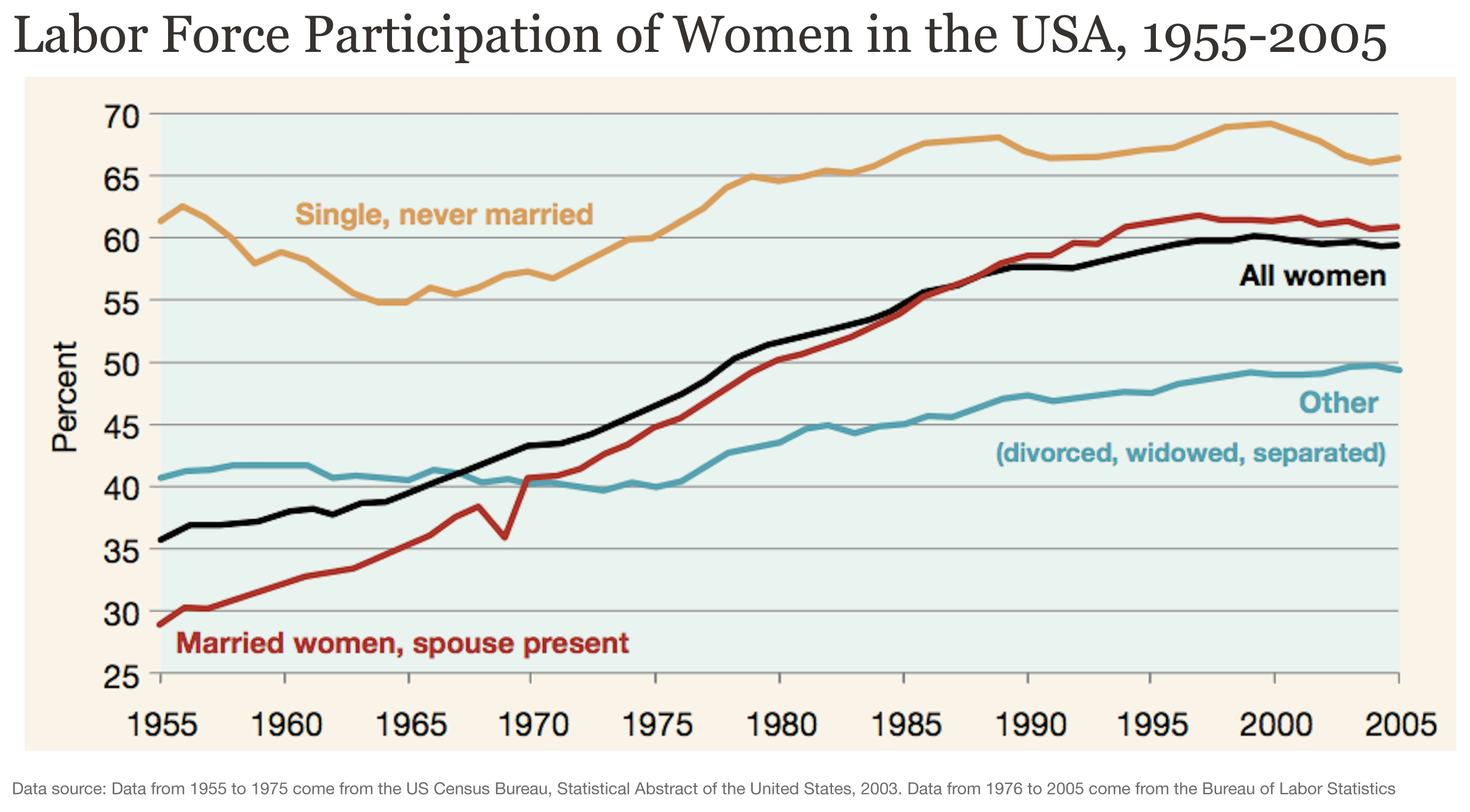
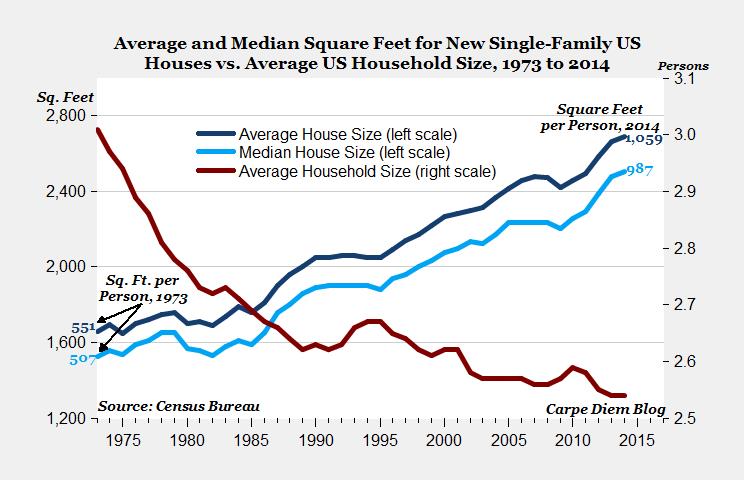


Gee I wonder...
https://www.epi.org/publication/ceo-compensation-2018/
>CEO compensation has grown 940% since 1978 Typical worker compensation has risen only 12% during that time
>What this report finds: The increased focus on growing inequality has led to an increased focus on CEO pay. Corporate boards running America’s largest public firms are giving top executives outsize compensation packages. Average pay of CEOs at the top 350 firms in 2018 was $17.2 million—or $14.0 million using a more conservative measure. (Stock options make up a big part of CEO pay packages, and the conservative measure values the options when granted, versus when cashed in, or “realized.”)
>CEO compensation is very high relative to typical worker compensation (by a ratio of 278-to-1 or 221-to-1). In contrast, the CEO-to-typical-worker compensation ratio (options realized) was 20-to-1 in 1965 and 58-to-1 in 1989. CEOs are even making a lot more—about five times as much—as other earners in the top 0.1%.
>From 1978 to 2018, CEO compensation grew by 1,007.5% (940.3% under the options-realized measure), far outstripping S&P stock market growth (706.7%) and the wage growth of very high earners (339.2%). In contrast, wages for the typical worker grew by just 11.9%.