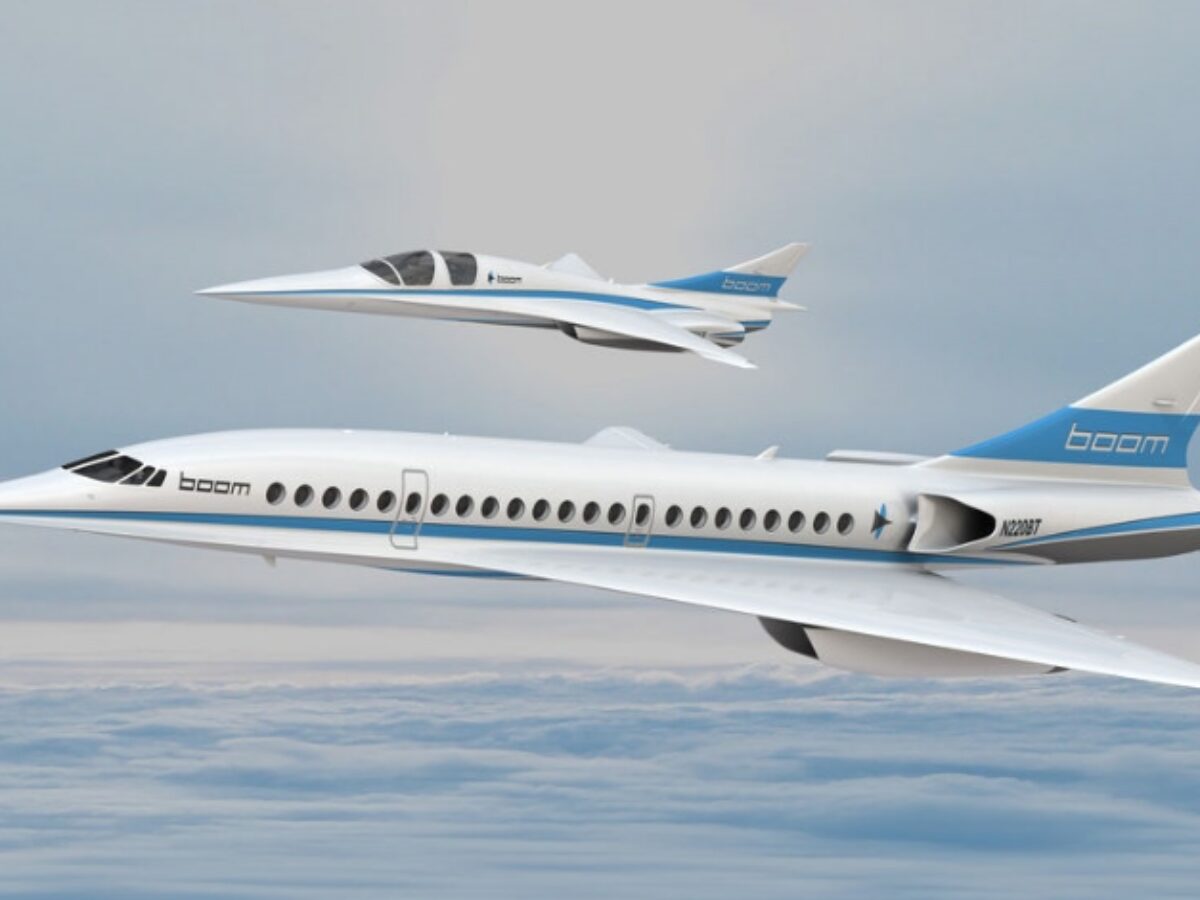
I want a printed specification or datasheet in a tabulated form, written by engineers along with isometric and orthogonal views (side/top/back/bottom), preferably with dimensions. I am good after that. Perhaps on a nice card stock from Red River Paper company. Color is good, although black and white will do. Completely satiated and satistfied. Ready to buy the damn thing.
They have the edit all backwards. They should have started with tight shots showing abstract lines and reflections, but instead they showed the whole body outline/shape, dimly, in the first third of the video while the music was still building.
So close, yet so far away. Cargo cult speed ramping.
Interesting design but full of stuff that has been abandoned by supersonic fighter jets. Interesting they’ve still got a top mounted intake and splitter plates on the intakes rather than a diverterless supersonic intake.
Is that really generally applicable to supersonic flight, or are these features good for preventing stall at high angle of attack flying, but otherwise bad for fuel economy? Yes, I've read about less mechanical complexity and weight reduction.
Also, for now they are using some variant of the https://en.wikipedia.org/wiki/General_Electric_J85
which is old, and maybe proven to work good with such inlets? The real engine which AFAIK Rolls Royce agreed to develop/build is not ready yet, and maybe enables different inlets?
The XB-1 is a "supersonic demonstrator" carrying a crew of two (and zero passengers). It is to be followed up by the passenger-carrying "Overture" in the future.
Always love hearing from Boom. By far the most impressive YC startup I know of. In a sea of interchangeable SaaS and mobile app ventures, they are out there doing hard things and actually trying to make a reality the kind of future we all dream about. Inspirational. They certainly have some daunting challenges to overcome but hope they pull through. I'm rooting for them.
The amount of commenters on here that are hating on it without actually reading out what they're doing or understanding their business plan leads me to believe that they're going to be very successful.
I get the hating. By that argument, even private jets are an abomination and so is the lifestyle of almost every billionaire out there. It is no surprise that the top 1% account for all of the pollution of the bottom 50% of the population.
Depending on your perspective, every expenditure and experience that money can buy, can be viewed as wasteful and harming the environment. For someone with no access to water, a long shower feels very wasteful.
If we don't actively come out of this dogma and not embark on some ground breaking technology, our lives won't change at all. So many new technologies from aircraft and space technology have made it to mainstream - Kevlar, carbon fiber to think of a couple. So, even if Boom ends up building only billionaire's toye, there is a possibility that second and third order inventions can make it to mainstream society and bring about change at scale.
> Depending on your perspective, every expenditure and experience that money can buy, can be viewed as wasteful and harming the environment. For someone with no access to water, a long shower feels very wasteful.
You seem to be searching for a binary answer to something that most people would agree is a gradient. A long shower is not even in the same ballpark as a private supersonic jet, you clearly know this.
> If we don't actively come out of this dogma and not embark on some ground breaking technology, our lives won't change at all.
Yes, but air travel is already something everyone (in the developed world) can afford. Same as almost everyone can afford a VW Golf, Ford Focus, Toyota... whatever. What Boom wants to build is the equivalent of a Ferrari or Lamborghini - it does the same thing as a normal airliner, but faster and in a more resource-consuming and therefore expensive way. And, like most people can't afford a super sports car, most people won't be able to afford a ticket for their supersonic airplanes (same as they couldn't afford a ticket for Concorde).
If it will be as expensive as Concorde, it won't work exactly as Concorde didn't. It's got to be a lot cheaper - at least 2x cheaper - to have any chance of working. And then, everyone who can afford a first class ticket, will be able to afford that.
My bet is somewhere like $4000 roundtrip trans-Atlantic ticket or $3000 cross-country ticket in U.S. is about the maximum the market will bear.
Then they are toast before they start. Any supersonic startup must solve the noise problem first. It is solvable with proper aerodynamical tricks, at least in theory.
"The bulk" is hard to quantify, but looking around for technology in my apartment (and whatever else I use outside of it on a daily basis), I wouldn't say so. A lot of it was previously available for well-off (not rich) households, and then became cheaper mainly due to scale. That doesn't seem to be a direction they are going with a low passenger count plane that has the biggest benefit for people that spend a lot of time traveling between continents (like regular high-stakes business trips).
More importantly most of those things don't inconvenience the people around me. If I use my computer or my kitchen-aid (high-price items in the past), it doesn't disturb my neighbors (or would have in the past when they were still in their infancy).
Do you read? Books (and libraries) used to be something only kings could afford. Then technology (the printing press) made them something for everyone.
When it comes to electronics: Sure, that has gotten cheaper by a thousandfold or however much it has been.
When it comes to transport: Partially; air travel has become fairly accessible for a lot of people now compared to a hundred years ago. Cars are also pretty common now - although driving is still quite expensive.
But I don't see how we can ever have personal airplanes be as affordable and accessible as cars. Not going to happen. I'd be happy to be proven wrong though.
Boom isn't in the market for making personal airplanes as affordable and accessible as cars. What they are trying to do is to make normal air travel, as it already exists, faster. Because very large jets cost a lot of money to design and develop, they start with smaller ones and work their way up.
This first demonstrator is a two-seater. The next jet they are designing is the Overture, designed for the ~50 seater business jet segment. And as the name hints, they don't intend to stop there.
> can ever have personal airplanes be as affordable and accessible as cars.
Sibling comment already addressed that Boom isn't "personal airplanes".
However: why not?
I mean, apart from the current fact that not enough people want this.
Let's look at a Cessna. It masses around 800kg empty, so lighter than many modern cars, and that's not due to exotic, expensive materials, and without that, cost tends to be roughly proportional to weight.
The engine is a four cylinder with 180hp. My car gets 200hp out of 2l with a turbocharger, but aviation tends to use very old-school engine tech for reliability, so it's got huge displacement, almost 6 liters. So there's some room for improvement there, particularly once we go electric, because electric motors are so much more reliable.
Fully electric is already viable for flight-training and other short-range needs, and unbeatably cheap for those missions. (A friend and I had this idea of getting a used Antonov An 2 and stuffing it with electric bus batteries for a south-/west- to east-bay commute... The numbers worked quite well).
Hybrid electric could mean getting to use much smaller, cheaper, common, efficient engines and use the electric engine and some batteries for safety.
Avionics? Yup, somewhat complex and expensive, but really not for too many intrinsic reasons. The gold standard for GA today is (still?) the Garmin 1000. An iPad has most of the same sensors (as does my Apple Watch), and the compute power is nothing to write home about.
Visit a DuPont mansion from 100 years ago. What were considered extreme luxuries of the super wealthy are now commonplace. In fact, we live better in many ways.
The reality we live in today was created through the use of wealth that employed people and produced better and better goods to meet more and more people's needs.
Not really, most tech starts in industry or the military. Most things aren’t pioneered by billionaires- you could make the argument that millionaires are often the early adopters that commission/bring tech down to the rest of us.
But there will never be a future where private jets are economical for the masses (even private cars aren't really economical for the long term for everyone globally), and I doubt the tech Boom are developing will make it into widely used commercial planes, but perhaps it will.
And because there are no people in a place, it's completely OK to pollute this place with noise, by burning bunker fuel, dumping unused munitions or mabye even nuclear waste there, ... you see the problem with this mentality?
> And because there are no people in a place, it's completely OK to pollute this place with noise, by burning bunker fuel, dumping unused munitions or mabye even nuclear waste there
Boom won't burn bunker fuel, nor will it dump munitions or nuclear waste, so how is this relevant? Some of those are real problems, but none of them will be made worse by Boom.
Oh, I also doubt fish (or other life in the ocean) won't mind a small increase in temperature in the ocean, or tiny sonar noises a few hundred kilometers away, or an increase in above-surface CO2 levels, or ...
> a small increase in temperature in the ocean, [...] or an increase in above-surface CO2 levels
Those are permanent, globally occuring, chemical phenomena. A sonic boom is a very temporary, very local, mechanical phenomenon. You cannot draw any conclusions from one to the other.
> tiny sonar noises a few hundred kilometers away
Sonar originates from within water, while sonic booms originate in the air. Most of the boom's acoustic energy will probably be reflected by the transition from one medium to the other.
I think marine life will most likely be a lot less disturbed by sonic booms than by naturally occuring storms.
I will bet money that if this plane ever starts carrying passengers, Boom will immediately start lobbying for overland supersonic bans to be lifted. Shareholders would demand it.
Pardon my lack of enthusiasm for yet another fight between privatized gains at the cost of socialized harms.
For sure you hear it above 10km, it just does no destroy a window.
> Supersonic operations over land must be conducted above 30,000 feet or, when below 30,000 feet, in specially designated areas approved by Headquarters United States Air Force, Washington, D.C., and the Federal Aviation Administration.
> Technological advancement is good in its own right.
I don't think it's as clear cut as you want to believe. Technological progress is almost exclusively fueled by economical gain, economical gain rarely aligns with long term progress.
Was leaded gas a progress ? Freon ? Asbestos ? Privacy invading social networks ? I guess it depends on the scale you look at it but it's more "is technological progress always desirable ?" rather than "tech is always good, always trust the tech, always praise the tech"
Do you mean that technological advancement usually makes someone rich? That's true recently, but in the past wars (and the military in general) have resulted in massive steps forward in technology.
It may not have been worth the cost in lives, but the benefits we've had since from that technology are still benefits.
Ice cream was initially a dessert only the rich could afford. Now it's for everyone. Except, of course, in communist wonderlands like Cuba or Venezuela...
Chips and crisps used to be a delicacy. Can't see how that would be exclusive to the rich though, the components (potatoes and hot fat) are (and were) pretty commonplace.
Deep fried anything used to be a luxury, because calories were expensive, and a whole pot of boiling oil is a lot of calories.
IIRC, southern fried chicken in the US descends from cooking styles that only the aristocrats of western England could afford. Which their 2nd sons (or rather, their 2nd son's cooks) brought along to Virginia.
> I believe the human-caused climate emergency exists and is important enough to do something about
How is being a Luddite an answer to a novel problem?
Boom is developing supersonic passenger jets. That involves a myriad of thermodynamic, aerospace, materials, tooling and other R&D. Nobody is saying if Boom makes an aircraft every hundred millionaire has a right to one. That’s the point of regulation.
Arguing we should ban even thinking about new technology on the grounds that it might make climate change worse is dogmatic adherence to a cultlike level.
I don't have any math to support my belief just a little bit of logic, but it works like this:
1) 787 burns X lbs of fuel per hour in flight
2) 787 takes Y hours to fly from point A to point B at Mach 0.85
3) X lbs of fuel * Y hours = Z polution
4) Boom burns Xf lbs of fule per hour in flight (could actually be less because it's smaller or could be higher because of additional needed thrust)
5) Boom takes Y.85 to fly from point A to point B at Mach 1
6) (Xf) of fuel (Y*.85) hours = H pollution
So as long H is less than Z then Boom would be decreasing the impact on the environment. Now I know that there are a lot of missing numbers in here like passenger count production impacts, etc. But the solution you seem to imply is that flight just shouldn't happen and I'm not sure this is an option so if Boom can reduce the amount of pollution created by flying then it seems like something you should be for not against.
I’d be surprised if boom could be more efficient per passenger mile. Remember kinetic energy goes up with the square of speed so doubling the speed requires four times the energy.
This is why your airliner is about 100 to 150 mpg per passenger but a container vessel is 1000mpg per tonne of cargo.
> Remember kinetic energy goes up with the square of speed
More relevant is that drag goes up with the square of speed generally... in the subsonic regime... I'm not sure what happens across the sound barrier, but I believe it gets worse.
"Concorde, a supersonic transport, managed about 17 passenger-miles to the Imperial gallon, which is 16.7 L/100 km per passenger; similar to a business jet, but much worse than a subsonic turbofan aircraft. Airbus states a fuel rate consumption of their A380 at less than 3 L/100 km per passenger"
But the real comparison should not be between subsonic and supersonic trans-ocean business trips. It should be between taking the trip or not taking the trip at all. The best way to reduce emissions is to avoid long-distance air travel completely.
its important to be realistic about it and realize that whatever is going on is not being caused by the very few flying in superironic jets, but the many living in concrete houses, driving, heating their houses, having children etc. we have 6 billion people on this planet all producing CO2. of those, approximately 0% will ever fly business class. I know it's not a truth people like to hear, because climate activism is supposed to be for the people, but ultimately those are going to get punished by it, not billionaires and their jets.
I think the OP as a valid view, but I'd refine it a bit: building software can be "hard" in the same way building a supersonic jet is, but "interchangeable SaaS and mobile app ventures" are not hard this way. The difficulty in the latter tends to be in code bureaucracy, not in the domain of the problem the product is trying to solve. Which is to say, it's a bit self-inflicted.
How does this seek to overcome the problem that killed Concorde: Civilian sonic booms over populations are illegal, and most places aircraft want to fly to/from are cities?
Concorde found a kinda niche between the East Coast of the US and European cities near the sea, but it really doesn't feel sustainable for an entire aircraft class to be limited to only that route (and wasn't for Concorde).
Primarily they are targeting transoceanic routes. Transoceanic demand has increased substantially in recent years. Transatlantic traffic has doubled since Concorde went out of service. Transpacific travel has grown even more, and Concorde was unable to compete there.
Transpacific and trans-hemisphere super sonic flights would be an interesting. the demand to fly to Asia from North America is likely higher than currently observed due to lack of interest in 12-24 hour flights.
With careful planning the fastest I can get to Australia/New Zealand is ~18-24 hours flight time - on a 10 day vacation that's ~40% of my vacation time including recovery from an 18 hour flight. I'd be fine flying 6 hours to the west coast then hopping on a supersonic flight for a 2-3x premium ( still expensive, but worthwhile every few years ).
I wish they'd do bunk beds for the 18-24 hrs flights. Not super lux super expensive but utilitarian - I'd lie down on the floor if they'd let me. For me I think supersonic will be a bit expensive and polluting.
I don't think the planned Boom plane has the range to go trans-Pacific. Maybe with a stopover in Honolulu to refuel (which could still be substantially faster)
Absolutely. To expand on this a bit, the great circle route between something like Hong Kong and Seattle is a leisurely flight up the Canadian coast, along Alaska, down it’s Archipelago, by Russia, Japan, and Korea. At no point do you come anywhere near Hawaii.
Though honestly even 4500nm is not very far for transpacific; from ANC Hong Kong and Manila are barely within/outside range, Bangkok and Singapore are out of the question.
Yes. Its maximum range was 4,500 miles. That won't even get you from Seattle to Tokyo (4,700 miles), let alone to anywhere else in Asia.
You can do two hops, by stopping in Anchorage, which will get you to Tokyo or Seoul on the second hop (Stopping in Hawaii won't get you the range to go to Seoul), but at that point a no-stop subsonic flight is faster, more comfortable, burns less jet fuel, and does not require you to make a landing within spitting distance of the Arctic circle.
This jet promises[1] to deliver a range of 4,500 nautical miles, which will barely get you from Seattle to crash-landing in the mountains east of Seoul (4530 nautical miles)
[1] It remains to be seen whether it will deliver on this promise.
Both because it did not have enough range and because it went out of production before airlines in Asia, Australia, or the Americas could buy it. Air France and British Airways can not legally fly routes like Seattle -> Tokyo or Sydney -> Seoul.
> Air France and British Airways can not legally fly routes like Seattle -> Tokyo or Sydney -> Seoul.
Wouldn't those be covered under the fifth freedom[1], assuming the flight originated in the airline's home country. E.g. BA flying London -> Seattle -> Tokyo.
Well Concorde couldn't make it to Seattle from London, so it would have had to do like London -> New York -> (subsonically) Seattle -> Tokyo which would have been a pretty hard sell I think. Plus the Seattle -> Tokyo route in particular would have required a next generation plane.
The laws around this are very complicated but generally airlines are not allowed to operate flights that operate between two non-home countries unless it's part of a larger route that originates in home country. This would be called a 7th freedom flight, and outside of the EU almost no countries have a deal like this.
The jet cannot be carbon neutral. The operations of the jet can be if the operators choose to offset the carbon. Boom is not an airline, so it can't say whether or not the jets will be carbon neutral.
It could contractually require buyers to offset carbon emissions but that's a dubious idea.
Carbon offsets aren't the only way to do carbon neutrality; Boom is ensuring compatibility with synthesized fuel (they specifically mention Prometheus Fuels). This is where hydrocarbons are basically used a an energy storage medium for renewably-generated energy, extracting the CO2 from the atmosphere for fuel production and emitting it back into atmosphere when the fuel is burned.
Actually, I find worrying that you can build a plane that creates trust from breaking long carbon chains into CO2 and, at the same time, publicly announce that it will be "carbon neutral" some day.
For downvoters: it's a fine project, but I don't think they can fly planes at higher speed, lower cost, and lower carbon emissions, without a major technology shift. It is hardly controversial.
Most likely: they do care, but it is not their main priority.
I think it is more likely that the economics killed Concord ($20k per seat), not the route, and it appears that Boom thinks like they can deliver a luxury, supersonic experience at a far cheaper, business class price.
And if transoceanic supersonic travel becomes popular, pressure will mount to define overland supersonic corridors, or manufacturers will invest to reduce the noise, or both.
In its later years I believe BA and Air France found that perceived costs of a Concorde ticket were actually more expensive than what they were charging, so they increased prices to match perceptions and then Concorde was fairly profitable.
By the time Concorde was actually retired, 9/11 dented air travel demand in general and the thing was a flying dinosaur with not a big enough market to justify an upgraded version of the plane.
It's not necessary to account for R&D costs if the R&D has other benefits (e.g. putting Airbus on the map as an alternative manufacturer to Boeing, giving Europe technology with military implications independent of its reliance on the USA, etc.)
>pressure will mount to define overland supersonic corridors
yes, that definitely need to happen. I wonder whether the sonic boom public scare is just based on the fact that the majority of the public has never experienced it. I grew up on a Navy base in USSR, and we regularly had fighters booming at the altitudes much lower than the altitude normal for the commercial supersonic travel. It was just fun for us children. May be you'd not want the boom echoing/bouncing through the Manhattan concrete mazes, yet at 20km altitude over rural areas there should be no issues.
Also there are large swaths of less populated lands in other countries who may be open to having such corridors over these areas. And back in Concorde times, there weren't such a big rich markets like China who has different approach to clearing of permitting/regulation issues for example when it comes to public transportation infrastructure.
first it makes the flight longer while not decreasing the cost of the flight thus damaging the economics of such an operation.
second - those are very different modes. We don't know how to design a plane flying efficiently (and thus achieving a good range, and the range is already an issue for supersonics) in both modes, subsonic and supersonic (well, we do have B-1 and Tu-160 though that is well beyond commercial reach and i'd say those planes more like illustrate the issue than showcase the solution). Concorde for example was using afterburner to get to supersonic mode as quickly as possible, and while afterburner is very inefficient, such approach was overall still most efficient for Concorde because the plane was designed for the supersonic mode.
Just to clarify, Concorde used afterburners for take-off and to get to supersonic speeds. When at speed it was able to supercruise without the afterburners.
What this meant in reality was that anyone in South West London (near to Heathrow but not necessarily just west of Heathrow) had this part of the day when the noise was terrible. You could be outside, sat down enjoying beers and all conversation would have to stop until this thing went overhead. Ear splitting was the word and there was no doubt the plane was Concorde.
Further down the road in the West Country the Concorde (there was only one!) would be able to be heard but it would not be announcing its presence and demanding that you stop everything that you were doing to look at it. At this stage it was high altitude but not on the supersonic super-cruise.
Then, over the Bristol Channel, Concorde would hit the afterburners good and proper to get up to full speed. People in Devon, Cornwall, South Wales and the south of Ireland would hear the boom albeit not at full intensity. It was still a 'boom' though.
If you look at the map and the size of the Bristol Channel then you can get an idea as to how big of an overland corridor you would need. It is huge, even for somewhere like Tibet.
My understanding it is economics, range and time. Technically Concorde of course could fly subsonic. It is just that fuel efficiency was lower due to supersonic design of wings and engines. Its engines were designed with Mach 2 ram effect in mind - that ram pressure on top of mechanical compression resulted in high compression ratio and thus provided high efficiency - and without that additional ram pressure (which is much much lower at subsonic speeds) the pure mechanical compression ratio of its engines was pretty low and thus low efficiency. It naturally didn't have that switch from mechanical compression to pure ram like SR-71 :) The Concorde supersonic wings have low lift-to-drag ratio at low speeds which naturally means high thrust - high fuel consumption and resulting high noise - to keep it in the air at those low speeds.
Supersonic planes have to be thin to be efficient. That makes it hard to give someone a large seat with a large screen and also provide them with large range of food/drink and flight attendants. I would think the math works best at a higher price 60k/flight.
> Overture flights will focus on 500+ primarily transoceanic routes that benefit from supersonic speeds—such as New York to London or San Francisco to Tokyo. Overture won't generate a sonic boom over land cruising at subsonic speeds. Its passengers won't even notice breaking through the "sound barrier," which will be inaudible and uneventful.
So I guess they haven't really solved physics. edit: in an economic way.
The Low-boom Flight Demonstration mission has two goals: 1) design and build a piloted, large-scale supersonic X-plane with technology that reduces the loudness of a sonic boom to that of a gentle thump; and 2) fly the X-plane over select U.S. communities to gather data on human responses to the low-boom flights and deliver that data set to U.S. and international regulators.
Using this data, new sound-based rules regarding supersonic flight over land can be written and adopted, which would open the doors to new commercial cargo and passenger markets to provide faster-than-sound air travel.
"NASA has a project to test whether the physics can be adequately finessed" would be more accurate description of what is on that page than "NASA has solved the physics".
there is also ongoing research into making the boom less audible & turbulent over land, which would enable cross-country flights:
>Graves explains that SonicBAT is an unusual test in that it uses a typical military aircraft with its loud sonic boom to help engineers better understand the sounds from future quiet supersonic aircraft
>"We're hoping we can eventually lower sonic booms to a low rumble," he said. "The goal is to eventually accommodate jets that can fly from New York to Los Angeles in two hours."
WRT to the US. I'd be curious if anyone has done a route analysis on trans-continental flights to minimize overheard booms. Once you're 200 miles from the coasts there is a lot of open space to fly through.
I think you'd be hard pressed to find a path where the boom cone's carpet doesn't pass over a moderately populated area and can be navigated by the aircraft at supersonic speeds. The US is not sparse east of the Missippi, which is more like 750 miles from the coast.
> Once you're 200 miles from the coasts there is a lot of open space to fly through.
That's really only true west of about a North-South line through the eastern edge of the Texas panhandle. From there east, there's still some open space (not a lot once you hit the Mississippi River), but you'd have to dodge around to make path not going over population concentrations.
There were a lot of potential buyers for Concorde in other parts of the world. They backed out when the operating costs came out, and the range was found to be lower than expected (though BA managed to increase it through operational improvements).
Whether supersonic travel is still relevant is another question, but there buyers then, maybe there would be now too.
Concorde had a bunch of publicly tours around Asia. There are a few that could make sense-- HK to Tokyo? Tokyo to Singapore?
The fuel requirements from the US to Asia are pretty intense, so I'm interested to see how they solve that issue.
Sonic booms haven't always been illegal in the US (1973?). My dad grew up near O'hare, and he said you'd occasionally hear them when it was still a military base. Its just annoying, but for people who live near airports, jet noise is already annoying? I think as long as jets just boom over specific areas, it would minimize the public nuisance.
We heard sonic booms routinely growing up in the 1990s in small-town Missouri, presumably from nearby air force bases. It was little more than a curiosity, and never enough to rattle windows or really affect anyone much beyond perhaps a brief startling.
I grew up not far from an Air Force base on Germany. We got sonic booms multiple times a day. It was super shitty. We never had windows break, but as a young child I started to cry every time it happened. My grandfather woke up from his naps from them quite regularly which sucked especially when he was dying of cancer.
I live in germany and can confirm that Jets go supersonic there. Live near both a US and german air force base and both sometimes go supersonic, more often it's the german air force to go after an unresponsive plane, probably about once every few months or so.
Especially from US airforce bases in germany you can't expect much, they pretty much ignore air safety regulations entirely and do what they want (there have been multiple almost collisions over my city reported to air safety, several accidents where people got injured or died due to american personel acting reckless).
This was in the late 80s and early 90s in a part of Rhineland-Palatinate that is still designated as a practice area for fighter jets. The low flying jets are still a common nuisance, but as far as I know going super sonic sad been banned since.
I tried to google verification of this but only find more current information.
> the NORC reported that 73% of subjects in the study said that they could live indefinitely with eight sonic booms per day, while 25% said that they couldn't. About 3% of the population telephoned, sued, or wrote protest letters, but Oklahoma City surgeons and hospitals filed no complaints.
However, with the city population at 500,000, that 3% figure represented 15,000 upset individuals. There were 9,594 complaints of damage to buildings, 4,629 formal damage claims, and 229 claims for a total of $12,845.32, mostly for broken glass and cracked plaster.
Concorde’s other problem was newfangled airport security. Why spend 5x on tickets for a 3h flight if you spend 2h at airports anyway? The day is wasted to travel regardless.
This doesn't add up. At the moment when I fly from the UK to New York I leave my house at 6 AM and could be in the city by just after lunch. With supersonic, including airport and transfer times, I could literally get up at my normal time in the UK and arrive to get a full working day in New York. None of the day is wasted.
You’re right it works in one direction. Now add to that 5x pricing. Worth it?
In the other direction it’s harder. Too short to sleep on the plane, too long to get a full day.
If you want to be in London at 9am, you’re leaving NYC at 2am-ish for a supersonic flight. (1h transit to airport, 2h at airport, 3h flight, 1h transit to London)
> If you want to be in London at 9am, you’re leaving NYC at 2am-ish for a supersonic flight. (1h transit to airport, 2h at airport, 3h flight, 1h transit to London)
I'm not sure what you mean - that gets you into London at 2pm not 9am (2am + 1 + 2 + 3 = 9am New York = 2pm London.)
To get into London at 9am you'd need to leave New York City at 10pm (9am - 1 - 3 - 2 = 3am London = 10pm New York. Which seems fine you're doing it overnight no days lost? You'd not get tons of sleep that night but you're not wasting a day either way. Could leave at 8pm and get two hours's sleep in the arrivals lounge!
And leaving at 10pm instead of 5pm as you have to now makes all the difference because it now isn't interfering with your day at all! That was the goal wasn't it? Makes it worth it?
You're right I mathed wrong. The problem is that on 3 hours of sleep now that I'm over 30, the next day is lost.
As for worth it, prob depends on who you are and why you're flying and how much more than a normal ticket it ends up costing. For me paying 5x the price isn't worth it under any circumstances.
And I'm pretty productive on airplanes (esp now with good wifi) so 3h vs. 6h flight isn't a big deal.
>[...] the problem that killed Concorde: Civilian sonic booms over populations are illegal
Did this killed the Concorde? I don't know the story well, but I always though it was because it was never a profitable venture but it was kept because it was good PR. Then the accident happened and it was just not worth it anymore ...
Concorde was profitable. It initially wasn't, but then BA and Air France found out that customers thought Concorde was more expensive than it actually was. Once they increased prices to customer expectation the Concorde was fairly profitable. https://theadaptivemarketer.com/2012/01/14/a-pricing-lesson-....
The major issue with Concorde by the time of its retirement was that it was very old and outdated, among other things needing a 3-person crew. The market for new Concordes was not large enough for a next-egeneration update to be profitable. And 9/11 had dented air travel demand.
> How does this seek to overcome the problem that killed Concorde
This did not single handedly killed the Concorde, there are plenty of routes with substantial flying time over unpopulated areas. Presumably if the cost of maintenance and the fuel consumption were lower it could still be flying.
So assuming Boom fixes those 2 points, then not being able to go supersonic over land just lowers efficiency but does not mean it's not viable.
I noticed in the first video at 13:00 he says their team has former employees from other places like SpaceX, NASA, Amazon, and one other I cant remember, but the image shown has logos from those companies and Boeing. Had to wonder if not saying Boeing was deliberate given the problems they've been having.
Not sure why you're getting downvoted, this seems like the crucial question. Even here in New Zealand we have experienced a huge tourism boom (pre-Covid) over the past 15 years. For most people getting here meant taking one or more really long-haul flights. It didn't seem to put a whole lot of people off: we had 3.7m tourist arrivals in 2017, without supersonic jets. Our population is only 5m.
(On a personal level I hope there isn't a market of even more people who want to come here who'll be enabled by greatly shorter flight times. We had more than enough tourists already, TYVM. But economically, we won't be able to resist because jobs)
> It didn't seem to put a whole lot of people off: we had 3.7m tourist arrivals in 2017, without supersonic jets. Our population is only 5m.
I think you might underestimate how many people would visit if the long-haul flights weren't an obstacle. Pre-covid Iceland, easily reachable from Europe and the NE US, had over 1M arrivals on a population of only 300k: https://en.wikipedia.org/wiki/Tourism_in_Iceland
Iceland is a little bit more "on the way" than NZ is - it can be a stopping point on a trip to Europe or the US.
But I think you must be right. If the trip becomes less burdensome more people will want to come. The obvious (to me) response is to set a target tourist number, and raise the arrival fee until we get approximately that number of tourists. But now we're getting into policy :)
In the video (https://youtu.be/18x38IMAwrY?t=2201) they have a blurb from the chairman of Japan Airlines, Yoshiharu Ueki. I have zero experience in this but a cursory Wikipedia dive shows them as being the 6th largest global airline by passengers. So it looks like they have at least _some_ commercial partnerships / relationships.
On the one hand, that makes a lot of sense as in, "Let's build a supersonic platform based on one that we know works to prove to ourselves that we can actually build a supersonic plane."
But the marketing spin around "Hey we made a copy of this plane that was built 60 years ago and we think it will work." Just doesn't have the same flair :-)
Still, as NASA has shown time and again, if you have a reliable air frame that is well characterized, and you instrument the crap out of it, then you can set it up a wide variety of aeronautical experiments and collect really valuable data that feels more trustworthy then "theoretical results" from a 10K core parallel computer doing CFD analysis.
If they are smart (and we can presume they are) they are doing both and updating their CFD models with data from XB-1 so that they are more confident that Overture will work. That said, to be really "ground breaking" they really should use the "low boom" technology that NASA has been researching to make a plane that can fly supersonic over land. That would actually be a new spin on the old Concorde business plan where it opens up more routes. Just the "hey it will be cheaper" bet doesn't leave a lot of room for an assumption fail late in the certification process.
Lots of differences with the x-59, no wing canards, one engine on the x-59 vs 3 on the XB-1, the XB-1 seems much shorter.
On the plus side the X-59 was developed by Lockheed and one of their advisors, Dr. Johnson was a CTO at Lockheed so there could be some cross pollination there.
That said, its kind of picking nits. If everything's a remix[1] is true, that is even MORE true in aviation.
One difference is that huge strides have been made in materials research. Boom advertises extensive use of carbon fiber, which was not available when the X-3 was designed/built.
Agreed, and it will be super helpful to see how carbon fiber deals with supersonic shock waves compared to steel.
Like I said, it makes a lot of sense to build a platform that can prove that your tooling gets you to a working aircraft. And once you can do that, you can then iterate using the platform to inform your engineering choices. SpaceX has done this brilliantly and is the current poster child AFAICT.
So I'm looking forward to the test program to see how it does, but was chuckling at the over the top marketing speak with which they "rolled out" this revolution.
Step 1: Build a plane (check!)
Step 2: Fly the plane (next on the list)
I'd guess carbon fiber is replacing aluminum. I'm not a materials guy but it's hard to imagine replacing titanium with carbon fiber. I don't think steel is used much in aircraft.
> So I'm looking forward to the test program to see how it does, but was chuckling at the over the top marketing speak with which they "rolled out" this revolution.
Same! :-) I'm even more skeptical of their use of the word "sustainable," although I commend them on making that a goal.
For a number of economic and engineering reasons, instead of making jets out of titanium, the USSR, for the most part, preferred to export it to the US, in exchange for dollars.
The MiG-25 was unusual in that it was designed to go mach 2.8+ which overheats normal materials. Boom said they were limiting their design to mach 2.2 so as to be able to stick to normal safety approved stuff.
It's interesting to see the Mig-25 steel design come back pretty much in SpaceX's starship.
>Douglas designed the X-3 with the goal of a maximum speed of approximately 2,000 m.p.h, but it was, however, seriously underpowered for this purpose and could not even exceed Mach 1 in level flight
I hope Boom do better!
For comparison the XB1 has "maximum thrust of 12,300 lbf" and X-3 had two " Westinghouse J34 turbojets were substituted, producing only 4,900 pounds-force (22 kilonewtons) of thrust with afterburner" so a bit more - 12300 lbf vs 9800 I guess.
So it's the year 2020, climate change is already causing major disasters regularly, and if we don't make major changes real quick, it's going to end the world as we know it in a matter of decades.
And yet here we are, admiring a plane that will probably burn ten times as much fossil fuel as a regular plane, which is already far too much.
If you’re heading, at speed, for a concrete wall that has an opening that might just be large enough to go through, you may opt for working on precision of steering, but the prudent also will decelerate until they’re through that opening.
We don't know how to replace fossil fuels. Even if we started building tons of nuclear plants and other sources of clean energy, we'd have to reduce our energy use to efficiently mitigate climate change.
We need to act on both fronts: become more sober AND produce more clean energy.
Doubtful; it would slow down / reverse the economy and probably cause population decline (which would be horrible because it would be through famine and the like), but I don't see how we'd end up gone.
Time is not on our side. Cosmical accidents, our own idiocy or even exhaustion of natural resources could wipe us out.
I believe we have a very small window of opportunity to become a multi planetary species, which would greatly reduce our current "all eggs in one basket" situation.
But fast technological progress is the only way to get there.
First, do we have any reason to believe this "plan" is anything else than a noncommittal greenwashing statement? What will prevent the next CEO from silently dropping it to reduce costs?
Second, we don't really know how to make carbon neutral fuel. There are all sorts of ecological issues with existing biofuels. Other methods have very low yields. And in any case, we can't make enough clean fuels, so what we really don't need is yet another very wasteful way of using them.
and the fuel used to extract those CO2? That's the worst empty promise I've seen.
Sure Teslas don't emit CO2, but electricity generation does, and until electricity generation is carbon neutral, all "we're carbon neutral because we used electricity to create our fuel" is patent bs.
That doesn't make it carbon-neutral. That's like saying that if I have a baby and kill someone, I'm neutral in my effect on the population. It doesn't work that way...
Not, the removal and the addition don't offset each other - in the sense that someone _else_ emitting some CO2 and you planting a tree don't offset each other. The contribution to CO2 sums up to zero (or not exactly zero but nevermind) - but the _actions_ don't offset each other.
Weird / false analogy; CO2 is a molecule and has no (moral) value.
It's more like taking water from the ground, drinking it, and sweating / pissing it out again.
But I too don't see how they can make fuel out of CO2, they're probably doing something with carbon neutrality, planting trees or something (or more likely: giving some money to one of many shady companies that claim to plant trees. You know, a bit like plastic recycling)
That's a really weird claim to me. Is your objection that the plane isn't carbon-neutral because it still has carbon emissions, and the claimed "neutrality" isn't an inherent aspect of the plane but rather a choice by the company to offset the emissions elsewhere?
What, in your opinion, is carbon-neutral?
Is burning wood from a sustainably-managed forest carbon-neutral in your eyes?
I invite you to read up on climate change. All credible sources point to hundreds of millions of displaced people, large swathes of land rendered inhabitable, etc. To me that's ending the world as we know it. And it's not me saying it, it's the best experts on the topic.
Well if the migration of a hundred million people is the “end of the world as you know it”, then it has happened probably a good 5 times in the last century alone. Look at how drastically China has changed since the 70s and that’s the migration of several hundred million alone.
It sounds like the world will end for you a couple of times in your lifetime regardless of climate change because your bar for the end of the world is so low.
The climate has been changing for thousands of years, people used to live on the bottom of the North Sea. You would be able to walk from mainland Europe to the UK.
The best experts basically all rely on subsidies for their livelyhood.
Furthermore, we can only measure and calculate properly for a couple of decades.
And finally, don't you see the biblical theme of your message?
> The climate has been changing for thousands of years, people used to live on the bottom of the North Sea. You would be able to walk from mainland Europe to the UK.
In the winter, my house was cold. In the summer, it became hot. The next winter, it got cold again. Now my house is on fire. But it's fine, because it's just becoming hot again. The temperature of my house is always changing, you see.
> The best experts basically all rely on subsidies for their livelyhood.
What's a good neutral source you'd recommend, then?
> Furthermore, we can only measure and calculate properly for a couple of decades.
Says who? And measure and calculate what?
> And finally, don't you see the biblical theme of your message?
>In the winter, my house was cold. In the summer, it became hot. The next winter, it got cold again. Now my house is on fire. But it's fine, because it's just becoming hot again. The temperature of my house is always changing, you see.
Ad absurdum. And I am not saying it goes up & down, I am saying it has been going up for thousands and thousands of years already.
> What's a good neutral source you'd recommend, then?
I would recommend to avoid polarization and listen to both sides of the spectrum.
> Says who? And measure and calculate what?
I say so, I have studied computer science, did plenty of math, then 'numerical math' where you discover how hard it actually is to do precision calculation with these damn computers. You might be surprised. Then I worked with a bunch of scientist who developed physics models and experienced first hand how much they struggled to get anything right.
> what
End-of-times. The (grand) deluge. Messiases who predict the end-of-times and offer the solution to it?
I think this is very cool, but their song and dance about making nothing seem foreign and allowing people to experience other cultures is actually backwards. If they are successful they will enable and accelerate the further dilution of distinct cultures. It’s very sad to travel to other parts of the world and find it to be tainted with many of the global brands and customs that you already know.
I like this company and have looked at them for a while, but I am not sure if they are all that viable.
I believe you will see supersonic electric jets capturing overland routes, I think think overland will happen otherwise. Electric planes will fly higher and thus have far less of a sonic boom problem. Even some shorter range over the ocean routes are possible.
Battery technology is improving fast and electric planes have inherent operational cost advantages.
I also think Starship without a first stage can compete in this already not very big market and with a first stage they can do routes that would be impossible for Overture.
Boom often compares itself to SpaceX, but I don't know if you can replicate SpaceX in the air domain. Space was much less sophisticated and much less commercial. And as I said, SpaceX is now going after the same market with rocket technology, so the difference between air and space domain is shrinking.
I wish them luck but who knows if any of these are gone work out anytime soon.
Suprising they don't have an overhead gantry and part jigs. They are using a forklift and a $100 chain hoist to move the wing around. And it looks like they are using 3d printed plastic parts on the plane?
Affordable supersonic aircraft seem like a great technological achievement, and I'm all for it.
But would the impact be that high?
Cutting flight time by 40-45% is nice, but end to end travel time includes driving to/from the airport and immigration, which does not change.
Let's look at JFK-LHR (New York - London). The flight time is cut from 6.5h to 3.5h. Let's add 2 hours overhead at each end (somewhat ... optimistic), which makes it 10.5h vs 7.5h.
LA-Sydney is 14.5h vs 8.5h, or 18.5h vs 12.5h end to end.
Is that difference really going to change if you take the trip or not? Would you be willing to pay a significant markup for that?
Seems like the market would be constrained to relatively high profile business travel.
Before Covid, I flew to APAC or EMEA once a month. I did 120K+ miles last year just to Asia, on JAL (its a great airline, great service, good people). I will be first in line to get on a supersonic flight SFO to TKO (Narita & Haneda).
JAL 100%. Better mileage program, more perks. ANA is simpler to get lower status, but getting to the top is better on JAL. I can speak highly for the quality of service at JAL. Now to be fair, I have had Diamond for 7 years, so on my normal schedules and airports the staff recognize me. I have not been able to fly at all this year. They have frozen expire dates for status, allowing for an extra year to make up for the lost 2020 year.
The JAL flight JL01 from SFO used to leave near midnight. I screwed up once and booked the flight on the wrong day. When I showed up a day late, they asked if I was okay as I had been booked on the flight the day before. We had a good chuckle at my screwup as they found me a seat on the flight, handing me a ticket, no change fee, etc. without a thought.
> travel to/from the airport and immigration, which does not change.
Musk's The Boring Company is working on changing the speed of travel to the airport. Midtown Manhattan to JFK is around 45 minutes to drive. But it's only 11 miles away. If you can travel in a straight line at 80 mph, it should only take 8.3 minutes).
And rich people who buy flights like that can already take helicopters and have separate immigration/customs gates without lines and checks.
Maybe you don't know what 'vapoware' is. Vapoware is a product that has been announced and didn't arrive after its release date.
There literally has never been a product announcement around hyperloop. It was a technical paper laying out the idea, that's all.
Second, you don't actually need a 'hyperloop', a 'loop' is perfectly fine. A 'loop' already exists in Nevada, and its just a tunnel with an electric car/bus/platfom inside. That isn't hyperloop fast, but you can still get up to 100+ MPH pretty easily.
And the 'loop' system is Las Vegas is perfectly within its schedule plan so far. The question is just if somebody pays for these tunnels.
LA-Sydney would become as doable as Chicago-London, and one of these trips today is much, much easier than the other.
The target per cost is equivalent to today's business class. Some people might jump at that. And we have no idea what a non-premium Boom cabin might look like.
High-profile business travel is a pretty huge market.
They're likely to be indirectly relevant to mainstream air travel because coach seats are subsidized by first/business class, which this is likely to cannibalize.
Wait, they are going to sell those to airlines, not to individuals? Ticket price will put them in competition with private subsonic planes, not with airlines.
The announced target market is airlines (and they've already got commitments from some; Virgin has announced publicly); projected fares are comparable to business class on transoceanic flights (their initial target market, to avoid regulatory issues with sonic booms on over-land routes). But I'm sure if someone else is able to write a check for the purchase price, and it doesn't bounce, they'll be happy to cash it.
The nice thing is they still likely have a number of years before the full-scale passenger version goes into production. I doubt COVID will have a significant impact on their long-term success or failure.
Was bored so tried the math.
Assume small town is 5000 people. 5000 * 20tons co2 (average US emissions per capita) = 100,000 tons of co2/year.
Cessna Citation produces 6 tons for every 3 hour flight. Lets say, there are 3 people each flight.
So 2 tons per person per flight.
If someone takes the private jet _every day of the year_, thats 700 tons. Still a far cry from 100,000 tons from a small town.
That 150,000 miles is same as the emissions of 70 average Americans.
And Elon isn't the only one to use that jet. Its used to shuttle his employees too.
Aviation industry is responsible for 2.8% of global emissions, but it is portrayed as the villan. Btw, Boom Supersonic is looking into synthetic fuels to stay carbon neutral.
Not very. This is from their FAQ for the airplane that XB-1 is input for:
> Our focus with Overture is to develop and build a commercial supersonic airliner for anyone who can afford a business-class ticket, not a private jet.
It'd be scale if it was the exact aircraft except every linear dimension was shrunk down. But having a different number of windows, different inlets etc. makes it a smaller concept demonstrator.
Not when the configuration is drastically different. "Scale" has a very specific meaning in engineering. It's like saying a motorcycle is a 1/3 scale version of a car just because it uses the same motor. It still demonstrates that the heart of the vehicle works, but it's not a scaled version of it.
A motorcycle is not a "1/3 scale version" of a car, but it is "1/3 the scale" of a car (assuming a car is roughly 3 times larger). Scale is not just used in engineering. For example a zoo might have a scale comparison of different animals.
I see what you mean. I think it's probably a case of 'convergent evolution', where two planes designed for the same sort of thing (size and speed in this case) come out looking sort of similar to each other. The American B-1 Lancer and the Russian Tu-160 look quite similar to each other for instance, but to my knowledge neither is a ripoff of the other.
> The world is better off when families can spend more time together
Yeah, almost no families in the world have the money to fly anywhere business class, in their life, ever. More importantly, it's ridiculous to rely on flight as part of the daily routine of a family - for multiple reasons, not the least of which being the environmental one.
> businesses have more opportunities to succeed in our global economy
This is the actual motivation, I would think.
> and world leaders can foster greater understanding in person.
Well, this point itself is debatable, especially considering certain current world leaders, but basically it's the same as the previous pont.
So the motivation is: "Let rich/powerful organizations ferry important people around faster to further their interests." Not so romantic, but it's a legitimate reason to work on a high-end product or service, I guess.
Carriers when first cell phone appeared: "Families can communicate more"
You: "No family can afford it"
Countless services we take today for granted have been introduced initially as toys for the ultra rich, then made their way to the general consumer. It's a good thing.
False analogy. Mobile phones were expensive because the R&D was expensive and the production technology immature. Flying people requires a lot of energy because of physical constraints, and the potential economies on fuel use, while existent, are strongly constrained.