Some interesting historical context on construction costs:
100 years ago the cost of construction was about $45/sqft when adjusted for inflation and today it is closer to $220/sqft, approximately 5x the cost. Blue collar wedges are pretty similar across time, but the cost of house construction (ignoring land) is dramatically higher.
The 1914 sears Model 147 house was 900sqft and cost $872 for materials, estimated at $1,530 with labor.[1] Adjusting for inflation from 1914 to 2020, that is about $22,000 for materials and 40K with labor.
Looking at 1913 US national labor statistics, the average baker in 1913 San Francisco worked 54 hrs/wk and made $0.46 per hour for an annual wage of $1,291[2] (or 33K in 2020 dollars)
The median baker in 2020 California makes 36.5K/yr [3]. The cost of new housing construction is $220/sqft[4], or 200K for the same size house.
The standard of construction has also changed since 1914. Not only do few people want to build a 900sqft freestanding home, if they did it today with that Sears kit, it would break nearly every building code in the book.
A more equal comparison would be to a prefab or mobile home, which you can get for that inflation adjusted price.
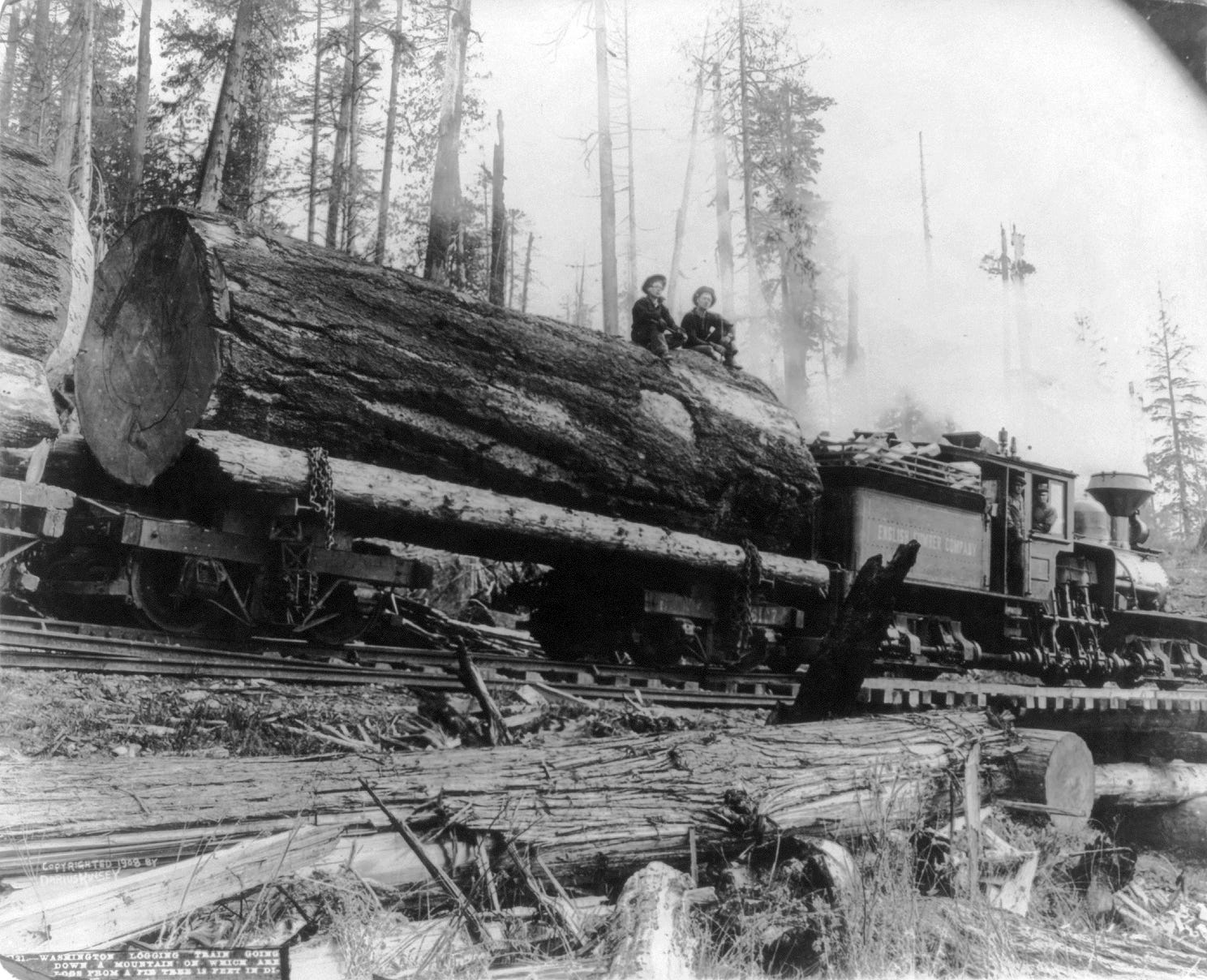
Quality lumber is incredibly expensive now compared with 1914. I owned a 1910s-construction house for a while, and they used huge, thick wooden boards around the foundation where the structure met the stone-and-mortar basement walls, and in the floor joists (visible in the basement), and in the diagonally-run underfloor boards (used where we'd use plywood, today). Nearly knot-free, perfectly straight, that stuff would probably be put aside for high-end fine woodworking or even veneer-making, now. It was beautiful stuff and they stuck it under the floors. The ones around the walls must have been something like 8"x14" or bigger, and tens of feet long. Nearly-flawless pieces of lumber. I assume the wood used in the wall framing (some pieces likely three stories long—it was a balloon-construction house) was similarly astoundingly-good by modern standards.
That stuff was, evidently, so cheap from the perspective of people in the 1910s, that they didn't think it worth any amount of effort to sub in worse wood for places where looks didn't matter. These days, some of that would be hard to find at any price, short of salvaging it from old buildings like that. And that's the "crap" they put under the nice wood they used for finishing!
OTOH we do have drywall, which has got to be cheaper in pretty much every way than lathe-and-plaster.
I live in Canada, where we are swimming in lumber (in theory). I just don't understand why it is so expensive. I know the processing and treatment is very sophisticated but there is so much automation throughout the whole chain. My only explanation is that lumber is a globally traded commodity .. price isn't determined by just Canadian demand for lumber but the global demand.
It makes me wonder .. if the US shutdown Canadian wood imports, would that significantly lower prices for Canadian consumers? How low would it go?
my un-schooled guess is simple - the rest of the industrialized world has benefited from profit markups in real dollars of today - that fun book or skateboard was priced in modern terms.. while lumber is a commodity from the previous century or three.. their dollars and costs were low to start with, and were pressed down by commodity markets.
I once asked a recent undergrad in Economics graduate, at a party, why one pound of bread costs more than one pound of meat (the inputs and processing costs are vastly different, through the life of the animal, the meat should be way, way more) but, blank stare, more beer.
I for one believe that most of the markets, most of the time, make no sense at all from the perspective of the real natural inputs, and all the sense in the world from the point of view of one human group selling things to another human group, any way they can; old timber included.
Bread doesn't seem like the best example here, because the finished product is not dense, can't be smushed, and has to get shipped to the store. Transport plus the shelf space (and rotation) can explain most of the price.
If you look at pure flour, rice, beans, pasta, and stuff like that, there are lots of cases where it drops from prepared-foods price down to something closer to its commodity value. Looking up rice, it goes for $14/c.w.t., which I think translates to a little over $0.10 per pound. You can't buy it at that price, but you can buy a literal 1 lb bag of the bad rice for $1.00. Consider larger quantities and you'll probably see an asymptote to a reasonable multiple times the commodity value.
Meat will not follow those rules. The floor for meat is much higher due to the physical inefficiency of production. Even at that higher price floor, there are huge untaxed externalities. A lot of people know the reality that we have to eat a lot less meat due to halt climate change. I think there is a strong business and social culture for businesses to move meat at close to its price floor, with business models like fast food.
as a consumer, I will walk to the corner store here in the California city, and I will check the price of a loaf of ordinary bread, and the price of a pound of ordinary meat, again today or tomorrow. Not "the cheapest rice by the ten pound bag" .. or "chicken parts whole in a ten pound bag" I believe my point stands.. yes, there are layers in the consumer markets.. times one hundred for a fast food meal, too.
Where is a pound of meat cheaper than a pound of bread?
Either way, no offense, but your economics grad needs to re-take some basic classes. To simplify, input costs only establish a floor on prices. Otherwise, prices are set by dynamic market supply/demand curves.
>It makes me wonder .. if the US shutdown Canadian wood imports, would that significantly lower prices for Canadian consumers? How low would it go?
It probably wouldnt go low because you are not recognising global demand and a growing global population, cost of automation for factory (automated built) furniture, bespoke furniture by individual or small teams of carpenters, cost of transporting wood to other countries where costs are different.
Here in the UK we have this place https://www.oakfurnitureland.co.uk/ it does real solid (oak) wood furniture, not some furniture made of chipboard.
It seems quite cheap but there are visible cost savings, like the furniture isnt that big, its suited to smaller homes than some grand mansion or luxury home, and with a lot of businesses, where finance/credit is available, sometimes the company main business is actually a credit broker/finance specialising in a niche market product.
Some people have said GE (General Electric) is now more a financial entity than a manufacturer, this is business diversification over the decades.
> the furniture isnt that big, its suited to smaller homes
To be fair, pretty much anything built after 1960 is small, and all UK housing is small by American standards.
I also don't think most people in the UK consider OakFurnitureLand a cheap, or even an affordable place to buy furniture. Despite being made of cheap internationally sourced oak, and somewhat mediocre, it's definitely a premium brand. If you were to buy all your furniture there many people would consider you well off.
Spot on with the reality of their finance business though
I spent quite a lot of time in https://www.oakfurnitureland.co.uk/ returns outlet picking through stuff. I furnished most of a house from there. The furniture is made in places like Thailand, and woods like mango are used as well as 'oak'. They must make reasonable margins even with the normal prices they charge. I'm sure they also benefit at least on their lower tier of credit plus upsells on insurance etc. I didn't encounter any of that as the outlet was strictly cash.
Even the carcasses use solid wood. Some of the returned furniture had cracks in interior wooden boards where a composite like ply/chip/MDF would not have cracked. I guess solid wood is lighter, part of their brand and they have less diversity of material sourcing. It must pay off, even with slightly higher returns.
I don't think most countries build houses of wood like North America does. In Europe houses are mostly built of various kinds of bricks and concrete. Only the roofs in detached houses are usually made of wood (and not all of them).
In the American south, there are a lot of masonry, or concrete homes or even AAC. See florida.
In the north masonry homes have a lot of problems with freeze thaw cycles. As far as upgrades
, remodeling, overall costs goes stick built homes are superior.
> In the north masonry homes have a lot of problems with freeze thaw cycles
That's weird, central Europe has pretty northern climate with cold snowy winters and hot summers and I've never heard about any such problems. I've lived my whole life in such houses. You just need proper insulation (but you need it anyway cause heating is expansive). I think Americans don't much care for good windows for example, at least in the movies they have these weird 1-layer sliding windows that nobody would use here :).
> As far as upgrades , remodeling, overall costs goes stick built homes are superior.
There's a bit of stigma against wooden houses here and they are considered worse investment because they degrade and lose value much faster.
Single pane windows are not common in the US in anything built in the last 30 years or so (give or take a few decades). Sliding windows are usually 2 or even 3 pane. Movies use single pane candy "glass" windows so characters can be thrown through them.
I would not be surprised if Canadian lumber was going to China. I believe a lot of Alaskan lumber, if not the majority of it, was China bound (this may have been close to two decades ago though when I had heard that).
Canadians are so stupid that we have allowed raw logs to be sold to Chinese offshore lumber mill ships, to be sold back to us, instead of insisting that the value-added processes be kept on-shore so that we have good-paying jobs for our own citizens.
> so that we have good-paying jobs for our own citizens.
Protectionism isn't always a good idea. Doing so would've made the final lumber output more expensive for Canadian consumers.
Automation is coming for the good-paying jobs sooner or later, anyways. The solution wasn't/isn't to ban outsourcing/automation, it's to better distribute the gains from outsourcing/automation across society.
The better mills have amazing automation. Penetrating scan of the log and then laser-guided slicing and dicing to maximize wood usage and profitability.
Now if only the lumber were properly dried instead of shipped slopping wet. (Actually, I suspect the kiln-dried lumber is destined for wealthy foreign markets; we locals get the c-grade crap. I have spent literally more than an hour picking through stacks to find enough good lumber to build a shed.)
The kiln drying process is exactly why you get what you get. When you crank the kiln to 11 in order to get the most throughput out of it you get residual stress and bent boards.
A covered pile outdoors or in a warehouse will yield straighter lumber (or just don't crank the kiln to 11) but that is not economically viable for random pine that people frame things with.
Canadians know that - they have only to look at dairy. Milk is probably fine from a consumer perspective (just not if you want to get into farming it), but whether deliberately or as a side-effect it cripples cheese.
Imagine my great-grandfather planted a seed 150 years ago for $0, then we did nothing but wait for 150 years, then I chop it down and get $100 of lumber.
But you can't enter the market and compete with me, because you don't have the right grandfather.
Property values in Canada are quite high. That free free squatted on non-free land for 150 years before you got to chop it down. How many dollars per year did the land cost for those 150 years?
This reminded me of the fact that the US Navy maintains a forest of trees that are of appropriate size to keep planks for the USS Constitution, the last remaining wooden US Navy vessel.
Sweden planted 300,000 oak trees on a particular island in the 1830s, after the Napoleonic wars, to provide lumber for future naval ships. It takes the trees about 150 years to reach a suitable size, so they were well obsolete for their intended purpose before they were ready.
> Quality lumber is incredibly expensive now compared with 1914.... Nearly knot-free, perfectly straight, that stuff would probably be put aside for high-end fine woodworking or even veneer-making, now. It was beautiful stuff and they stuck it under the floors.
Could that have been lumber from old growth forests that are now either extinct or protected from logging?
IIRC, lumber nowadays is basically farmed using relatively fast-growing trees.
I don't know if it is true that quality today is worse, but they used way more wood for heating back then. So maybe they picked the nice trees for wood work and lit up the rest.
Trees on plantation are straighter than wild trees.
I'm really curious to know why, in our hyper-industrialized world of today, is lumber so expensive when compared to yesteryear? Is it cost of land on which it grows? Is it increased demand because of population growth? Increased demand because of new uses? Increased demand because of global markets? Is it because lumbar prices were artificially depressed because the cost of growing new trees was not included (because people were just cutting down what was already there). Maybe it is because land/housing prices have gone up so much, people are just willing to spend more as it is a relative small percentage of the total cost of housing?
My understanding is that the trees no longer exist. We cut down ancient hardwood forests that took hundreds and thousands of years to grow. All of that is gone now except in a few places like national parks and monuments. In its place are tree farms that are harvested after growing for a few years. Instead of cutting down trees that are 4 feet across with beautiful straight grain knot free lumber, we get crap heartwood with knots that bows and warps.
To get that beautiful wood again, we would have to plant the forests, let them grow for hundreds of years, then harvest the wood. Well, that's not going to happen, so we end up in the situation we are in of having to use a very poor substitute.
This. You buy a 4"x4" post (nominal. Actually 3.5"x3.5") at your local home improvement store and it has wane on all four corners and the pith running down the middle.
Translation: it's made from the smallest possible tree you could plausibly saw a 4x4 out of. And the pith (the center of the trunk) running through the middle guarantees that the post will split along the radial plane as it dries.
If you go to a better lumber yard, you get better lumber. Except, apparently, for 2x3's. They are universally crap. Source: built a chicken coop with 2x3's and bought from a local outfit because they deliver inexpensively. Everything else was gorgeous compared to the box home improvement store. The 2x3's were pretty much the same.
Heard you should get the largest lumber you can get and rip it down. Like get 2 x 12's and rip down to 2 x 4's.
Makes sense that the larger cross-sectional lumber needs to come from a larger cross-sectional tree with few defects. The crap-wood they can turn into 2x4, 2x3....
I did the above to create a nice workbench with few knots. It helped of course that the lumber I ripped was glued up to make the butcher-block-style top, the uprights and cross braces also doubled, tripled up.
North america was heavily deforested during the pleistocene which wasn't really all that long ago. You can also find historic pictures of mass clear cutting from the start of the 1900s that are now heavily forested and will eventually produce large mature trees.
My dad, born in toward the end of WWII, has complained for at least the last three decades that it keeps getting harder every year to find usable boards at lumber yards. Tons of them warped, damaged, way too many knots or other problems, and so on, and that's when you are shopping a couple tiers up from the worst stock. I don't know why that is, but that seems to be the trend he's seen over his life. Makes sense, if he came into adulthood about halfway between the unthinkably-nice framing & foundational lumber in that 1910s house, and now, and it was a somewhat continuous process instead of some sudden change.
Interesting. This might be explained by the switch from old growth to new growth^. Older trees would be larger, and have more core to work with (I think knots are mostly from the outer layers of the tree).
It's a little more complex than that. You get branches (which manifest as knots in boards) where there's sunlight that can reach the leaves on the ends of those branches.
Trees grown among other trees have to grow up to reach sunlight. The innermost part of the lower trunk might have knots from branches when the tree was young, but once they reach harvestable size, there's a fair amount of clear lumber down low.
Trees grown in the open don't have the pressure to grow upwards, and end up with branches down low throughout their lives (from the center all the way through to the bark). As a result, there's very little clear lumber in them.
Disclaimer, I'm a furnituremaker, not a forester. The above is somewhat better than pure speculation, but likely misses some important bits.
The sapwood is an approximately constant radial dimension over the life of the tree once it gets big enough to form heartwood. Sufficiently old trees are more heartwood by percentage than sapwood.
For hardwoods, it's typically the heartwood that's more desirable. Walnut and cherry both have pretty strongly contrasting sapwood that does not match the customer's expectation for the color of those woods, for instance.
That would be my guess for at least part of the reason, too, but it'd only be a guess. I also wouldn't be surprised to find out that tree species plays a role, and that we plant species for harvest that simply produce worse lumber than what used to be widely available (as old growth).
The funny thing is that the straight grained radiata pine is sold at a premium imported from Australian and New Zealand plantations when it's an American tree that could be farmed domestically.
The wood used to built those houses was the old growth timber of the western united states. Its basically gone now. As well as the second, third and fourth growth.
Wood of sufficient quality to do the things we used to do with it simply doesn't come from industrial forests.
At least in Finland, there has been a trend of forest owners to favor faster growing species or just felling them earlier. Most of the trees won't be good enough for quality lumber so it's just sold at bulk prices to paper mills. With the method you can probably get 2 good harvests in the time of one. If you let the tree grow 100 years instead of 30, you might not still get 3x the price and you would have to wait 70 years more.
A detail I liked in the Blade Runner 2049 movie was the office of the Wallace Corporation CEO -- every surface was covered in wood.
Right after seeing that movie I visited an old house where everything is wood. Huge wood cabinets, wood floors, wood ceiling, etc...
I suddenly realised that I can't afford wood furniture any more! The IKEA stuff I buy these days is made of "manufactured" materials that are "wood-like", but have essentially cardboard honeycomb between two sheets of plywood or something.
I used to have IKEA furniture that was solid pine, but good luck finding anything like that in their store these days...
Why would anyone want solid pine? Furniture has been made of veneered wood for a very long time. It has been popular since the late 17th century, long before IKEA.
It didn't take long to find it in their catalogue.
Anyway, IKEA is not the only company selling furniture.
You are correct that most solid woods are expensive (not pine usually though) but that is at least in part simply due to high demand for such furniture and the lack of supply of the raw materials.
That’s because when this country was still being settled, standing trees were an obstacle in the course of productively developing all this land, which, at the time, meant mostly agriculture. Before big machines arrived on the scene, getting rid of all of that heavy garbage was a lot of labor, and since there was a lot of trees around, and shipping them far away was way too expensive, there were few buyers, all of which made prices low. When all local trees were cut, land had been developed into farms and towns, and lumber needed to be shipped from further away, prices started going up.
Long leaf pine of the South Eastern United States is now also used as a heating and electricity generation fuel as far away as Europe. North Carolina is on track to become the World's largest single source of wood pellets[1]. On the other hand, during the lumber shortage of 2020/1 the bottleneck was at the mill.
Not only do few people want to build a 900sqft freestanding home, if they did it today with that Sears kit, it would break nearly every building code in the book.
Lots of people want to build 900 sqft homes. It's just that with land costing 100s of ks and utility hookups etc at 100k, it make no sense to build a 900 sqft house.
Basically, areas with high house prices have created a situation building a little house on a bit of land is between very cost ineffective and simply impossible and then said "no one want to do this".
100% agree. Beyond that too, it is very difficult (relative to FHA or even Conventional mortgage) to get approved for a construction loan, and in a lot of cases you have to close on your loan twice, the extra fees and higher interest rates eating into your potential savings. There's also no way you're going to get that loan without a general contractor overseeing the entire operation, who will take 20% off the top alone, which don't get me wrong, is fair if you need it. If you want to do anything DIY to save cash and hire inspectors to catch your mistakes + professionals to do risky/difficult stuff (electric, plumbing, HVAC), you can't do it with the bank's money.
Also, it is pretty common for county codes to require each home to be a minimum 1000 sqft (at least in FL and MI). Even if we don't want to allow tiny homes of sub-500 sqft to gasp potentially lower the value of my home by giving someone else a place to live, the 700-900 sqft range is still very nice for a lot of people.
Also, with min lot sizes a 900 sq ft house doesn't quite pencil out at today's land prices. Most jurisdictions would not let you buy a 900 sq ft plot of land, for example, because the size would be too small.
Quite a few, though it may have crept up slightly - one link I found said the Uk average new builds size 2002-2012 was more like 1030 sq ft.
UK new build houses (as a type - of course there's lots of variety) are a strange breed. Small and crammed into tiny lots though cleverly designed to make the most of a small space. Energy-efficient but shoddily constructed. The cheapest premium-looking materials (i.e. brick). Generally nice enough to live in but a bit depressing.
In UK you can buy a house that was built in the dark ages, before Americas were 'discovered', were declared a listed building and the owners are legally barred from making major changes.
They cost like 3x what a newbuild does, this "but building codes" stuff doesnt stand up to scruitiny.
You dont have to use wood, we have brick. We've had automation and 100 years of growth in productivity.
> They cost like 3x what a newbuild does, this "but building codes" stuff doesnt stand up to scruitiny.
I don't think that's a fair comparison. There is a fixed supply by definition of those old buildings, so their price will be pushed up by demand with little relation to their cost to build since they can't be built anymore.
A better comparison would be to look at the cost of new houses in developing places like SE Asia where there are little to no building codes.
The building code certainly allows homes to be built with 3 foot brick walls, but home builder building 100 cookie cutter homes on a plot of land are in it for the money (despite saying they are in it to build peoples dreams in their ads).
They build using the cheapest methods allowed by law, see the choice to build with fireproof cladding (£24 psm) vs flamable (£22 psm). Building codes are about setting a floor in the construction quality, not a ceiling (pun intended).
There's a lot more than you probably imagine, other than these 3x price ones GP's thinking of - that seems pretty niche, they'd have to be exceptionally well-preserved and dripping in original features.
The average craftsman home listed for sale in CA - 80+ years old - seems substantially better than the average newly built D.R. Horton home.
Maybe this is highly biased toward craftsman homes that have been well maintained due to how expensive CA housing is. But why wouldn't D.R. Horton homes also be maintained? They're theoretically equally expensive.
The surviving craftsman homes, which weren’t average for the time time due to survivorship bias, are more likely to be built in higher density walkable environments closer to urban cores. Real estate in those areas is more valuable in general.
The average D.R. Horton home is built further out on lower density, less valuable land.
There’s also an element of scarcity here. There’s a subset of people who find older homes appealing specifically because they are older. The supply of older homes can’t increase, but the supply of D.R. Horton homes can and does.
I wouldn’t exactly characterize that as “construction costs going up” though. We’re building different things. The standard of living has changed significantly.
The 1910’s were a very different time. Comparing houses now to houses then is like comparing a horse to a Honda Accord. We’re not just talking luxury features here —- You can be pretty certain that a home built in 2022 has indoor plumbing, a refrigerator, and a furnace that doesn’t require shoveling fuel.
That said, I think the difference is overstated. I have lots of friends who live in craftsmen homes. They resell at basically the same price as similar sized houses built 25 years ago (even with single pane windows ect) . If somehow you got one that wasn't upgraded since 1920, you are looking at a few tens of thousands to put in electrical, plumbing, and appliances.
Still, you are right that that they are not the same. But a lot of people today would kill to own a beautiful new craftsman home for 40k! I wouldn't trade out my car for a horse, but I would trade 40k a year rent for a craftsman home!
The point is that even you wanted to replicate an original craftsman home today, you wouldn't be able to do it for that price, even ignoring regulations. Labor costs have gone up, wood has gone up, minimum cost of every material used has gone up.
The average craftsman home built 100 years ago isn’t going for the same price as a 25 year old house.
The craftsman homes that have survived for 100 years in good condition are. That’s a very different thing.
Old houses also have tons of problems even when upgraded, and they just aren’t anywhere near equivalent to a modern home unless you essentially gut them and rebuild.
Insulation isn’t nearly as good. Bathrooms aren’t nearly the same size. The floor plans aren’t nearly as open. This last one in particular is a big cost difference because creating large open spans is expensive.
Those things might not matter as much to you, but they are big differences.
>The point is that even you wanted to replicate an original craftsman home today, you wouldn't be able to do it for that price, even ignoring regulations. Labor costs have gone up, wood has gone up, minimum cost of every material used has gone up.
Depends on the part of the country and whether or not you can use modern equivalent materials.
Where I live, assuming pre pandemic prices, I could probably build a 900 sq ft, single story house with a wooden pier foundation, no plumbing, no electrical, no insulation (or maybe old newspapers like my great grandmothers house used for insulation), no driveway, no sod, and no inspections for $40-$50k.
That would be roughly equivalent to your average house built 100 years ago.
> The floor plans aren’t nearly as open. This last one in particular is a big cost difference because creating large open spans is expensive.
That especially is just fashion, I'd be really careful with that sort of conversion. Or, if the only 'problem' with a property is that it has too many segregated rooms, and that's depressing the price.. snap it up, fashion's bound to come around. (Unless it's for you to live in and you particularly care of course, live where you want!)
There’s probably some an element of fashion to it, but there’s also a technical element. Engineered lumber allows for cheaper, larger unsupported spans.
Cooking is also less frequent, extraction fans are better/cheaper, we don’t use wood burning stoves. When people do cook it’s less likely to be an all day process, and less likely to involve methods like deep frying in bacon grease. It’s also less likely that a middle class family has a servant to do the cooking for them.
All this leads to less need to segregate the kitchen from the rest of the house.
If you look at Victorian houses, kitchens were placed as far away from living spaces as possible. Going forward from the 19th century there has been an overall trend towards integrating the kitchen with living spaces. Culminating in the modern trend of combining the kitchen and living room into one large space.
Families are also smaller than they used to be, so there’s less need for as many rooms. Plus furniture is larger on average.
The point is there are factors pushing houses towards larger open spaces, and larger open rooms in general that are likely durable.
Comparing houses now to houses then is like comparing a horse to a Honda Accord.
I don't think that's a fair comparison. I've lived in a Sear kit house. It had everything someone now would recognized as necessary for a house (including everything you mention, plumbing, wiring, etc and as opposed to a house built in the 1800s, which could have or not-have anything).
A fair comparison is a VW bug versus a modern SUV. The bug has everything needed to be a basic car but has nothing to make it special. And the comparison would be closer if only giant SUVs were being sold as cars today.
Just interjecting "but building codes!" doesn't make a lot of sense. If the codes are so strict that we can't actually build houses they are failing at their purpose.
I dunno if you've dug deeply into most building codes but they're almost always overly specific in pointless ways and in ways totally unrelated to safety. Getting an engineer to sign off on a design should be enough, especially for a freestanding (tiny)house.
OTOH, hiring an engineer to actually put their name on your home construction will almost certainly cost significantly more than the city inspection cost.
Every location (in the US) I'm aware of requires houses to be signed off on by an engineer before construction. You always have to pay for it. The issue is engineers are usually obligated to enforce code, and a lot of them try to be stamp mills -- they only want to look over and assure designs that are very similar so they don't have to think about it.
There's an unfortunate number of locations in the US where you must use wood frame for your house, or you must route your power in exactly this way, etc, even if it'd be equally safe or cheaper to do something else.
> Every location (in the US) I'm aware of requires houses to be signed off on by an engineer before construction.
This varies widely by state. In some states, it matters if you're in a municipality or if you're rural.
Where I am, in this county, I do not require a permit or inspections or anything to build a house for myself unless I'm inside a municipality. The government doesn't care until it's time to pay taxes. I may need some sort of inspection to hook up to the electric grid though, or to get water turned on. In (edit: some) other states, you can barely build a small dog house behind your house in the country without permits, inspections, engineers, surveys, and all kinds of other stuff.
I will admit that I don't know regulations outside of my area, and I'm guilty of assuming they are somewhat standardized across the US (and indeed, for some codes, internationally).
Here we just have city inspectors to check basic code compliance. They'll take a quick look at the framing, electrical, and plumbing before the sheetrock goes up, and then they come back for a walk-through before issuing the certificate of occupation. No engineers.
The biggest fees by far are the permit fees, but that's for revenue and would still exist if engineers were doing the analysis for the construction.
Have you checked on the prices for prefab homes? Even in the Midwest 40k won’t even get you the cheapest ones unless you go with something like a used mobile home.
also as someone who is working with architects and builders right now on a house, I can say the houses you are getting at the 250 /sqft range in many cases are terribly built.
They are going to last a fraction of the time that that $45 / sqft house from 100 years ago lasted
Many houses built 100 years ago were incredibly shoddily built / assembled. Have you ever looked at the foundations on old houses? Wooden piers that are lucky to last 40 years were very common. You’re seeing survivorship bias at work.
Also 250/sq ft is far from cheap/shoddy quality in much of the US. And with proper maintenance just about any house built to code in most places in the US will easily last longer than the average house built 100 years ago.
I don’t need a house that lasts 100 years. My estate will be selling it in 50 years, if I don’t sell it in the average ownership duration of 10 years.
Lasting a long time does not mean a structure is better in every way. Old housing can be a challenge in terms of safety, cohesive design, lifestyle fit, land use, environmental concerns, etc.
In Japan, for instance, it is popular to frequently tear down housing rebuild it, and it works well for them.
I have lived in and fixed up many old houses with strong bones. They might stand for hundreds of years but everything attached to those bones is a patchwork of afterthoughts.
+1 for wooden American homes, made from naturally sequestered carbon :)
I haven't done the math, but I'd bet the energy efficiency requirements would more than make up for it. Uninsulated/underinsulated homes are a huge waste of energy.
The Sears kit wasn’t unique in that regard and they were built pretty good for the time. Non kit houses were often balloon framed or featured other serious code issues.
I live in a northeast city, and the average house in a ten block radius was built between 1920-1940. They seem to weather just fine and gradual retrofits to things like electric panels eventually take place. You can’t compare that meaningfully to a mobile home, which is more like a car with a 20 year lifespan. Frankly, I think the building codes are out of control in some respects and add needless cost.
The standard of construction of a middle class home built in 1925 is better the 2022 on the basis of materials alone.
“Lasting a long time” also <> higher quality. There’s a lot of other factors that more closely contribute to making a house a nice place to live. Whether it lasts for hundreds of years after the owners death is relatively unimpactful on their quality of life.
In 1925, only half of homes in the US had electric lighting. None had air conditioning. Many would have had only steam boilers (which can function without electric pumps) fired by hand-shoveled coal. Most would have had no insulation. In 1940, half of homes had no indoor flush toilets and no hot running water.
If you built a house today without electricity, with only cold water service, and an outhouse, I think you’d save a fair bit on skilled trades (and be pretty damn unhappy when you visited a neighbor and saw their utilities).
>In 1925, only half of homes in the US had electric lighting. None had air conditioning. Many would have had only steam boilers (which can function without electric pumps) fired by hand-shoveled coal. Most would have had no insulation. In 1940, half of homes had no indoor flush toilets and no hot running water.
This is true but can be a little bit misleading.
You would expect new homes built in 1925 or 1940 to have many more of these amenities than the average. (you can see the flush toilet in the Sears 1914 home).
For context, The average home in the US today was built ~45 years ago.
"In 1925, only half of homes in the US had electric lighting."
Surely if our goal was to compare prices of TVs over the past 20 years, and if we found that prices of TVs haven't changed, you cannot then claim 'well, old TVs were 720p and modern TVs are 4K, so actually the price of TVs dropped 4 times!'
Today we have all kinds of things that increase productivity: electric power tools, prebuilt parts, laser levels and measuring tools, CAD software, flooring that interlocks, expanding foam that's easilly applied from a spray can, drywall and dozens of things I never even heard of.
There's a lot of ways that the standards have changed, it's not just one dimension.
Complexity and feature set are probably the biggest. New construction single-family homes today are more likely to be customized, not kits, have way more features and way better mechanicals. That 1914 house had no kitchen appliances, no laundry appliances, no driveway, no garage, no insulation, no central HVAC, etc.
No kidding. Brick foundation, exterior plumbing, knob and tube wiring with 1 electrical outlet and 1 ceiling light bulb per room, zero insulation, single pane glass windows, dirt driveway... all features of my "charming, historically accurate" previous residence.
As an owner of 90+ year old home. Yes. It's quite dramatic how underbuilt old homes are. 2x4 joists spanning 10+ feet was commonplace. Foundations were cinderblocks holding up whole timbers. Insulation wasn't even a thing!
Yes its interesting example, but 1914 Sears house didn't have electricity, or hot water (was an extra), no shower, I'm guessing its single glazed and lightly insulated.
Certainly I think most modern houses are too luxurious with marble and complicated accessories that aren't really needed.
Are most modern houses really too luxurious where you're from?
What I see is that they have pretty poor build quality when you look closely, and are thrown together as cheaply as possible, and are not designed all that well. Where I am, "marble" would be engineered stone (which I don't have a problem with it's functional and looks okay), but many new kitchens (and bathrooms) aren't well designed for the space they take up and come with flimsy gimmicky fittings and appliances.
Where modern houses go overboard (in my opinion) is optimizing floor area per dollar and making them very large and lowering quality. Although that's also a response to buyer preferences, people like having very big houses and don't care too much about the design, the details, or efficiency.
> Blue collar wedges (wages?) are pretty similar across time, but the cost of house construction (ignoring land) is dramatically higher.
Blue collar wages as a whole may have, but construction workers' wages since 2006 have increased 47% when adjusted for inflation. This should come as no surprise, since that field historically has strong unions. You also have more rigorous safety codes for those workers.
On top of that, building codes have changed dramatically (thankfully) in those past 100 years. Whether it's structural, insulation, windows, electrical wiring and capacity, plumbing (older homes pipes were narrower, so couldn't handle things like a garbage disposal).
Did the 1914 house have electricity? With "acetylene lighting plant" being extra, I think not.
Did the 1914 house have more than one toilet? Cost per square foot doesn't cover what goes into the square foot, and fixtures cost a lot more than an empty room.
Does it cost 5x to add electrical wiring into a house? I would happily take a 1915 house and upgrade it.
I love in a 'premium' newbuild block in a 1st world country, and the construction quality is so atrocious it would be condemned in some 2nd world countries!
The builders forgot to connect the extractor fan to any ducting, it just sits inside the ceiling and makes noise, the piping of the sprinkler system in not secured to any structure and is wobbling and threatwning a flood, the guy that made a hole in the ceiling for the sprinkler missed and we have a hole in the ceiling and a sprinkler somewhere inside. Last week a hot water mains has burst creating a flood of scalding water and 13 floors had to be evacuated. We had a nice steaming waterfall down the side of the building 40 meters down. The electric meters are installed in breach of code.
It's a 23 story building and elevators never work, etc.
The building was completed 4 years ago, apartments sold at a premium to 'investors' based in tax heavens - not a single resident here owns the flat. Mine is based in Cayman islands.
> I would happily take a 1915 house and upgrade it.
Why do you think it's so much easier/better to upgrade an old house than fix constructions errors with a new one?
I live in an early-20th-century house with minimally-acceptable plumbing and electric (pipes not secured to the structure? welcome to the club!), no insulation, terribly cold windows, one tiny bathroom, sometimes-wobbly feeling floors, etc.
"Upgrading it" would basically be "rip it down to the studs and redo it all" which is basically "everything but one of the easiest parts of new construction" anyway.
The idea was basically 'I would rather upgrade a well-built 1900 house than try to fix a poorly built, possibly structurally flawed modern one'.
I am not sure it would be easier, but my genereal experiece is telling me the outcome is usually better.
I think the new 'buy to let' phenomenom makes it possible to sell shoddy construction as premium houses to investors based in tax heavens becuase it looks shiny and htey don't give two shits.
Baker is a strange salary to look at. Back then bakers were everywhere churning out a staple food by hand. Today a baker is likely to be an artisan of some kind, with a specialist product.
It's odd, don't you think, that an "artisan" of some kind, with a "specialist" product, would only make about 10% more per annum, adjusted for inflation, than a generalist churning out a staple food by hand?
Modern bakers are competing in a market dominated by extremely cheap mass production. The economy of scale has moved out of the local bakery and into the regional bread factory.
People are willing to pay double or triple for artisanal bread compared with mass produced bread. But are they willing to pay 10-20x? If not, and the extreme cost efficiency of modern food factories inexorably lowers prices, the market clearing price of artisanal bread is limited and declining.
Ex-Baker by Trade here. yes even the little shops are effectively mass production factories.
Buy the ingredients in big pre-mixed sacks. add the right temp water and yeast into a big mixer and press go.
drop that into a machine that cuts the right mass chunks out and shapes it ready for production line style dropping into tins and mounting in the proofer then into the oven.
Typically they only have one actual baker, a few apprentices and often just unskilled laborers.
actual "Artisan" bakeries are very rare and not terribly profitable unless in highly affluent areas.
Propose an alternative comparison for a simple job that does not require a degree and has existed for a hundred years, and tell us - are the results are different?
Any tradesman job that's existed that long? We could keep it related even - bricklayer, basically exactly the same job (..on a large site cement might be made elsewhere and delivered for you, or on site the mixer might be electric).
I expect that most "bakers" in the US today work for grocery chains (or maybe for manufacturers of packaged bread and pastry products--not sure how precisely the category is defined). They're probably mostly not working for artisan specialty bakeries although I wouldn't be shocked if people at those places weren't exactly raking it in either.
As I say. I don't know who is counted. In any case, I certainly imagine grocery chains that bake on-premise have "bakers" and there are more of them in that type of job than working in high-end artisan bakeries.
Just wanted to say I've enjoyed this HN rabbithole gold, where we've gone from talking about increasing house costs to discussing the role of bakers in modern day industrial bakeries :)
It is just a point of comparison. You can ignore it and focus on inflation and dollar purchasing power for consumer goods, also included. Point being that house construction costs have grown on a different trajectory than dollar value and salary.
yes that occupation has changed considerably in the last 100 years. A "baker" today is usually the person who opens Krispy Kreme in the morning. 1914 was a decade and half before sliced bread was even invented!
These days, bread is made very efficiently in massive plants (which is why it costs only $0.93 a loaf at my grocer)
By how much and why the cost of labor has changed over time is an interesting question. I'd assume that the bulk of the cost of labor is wages, but there are some other direct and indirect costs that might contribute in addition to wage related factors.
Carrying workers' compensation insurance was not the norm at the turn of the 20th century; injured workers could instead sue their employer for negligence but usually lost. Legal challenges to state legislation that made participation in a workers' compensation program mandatory weren't resolved until the Supreme Court's 1917 ruling on N.Y. Central R.R. Co. v. White. In the modern day, Texas is the only state where workers' compensation insurance isn't mandatory.
In a similar vein, workplace safety standards have seen a lot of change. With the exception of a few states that passed legislation sooner, workplace safety was largely unregulated until the Occupational Safety and Health Act of 1970 established OSHA.
I know less of the specifics but consumer protection laws have also changed. Many states now impose statutory warranties on new construction that cover construction defects for a period of time. It seems plausible that builders had less liability for such defects in 1914.
Construction equipment and the cost of running and maintaining it is another thing that I would expect gets rolled into the cost of labor. I'd assume that equipment costs are usually offset by increased efficiency (paying wages for less time), so it wouldn't increase the cost of labor, but it would be interesting to see data on that.
As far as wage-related factors, while blue collar wages may not have changed in general there are some exceptions. Based on the sources you provided, plumbers in 1913 San Francisco worked 44 hrs/wk and made $0.75 per hour for an annual wage of $1716 (or $44.9K in 2020 dollars). The median plumber in 2020 San Francisco makes $110.9K/yr. (Since SF might be an outlier, in St Louis in 1913 plumbers made $1515 annually, equivalent to $39.6K in 2020, and had a median annual wage of $80.6K in 2020.)
It's also possible the number and types of workers required to build a home has changed. Constructing a new home might now require more "specialists" (like plumbers) who command higher wages to do work that was either not done at all or was previously done by general laborers paid lower wages. It would be interesting to see data on that as well.
They cost about the same. There's a few differences, like some better tech--also some worse tech, like preferring lasers and CPUs over older cheaper techniques that also work better[1]. There's more regulation too. And wages have swung upward and downward in the intervening time, right now we're barely past the bottom of the cycle[2] of the relationship between leaf-node employee wages and everything else.
But the real difference is that official inflation is a lie. Inflation since 1970 is closer to 38x (candy-jar guessing), not 7.25x. So the costs of construction are pretty similar.
[1] So once upon a time, to create a level line, and in Latin America to this day, you fill a clear hose held up in a U-shape with water up to a foot from the top on either end. Hold one waterline up to the mark that marks the height you want for the level line. Then extend the other end out to the wall you want the level line to extend to. The waterline will be at the same height on either end. Mark it. That's the endpoint of the level line. Costs like three dollars for the hose and that hose lasts indefinitely unless it is damaged, by getting stepped on pretty much not due to any other reason. Whereas apparently in USA there's laser levels that have all these buttons and a manual and a CPU and data and...yuck. And it starts at $29.99 for the basic model, of what I can tell--you can't look up prices online anymore much because they're tailor in many cases. That's what I think that crappy product costs--that's the "price point" they target. Plus there's price discrimination and rebates, points, programs, whereas with the clear hose you're clearly not getting hosed.
[2] Since about the seventies--a time when I daresay managers were underpaid--there has been opposition at multiple different levels against leaf-node employee wages. From opposing the minimum wage, to promoting immigrant arrivals who rarely manage anybody when they arrive, to busting unions and strikes, to right-to-work laws, plus noncompetes for the likes of sandwich makers, plus SCOTUS making paying union dues destined for political speech optional (but no such luck for the part of the price for a good that corporations destine for political speech), to women entering the workforce (more leaf-node competition, they don't start out as management), to college becoming impossible to pay for as a leaf-node worker, then endless distortions in the housing market to make rent a third of income (this is by design, it can just as easily be a tenth), plus the erosion of safety nets...it's a subject unto itself, but leaf-node wages are heavily opposed in America. After IIRC their peak in 1978, 44 years ago, they are coming back up from the trough. Tying it back to the subject of inflation, leaf-node wages are considered inflationary in a way that other wages are not. And according to the BLS, inflation and leaf-node wages are the sameself thing.
EDIT: I forgot the other main ingredients of inflation: commodities, cars and computers. Commodity prices are also strongly opposed politically, corporately, and "mediatically." Cars and computers are not politically opposed--on the contrary, they're good, that's why they're included, to make inflation look smaller, look it up on http://www.shadowstats.com.
I take it you haven't done any construction with a modern laser level? Have fun hanging level ceiling tile grid with your hose, hauling it around and keeping it filled between sites, making sure those walls are level horizontally AND vertically, and while you could use a hose/string for laying tile it's going to be much quicker and easier with a laser.
The only levels where you might have more than a couple buttons and need a manual are specialty ones like for surveying, not something you would do with a hose anyways.


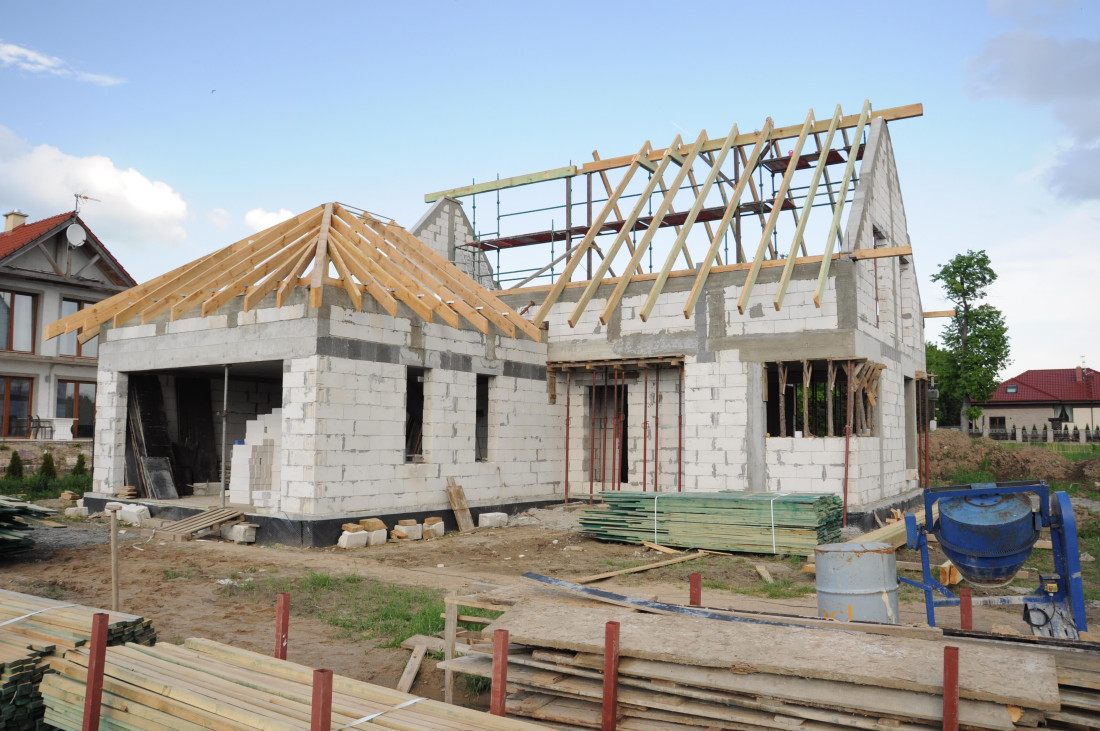

100 years ago the cost of construction was about $45/sqft when adjusted for inflation and today it is closer to $220/sqft, approximately 5x the cost. Blue collar wedges are pretty similar across time, but the cost of house construction (ignoring land) is dramatically higher.
The 1914 sears Model 147 house was 900sqft and cost $872 for materials, estimated at $1,530 with labor.[1] Adjusting for inflation from 1914 to 2020, that is about $22,000 for materials and 40K with labor.
Looking at 1913 US national labor statistics, the average baker in 1913 San Francisco worked 54 hrs/wk and made $0.46 per hour for an annual wage of $1,291[2] (or 33K in 2020 dollars)
The median baker in 2020 California makes 36.5K/yr [3]. The cost of new housing construction is $220/sqft[4], or 200K for the same size house.
http://www.searsarchives.com/homes/images/1908-1914/1913_014...
https://fraser.stlouisfed.org/title/union-scale-wages-hours-...
https://www.careeronestop.org/Toolkit/Careers/Occupations/oc...
https://ternercenter.berkeley.edu/wp-content/uploads/pdfs/Ha...