Hacker Newsnew | past | comments | ask | show | jobs | submitlogin
Launch HN: Stock Unlock (YC W22) – Investment Education for Everyone
100 points by hippofluff on March 11, 2022 | hide | past | favorite | 123 comments
Hi there HN! My name is Jake Ruth, and together with Nick Puljic and Daniel Pronk we are building Stock Unlock (https://stockunlock.com/), a web app that provides investment education and analysis tools. It’s great to meet you all… and speaking of “meeting”, Nick and I only met Daniel in real life a couple weeks ago even though we have been working on this for over a year… but more to come on that later in the post :)

As retail investors we noticed that many retail products have some combo of the following shortcomings: high paywalls, tricky to navigate web design, oversimplification of investing principles, and misaligned incentives that push users to trade more—instead of giving them adequate education to manage a successful portfolio. They are very non noob friendly.

Further, I am personally very “triggered” by the lack of financial education myself and friends were not given growing up. I am fortunate to be a software engineer, but it really hurts me to see a lot of close friends, and even family get bit by the financial system since they are not educated by it. And it’s not our fault. Much of America and the world falls into this bucket, which was exasperated by a deflationary financial brokerage environment that led to trading apps which would allow anyone to trade stocks in minutes from their pocket (for free!). Honestly, that’s great. Access to markets is important. However, many people are following a similar story line, you get easy access to trading for low costs/free, you probably started in the bull market from the covid flash crash, made some money if you’re lucky, but have since fallen into the red/realized how clueless we all are for what investing actually is.

I remember so clearly a few years ago looking at a Yahoo Finance page and feeling overwhelmed by price ratios, reported financials, stock prices cross stocks, analysts, different news articles from the same publishers saying the opposite headlines… It honestly felt impossible to learn. Especially since my family/close friends aren’t into finance or investing.

Then one day, sitting on my bed in NYC hiding from COVID in 2020, I stumbled upon Daniel’s Youtube account. I do not follow celebs, I don’t know famous people, I don’t twitter, but there was something about Daniel and the investment education content he put out that immediately had me captivated and drawn to his account. He is well spoken and presents investing and financial analysis in a way that I actually could understand, and it blew my mind. I proceeded to feverishly ingest his Youtube content for months.

I began to notice a pattern in Daniel’s videos, he would sometimes use third party sites to show investment graphs, but he would often open an excel sheet with 3-5 stocks in it (columns), and then fill in rows for financial metrics. I will quote Daniel “I spend about 5-8 hours a week making these spreadsheets, it takes a lot of time but it’s worth it”. So I’m an engineer sitting here watching this and I think… I could definitely write a program to do this. And better yet, I could give it to Daniel as a thank you for all the great work he puts into Youtube.

So on a weekend I whip up this program to automate his spreadsheet creation and give it to Daniel… I mean I tried to, but Daniel didn’t answer my Youtube comment! GASP!!!! Ok… so, I found his instagram, but still no luck. I was honestly pretty pissed, like this dude is so smart how could he not recognize that I can save him 5-8 hours a week if he used my program to automate his spreadsheet creation.

Well, another 2 months go by. Every week I iterated on the program more, started ranting to my co-worker at the time Nick (we were at Oscar Health together), and kept pinging Daniel shamelessly across multiple social channels. FINALLY he answered me… we ended up hopping on a zoom call, which itself went for 2-3 hours, a beer was cracked… the rest is well, history!

I was able to pretty easily write a Python script to hit a financial data API (Alpha Vantage at the time), and Daniel, Nick, and myself all saw a vision for us to create a software platform that actually taught users how to invest, without oversimplifying the process, and at a price that didn’t break the bank.

The moment at which this turned from a side project to a company, was when I shared my program with Daniel Pronk’s investing discord community and people basically freaked out. “This is the best thing ever”, “can you make it generate _this_?”, “how can I pay you for this”... I basically took the classic “push back chair from desk” moment and knew it was time to take this full time. Thankfully, Nick was also on board! We had a founding team of 3, and at the time the project was called “Stonk Reporter” (I’m still a bit salty we didn’t keep this name). After a long 4 month beta/pilot with around 200 users from Daniel’s discord, we launched Stock Unlock on December 11th 2021. Jake and Nick met Daniel for the first time a couple weeks ago, until then it was a fully remote co-founder relationship!

Today we provide a modern/easy-to-use web app which has data visualization tools for financials, and contextual, inline education. Sites like Investopedia are good for term lookup, but the education isn't given at the time the investor needs it. Typically you get confused, search the internet, and land there—we show it to you in place. For users who already know the ropes, our graphing tools allow users to compare 70+ financial metrics across as many stocks as they want. These tools either don't exist or are part of extremely pricey programs like Bloomberg Terminal (no retail investor can afford that). We have existing investors using Stock Unlock who say they save 80-90% of their time on company analysis with our tools.

Our current business model is that we give everyone a 7 day free trial, no credit card/totally free to try the site. We ask for email, but you can give a fake email if you want and we don’t verify it/anything like that. After the 7 day free trial we are priced at $6.99 per month / $74.99 per year (USD, prices will vary for Euro/Canada).

We build the consumer web app layer and get our financial data from another startup called Finnhub. We are “serverless” using AWS for all our backend infrastructure. We use Cognito for user auth, Api Gateway & Lambda (Python) for the API, Dynamo & Postgres for data store, S3/CloudFront/Route 53 for static hosting. The frontend is all ReactJS with special help from Material UI for our designed components/us not needing to write tons of CSS (yay), and recharts for the lib to help draw pretty graphs. There are also a ton of fun technical challenges that we solve, currency conversion/alignment for the 122,000 global stocks we support has been hairy/filled with edge cases, also data staleness for prices/market caps is another area of complexity. Not to mention building around a 3rd party HTTPS/JSON api and caching those endpoints/storing some data internally is a fun juggle!

Your feedback/your stories about any of the above or this space in general would be amazing. I look forward to interacting with everyone in the comments, we embrace constructive feedback and feel fortunate knowing that you will hold us to your highest standards.

If you do decide to try our application, please let us know your thoughts! We launched with a pretty raw MVP and are adding features to the site weekly, with no end in sight. Cheers!


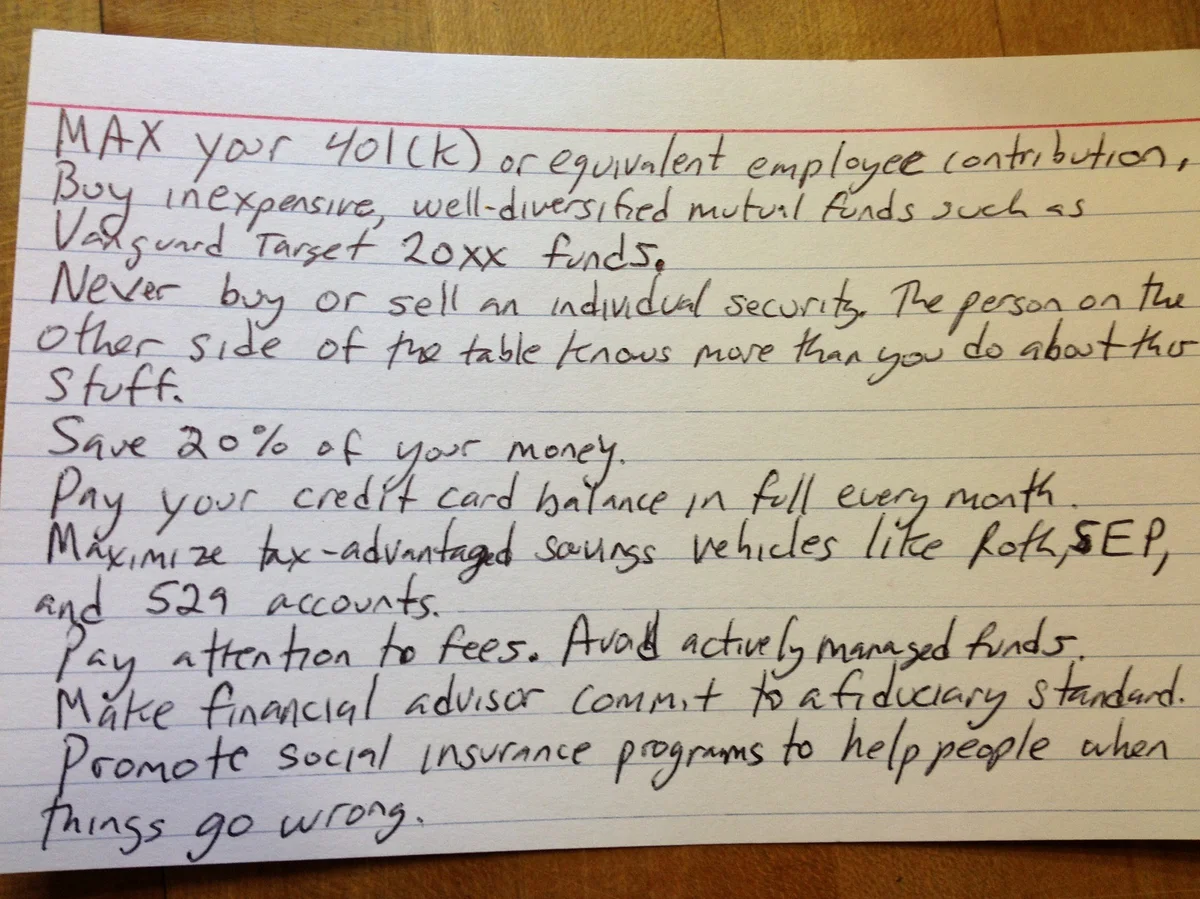
Jake, you say you want to help the retail investor... Then why are you only pointing them into buying individual stocks?

Most are better served with a more conservative ETF market index portfolio approach. Picking individual stocks can be part of one's portfolio at some point but it is a hard place to start.


Hi! I agree 100% that stocks are not the only investment vehicle, and you're right it's not meant for everyone to buy.

Also, we are developing support for viewing ETFs as I type this (well, Nick is today). Which will be released in the next couple weeks.

Our MVP here, is built around communities of people who want to learn more about stocks, as well as get better research tools than what they use currently. We do not have any intention of pushing people to buy anything, the "vibe" is moreso giving as much information and education as possible, which we believe/are seeing will lead to people making more confident informed decisions with their capital. Whether that's buying stocks, or something else, no skin off our back.

This is a great topic :)


Curious for you to go a bit further here. I’d argue two links [0] [1] have all the info a regular person needs to make prudent investment decisions. Why do regular people need your research tools?

More pointedly, and I ask this as someone completely unfamiliar with Daniel’s content, but does Daniel claim to beat the market or that his audience could beat the market? If so, there’s a moral hazard here, in the opinion of folks like myself that believe such advice is fairly dangerous.

[0] http://efficientfrontier.com/ef/0adhoc/ifyoucan.pdf

[1] https://www.bogleheads.org/wiki/Three-fund_portfolio


Hi! Sry for the lag on the reply here, I didn't have time to read those through fully but I skimmed both.

I want to make one thing super clear, we don't make money off users trading, we are an investment/analysis tool and we make no claims/would never be a predatory entity that makes claims of x% returns/anything like that. We genuinely care about educating our users, and then letting them make their own decisions.

As for the links you sent (thanks for that btw!) I would bucket this with a bulk of the education out there, that's existed for a while, but hasn't been solving the financial literacy issue. The reason we believe this is the case is that education you sent is boring/static white text. Most people in the younger generations just don't learn that way. Further that education isn't inlined/when you need it while looking at financials.

A lot of our users/the founders find it much easier/more inviting/more fun & interactive to learn with the "clicky" ? modules we embed inline all over the site to define everything in small chunks. We are finding this is a way to learn where you actually remember things, but more importantly are engaged/having fun learning it. We have yet to see a tool besides ours to execute on this properly since it's very hard to create a consumer product that makes learning investing easy. Most importantly noobies feel comfortable in our tool, 99% of people who are brand new to investing get scared to death and never start when sent 20+ 10pt size font articles.

Lastly, my point isn't to say those resources aren't great, they are. But statistically people will just not read that, and/or not internalize it since it's not being applied when they need it while researching numbers/S1 filings/SEC reports/etc


How in-depth do you plan to go? Black-Scholes? Fitting volatility curves?


Definitely not that deep! I would say those formulas/complex math are not things Stock Unlock believes are necessary for 99% of people to learn.

Surprisingly, most people don't understand price ratios, whats each line of a financial report means (i.e. operating cash flow vs investing cash flow). So you can maybe label it "investing 101", "Intelligent Investor" type stuff.


Can you give more info on fitting volatility curves?


Lookup the term Implied Volatility Surface, it is a visualisation of an option's volatility and value across time (usually derived from black-scholes I think, assuming european style options, american ones use others like binomial). Find a decent textbook on quantitative finance related to options and derivatives (as in actual mathematical modeling, not candlestick horoscopes), they would be able to explain it better.


Because they need to make money, and to do that, they need less people to believe what you said. That’s my cynical point of view


Being "confident" and "informed" are not virtues when investing for middle/upper-middle class people. They simply need to put money in a good ETF or managed money-market fund with low fees, and contribute regularly. No "research" should be involved.


Hi! I have a Msc in finance and a CFA. I've worked as a professional quantitative investor, and I've never purchased a single stock for myself!

I had a view similar to yours regarding ETF and average investors until 3 months ago. For many reasons, I decided to become more active on social media in order to increase financial literacy. I was shocked by the amount of marketing the 'middle class' are exposed to. Competition is intense, and giving good financial advice is actually an uphill battle. I consider this environment to be toxic for the average individual.

Is this app perfect? probably not. However, I view this type of initiative as an improvment!


> I consider this environment to be toxic for the average individual.

So to repeat what another person said: wouldn't the most accurate advice be to ignore all the marketing and use ETFs?

If people are inundated with marketing telling them to be active investors, telling them to be a more informed active investor is not the solution.


*wouldn't the most accurate advice be to ignore all the marketing*

Your point is right, but I'm afraid that the underlying advice is not applicable. First of all few people are truly in control of their attention span, and we are all exposed to marketing wether we like it or not. You might as well ask a dog to ignore the smell of food.

*If people are inundated with marketing telling them to be active investors, telling them to be a more informed active investor is not the solution*

The problem with some popular financial apps is that the marketing is 'built in as a feature'. My banking app allows me to create a 'saving account', which sounds like a good think to do right? However if I click, I will have ''investing options'' to choose, which are all financial product sold by the institution. These types of 'financial dark patterns' are all over the industry. In Canada, I consider those to be built in by law, and are not likely to change any time soon.

Managing investor bias is not something you can achieve with a mathematical argument; it requires patience, trial and error. People who are bombarded with marketing about stock trading will avoid ETF and trade stocks. I think that a lot of them would benefit a learning environment which was not created by financial institution to sell them products in the first place. You could then introduce a feature, where the apps suggest some ETF information if the portfolio is hyper concentrated in a few stock, etc.


Hi! I really appreciate this perspective, you're not wrong, but I do think there's room for a lot of investment styles. I know a lot of middle/upper class people that enjoy analyzing stocks for long term holds in companies they believe in.

I respect we won't cater to everyone, but the numbers/data we are seeing is showing a lot of our subs are middle aged/middle class people that are loving our tool. So some people will want it, some won't, that's my take.

If you ever get curious, please think of us! Again, thanks for the insight :)


> I do think there's room for a lot of investment styles. I know a lot of middle/upper class people that enjoy analyzing stocks for long term holds in companies they believe in.

So are you investment education or are you investment data?

The former pushes people toward a certain investment style, and currently that investment style is one that loses them money (as you seem to know).

It seems that you're trying to democratize something like Bloomberg. In the hands of an individual retail investor, it's essentially a tool for gambling. I don't think there's anything immoral about that, but the veneer of "making the world better" in your posts really rubs me the wrong way.

If your goal is to educate people for the betterment of society, tell them not to look at stock market data, not to pay attention to people like Kramer, and to put their money into ETFs.


> So are you investment education or are you investment data?

Both! For example, think investopedia is great but it's not contextual education, aka it's not given to you at the right time. I was able to learn best by applying the numbers with education and actually exercising/using it. This is also why I believe that the static white text/endless pages of definitions isn't the type of education that ends up working in this case (people have short attention spans/it's boring/dry).

Responding to your other messages, I appreciate your honest concern around the gambling. I agree that when people trade/try to see patterns in charts, buy/sell within a year or two, that is gambling.

We may agree to disagree on this one, but long term stock investing, when you buy and hold great companies for 5, 10, 20 years, is what we are going for here. We believe that when you can identify a great company, and have patience/the right long term mindset to DCA into it over time, you can do well. You can do that with a small % of your capital, we are also adding suport for ETFs and I agree those are also great investment vehicles for people that don't have the time/care to truly analyze individual stocks/businesses.


He can't decide for people what the best course of action is, only give them to tools if they wish to go down this rabbit hole.

It's meant for the financially mostly-literate and curious, not your mom/dad. It's for everyone who watches Jim Cramer.


So this isn't meant to get people to the point of being mostly-literate? Like what even is a stock and how do they work?


For anyone looking for investment resource targeted towards Indian Market.

https://indiainvestments.wiki is the best resource and free for anyone to contribute to.

Most people don't need to research individual stocks as OP said.

They should learn about XIRR, excel, risk and portfolio management (which will cover insurance, emergency fund, expense management), and different types of investment instruments.

The wiki covers all of it and answers frequently asked questions related to Indian Market.

Everyone push toward trading individual stocks because it's profitable for businesses. Brokerage earn more money through those trades whereas many AMC which manage direct funds lose money on transaction cost in initial years and only make up for it via other side income. It is the case in India.


Guess what ETFs consist of...


That’s the point. Most investors are served perfectly fine by an index fund and functional broker. That’s it.

Active trading and expensive funds are your enemy as an unsophisticated investor. VTI or ITOT and chill, and as long as you have income, discipline, and an emergency fund you’ll do better than most.

https://longnow.org/ideas/02018/02/09/warren-buffett-wins-mi...

https://longbets.org/362/

https://www.npr.org/sections/alltechconsidered/2016/01/08/46...

https://media.npr.org/assets/img/2016/01/07/index-67f786d0f1... (“Never buy or sell an individual security; the person on the other side of the table knows more than you do about that stuff.”)


My point is that ETFs by definition are a group of stocks, often grouped by sector unless talking about a whole-market ETF.

For example you could have invested in SPY, or QQQ, or IWM at the bottom of the bear market in 2008, and walked away with vastly different returns on Dec 31, 2021. Those are all indexes. Even from 2020 onwards, if you had picked XLE you would have had different returns till date than if you invested in XLU or some green energy ETF, or even 2020's darling, ARKK.

Just saying invest in an ETF doesn't mean anything. They are baskets of stocks, and as the macro environment changes, some ETFs will perform better than others. In effect, even an all-encompassing ETF (VTI?) will only perform well in a bull market. Just because we've been in a decades-long bull market doesn't mean stocks will keep going up forever.

Is the answer stock picking? Absolutely not. However, ETFs are not the "practically risk-free return" they are sometimes billed as.


Entry and exit points are material, but you don’t know when to enter and exit to maximize profit, hence “time in the market beats timing the market.” On average, you should come out ahead (based on available data and back testing).

These are well worn passive capital market investment principles, with copious amounts of supporting data. As an individual, it is very difficult to do better than long duration broad equities basket exposure with a low expense ratio.


"Exposure to stocks" is not the problem. Thinking you know which stocks to pick is the problem. Robots and random chance are better than human intuition, partly because of institutional manipulation of markets.


I disagree with the proposition that it is impossible to pick good companies. Anyone with half a brain could have invested in AMD as Zen 1 and Zen 2 came out, and the writing was on the wall for Intel. Same goes for other industries, if you are willing to do your homework and manage your risk.


It's easy to invest in a single stock that goes up in the longest bull market in US history.

It is much harder to beat the market, especially in a bear market.

The core tenet of investing is that you make a bet that other people see as risky. We have enormous amounts of research that active investing at an individual level can no longer beat the market in the face of widespread insider trading at the investor level, HFT, etc.

You need asymmetrical information to beat the market, and individuals just can't get it.


> It is much harder to beat the market, especially in a bear market.

This is the crux of the Warren Buffet vs Hedge Fund bet, and why it failed. Buffet quite possibly realized that a new bull market was about to begin, and the market would beat a hedge fund. When the bull market ends though, let's see if hedge funds don't start beating the market with their long-short-cash strategy.

I am nowhere near hedge fund territory, but do have some qualms about whether this bull market will just grow to the sky or have a big reset sometime quite soon, quite possibly reaching 6000 on the S&P before that.

Also, I find the efficient market hypothesis quite bullshit, so there's that.


this^ 100%

The companies and corporations that sell investment vehicles and services try to "make it cool/funny" to not understand money and that "rich people have their wealth managed for them", a bunch of bologne!

That being said, it's not simple, and people need to be serious about investing, it's very easy to get burned without the proper education/patience


What Yahoo! Finance did right was that if you had a watchlist of 100 stocks, all of the news from those 100 stocks would show up in one feed, instead of 100 separate feeds. It would also be good if I could screen by news source, so that spammers like Motley Fool could be screened out, which Yahoo! did not have. Yahoo also had mass importation of tickers via cut and paste, instead of one-by-one creation of watchlists. It would also be good to have % return of the stock from the day it was inserted in the feed. In terms of charts, it would be nice to have daily / weekly monthly charts in one glance, so I can see trends over different time frames. I don't care about screeners or charting that much because I have other places to screen stocks and do charting, I'm looking for a tool to follow the news and at the same time get a quick glance at the chart over different time frames.


Take a look at https://biztoc.com


Wow... TLDR reply here is: I am extremely grateful for all these feature requests (thank you!!!), we are recording all of these internally! We have been/and will continue to build Stock Unlock around feedback like this (from the community!)

More context... All the features your described for our watchlist are great, the current watchlist feature we have right now is pretty "bare bones" and we are planning a lot of improvements to that in the coming months. (Sneak peek: We are also building a portfolio tracker too!)

I also am on the same page as you with not needing to pay for a screener/things that are already free, we are doubling down on the tools in our platform that we just couldn't find a good/affordable solution for elsewhere (hence some of the prioritization of these features, it's a fun balance!).

The features you're requesting around news is great. We will be looking for a good way to find/filter news. I totally agree that a lot of news outlet are... so terrible I just never ever want to see them.

:)


I've worked in technology at very large investment banks for quite a while. I've seen the pattern of new software engineers coming in, learning a little bit about finance and suddenly they're day trading equities and equity options. They get lucky or not, but always give it back and more.

Investment banks have literally rooms of people who spend 10 hours per day 6 days per week specializing in whatever security you're thinking of buying or selling. Literally - there are people that have a full time job specializing in out-of-the-money AAPL options with a 6+ month expiration. They also spend millions of dollars per year on proprietary data and software engineers to weaponize that data.

If you're a full time software engineer spending 10 hours per week researching and trading while relying on free/low-cost data, you cannot compete long term with professional traders. It is that simple.


Hi! We would have so much fun having a coffee/beer together over this/I would love to learn more about your experience.

To say it simply, I agree! Like completely, my own opinion here (building on yours) is that it's really unwise/not smart for anyone, whether they are an engineer or not, to day trade/trade options/trade on short timelines.

Stock Unlock is built around long term investing, and being able to more quickly learn how to understand a company. We don't push/have anything that would influence someone to trade/invest, our tools are very catered to a long term investor and facilitating their investment education journey and analysis. For example, we have no options anything in our site, no day trading charts. However we do have very in depth data visualization tools around historical financials/ways to compare companies financials/and ways to dive further into a companies executive team/all the other things you'd want to look at when considering a long term hold.

Shameless plug, I am very "bullish" on also teaching the investing mindset, basically platformitizing great minds like Warren Buffet and Peter Lynch so people know what to expect when buying a stock in terms of price fluctuations/unpredictability of prices short term.

If you're up for it I'd love to continue this thread, thanks for the thoughts!


our tools are very catered to a long term investor

That's awesome! I'll have to check out your app. I am a big advocate for a three-fund low-cost index approach(1) but I acknowledge that there can be specific circumstances per investor.

basically platformitizing great minds like Warren Buffet and Peter Lynch

May I also humbly suggest researching John Bogle, the founder of Vanguard? There is a very active investment community on https://www.bogleheads.org/forum

--

(1) Vanguard S&P 500 Index Fund, Vanguard Total International Stock Index Fund and Vanguard Total Bond Market Index Fund. Those three funds give a diversified exposure to the entire market. Using Vanguard (or Fidelity) is a great way to lower costs as is using a simple three-fund portfolio. The thing to avoid is the approach that many high-fee money managers use to put someone into 12-15 funds that have high loads and then rebalance monthly while they're marking up the buys and marking down the sells. I had a coworker one time realize that he was paying high five figures in fees per year to a certain unnamed popular money manager through their hidden fees.


I was unaware how active Bogleheads is, that seems like a great forum thank you for sharing that.

If you try Stock Unlock I'd love to hear your thoughts ^_^

Wow 5 figures in fees... Not cool! On thing that personally kicked off this journey for me was the thought that I didn't have to have someone manage my money for me and that it brings great peace of mind and calmness when someone has fully understanding of how their money is invested. It just takes some time/care to learn the basics just like any subject

Cheers friend!


Have you considered other forms of financial literacy?

For example, many people don't use credit cards properly.

Many people don't take advantage of lower interest loans.

Many people don't understand the importance of certain forms of permanent / life / disability insurance.

These are all things I hope my kids get to learn _before leaving high school_!

Your tool feels like it could really expand financial literacy across the board, not just for investments.


I love the way you think! 100% we are considering all of this.

Right now we are a team of 3 and we haven't had time to expand our business into those other niche's. But you best believe we have our eyes set on all the above! There is such a big need to have easier/more fun ways to get the public more aware about these things.

I'd love to hear more thoughts if you have any :)


There are lots of schools and nonprofits that offer this education. It's not a profitable business model.

OP is expecting to get money from stock pickers and day traders, which is a much more lucrative market than the average "person who doesn't understand retail banking products".


Don't take this the wrong way but I've had a quick glance at your website and I don't see what's different from your competitors.

Looking at the homepage all I see is "yet another" .... yet another screening tool, yet another charting tool, yet another analyst expectations tool, yet another watchlist tool.

And frankly, for a company that claims its all about "investment education for everyone", I don't know why you are selling stuff that does not work.

Screening tools don't work. They don't work as a pure concept (i.e. there's no magic screen to make money / avoid loosing money). They don't work on the basis that you are mostly screening against lagging data (company reported financials). In the right hands screening tools can sometimes give you something resembling a "shortlist", but there's still a whole load of donkey work to be done after that to verify/validate.

Technical analysis (reading tea leaves on charts) doesn't work either.

Analyst expectations ? Give me a break. Most analysts are sell-side, not buy-side.

Its like come on guys. If you're about "investment education for everyone" then you really need to do the Right Thing (TM) and explain to people there's no magic wand, there's no shortcut to hard work, and explain to people what they really should be doing, i.e. understanding what they are investing in (understand the company, understand the industry, understand the geo-political context), and explaining people how to evaluate their appetite for risk and how to invest within that risk profile.


Hi! Not taking this the wrong way at all, I appreciate you taking the time to share these valuable thoughts.

"explain to people there's no magic wand, there's no shortcut to hard work, and explain to people what they really should be doing" - we could not agree more, I'd go further to say this is what we are building, so we are going to dive deep to make sure we are putting across the right message when users first hit the website. (Side note, I think you'd love Daniel Pronk's Youtube channel!)

I agree about screeners, Stock Unlock doesn't have screeners. I am curious what other sites you have used that have what we do in the "free form" tool (maybe bloomberg terminal but they cost around 25k a year-ish)? Also a huge angle on this is the embedded education, I'd love to hear your thoughts on that. The embedded education has been helping newer investors feel comfortable/learn terms/learn how to analyze financials on their own. We find many other sites have sub par design or they present things in a way that assumes the user is already an investing pro/or has a finance degree

As for analyst data I actually agree, I had a light argument with founders about this but "lost" since many investors and most of our users expect this. But for me personally, I never listen to analysts. And low and behold... it's one of our most viewed pages after insights tab and free form tool.

Again, thanks for being honest. I appreciate that


> Stock Unlock doesn't have screeners

"Stock Unlock quickly analyzes any stock and highlights the positives and negatives we find" is basically the same thing just on a per-stock rather than screener basis ?

The animation on your website is basically showing that, assigning red/green flags based on the usual screening suspects.

Unless you are going to tell me that output is specifically adapted to each individual company and the industry where it operates. But I doubt that. Since to do that correctly requires the sort of manual work analysts do, you can't automate it.


> Unless you are going to tell me that output is specifically adapted to each individual company and the industry where it operates. But I doubt that.

That's what we do! For example, if you look at a REIT stock like "bxp" that will have different insights than BAC which is a bank stock. Same for MSFT, which is not a REIT or a bank, and must have different financial metrics to care about.

No automations, we are working HARD and coding in a bunch of static text/education/etc (200+ pages and counting of custom education content to date).

Daniel Pronk is the content creator and creates the product specs for how we analyze different industries. We actually aren't doing anything too fancy here, you request a ticker, we pull it's financials, run analysis on them, then print that to the user. MOST importantly imo, we have detailed explanation for everything/never push our users, but rather guide/teach our users how to analyze and interpret these things for themselves so they can make their own decisions.

If you have time to crawl through the tool/click around I'd be curious to see what you think. Again, I am not taking this as offense, I'm grateful you're giving raw feedback. It helps us improve!


> if you look at a REIT stock like "bxp" that will have different insights than BAC which is a bank stock. Same for MSFT, which is not a REIT or a bank, and must have different financial metrics to care about

Do you show non-GAAP measures for its divisions? That would be neat.

From the front page, this looks like an interesting, if somewhat undifferentiated, analysis tool. (See most brokers’ free stock screening/filtering tools, for example, IB’s or Fidelity’s.) The UI appears well built. As a trainer for would-be brokers, it’s fine. Where it loses its education bona fides is in its stock-analysis orientation. That paradigm contains an implicit bias towards stock picking. (Versus, e.g., a portfolio-analysis paradigm.)

The fundamentals approach is laudable. But it’s surface level. If you can’t construct financial statements from scratch, memorising a bunch of accounting ratios doesn’t drive first-principles understanding. If you can’t model a capital structure, you’re scratching at surface level stats mined to bits by the pros when e.g. a bond issuance is announced.

All that said, your company could make money if it tapped into the take-a-screenshot-and-tweet market. It won’t help people understand. But many traders don’t care about that. That’s a valid target market.


> Do you show non-GAAP measures for its divisions? That would be neat.

We do show this, this can be found on insights tab, financials tab (shows GAAP financials, 20+ years), graphed in free form tool, and seen in the "quick view table" for stats next to a stock graph on a stock landing page

I totally agree, we do look a bit similar from our marketing page, these comments are insightful and it will lead us to find different branding to better put across what we are. So thanks again for that!

You are also right, financial analysis is just one piece of the puzzle, there are a lot more things to look at when deciding to make an investment.

> All that said, your company could make money if it tapped into the take-a-screenshot-and-tweet market. It won’t help people understand. But many traders don’t care about that. That’s a valid target market.

We will be working hard here to prove that isn't our brand, but I don't blame you for getting that vibe based on how our marketing site looks. Our site is the only website, with embedded/contextual education inlined everywhere, we defined everything, and many new investors have told us personally how helpful our site has been to help them getting started. Our companies mission/incentives are for our users to learn how to invest the right way. We don't make money from user trade frequency, it's from our subscriptions.

I don't mean to sell at all, I get super passionate about this stuff and this is a very engaging thread. (Hopefully it's not coming across that way, but if it is I can handle you telling me that and I'll learn quick!)


I agree with you almost completely, except where you have gripes about "lagging data."

Every finance professional reads 10-K and 10-Qs, so I have no idea where you're coming from with this complaint. Where else are you getting finance information? CNBC? Teslarati?

The technical analysis and analyst ratings crap needs to go, for sure. I'm tired of seeing that bs. They're immediate signals someone's peddling amateur hour.


They need to make money and they can’t do so if people are putting their money into boring, index funds that outperform gambling on individual stocks.


I agree with your sentiment here that gambling on stocks is bad.

Our goal is to provide education and analysis tools, since we believe investing is not gambling. Even though, many people today treat it like it is. We don't make money/aren't incentivized on our users making/executing trades (unlike a lot of other services today).

I understand that our product isn't going to interest everyone, there's nothing wrong with only investing in index funds. That being said, a lot of people take 5-15% of their money and put it into riskier investments. Also, a lot of newer investors are investing in causes/things they believe in as a social/environmental cause. By being supplied with investing education and tooling that most people are deprived of/never shown, we hope that we can remove the word "gamble" from long term investing


> since we believe investing is not gambling

All investing is betting. Day-trading and forex "investing" are certainly gambling, and there is a lot of addiction among day-traders.

Stock-picking is more controversial in terms of whether to call it gambling, but if we know that nearly 100% of individual investors won't beat the market in the long-run, then it seems a lot like a casino, where the house always wins.


>(understand the company, understand the industry, understand the geo-political context), and explaining people how to evaluate their appetite for risk and how to invest within that risk profile.

Can you recommend any books/media for this specifically? I've often wanted this type of material but haven't been able to distinguish pop-economic feel-good/self-help books from high value ones.


> Screening tools don't work

There are some very successful investors who might disagree with that assessment somewhat, to put it mildly


> There are some very successful investors who might disagree with that assessment somewhat, to put it mildly

Like who ?

The first thing any "successful investor" will tell you is that there is no magic answer to investing.

If you accept there is no magic answer, then by definition screening does not work.

As I said. In the RIGHT HANDS, screening will give you something that MIGHT be a "shortlist". But that output WILL NOT be actionable, there will be a bunch of time consuming hard manual work to do after that in order to validate/verify/research further. Post-validation you will find most of what the screener outputted was indeed not actionable and IF you are lucky there might be one or two names on the list that are.

You can't just make some magic selections in a screener and expect it to spit out the next ten-bagger. It just doesn't work like that.


Setting up a bit of a strawman here.

I did not say screening tools do all the work. I said that they work. Onviously one uses screening tools as a starting point. But they are step one in every sane approach to analysis.


> I said that they work.

But they don't.

Companies massage their financials. This, by definition, throws off your screeners (false positives / false negatives).

Other times companies don't screen well, they might be technically "weak" if your definition is based upon screening, but they are actually perfectly viable and actionable investments.

I see both, a lot.


Who? And how much of their success was due to screening tools?


Well any of the ones that have made a profit, for starters.

Even indexes like the S&P 500 are nothing but prefiltered lists of stocks. S&P’s criteria include size and industry. Buffet is famous for filtering out stocks by his own criteria, mainly focusing on the balance sheet.

Nothing is certain, but a good filter increases the likelihood of profit, sometimes to a ridiculous degree.


> Well any of the ones that have made a profit, for starters.

Citation? I've made profit without ever looking at a screening tool or doing technical analysis.

> Nothing is certain, but a good filter increases the likelihood of profit, sometimes to a ridiculous degree.

Citation?

Analysts do tons of technical analysis and fail to beat SPY. Buffet himself even made a Long Bet with someone to this point. I'm surprised you'd use him as an example...


I just mentioned the S&P500 as an example of a filter. S&P500 is what SPY consists of.

Also, filter != technical analysis. Filters can work on any indicator. I use them on fundamentals, as do Buffet, Munger, Graham, Dodd.


OK, enjoy your billions with your filters.


You can disagree without being a dick about it


I don't think there's anything wrong with an application that teaches concepts like earnings ratios, fundamental analysis, etc. In fact it seems like doing it interactively while looking at real data would be a good way to do it.

However, I'm not really sure that this is the kind of knowledge that you talked about. I mean it certainly doesn't hurt to know of this, but I don't really think this is what is meant when we talk about American's financial illiteracy levels.

There are countless reddit posts where people don't know that tax refunds (except in the case of certain refundable credits) simply repay them for taxes they already paid in but did not owe that year. People who don't know what the difference between the minimum payment and the payment needed to avoid interest is. People who routinely use overdrafts as a form of credit. People who use high-fee prepaid cards to "avoid overdrafts" instead of simply not making them.

And as smt88 said, there's just not much profit in that. There are perfectly good websites, blog posts, and videos out there that cover this already, and it can't really be coupled with data for monetization the way stocks can. Frankly, while it absolutely should be taught to kids, there's a point at which if you're an adult and you can't sit down for five minutes to read an article about how your credit card works, its no one's fault but yours. I agree that optimizing for readability is great, but I don't know that "no one will read black text on a white page." That describes a book, after all.


Thanks for this perspective, I agree that financial literacy is far bigger topic than what we cover in Stock Unlock. Further, we definitely don't cater to every person today, we have a lot of users who love us but I know that there's also people that we don't appeal to right now (and that's okay). Daniel Pronk's Youtube I believe is a good way to understand what crowd we are catering to today.

In my personal experience there is a need for a better way to learn to get into long term investing, my hope is that we will continue to expand into other areas of financial literacy as well, but right now we are focusing on getting one thing right.


Without adding some sort of no-signup use or free tier, this looks dead on arrival. It's not clear what value add you're providing over existing options like Google Finance, Yahoo Finance, and a lot of smaller sites. As is, there's nothing compelling enough to make me want to take the high-friction step of signing up for a trial.

I understand the motivation, a lot of existing options aren't particularly good in varying ways. I just don't see any real differentiation here.


Thank you so much for sharing these feedback and I appreciate the insight.

I'm curious how much time you have spent on Yahoo Finance or Google Finance, almost everyone who uses those tools for over a day finds Stock Unlock and usually ends up subscribing since we are just worlds away from what they offer. We are totally free to try/you can even type in a fake email, so I'd be curious to hear more of your thoughts after you try out our tool.

I am not here to brag about numbers, but our growth/number subscribers backs up our own angst/annoyances we had as founders that every single tool out there today whether it's free or paid cannot do simple things like: "Show me Google/Apple/MSFT revenue for last 20 years graphed together, okay now lets throw price to sales in there", you can do this on our platform in 60s in the free form tool.

Further, for anyone that spends a lot of time investing/analyzing companies, YF and Google Finance just don't cut it. We are gaining subscribers daily that are leaving those platforms since they believe (and our telling us) how much value they are getting from our platform, at a price that is lower than anyone else (we care about our users free cash flow)

I really don't mean to come out here and sell, but I believe if you used our tool you would see/feel that we are not the same as the sites you quoted.

Again/to reiterate, your opinion is appreciated and thank you for taking the time to comment and share your thoughts :)


This is great! It was hard to really see the value at first, but once I watched one of Daniel's video and saw how he used it I was able to see the advantages.


This insight is 100!!! And thank you very much _blushes_

I cannot agree more, one our biggest issues right now is it take a person a good amount of time (relative to a "typical" site) so really see the value we offer/what we are aiming to do.

Daniel will be thrilled to hear that and thank you so much for taking a dive on Stock Unlock! We have been having so much fun building this, if you have any thoughts/feature suggestions/things like that, that come to mind, please let me know ^_^


You might want to secure the tickers allowed to be queried at your endpoint for getFreeFormNoAuth.

This should be done on the backend as currently you can just make open requests for any ticker currently to that endpoint, and it allows it [1].

[1] https://x8ijjvlkb0.execute-api.us-east-2.amazonaws.com/prod/...


Hi! Thank you for informing us of this potential issue, I really appreciate the good intention behind making us aware of this.

You may not agree, but here is the context on this: We purposefully do not restrict this, and actually do have the code that can restrict (if we want to turn it back on). Anyone can make a free account to Stock Unlock, and have unrestricted access to our whole site (and therefor the "API"). I personally do not mind if someone uses that URL as it's almost trivial to do the same thing with logged in cred/curl.

There may be something I am missing here and if that's the case please call me out on it. Again, thanks! Also, welcome to our "API" lol ^_^


> I personally do not mind

You personally might not mind, but I suspect the people who license you the ticker feeds might. ;-)


> You personally might not mind, but I suspect the people who license you the ticker feeds might. ;-)

You're right... We will double check this with them. Appreciate the nice push here and thank you. It's definitely worth our due diligence to make sure this doesn't breach any "grey areas" for the restrictions we have to not re-sell their api directly.


My company pays a lot of figures for xignite and we cannot make this data publicly available without some restrictions (it would cost a lot more to do so).

My purely non-legal take is we can distribute price and metadata for instruments relative to a user's portfolio or a defined demo set of data or charts to yours, etc, but not freely distribute price data without an attribution behind it. I _suppose_ a user could add literally all 300k instruments we support to get the price data and that would violate our agreements (similar stuff has happened before, just watch it), but we'd just have to deal with the user via our TOS.

Good luck, unfortunately the next level of APIs for financial data and licensing fees can be annoying, from almost free to like 6 figures overnight. Some exchanges are much worse than others, like arbitrary pricing based on how large your company is…


Thank you for all these insights! We also went "through the ringer" finding good quality financial data, that would allow us to build a consumer web app around.

I think it would be worth you time to look into Finnhub, you can tell them "Jake from Stock Unlock" referred you (if you haven't tried them already).

I like to think of them as the "anti-Bloomberg", their data quality is great and their coverage is excellent.

We also churned through meeting with a lot of the "legacy" data providers that have ridiculous/terrible contracts that make it complex/really annoying to build a consumer platform around.

I'd love to chat more about this! Very few people have really had to dive deep on this, so it's neat meeting others that feel the pain.

Lastly, the term I use is "data cartel". There is literally a financial data cartel, but I am convinced this is the decade that get's broken up, and entrepreneurs like us will have a lot more "innovation" room. Cheers!


Unfortunately, I _think_ the majority of it comes down to the exchanges more-so than the data brokers.

I can't speak to exact numbers, but I believe we were quoted like 6 figures/year for JSE and I think we pay like 4 figures/year now…? Exchanges can and do charge whatever they want…so when you need realtime data explicitly, even if you skip the data brokers, you'll just have to pay. You legally cannot use data for profit from some exchanges (if I recall, JSE is one). Some exchanges seem to have a majority of their revenue coming from data licensing.

Oh, then don't get me started on ISINs and all the failed "open source" attempts to not use ISINs and how some ISINs can be used without licensing while others require it.

---

My company is mostly AU/NZ (mostly because of tax, but quickly growing), so most of these data services didn't even support us until the past few years. We use a combo of like 10 data brokers to piece together coverage and we're still missing huge datasets (unfortunately Finnhub doesn't seem to cover any of them, but will look).

Luckily I focus on the Frontend/UX of our product and avoid this drama, but do feel free to reach out (contact via profile; I'm easy to find).

Good luck! I do like the idea of education, will follow. Even though I've worked in this industry for 5 years, I still find new stuff on the retail investor side of things. We'd love to educate more in our product, but we just partner with people instead..


Ah yes, the exchanges love to keep their data private/monetized... but they are a business too so I get it.

Lets definitely keep in touch, I'll check out your profile. I appreciate the support thanks!

ISINs... what a mess, ha! We don't touch those


> the term I use is "data cartel". There is literally a financial data cartel, but I am convinced this is the decade that get's broken up

It won't happen. Full stop.

Just the same as the marketing lies perpetuated by Bloomberg terminal competitors that they are the next "Bloomberg-killer". They are not (I've tried some of them, they don't come close, infact they are so far away its a joke).

The fact of the matter is financial data is HARD.

To ensure consistent quality takes a lot of time, a lot of effort and a lot of money. Data will have errors, some of them will be easy to spot (e.g. missing values) but others will be tricker to spot for the untrained eye.

Some financial data requires manual inputs which can't be automated (e.g. fixing bad OCRs, or inputting data that is only available in paper form).

The other fact of the matter is BREADTH.

Any Tom, Dick or Harry can have a good chance at getting you currency data, or BASIC data on US stocks, that sort of data is common as muck.

But only the Bloombergs or Refinitivs of this world can give you TRUE global coverage. Only the Bloombergs or Refinitivs of this world can give you more advanced GLOBAL data such as swaps, swaptions, CDS. Only the Bloombergs or Refinitivs of this world can give you true IN-DEPTH and GLOBAL fundamental data for any company on the planet. Only the Bloombergs or Refinitivs of this world can give you many decades of GLOBAL historical data.

You would need billions to properly compete against Bloomberg or Refinitiv. And that's only the startup costs of getting you to the point where they are today.


You're speaking my language! I agree with everything you said. We are actually in talks with Refinitiv, they would allow us to re-sell their data on our website (bloomberg will not).

Here's my two cents here/my angle. I think that 95% of the data in bloomberg terminal isn't needed for the common investor. Further, companies like ours will not replace Bloomberg terminal, we don't plan to go for their customers, and we know we cannot compete with the ridiculous level of data they have. Honestly, full respect and hats off to them they have worked super hard to build that up and deserve their moat.

I do think there's a ton of room for more practical solution that works for the common person (not a financial professional) and that there will be more decentralization of financial data, maybe not all of it, but I see it happening now where companies like Finnhub and others are slowly building their own empires/chipping away at their own custom data and I think there will be competitors that creep up. I guess time will tell though!

It really is a fun snaky problem to solve, I love solving problems that people think are unsolvable, maybe I'm dumb (probably) but it makes the process all the more fun when you know you're swimming with sharks


> I think that 95% of the data in bloomberg terminal isn't needed for the common investor.

You'd be surprised.

For example, good old fundamental data.

The cheap competitors won't give you full coverage.

For example, little (but important) details based on adjustments detailed in financial footnotes. That won't be there on the cheap sources, but it will be on Bloomberg/Refinitiv and not only that but they will let you click through to the actual precise location in the source content so you can trace where they got the number from.


Stock Unlock has 20+ years of fundamental data for 22,000 US/CAD stocks, and as of today 122,000 global stocks. And the data is high quality, we churned through 3 different data providers building our beta to find this.

Finnhub is not a "cheap" competitor. The entire financial system for executing trades/brokerages has been deflating for decades (used to be $50 per trade online, then $7, now free... 30+ years ago you had to be rich pay a lot and phone in to a broker at an exchange) and that is also happening to the financial data that has been behind the walled gardens of companies like Bloomberg.

So things like fundamental data are definitely becoming way easier to get, and the huge statue (Bloomberg) as I see it will continue to get chipped away at, I am seeing it now, but I guess time will tell here. It's totally possible I'll be wrong, but the evidence I see it stacking up/we are building in it everyday


No problem, just looking out is all! Best of luck!


People like you are awesome, again, thank you! This did result in us wanting to double check we aren't entering a grey area with our data provider.


I'm somewhat late to the game, but first of all, congrats not just for being bild and trying to shake up the state of fin-ed apps, but also for the excellent job of communicating that you are doing here.

I have lightly researched David Pronk you provides you with the actual financial content, and he himself claims on his website he is not a financial advisor. While I don't mean to discredit him in any way and don't want to imply his advice is bad (it seams reasonable enough for someone like me who doesn't know too much about finance), I am still wondering why you didn't also hire a professional to audit what Daniel has written? There are various certificates within the finance industry and it would increase my trust in our offering if I knew that a professional with at least some experience and/or certificats has vetted it.


Hi! Thanks so much for taking a look at us/Daniel and sharing your thoughts. You're not too late on the comment, and yes we like solving big problems!

I totally respect your opinion here. The type of education we are providing is not hedge fund level trading algos/any deep monetary theory, it's pretty bare bones stuff like "how to understand/use price ratios such as p/fcf", or "what financial metrics should i look at for bank stocks"

If/when we get to deeper topic, and actually have money/aren't a scrappy bootstrapped startup, as the CEO I am 100% going to continue to make sure we are properly resourced/reviewed so that our content stays trusty worthy/helpful for our subscribers. If you try the app I'd love your feedback! Think, investopedia type stuff but with examples and actually inline in our app when you need it, not as a standalone piece of info you need to go to google for and then forget what you read the next day


I share the concern of others, so won't waste more space here.

But I'll ask for results/case studies :) What are some trades you/others have made by using this tool which resulted in gains?

Describing successful uses of the tool would go a long way in getting potential users at least excited and believing they could do the same.


Hi! This space has a lot of "trust issues" and I completely agree with the sentiment that this type of headline/web app has seemingly "crossed our path" before, and that this may just be another one...

We launched on December 11th, we don't have numbers on "trades" since we don't suggest or push trading. Long term investing is more of the vibe, and the time frame is too short for anything meaningful to share there. Short term trading is hard/98% of people loose money after 2 years, we aren't about that.

What I can say is this. Daniel Pronk, many other financial youtubers, myself, and our users have reported the following (not exact quotes, I'm paraphrasing): "Stock Unlock saves me 80-90% of my time it used to take me to analyze a company", "The insights feature really helps me get a quick first look at a stock when I start my analysis", "education mode is a game changes, finally a website I can use and learn how to invest"

The last thought I'd leave here, financial youtubers have millions of followers, and many people are looking for a way to learn how to invest, and not have things abstracted/done for them (these tools just do not exist in brokerage sites today). This tool is basically a platformization pulling together all the knowledge basins from Youtube accounts/other tools priced way too high.

(7 day free trial/no credit card/no pressure to purchase anything) Our price is also, the lowest out there, for the most value. There simply isn't another product out there with our feature set at our price point, not to mention education embedded everywhere makes up approachable to all investors, not just experienced ones.

I feel that may be too long of a response... but here we are. Thanks for giving me the opportunity to make a case for that, I'd love to continue this thread :)


Congrats on the website and good luck.

I'm not sure I agree that there isn't Financial Education out there? I've used Schwab for 20+ years (yes old guy here) and now TDAmeritrade and I can tell you, they are all about education.

Have fun building your idea


Hi! Thank you so much, super appreciate the "congrats", woo! _enqueue rockets_

You are super right, there is 100% a lot of investment education out there. For my generation, no one I know (including myself) is going to go through static content/white pages with black text and just read that. Further when it's not contextual/inlined with the real financials it's hard to make that connection/memory commit.

Building on that, an insight we had here is that education needs to be provided when you need it. And most investors have no idea when it's a good time to learn a p/e ratio for example.

One thing we did in Stock Unlock, was put inlined education, everywhere, defining every term.

Given your experience in this space it would be an honor (seriously) to get your honest thoughts about how we are doing it. Daniel Pronk has written 200+ pages of custom education content which is embedded through 100s of interactable widgets throughout the site.

I hope you have a great day, the markets are pretty turbulent out there!


MSCI World ETF.

There, I saved you not only $75/yr but also countless hours of your time.


This is a great ETF! Stock Unlock is adding support for ETF's in the next couple weeks ^_^

I would like to add, a lot of investors will have a majority of their holdings in indexes/ETFs/Mutual Funds, but that doesn't mean you can't take an allocation and put it into other assets, that some may consider more risky (i.e. an individual stock).

If you ever get curious about looking at stocks/"opening the hood" I'd appreciate it if you thought of us, if not have a great day. Thanks!


This looks more like a re-skin of the FinViz Screener more than a new product. The only difference is you have to pay for Stock Unlock


I'd love to hear your thoughts after using our tool, Finviz is a stock screener, Stock Unlock does not have a Stock screener. I'd love to gain more insights on your thoughts here so we can understand how we appear "at a glance" from the consumer lense.

Is there somewhere on our marketing material that makes it seem that we are a screener? If that's the case we would love to iterate/make it clear we aren't a stock screener.

Thanks for this insight ^_^


From your front page

"Compare & visualize financial data"

"Unleash the power of our Free Form Tool to compare stocks across 60+ financial metrics like reported financials, ratios, growth and more, in an easily digestible visualization"

"Over 60 financial metrics to compare"

"20+ years of historical data"

"Easy to use interface"

"See analyst price targets, rating changes over time, EPS & revenue estimates, and more"

"Quickly view analysts most recent recommendations and how they have changed over time"

"Gain insights into the future performance of companies"

I can keep going, but these are all things I and people I know use FinViz for

Why gain insights into future performance if you're not screening stocks for purchase? Your comment about not being a screener confuses me. It sounds more like. "Our product owner doesn't like the word screener"

If your additional payment-worthy feature is explaining the technical terms. FinViz also explains them https://finviz.com/help/screener.ashx


This makes a lot of sense, we are going to work really hard internally to work on our branding/what our marketing site is saying. It seems that we aren't properly conveying what we are, and that's on us. I'm grateful for you taking the time to bring this to our attention.

I'm all ears for any other feedback you have!

> Why gain insights into future performance if you're not screening stocks for purchase? Your comment about not being a screener confuses me. It sounds more like. "Our product owner doesn't like the word screener"

Most of the insights we have are analyzing past financials for things like "is this company profitable", "is this companies dividend payment > than their free cash flow" for example. I did look up the english definition for "screener" and it's a bit vague. I always viewed it strictly as an input tool, where users enter in criteria and then get "screened" search results which filter from a large DB/etc. I may be mistaken if that term applies to more than just things like finviz, but that's my experience with it. I've never seen someone use the term "screener" for a new feature like ours that doesn't conform to/behave like any other screeners I've used to date.

English is hard lol, I prefer Python :p


I don't care what you officially call this thing. I'm calling it "Stonk Reporter".


I love you


Who is your 3rd party data provider for the stock fundamental data?


Thanks for this question, we current use Finnhub (https://finnhub.io/). We are also in talks with other data providers since as we scale we see ourselves connecting to multiple, but it's just Finnhub for now.


You had me at "Stonk Reporter"


_virtual high five_


Ah to be young and enthusiastic. FYI “retail investor” is a derogatory term you should probably avoid using.


Hi! I am unaware of this but would love to learn more, I hear/and use this term daily with a lot of different people and this is news to me.

Any resources you can share for me to gain more knowledge around this? Also is there a term that is more acceptable we can use instead?

Thanks!


What are your thoughts on 99% of fund managers underperforming the SPY?


funny answer: 99% of fund managers aren't on Stock Unlock

real answer: Are those actively or passively managed funds or both? And, fund managers are people to, and the public is lead to believe they are great/good at what they do but the truth of the matter is, they aren't. I actually don't see the value in funds, the reason Stock Unlock exists is that we as a society have been manipulated into believing investing is hard and we must use the products of big banks/big finance to manage it for us, that in my opinion is a lie.

I have hard opinions here so I'll stop there, I can go on more if you'd like to continue this thread. I love chatting about this


My initial thought when I see it is "for everyone" is "not for me" - who is it actually for? You have to have some initial target persona that needs this info today, right?


I see your point here, honestly it was incredibly challenging to pick only 4 words in our title so we may have missed the mark there.

Thanks for giving me the opportunity to clarify: we are a product for anyone who is curious to learn more about investing, as well as for any existing investors who want to save time/money with our powerful tooling like the Free Form tool

Many of my friends who are financially illiterate are loving the tool, as well as financial YouTubers and professionals who love the simplicity and ease of our data visualization features all over our site to easily spot trends/analyze companies they may want to invest in

I'd love to clarify more if you have additional questions! The best way to see our value is to use the tool, which is honestly something we need to work on since it's not immediately obvious at a glance why we are a great platform


Do you happen to be hiring customer service people?


Not at this time, we simply don't have enough CS volume for a team.

That being said we are in a growth trajectory to need a team likely by years end. If you're still interested then I'd love to touch base! My email is predictably Jake {at} StockUnlock [dot] c0m (take that web crawlers!)


Does this tool use any kind of valuation model?


We don't have any valuation models right now, we do plan to build a simple DCF model soon though!

Right now one of our most asked for features is to be able to graph/project future values (i.e. net income) and show potential future prices at various p/e ratios, etc.


Please put a TLDR at the top of this post. There is currently one sentence that refers to “financial education” but no further details on what that entails until you read a long story about how you met. I skimmed the post but still don’t know what market you’re in or how you’re differentiated. Most HNers will care more about your product/vision than the story of how you met.


I would normally agree but when editing this text I found it so exuberant that I just decided to leave it as is.


You're right, there likely was an opportunity for a TLDR there.

I will post one for you here for your convenience:

TLDR; Stock Unlock is a web app providing investment education and analysis tools, which is built by a group of stock nerds with an interesting company origin story. We are on a mission to show everyone that investing isn't meant to be hard, the tooling today is just inaccessible/hard to use. By focusing on education and building tools which save our communities time, Stock Unlock is looking to be the online place for everyone to learn to invest/manage their own capital.

I hope that's not too sale-y? I am much better at writing code than english, I promise :p

If this is still unclear please let me know and I'd love to give more insights.


This helps, but it's still pretty high-level. Investment education could mean a lot of things, and it's not quite clear how people interact with the product.

Also, I have somewhat of a shady knee-jerk reaction when I hear about any stock-analysis-tools-to-help-you-make-money. I always think "if this is such a great system, why don't you keep it a secret and use it yourself with your own money or money you've raised?" If getting a few dollars a week from a bunch of people is more lucrative than using the tool internally, how valuable can the tool be?

Just my 2¢!


Our investment education right now is 100s of interactive "?" widgets all over the site that are built from 200+ pages of definitions written by Daniel Pronk. Things like definitions, how to calculate, how investors use this, etc (I hope that further clarifies, you're right that "investment education" is vague)

And I see your points and it's definitely a trustless space we are in which is why we are built off the ground from discord communities/not people leaving finance jobs in suits. We will work on our branding, we never promise people will make money, only that we provide resources to help people better analyze and understand stocks. Sure, that should result in better money management, but as a co-founder I'd never promise returns/tell someone this will get you rich

Your 2cents is worth a dollar to me. Appreciate all this!


This looks really cool! I really like the free form chart builder. I work at Simply Wall St and we also make financial data easy to use and understand. We’ve realised that a bigger portion of our effort should be spent on educating individual investors so it looks like we’ve come to the same conclusion as both of you.

If anyone is keen to checkout Simply Wall St (https://www.simplywall.st), we have a 7-day free trial and a free plan for ongoing light usage.


Frankly, all I've learned here is that if I want a co-founder in 2022, I should find a YouTuber.

IMO building tools for individual stock picking is not the way to go. If you truly want to financially educate, I'd start with a MOOC explaining different perspectives. The reason for different perspectives is that I am also not a fan of the ETF only crowd. I guess some of them don't know what happened to Japan, who's to say that such a thing won't happen to the US? Hence, different perspectives are needed. Also, I feel that Benjamin [1] is showing a doing a good job in telling me in a funny way on what not to do.

You have a YouTuber as a co-founder, from an mission-driven perspective (financial education) I'd consider stratifying your crowd to beginners and non-beginners. Non-beginners should be redirected to the YouTube channel (assuming your YouTube co-founder gives solid advice, which we'll see).

YouTubers that I believe that give solid advice:

- Patrick Boyle (amazing mindset, overarching view of markets that's it, no investing advice but I feel inspired to think like him)

- Benjamin (on what not to do)

- The Plain Bagel (rock solid ETF type of person, but also a market perspective like Patrick Boyle)

- Ben Felix (kinda like the Plain Bagel)

- Bogleheads is a good thing to Google :)

- New Money (he's in between this list and the next list. His own opinions are meh, the investors he follows such as Peter Lynch and the lessons he summarizes are awesome)

YouTubers that make seem to make sense but I'd advice to stay away from:

- Meet Kevin

- Stoic Finance (kinda like Patrick Boyle, except Boyle is way better IMO)

- Real Vision Finance

Note: these YouTubers clearly have their heart and mind in the right place. I simply don't think they give solid advice, but they aren't scamming and also they don't give junk advice. The issue is that their advice is very very tricky and needs to be seen through a lense of an experienced investor.

Bad:

- Andrei Jikh (fun content but the good advice that he gives are better stated by the channels that are actually good)

Utterly horrible:

- Anyone teaching technical analysis without hard data and strong evidence, not just "yea but Wyckoff". No, if you can't at least show as much evidence as the book The Intelligent Investor, then you have no business in teaching TA (and this is a very mild criterion, too mild maybe). Also while giving that evidence, it needs to be contrasted to actual quantitative methods (a less mild criterion).

- Anyone telling you to buy crypto

- Anyone not at least attempting to show a full picture but immediately telling their story while heavily emphasizing you should use their system

[1] https://www.youtube.com/channel/UCkcnYVAVZQOB-nXHechtXDg/vid...


> Frankly, all I've learned here is that if I want a co-founder in 2022, I should find a YouTuber.

Honestly... fair, it was pretty story heavy. I also agree though, Youtubers have existing audiences and communities that you can solve problems around.

I am curious if you have an opinion on Daniel Pronks channel? It seems we value the same things, getting information in a way that isn't opinionated, but rather something like: "hey, here's what I think and here's why, here's where I could be wrong, what do you all think of this? Lets talk about different opinions in the comments, etc". I find Daniel Pronk is the best (just my opinion of course)


> I am curious if you have an opinion on Daniel Pronks channel?

In the coming months I'll have an opinion about him. I haven't watched enough of his videos. It's tough to distinguish "stay away from" versus "good", since both categories seem to be well intentioned.


Agree with you on Boyle and Bagel being good and Jikh being bad. Strongly disagree with you on Meet Kevin. He's on my bad list. Just my opinion.


In terms of educating people on finance, I feel it's much better to say that Meet Kevin is utter trash than it to say to distrust Patrick Boyle.

In fact, I'd even go so far that it's better to say anything is trash and keep:

Bogleheads

Ben Felix

Plain Bagel

Patrick Boyle


No offense but I don't see the point of this. Take a random sample of your users using whatever tooling you build, vs me who's using a total market index. Let's wait 20 years and it's unlikely any of your users will beat me when adjusted for risk.

Honestly people have become way too arrogant due to 2020 and 2019 being a ridiculous bull market. Most of the time people picking individual stocks get obliterated.


Hi, thanks for sharing your perspective. While Stock Unlock is a great tool, I don't think it's meant for everyone. If you are a passive investor that is DCA'ing into an index, I don't think a tool like Stock Unlock would be for you.

Further/mathematically you're correct, statistically you will beat people that try to beat the market.

That being said, there's a lot of angles to this. For example, you can put x% of money into safe investments, but a lot of people do really nerd out on companies/understanding them (and will take smaller chunks of their money into more risky investments). For people like myself I can even use my capital to fund/invest in companies that are supporting causes I like (like green energy). We have found a lot of our users just enjoy learning, and it doesn't even mean they will invest.

I'll end this by highlighting that a lot of apps today are incentivized/have revenue structures which are built upon user trade frequency. That's bad. At Stock Unlock, we are incentivized to teach our users & we make money from the subscription fee for the platform. We don't care/would never push people to buy, well anything. They can take our opinionless/open research and data visualization tools and do with that what they want.

I'll end this by highlighting again, that your point makes sense and I fully respect/anticipate that we won't cater to everyone's needs today. Please keep us in mind if you ever get curious about how to analyze a single stock!


I wish you would just be honest and say you are trying to assist people in _gambling_.

Investing is the world I have grown to absolutely hate. Like, you can't know how much I hate that word. Just like all the crypto "investing".

It's all about people trying to get rich in something they have zero control over. And the only people who can even benefit from this gambling are people who already have enough capital for it to make any difference, so it just continues to help the already well off be even more well off, while the people without capital are left behind.

The world would be infinitely better off without the services you are trying to provide.


> I wish you would just be honest and say you are trying to assist people in _gambling_

I have to apologize if we are putting off a message (that I'm not aware of*) that we assist with gambling. Long term investing is not meant to be gambling, and that's the entire point of our platform, to educate people/having them think that stocks aren't just lottery tickets you buy when someone at the bar says "it's going to the moon"

I understand this space in general has trust issues, I understand that a lot of people are burned/on their heels for this space, I get it, that's why we are here building this. On our side we never promise returns, or sell this as a tool that will make you rich, we advertise this as a way for people to gain fair access to market data with tools the pros use, embedded with education that makes it accessible for anyone to learn. We have no skin in the game for how people invest/trade but hope to influence less "gambly" decisions through our platform.

> The world would be infinitely better off without the services you are trying to provide.

I am getting a sense that you will be saying this blindly to any app you see that comes around, and I don't blame you, it's an unfair world out there with a lot of shady people trying to make a quick buck. If you look at companies core fundamentals, investing is not gambling. Investing is understanding a business and industry and forecasting when there's a margin of safety of that companies future growth, relative to it's current trading price and reported financials/leadership/company earnings communications/all that (it's not simple and takes time to learn! We make that process easier.). It's an entire world. If you ever change your mindset here to be more open minded that not everyone is out to get you, I'm sure Stock Unlock will show that we are different. If you have more constructive feedback I'd love to continue this conversation, if not I appreciate your time and comments here.


>Investing is understanding a business and industry and forecasting when there's a margin of safety of that companies future growth, relative to it's current trading price and reported financials/leadership/company earnings communications/all

That's giving me the biggest eyeroll ever. You can throw all the academic wording out there you want. I've been through all that, I know precisely what you mean. And it's nearly all bs.

>Long term investing is not meant to be gambling, and that's the entire point of our platform, to educate people/having them think that stocks aren't just lottery tickets you buy when someone at the bar says "it's going to the moon"

Fair enough. However, yes, it is gambling. You don't control anything about the company you are 'investing' in. You can do all the research you want, you can think you know whatever. But you have no control over idiosyncratic events.

Also, why are you even suggesting people 'invest'? Just so they can "make more money" by putting money into something they can never fully understand or have control over?

I probably wasn't clear the first time around- and that was kind of intentional. Yes I am completely against the world of "investing" because it's just people trying to make money. That's literally it. So let's call it what it is- gambling- and stop pretending like investing is a "good thing".


Guidelines | FAQ | Lists | API | Security | Legal | Apply to YC | Contact

Search: