That seems pretty small by today's mega sized binaries. But for an assembly program that seems very big. It is impressive that a large part of my childhood was written in assembly
There was an interesting talk on this at Linux.conf.au a couple of years ago, trying to figure out why modern binaries are so large. http://www.youtube.com/watch?v=Nbv9L-WIu0s
> Bloat: How and Why UNIX Grew Up (and Out) - Rusty Russell, Matt Evans
> The 'ls' binary on the original release of Unix (version 6) was 4920 bytes long. Thirty six years later, 'ls' on Ubuntu is 105776 bytes. Is this the laziness of modern coders? Increasing features? Does 'cat' really now do 313 times more stuff, or is there something else going on?
OT: I find it slightly disturbing to read people's Google+ conversations that were imported to extend the YouTube thread. I hope YouTube/Google isn't really buying Twitch, despite the return that would mean for the Twitch investors.
It depends on the exact proficiency of the programmers involved and the compiler/platform/etc., but it's not unusual to have an order of magnitude difference or more between the same application written in Asm vs. a high-level language like C.
People have tried to rewrite standard *nix utilities in Asm; one example is Asmutils[1][2] which certainly illustrates the "order of magnitude or more" size difference. If you're curious about extreme size optimisation there are many cool examples of that in the demoscene, like 96KB games[3] and all the 4k/64k intros.
Must do, the art is all very compact. 2 bits per pixel - so 4 colour palette or 2-bit grayscale in the first game. All you need is black, dark grey, light grey and white and you have Pokemon Red! Music is also pretty small, as it's synthesised you don't need to store samples, you can loop repeated sections to save space and so on.
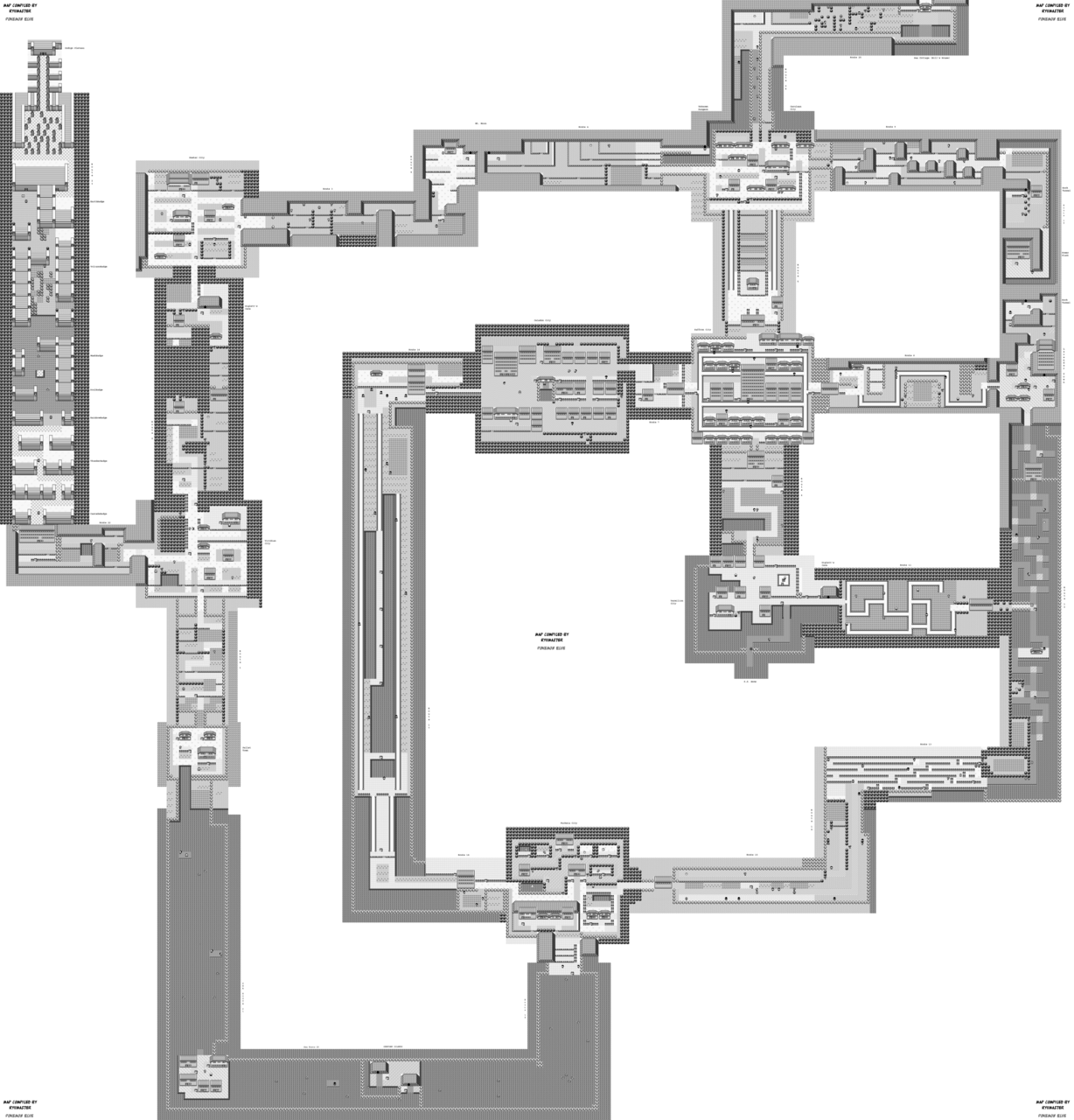
This is the entire overworld for Kanto, for instance.
And as the person below also mentioned.. No, the credits for Pokemon are extensive. There may only have been four coders, but there were level designers, sprite designers, etc, etc.




1) Pokemon Gold/Silver, the prior versions of Crystal, was programmed by four people. (http://en.wikipedia.org/wiki/Pokémon_Gold_and_Silver#Develop...)
2) Crystal is 1MB in size. Yes, one megabyte.